

What to eat in Oman — and what it costs
The heat hits you like a wall the second you step out of the taxi in Mutrah, even at 6 in the evening. The air is thick, the corniche is quiet, and the only sound is the slow lapping of the harbour against the stone. But if you follow your nose past the silver shops and into the labyrinth of the Mutrah Souq, you’ll find the real heartbeat of Omani food — the scent of cardamom coffee, sizzling lamb fat, and the sweet, sticky promise of halwa. This is not a city for fine-dining pretension in summer. It’s a city for eating well, eating honestly, and letting the flavours do the heavy lifting. Here’s what to seek out, where to find it, and what it costs in August 2026.
Start at the Souq: The Flavours of Mutrah
You don’t come to Mutrah for the tourist trinkets — you come for the food stalls tucked between the frankincense dealers and the spice mountains. The souq is one of the oldest continuously running markets on the Arabian Peninsula, and the vendors here have been feeding the city for generations. Grab a small cup of qahwa (Omani coffee, spiced with cardamom and often a hint of rosewater) from a stall near the fish market. It’ll cost you around 0.5 OMR (about 1.3 USD) for a small cup, often served with a single date. That’s your palate cleanser.
Next, look for a vendor frying luqaimat — those small, golden dumplings drenched in date syrup or honey. A paper cone of six or eight pieces goes for somewhere between 0.5 and 1 OMR. They’re crunchy on the outside, pillowy on the inside, and dangerously moreish. If you want something more substantial, a fish sandwich fresh from the nearby market — usually kingfish or tuna, grilled over charcoal with a squeeze of lime and a smear of fiery sahawiq salsa — will set you back about 1 OMR. The locals will point you to the stalls closest to the harbour, where the catch comes in daily.
The Heavy Hitters: Shuwa and Majboos
If you only eat one thing in Oman, make it shuwa. This is the national dish, and it’s not something you stumble upon casually. It’s lamb (sometimes goat) marinated for 24 hours in a paste of red chillies, coriander, cumin, and other spices, then wrapped in banana leaves and buried in an underground sand oven to slow-cook for up to two days. The result is meat so tender it falls apart at the touch of a spoon.
For an authentic sit-down experience, head to Ramssa Omani Restaurant. It’s a well-loved spot in the city where the staff treat you like family. A plate of shuwa with rice and a side of Omani salad will cost you around 4 or 5 OMR (roughly 10-13 USD) — not cheap by street-food standards, but for that slow-cooked feast, it’s a bargain. You’ll see Omani families there on Friday afternoons, sharing platters, so you know it’s the real deal.
Just as important is majboos, the spiced rice dish (think biryani’s Omani cousin) usually served with chicken, fish, or lamb. The chicken version at Imperial Kitchen – Muscat in Ruwi is a local favourite — fragrant basmati rice, caramelised onions, and a piece of chicken that’s been simmered in a rich, spiced broth. A generous plateful will cost you between 2.5 and 3.5 OMR. Ruwi is the city’s ‘Little India’ district, and the streets here are packed with South Asian kitchens too, but for the pure Omani take on this comforting classic, Imperial Kitchen gets it right.
A Sweet Interlude: Omani Halwa and Coffee
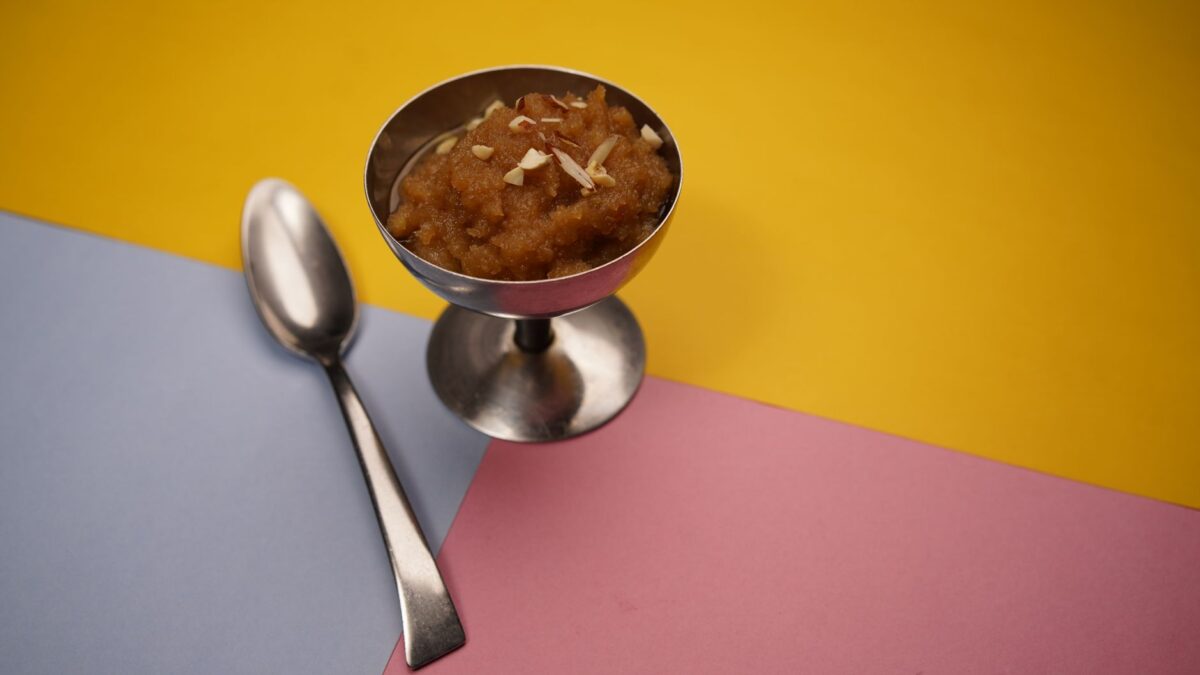
No Omani meal ends without halwa. This isn’t the crumbly Middle Eastern dessert you might know from elsewhere — Omani halwa is a dense, gelatinous, amber-coloured sweet made from brown sugar, saffron, rosewater, and often studded with almonds and cashews. It’s served at every celebration, every wedding, and every serious business meeting.
You’ll find good halwa at the sweets stalls in the souq, but for a more refined setting, try KAIA مطعم in Al Khuwair. They do a beautiful presentation with a side of strong Omani coffee. A small portion costs around 1.5 OMR. The trick is to take a bite of the halwa, then sip the bitter coffee — the contrast is what makes it sing. If you’re staying in the Qurum area, check the display cases at Monza Cafe & Gallery on the Bareeq Al Shatti promenade; they often have a particularly good saffron-laced variety.
Street Food and Quick Bites: Ruwi’s Backstreets
For a proper lunch on the go, Ruwi is your spot. The dense souq streets that flank the NBO Head Office branch are a maze of tiny eateries and shawarma counters. A chicken shawarma wrap, loaded with garlic sauce and pickles, is a snack that needs no introduction — and in Ruwi, you’ll find winners for around 0.8 to 1.2 OMR. Pair that with a fresh sugarcane juice, which vendors will press right in front of you for about 0.5 OMR per tall glass. It’s the only way to beat the 44-degree ‘feels-like’ temperature.
If you’re craving something a little heartier but still want to stay on a budget, most of the Indian and Pakistani restaurants in Ruwi (the ones with the crowded lunch buffets) will give you an excellent thali or curry plate — rice, dal, bread, and a curry — for 1.5 to 2 OMR. That’s a full meal, and it’s how the city’s bankers and shopkeepers eat every day.
A Proper Sit-Down Dinner: The Upscale End
Muscat has its glitzy side, and while the deep-summer lull means hotel restaurants are quieter, that’s precisely when you’ll get the best service. If you want to treat yourself, head to the beachfront at Bareeq Al Shatti in Qurum. The Cowboy Steakhouse is a reliable choice, but it’s more about the grill than the Omani experience. For something that feels more like an occasion with a view, the W Muscat’s pool deck (where Chilean artist Del Campo plays later in the week) is a vibe, but their food is international.
For a fusion experience that uses local ingredients, Thy Yard ذا يارد in Al Mouj is a buzzy spot on the marina. A three-course meal for two, without wine, will likely run you between 25 and 35 OMR. You’re paying for the setting here — watching the yachts bob in the marina while the heat finally breaks is worth a few extra rials.
Remember that the city slows down in August. Many restaurants in the city centre close for a few hours in the early afternoon, and some may have shortened hours for the summer as families travel to Salalah’s khareef. Check opening times on Google Maps before you head out, especially for places like Sandhills Lounge in Bowshar, which is a lovely pitstop but might have a reduced summer schedule. If you’re after a caffeine fix in the malls, KAVOHOLIK in City Centre Muscat or Qaha Specialty Coffee in Bowshar are both reliable — a specialty flat white will be around 1.8 to 2.5 OMR, keeping you sane during the hottest part of the day.
Practical Notes on Prices and Paying
It’s all in Omani rials, and the currency is pegged at around 0.384 OMR per US dollar (so about 2.6 OMR per USD). Prices have been steady thanks to low inflation, around 1%, so what you see on a menu today will feel fair. An honest day of eating — coffee, a shuwa lunch, street snacks, and a decent dinner — will set you back between 8 and 15 OMR per person, depending on how often you sit down for service.
A final practical tip: public buses run by Mwasalat have gone cashless since 1 August, so you’ll need a card or the app for those, but taxis and Careem still take cash if you need it. And remember, if you’re eating in a souq stall, small notes are king — nobody wants to break a 10-rial note for a 0.5-rial coffee. Bring change, bring a healthy appetite, and let the city’s flavours do the talking.
Frequently asked questions
What is the most authentic Omani dish to try in Muscat?
You should seek out shuwa — slow-cooked lamb marinated in spices and buried underground. Try it at Ramssa Omani Restaurant, where a plate costs around 4-5 OMR.
How much does a typical meal cost in Oman?
Street food like shawarma or luqaimat costs between 0.5 and 1.5 OMR. A sit-down meal at a mid-range Omani restaurant like Imperial Kitchen will be about 2.5-3.5 OMR, while a fine dining night out at the marina can be 25+ OMR per person.
Where is the best place for street food in Muscat?
Ruwi, the central business district, is the de facto street food hub. Explore the small lanes near the souq and the National Bank of Oman head office for cheap shawarma, juice presses, and Indian thalis.
What is Omani halwa and where can I taste it?
Omani halwa is a dense, saffron-flavoured sweet made with brown sugar and nuts. It's served with coffee and can be found at KAIA restaurant or at stalls inside the Mutrah Souq for about 1.5 OMR per portion.
Is the Mutrah Souq a good place to eat or just to shop?
Both. The souq has excellent food stalls, especially around the fish market side, serving fresh fish sandwiches and Omani coffee. It's a great spot to snack while you experience one of the oldest markets in the region.
Things to do in Oman
 Private Tour to Wadi Bani Khalid & Wahiba Sand Desert with Sunset
 Private Full-Day Wadi Shab Adventure and Bimmah Sinkhole Tour
 Private Full-Day Wadi Shab and Bimmah Sinkhole Tour
 Sunset in Wahiba Sands 4x4 Adventure
 Nizwa Fort-Nizwa Souq-Birkat Al Mouz-Jebel Akhdar - Private Full Day Tour
 Private Historical Tour - Nizwa Fort - Nizwa Souq - Bahla Fort - Jabreen Castle