

What to eat in Singapore — and what it costs
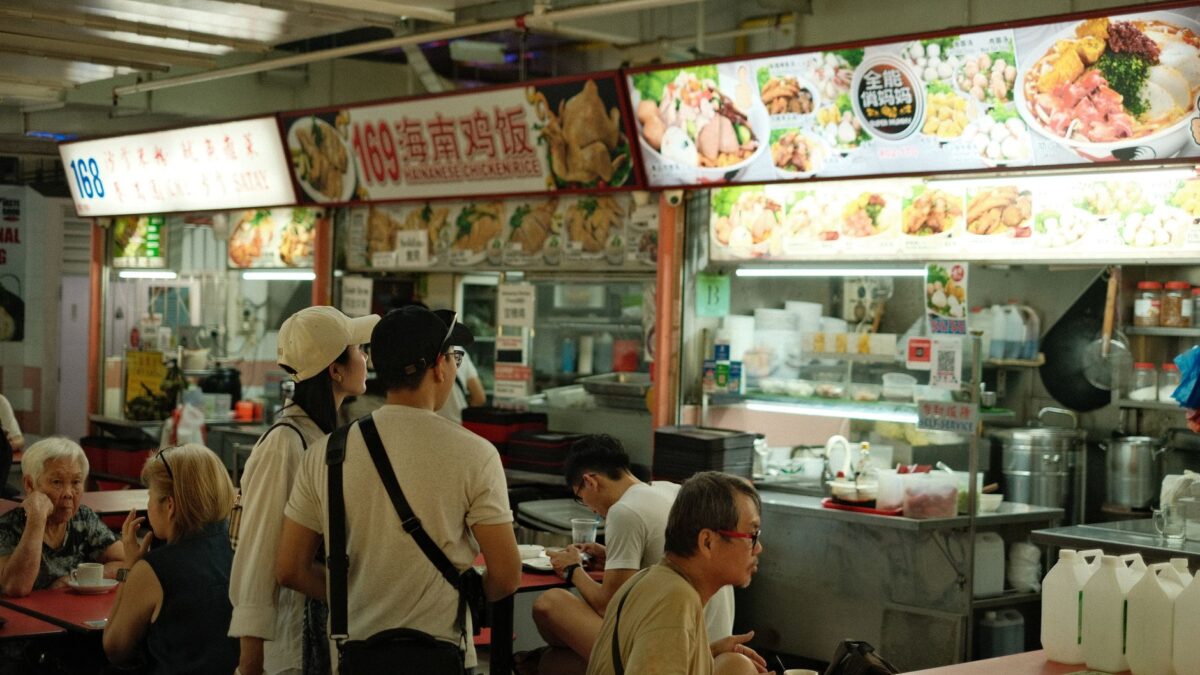
The air hangs thick and warm, 36 degrees with a tropical weight that presses down on your shoulders. It’s a few days after National Day, and the red-and-white bunting still flutters over HDB blocks. You’ve just ducked into the cool of Tiong Bahru Market, where the fans whir overhead and the smell of garlic, chilli, and coconut milk hits you like a welcome wall. Somewhere behind you, a queue snakes past a stall — it’s not a tourist line, but aunties and uncles in their 60s, here for the same thing you’re about to discover. This is how you eat in Singapore: not by looking up ‘best restaurants,’ but by following the clatter of metal bowls and the stack of tissue packets marking tables.
Hawker Fare: The National Kitchen
There’s no such thing as ‘casual dining’ versus ‘fine dining’ here. There’s hawker centre food, which costs roughly S$4.50 to S$7.50 for a dish and a drink, and then there’s mid-range restaurants, where you’ll spend S$20 to S$40 per person. And the gap between them is far smaller than you might expect. A hawker meal is serious. It’s UNESCO-listed — yes, really — and for most of us, it’s not a budget hack, it’s the standard.
Let me tell you about a few dishes worth sweating for.
Hainanese Chicken Rice: The Benchmark
This is the dish that defines Singapore. Poached chicken, smooth and silky, served on fragrant rice cooked in chicken fat, with a trio of chilli, ginger, and dark soy. It’s about S$4 to S$6 at a hawker centre. Go to Maxwell Food Centre in Chinatown and join the line at Tian Tian Hainanese Chicken Rice — yes, the one Anthony Bourdain approved. It’s worth the wait. If you prefer a less chaotic scene, try the chicken rice at the Tiong Bahru Market‘s food centre; the stalls there are celebrated among locals, and you won’t feel like a tourist.
Katong Laksa: A Noodle Soup That Eats Like a Meal
Laksa is a rich, coconut-curry noodle soup, and the Katong style is the version I grew up on. It’s a little sweeter, a little thicker, and it’s always served with the noodles cut short so you can eat it with just a spoon. A bowl at a hawker centre sets you back around S$5 to S$7. Head east to Katong/Joo Chiat, the Peranakan heritage heartland, and look for a stall that’s got a long queue — you’ll find one near the old shophouses. The area is served by the new Thomson-East Coast Line MRT stations, so it’s easy to get to, and the pastel shophouses make for a beautiful walk afterwards.
Char Kway Teow: Wok Hei Magic
Flat rice noodles, Chinese sausage, egg, beansprouts, and sometimes cockles, all fried over a blazing fire until you get that smoky ‘wok hei’ — the breath of the wok. It’s about S$4.50 to S$6 per plate. Look for a hawker stall where the man is tossing the noodles in a blackened wok while a flame licks the side. You’ll find excellent versions at Old Airport Road Food Centre and also at the Holland Village hawker centre, which sits in the middle of that bohemian expat enclave.
Satay, Seafood, and a Beer at Lau Pa Sat
If you’re in the Central Business District around dinner time, make your way to Lau Pa Sat, the ornate Victorian iron structure. At night, the street beside it transforms into what’s called ‘Satay Street.’ You’ll smell the charcoal smoke before you see it. Satay here runs about S$0.80 to S$1.00 per stick, and a set of 10 to 25 sticks costs S$10 to S$25. It’s a perfect, greasy snack after a day of exploring — dip the skewers in peanut sauce, wash it down with a large bottle of local Tiger Beer, which costs around S$7 to S$10 at a hawker, and watch the city workers unwind.
For a sit-down seafood experience, you have to go for chili crab. It’s a Singapore icon — a mud crab wok-fried in a sweet-spicy tomato-chilli gravy. The most famous place is Jumbo Seafood, which is a full restaurant experience. Depending on what you order, you can expect to pay S$20 to S$40 per person for a meal with rice and drinks. It’s not cheap, but it’s the one dish where you really should splurge. Order some fried mantou buns to mop up the sauce — that’s not optional.
Kopi, Kaya, and the Coffee Culture
Now, somewhere between the hawker centres and the mid-range restaurants, there’s a whole world of coffee. At your local kopitiam or hawker centre, a cup of kopi (the local-style coffee with condensed milk) costs about S$1.50 to S$2.50. It’s strong, thick, and sweet, and you’ll be forgiven if you need to learn the ordering language: kopi is coffee with condensed milk, kopi-o is black with sugar, kopi-c is with evaporated milk and sugar. Do yourself a favour and order a kopi at a kopitiam like Chin Mee Chin Confectionery in Katong, and pair it with a slice of kaya toast — coconut jam and butter between toasted bread, often served with soft-boiled eggs. That’s breakfast.
But Singapore’s coffee scene isn’t only about the old-school. The island has a thriving third-wave coffee culture, too. You’ll find roasteries and pour-over bars tucked into the heartlands and in gentrified HDB estates. Seek out Nylon Coffee in Everton Park or Common Man Coffee Roasters on Martin Road. For the record, I’m a regular at the latter, because their flat white is the best in the city, and it sets you back about S$6. It’s a different universe from the kopitiam, but both are quintessentially Singapore.
Where to Sit Down: The Comfort Food Restaurants
There are times when you want a table, a air-conditioned room, and no need to chope (that’s the word for reserving a seat with a packet of tissues). For that, I’d point you to the new wave of ‘modern Singapore comfort food’ places. Fatt Choy Eating House [發財餐馆] in Bugis/Haji Lane is exactly that — a dressed-up kokpit, but with a menu that plays with family recipes. You’ll get a proper satay bee hoon or a Hokkien mee, and you’ll spend about S$20 to S$30 per person.
For something a little more western but still very Singapore, head to MERCI MARCEL CLUB STREET for a French bistro experience in the heart of the CBD, or try Chez Suzette for their salted egg yolk croissant — a bizarre but delicious marriage of French pastry and Southeast Asian flavour. These are the kinds of places where you can sit for two hours with a bottle of wine. The price point? Still within that S$20 to S$40 per person range if you’re not going overboard with the drinks.
Practical Prices: How to Budget Your Day
So, let’s talk real numbers. Singapore can be expensive — the rent alone for a modest 1-bedroom HDB flat is around S$2,500 to S$3,500 a month, and the general cost of living is high. But eating out, particularly at hawker centres, is genuinely affordable, even after the Public Transport Council’s fare adjustment that raised transit fares by about 5% in December 2025. A short MRT ride costs S$1.28 on a fare card, and an adult monthly travel pass is S$122 for unlimited basic bus and MRT rides.
For a day of eating, you can easily do breakfast (kopi + kaya toast) for S$3.50, lunch (chicken rice + a sugarcane juice) for S$6, and dinner (char kway teow + a Tiger beer) for S$12. That’s under S$25 for three full meals. If you add a sit-down restaurant meal and a cocktail at a bar, you might hit S$80. It’s all about balance.
What’s Happening Around Your Meal
Since you’re here in August, there’s a lot going on. The Singapore Night Festival is on (17th edition, themed ‘Myths and Legends’) — it takes over Bras Basah and Bugis with projection mapping and festival villages from 21 August to 5 September. If you’re around, definitely eat in that area and then wander the installations. Also, the Art of the Automobile — the world’s first immersive Concours d’Elegance — is opening at the IMBA Theatre at Gardens by the Bay from 13–16 August, if you want a high-octane pre-dinner activity. And the Light Together Bras Basah.Bugis National Day light show is running until 5 September, so the city is glowing at night.
Just a tiny caution: on Friday nights in August, the entire Downtown Line ends service at 11:30pm for integration tests, with shuttle buses S41-S43 covering the line instead. If you’re out late, plan your ride to avoid a long walk. And the Sengkang West LRT inner loop is closed, so rely on the outer loop and shuttle buses.
Final Word: Eat Like a Local
Don’t overthink it. Singapore is a city that lives to eat, and it’s impossibly good at it. The best strategy is to pick a hawker centre, find a stall with a queue, and order whatever they’re famous for. Sit down, look at the condensation on your glass of iced lemon tea, and take a moment. You’re in a food capital, and the next plate is already calling.
Frequently asked questions
How much does a meal cost at a hawker centre in Singapore?
A meal at a hawker centre — a dish and a drink — typically costs about S$4.50 to S$7.50. For example, a plate of Hainanese chicken rice is around S$4 to S$6, and a bowl of Katong laksa is S$5 to S$7.
What is the best place to try Hainanese chicken rice in Singapore?
Tian Tian Hainanese Chicken Rice at Maxwell Food Centre is a celebrated spot, famous after Anthony Bourdain's visit. Expect a queue, but it's worth it. You'll pay around S$4 to S$6 for a plate.
Is Singapore an expensive city to eat out in?
It can be, but hawker food is very affordable. You can eat three meals at hawker centres for under S$25. A mid-range sit-down restaurant meal costs about S$20 to S$40 per person, so it's more about where you choose to eat.
What is the local coffee drink and how much does it cost?
It's called 'kopi' — coffee with condensed milk, strong and sweet. At a kopitiam or hawker centre, it costs about S$1.50 to S$2.50. You can also get it with evaporated milk (kopi-c) or black with sugar (kopi-o).
What is the best time to visit the Satay Street at Lau Pa Sat?
Evenings after 7pm, when the street transforms into 'Satay Street.' Satay costs about S$0.80 to S$1 per stick, and sets run S$10–S$25. It's a lively atmosphere near the CBD, perfect after a day of sightseeing.
Things to do in Singapore
 Singapore Light to Night Bike Tour
 Private Custom Singapore Walking Tour (4–8 Hrs, Flexible Plan)
 Private Singapore Food Tour: Culture & Local Neighborhoods
 Private Tour: Sightseeing Daytrip to Johor Bahru from Singapore
 Private Singapore Walking Tour: City Highlights & Hidden Gems
 Beyond Michelin: Chinatown Hawker Food Tour with 8 Tastings