

What to eat in Uzbekistan — and what it costs
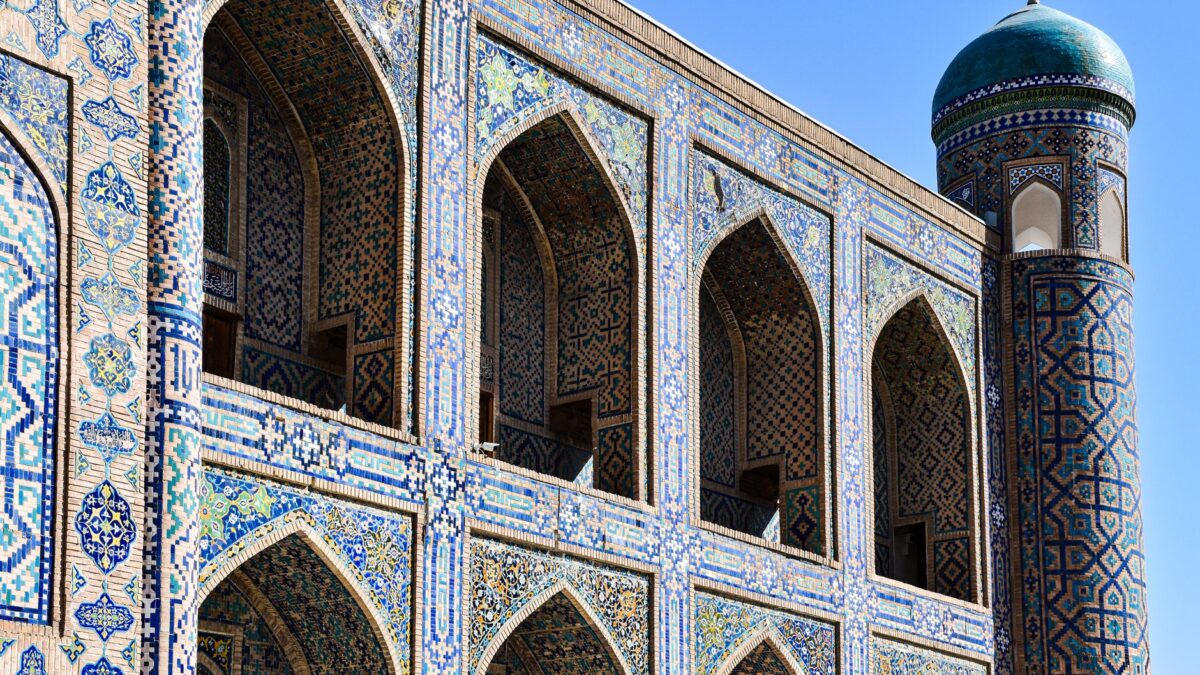
The heat hits you first — a dry, shimmering wall of it that makes the blue dome of Chorsu Bazaar look like a mirage. But then you catch the smell: charcoal smoke, sizzling lamb fat, fresh non bread pulled from a tandyr, and somewhere beneath it all, the sweet perfume of melons stacked in pyramids taller than you. This is Tashkent in August, and if you’re here, you’re about to eat very, very well.
The national dish you can’t skip: Plov at Besh Qozon
You haven’t really arrived in Uzbekistan until you’ve watched a kazan the size of a bathtub being lifted off a fire, steam rising like a dragon’s breath, revealing mountains of rice studded with carrots, chickpeas, and tender chunks of beef or lamb. That’s the scene at Besh Qozon Pilaf Center, the city’s ceremonial plov headquarters, just a stone’s throw from the TV tower.
This is not a quiet, romantic dinner spot. It’s a sprawling open-air amphitheater of hungry locals and curious travelers, all digging into glistening plates of the national dish. For a bowl of osh here, expect to pay around 25,000–40,000 UZS (roughly $2.60) — a bargain for a meal that’s equal parts history, ritual, and pure comfort. Order the classic, add a slice of fresh non and a glass of green tea, and let the grease do its happy work.
If you want the full ceremony, go early — they start cooking at dawn, and the best portions go fast. The nearby TV tower (tallest in Central Asia, about 375 meters) offers a cold-blasted observation deck where you can survey the city before your feast. A quick Yandex Go ride from the center will set you back around 10,000–20,000 UZS — cheap enough that you won’t think twice.
From street corners to flame-grilled samsa: a bazaar crawl
Now, let’s talk bazaars. Chorsu Bazaar, with its giant blue dome, is the beating heart of the Eski Shahar (Old Town) — a labyrinth of dried fruits, spices, and, crucially, the most authentic street food in the city. You’ll want to spend at least an hour here, but start with the samsa.
These golden, flaky pastry pockets are baked in clay ovens, and the meaty, onion-laced filling is the stuff of legend. At any decent stall near the bazaar’s entrance, a fresh samsa will cost you about 6,000–10,000 UZS (under a dollar). The trick is to eat it immediately, burning your fingers, letting the juice run down your chin. Pair it with a tangy chai — a cup of which is often free if you buy a samsa, or a small fraction of the price elsewhere.
Head down into the bazaar’s lower level — the meat market is a sensory blast, and while you’re unlikely to buy a leg of lamb, watching the butchers in action is a free show. Above ground, grab a juicy shashlik (lamb or chicken skewers) from one of the charcoal grills that line the outer edges. Prices vary, but a couple of skewers plus a hunk of non bread will come to about 15,000–20,000 UZS (under $1.50). For a cool-down, buy a slice of watermelon — in August, the bazaars are stacked with them — and eat it right there, hands sticky, feeling impossibly content.
A sit-down dinner that won’t break the bank
After a day of grazing, you’ll want a table. Tashkent’s dining scene has exploded in recent years, especially around the affluent Mirobod district and the newer Tashkent City business hub. One name you’ll hear repeatedly is Socials Minor — a chic, Western-friendly cafe and restaurant that’s equally good for a flat white in the morning or a proper dinner. Their menu is creative, but if you’re after the classics, they do a solid manti and a mean beef stroganoff.
For a more traditional feel, try BOBOY Shevchenko (yes, that Shevchenko — a nod to the Ukrainian street it’s on). It’s a bustling, no-frills spot beloved by locals for its lagman, manti, and grilled meats. A full meal here — soup, main course, and bread — will set you back around 60,000–70,000 UZS (roughly $5) for a filling, satisfying dinner.
If you want the full three-course experience with wine or cocktails, head to Yuzhanin or Lali Restaurant in Mirobod. These are the kind of places where the tablecloths are crisp and the service is polished. Expect to pay around 400,000–450,000 UZS (about $35) for a three-course dinner for two, without drinks. That’s a splurge by local standards, but still a steal compared to any European capital.
Where the real food lives: tea houses and family kitchens
The tourist trail will show you the highlights, but the soul of Tashkent’s food is in its chaikhanas (tea houses) — leafy courtyards where old men sip green tea from pialas and play backgammon for hours. This is where you’ll find the most honest plov, the fluffiest non, and the kindest hospitality.
Look for places with outdoor seating, shady trees, and a bed-like tapchan to lounge on. A pot of tea, a plate of grilled meat, and a basket of non at a chaikhana will rarely exceed 40,000–60,000 UZS (about $4–5) per person. And if you’re invited to a local’s home — and you will be, if you’re open to it — accept. That’s where you’ll taste the true, soulful osh.
While you’re exploring, don’t miss Yunusobod district’s casual cafes, where you can find decent cappuccinos (around 23,000–28,500 UZS, a touch more expensive than a bowl of plov, but the Wi-Fi is better). And for a proper Tashkent morning, grab a warm loaf of non from a tandyr bakery near Chorsu — it’ll cost about 6,200–7,800 UZS and is the most honest 50 cents you’ll ever spend.
The cost of eating in Tashkent: a practical breakdown
So what does a food budget look like? The good news: Tashkent is one of Central Asia’s most affordable capitals. A metro ride is just 2,000 UZS (about $0.20) — cheaper than the bread. Here’s a rough guide to what you’ll shell out:
- Street food and bazaar eats: 10,000–30,000 UZS ($0.80–2.50) per snack — samsa, shashlik, or a melon slice.
- Bowl of plov at a plov center: 25,000–40,000 UZS ($2–3.20).
- Inexpensive local restaurant meal: 60,000–70,000 UZS ($5) for a main plus bread and tea.
- Three-course dinner for two at a mid-range spot: 400,000–450,000 UZS ($35) — the splurge option.
- Local beer (0.5L): 15,000–16,000 UZS ($1.20) — a nice end to a hot day.
One tip: always carry cash — soum — especially for bazaars and small vendors. While Humo and Uzcard cards work at most terminals, you’ll be lost without paper notes at the samsa stall. And when the August heat gets oppressive (it hits 36°C some afternoons), escape to the cool of the Alisher Navoi Metro station — yes, you can take photos there now — and surface only when the sun is lower.
The final bite
Uzbekistan’s cuisine is not subtle. It’s fat, flour, lamb, and fire — honest and generous, like the people who cook it. You’ll leave with a full stomach, a stained shirt, and a new benchmark for what a meal should be. So go on — order that second plate of plov. Your heart (and your wallet) will thank you.
Frequently asked questions
How much does a meal cost in Tashkent, Uzbekistan?
A filling meal at an inexpensive local restaurant costs around 60,000–70,000 UZS (about $5), while a bowl of plov at Besh Qozon is roughly 25,000–40,000 UZS ($2–3). A three-course dinner for two at a mid-range restaurant is about 400,000–450,000 UZS ($35).
Where can I try authentic plov in Tashkent?
Head to Besh Qozon Pilaf Center near the TV tower — it's the city's ceremonial spot where plov is cooked in massive kazans. For a more local vibe, seek out a chaikhana (tea house) in the old town, where plov is often the pride of the house.
Is street food safe to eat in Tashkent?
Yes, in general Tashkent is very safe for travelers, and street food like samsa and shashlik from busy bazaars (especially Chorsu) is fresh and popular among locals. If you see a crowd, that's a good sign. Just use common sense — eat it hot and off the grill.
Do I need to carry cash in Tashkent for food?
Absolutely. While Humo and Uzcard cards are accepted at many restaurants and supermarkets, bazaar vendors and street stalls overwhelmingly prefer cash (Uzbekistani soum). Keep small denominations handy for samsa, fruit, and tea.
What is the most affordable way to eat well in Tashkent?
Stick to bazaars and chaikhanas. A samsa costs under a dollar, a plov bowl is about 25,000–40,000 UZS, and a plate of lagman at a local spot is around 60,000–70,000 UZS. Skip the upscale Mirobod restaurants if you're on a budget — they're great, but pricier.
Things to do in Uzbekistan
 Samarkand Private Guided Tour with transport (options avail)
 Seven Lakes Tajikistan: All-Inclusive Day Tour
 Samarkand All Inclusive Day Tour from Tashkent
 Tashkent: Hands-On Uzbek Culture & Pottery Workshop
 Bukhara: Walking Tour with a Small Group. Complete Guidance
 Day trip to Charvak lake, Chimgan & Amirsoy ski resort mountains