

Australia Travel Podcast with Jack Thornton
Hosted by Jack Thornton — a new episode every day from Australia.
This podcast covers travel across Australia, a country that is also a continent, with an arid interior, a fertile south-eastern plain and most residents clustered around the coast. What makes travel here distinctive is the scale: the world’s smallest continent is still the sixth-largest country, and the distances between places are long.
From Sydney and Melbourne to Perth and Adelaide, the show’s range includes the places where most Australians live, plus the Great Dividing Range that runs along the eastern coast. Inland, the low plateau is mostly desert, and the north is tropical, so the host’s route moves between very different climates.
The host stays put while the tropical north moves through its dry and wet seasons, or while winter cools the temperate south. Later episodes return to places already visited, letting the changes in bush, farmland and coastline show what has altered since. That slow accumulation is the point of the series.
Recent episodes
Things to do in Australia
 Kayak to Goat Island in Sydney Harbour with Local
 Flying Fox Experience, Thousands of Australia's Largest Bat
 Likely to sell out
Full Day Kayaking Tour in Coorong National Park
Likely to sell out
Full Day Kayaking Tour in Coorong National Park
 Margaret River Coastal and Wildlife Eco Trip from Busselton or Dunsborough
 Winemaking Class at McCaffrey's Estate
 Byron Bay Brewery & Distillery Tour: Tastings, Lunch & transfers
 Sunset Sail Cruise Airlie Beach
 Private Great Ocean Road - The Ultimate Aussie Adventure
Plan your trip to Australia
Getting around
Staying connected
Australia at a glance
Australia in depth
Reference data on the country — geography, people, history, economy and transport.
Geography and climate
Location
Oceania, continent between the Indian Ocean and the South Pacific Ocean
Terrain
Mostly low plateau with deserts; fertile plain in southeast
Climate
Generally arid to semiarid; temperate in south and east; tropical in north
Elevation
- Highest point
- Mount Kosciuszko 2,228 m
- Lowest point
- Lake Eyre -15 m
- Mean elevation
- 330 m
Area
- Total
- 7,741,220 sq km
- Land
- 7,682,300 sq km
- Water
- 58,920 sq km
Size comparison
Slightly smaller than the 48 contiguous US states
Coastline
25,760 km
Land borders
Total 0 km
Natural resources
Alumina, coal, iron ore, copper, lithium, tin, gold, silver, uranium, nickel, tungsten, rare earth elements, mineral sands, lead, zinc, diamonds, opals, natural gas, petroleum
Land use
- Agricultural land
- 47.2% (2023 est.)
- Arable land
- 4% (2023 est.)
- Permanent crops
- 0.1% (2023 est.)
- Permanent pasture
- 43.1% (2023 est.)
- Forest
- 17.3% (2023 est.)
- Other
- 35.4% (2023 est.)
Natural hazards
Cyclones along the coast; severe droughts; forest fires
Volcanism: volcanic activity on Heard and McDonald Islands
Note
Note 1: world's smallest continent but sixth-largest country; the largest country in Oceania, the largest country entirely in the Southern Hemisphere, and the largest country without land borders
Note 2: the Great Dividing Range that runs along eastern Australia is that continent’s longest mountain range and the third-longest land-based range in the world; the term "Great Dividing Range" refers to the fact that the mountains form a watershed crest from which all of the rivers of eastern Australia flow – east, west, north, and south
Note 3: Australia is the only continent without glaciers; it is the driest inhabited continent on earth; Perth on the west coast is home to the invigorating sea breeze known as the "Fremantle Doctor," one of the most consistent winds in the world; Australia hosts 10% of the world's biodiversity, and a great number of its flora and fauna exist nowhere else in the world
People and society
Population
- Total
- 27,490,921 (2025 est.)
- Male
- 13,685,935
- Female
- 13,804,986
Nationality
- Noun
- Australian(s)
- Adjective
- Australian
Ethnic groups
English 33%, Australian 29.9%, Irish 9.5%, Scottish 8.6%, Chinese 5.5%, Italian 4.4%, German 4%, Indian 3.1%, Australian Aboriginal 2.9%, Greek 1.7%, unspecified 4.7% (2021 est.)
Languages
English 72%, Mandarin 2.7%, Arabic 1.4%, Vietnamese 1.3%, Cantonese 1.2%, other 15.7%, unspecified 5.7% (2021 est.)
Religions
Roman Catholic 20%, Protestant 18.1% (Anglican 9.8%, Uniting Church 2.6%, Presbyterian and Reformed 1.6%, Baptist 1.4%, Pentecostal 1%, other Protestant 1.7%), other Christian 3.5%, Muslim 3.2%, Hindu 2.7%, Buddhist 2.4%, Orthodox 2.3% (Eastern Orthodox 2.1%, Oriental Orthodox 0.2%), other 2.1%, none 38.4%, unspecified 7.3% (2021 est.)
Median age
- Total
- 38.5 years (2025 est.)
- Male
- 36.9 years
- Female
- 39.2 years
Life expectancy
- Total population
- 83.5 years (2024 est.)
- Male
- 81.3 years
- Female
- 85.7 years
Urbanisation
- Urban population
- 86.6% of total population (2023)
- Rate of urbanization
- 1.27% annual rate of change (2020-25 est.)
Where people live
Population is primarily located on the periphery, with the highest concentration of people residing in the east and southeast; a secondary population center is located in and around Perth in the west; of the states and territories, New South Wales has, by far, the largest population; the interior, or "outback," has a very sparse population
Largest cities
5.235 million Melbourne, 5.121 million Sydney, 2.505 million Brisbane, 2.118 million Perth, 1.367 million Adelaide, 472,000 CANBERRA (capital) (2023)
Background and government
Background
Aboriginal Australians arrived on the continent at least 60,000 years ago and developed complex hunter-gatherer societies and oral histories. Dutch navigators led by Abel TASMAN were the first Europeans to land in Australia in 1606, and they mapped the western and northern coasts. They named the continent New Holland but made no attempts to permanently settle it. In 1770, Englishman James COOK sailed to the east coast of Australia, named it New South Wales, and claimed it for Great Britain. In 1788 and 1825 respectively, Great Britain established New South Wales and then Tasmania as penal colonies. Great Britain and Ireland sent more than 150,000 convicts to Australia before ending the practice in 1868. As Europeans began settling areas away from the coasts, they came into more direct contact with Aboriginal Australians. Europeans also cleared land for agriculture, impacting Aboriginal Australians’ ways of life. These issues, along with disease and a policy in the 1900s that forcefully removed Aboriginal children from their parents, reduced the Aboriginal Australian population from more than 700,000 pre-European contact to a low of 74,000 in 1933.
Four additional colonies were established in Australia in the mid-1800s: Western Australia (1829), South Australia (1836), Victoria (1851), and Queensland (1859). Gold rushes beginning in the 1850s brought thousands of new immigrants to New South Wales and Victoria, helping to reorient Australia away from its penal colony roots. In the second half of the 1800s, the colonies were all gradually granted self-government, and in 1901, they federated and became the Commonwealth of Australia. Australia contributed more than 400,000 troops to Allied efforts during World War I, and Australian troops played a large role in the defeat of Japanese troops in the Pacific in World War II. Australia severed most constitutional links with the UK in 1942 but remained part of the British Commonwealth. Australia’s post-war economy boomed and by the 1970s, racial policies that prevented most non-Whites from immigrating to Australia were removed, greatly increasing Asian immigration to the country. In recent decades, Australia has become an internationally competitive, advanced market economy due in large part to economic reforms adopted in the 1980s and its proximity to East and Southeast Asia.
In the early 2000s, Australian politics became unstable with frequent attempts to oust party leaders, including five changes of prime minister between 2010 and 2018. As a result, both major parties instituted rules to make it harder to remove a party leader.
Government
Federal parliamentary democracy under a constitutional monarchy; a Commonwealth realm
Capital
Canberra
Time zone
UTC+11 (16 hours ahead of Washington, DC, during Standard Time)
Independence
1 January 1901 (from the federation of UK colonies)
National day
Australia Day (commemorates the arrival of the First Fleet of Australian settlers), 26 January (1788); ANZAC Day (commemorates the anniversary of the landing of troops of the Australian and New Zealand Army Corps during World War I at Gallipoli, Turkey), 25 April (1915)
Economy and cost of living
Overview
High-income and globally integrated economy; strong mining, manufacturing, and service sectors driving slow but steady growth; net exporter, driven by commodities to East Asian trade partners; weak productivity and aging population straining labor force participation
GDP per capita
- Real GDP per capita 2024
- $60,100 (2024 est.)
- Real GDP per capita 2023
- $60,500 (2023 est.)
- Real GDP per capita 2022
- $59,900 (2022 est.)
Inflation
- Inflation rate (consumer prices) 2024
- 3.2% (2024 est.)
- Inflation rate (consumer prices) 2023
- 5.6% (2023 est.)
- Inflation rate (consumer prices) 2022
- 6.6% (2022 est.)
Unemployment
- Unemployment rate 2024
- 4.1% (2024 est.)
- Unemployment rate 2023
- 3.7% (2023 est.)
- Unemployment rate 2022
- 3.8% (2022 est.)
Exchange rate
- Currency
- Australian dollars (AUD) per US dollar -
- Exchange rates 2024
- 1.515 (2024 est.)
- Exchange rates 2023
- 1.505 (2023 est.)
- Exchange rates 2022
- 1.442 (2022 est.)
- Exchange rates 2021
- 1.331 (2021 est.)
- Exchange rates 2020
- 1.453 (2020 est.)
Main industries
Mining, industrial and transportation equipment, food processing, chemicals, steel
Agriculture
Wheat, sugarcane, barley, rapeseed, milk, cotton, sorghum, beef, lentils, grapes (2023)
Transport and connectivity
Airports
2,257 (2025)
Railways
- Total
- 32,606 km (2022) 3,448 km electrified
- Standard gauge
- 18,007 km (2022) 1.435 mm
- Narrow gauge
- 11,914 km (2022) 1.067 mm
- Broad gauge
- 2,685 km (2022) 1.600 mm
Ports
- Total ports
- 66 (2024)
- Large
- 5
- Medium
- 8
- Small
- 24
- Very small
- 29
- Ports with oil terminals
- 38
- Key ports
- Brisbane, Dampier, Darwin, Fremantle, Geelong, Hobart, Melbourne, Newcastle, Port Adelaide, Port Dalrymple, Port Kembla, Port Lincoln, Sydney
Internet domain
.au
Internet users
Percent of population 97% (2023 est.)
Mobile subscriptions
- Total subscriptions
- 30.1 million (2024 est.)
- Subscriptions per 100 inhabitants
- 113 (2024 est.)
Environment
Environmental issues
Soil erosion from overgrazing, deforestation, industrial development, urbanization, and poor farming practices; limited natural freshwater resources; soil salinity from use of poor-quality water, drought, desertification; habitat loss from agricultural clearing; floral extinctions; Great Barrier Reef preservation; overfishing; pollution; invasive species
Fresh water
492 billion cubic meters (2022 est.)
Country reference figures are periodically revised. Check anything time-sensitive or safety-critical against an official source before you travel.
Australia travel guides
 Costs & Money
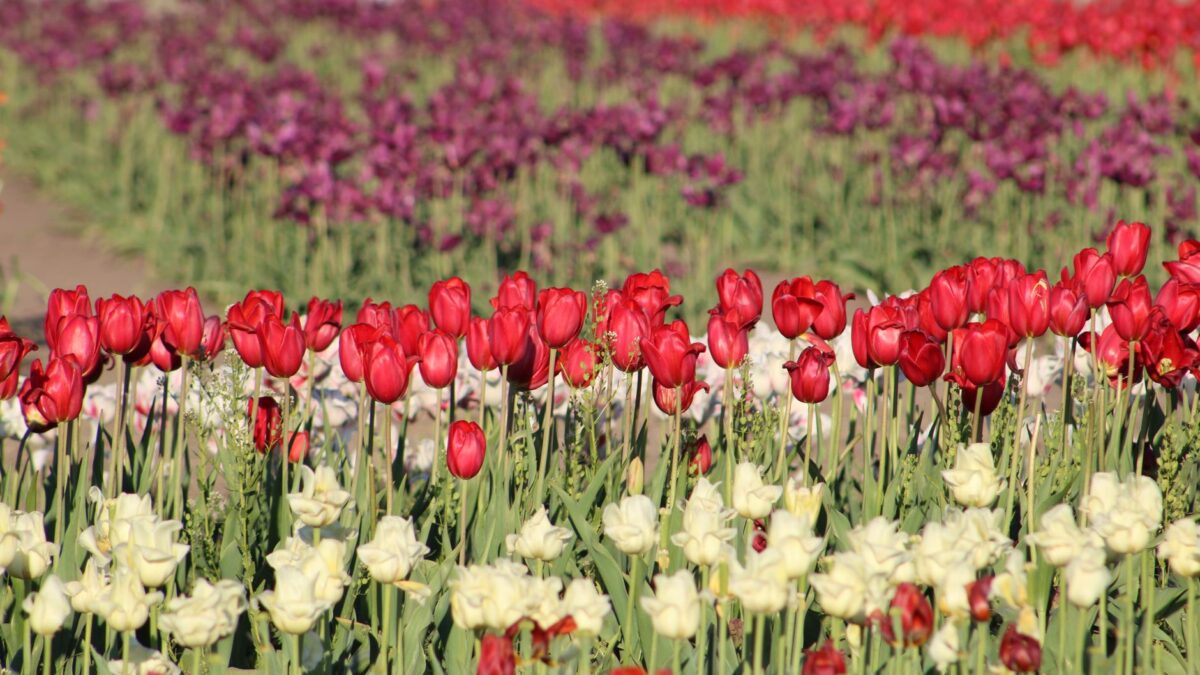
How much does a trip to Australia cost?
Discover real costs for a trip to Canberra, Australia in 2026. Budget breakdowns for accommodation, food, transport, and free attractions in AUD.
 Getting Around
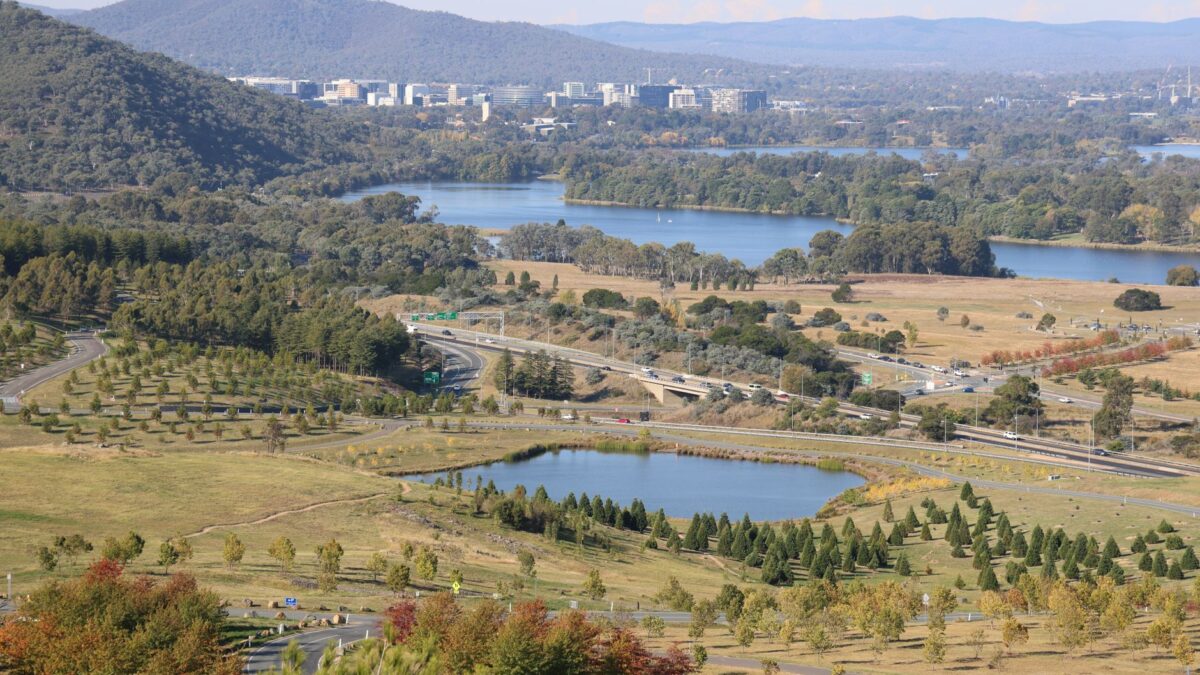
Getting around Canberra: metros, taxis and passes
Navigate Canberra like a local. Learn about MyWay+ fares, light rail routes, taxi costs, and why walking is often the best way to see…
 Getting Around
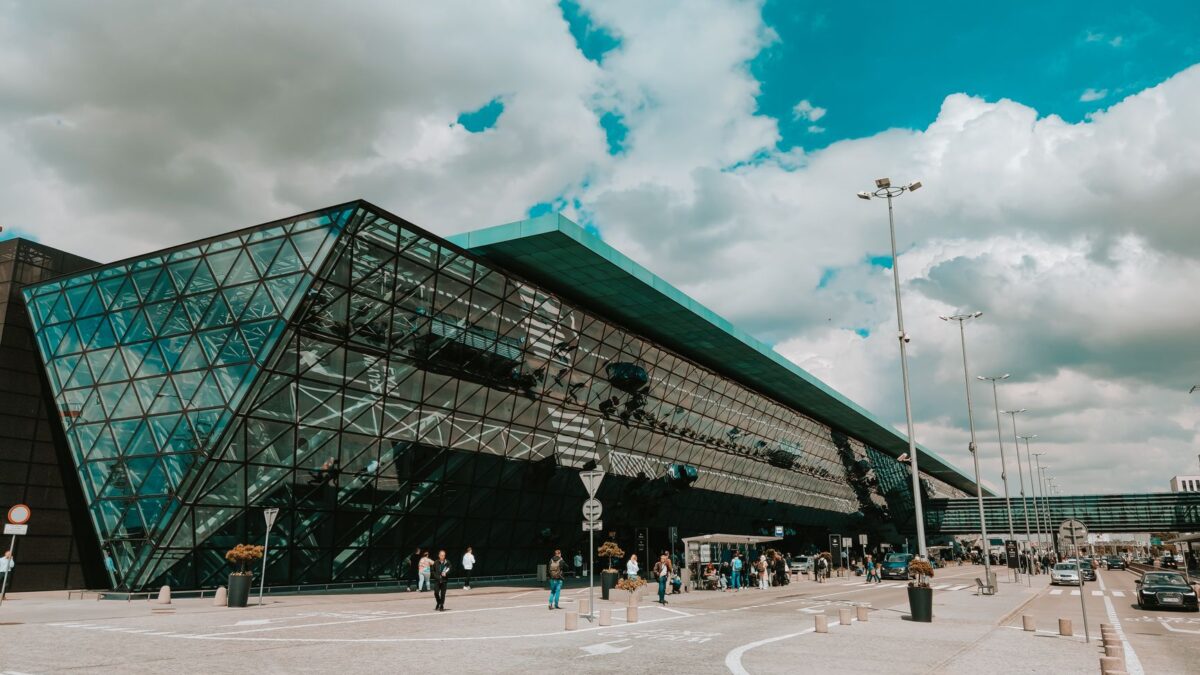
From the airport into Canberra: every option and what it costs
Get from Canberra Airport to the city centre by bus, taxi, or private transfer. Real fares, journey times, and local tips for navigating Australia's…
 Food & Drink
What to eat in Australia — and what it costs
Explore Canberra's best eats from Braddon cafes to Dickson noodles. Real prices, honest costs, and local spots for foodies visiting Australia's capital.
Oceania
 New Zealand
New Zealand Travel Podcast with Aroha Ngata
The Southern Alps divide the South Island along its length, while over three-quarters of New Zealanders live on the North Island.
 Fiji
FijiFiji Travel Podcast with Salote Waqa
The island of Viti Levu, where Suva stands as the capital, holds roughly 70 per cent of Fiji's population and most of…