


Costa Rica Travel Podcast with Daniela Rojas
Hosted by Daniela Rojas — a new episode every day from Costa Rica.
Costa Rica Travel Podcast is a show about moving through the country the way a resident would: settling in one place, learning it, then moving somewhere connected to it. Travel here means negotiating coastal plains, rugged mountains and more than one hundred volcanic cones, while the dry season shapes the rhythm of the year.
The show’s range moves from the capital, San José, to the central highlands, with the historic city of Cartago and the Irazú volcano anchoring the early episodes. It also pays attention to the cooler highland climate and the four volcanoes that rise near the capital, two of them active.
The show unfolds across dry and rainy seasons, returning to places after months away to see how the land and life have shifted. That slow accumulation of knowing somewhere properly is the point: what a mountain looks like in December, what a town feels like by August.
Recent episodes
Things to do in Costa Rica
 Tour and Night Walk La Fortuna
 Tubing in Rio Celeste
 Likely to sell out
Costa Rica The Chela Cooking Experience
Likely to sell out
Costa Rica The Chela Cooking Experience
 Surf Lesson + Beach day in Jaco Beach!
 Morning Fishing Half Day Charter
 Surfing Classes Manuel Antonio
 White Water Rafting Half Day Naranjo River (Apr. 15th-Jan. 10th)
 Combo 3 Best Tours In La Fortuna
Plan your trip to Costa Rica
Getting around
Staying connected
Costa Rica at a glance
Costa Rica in depth
Reference data on the country — geography, people, history, economy and transport.
Geography and climate
Location
Central America, bordering both the Caribbean Sea and the North Pacific Ocean, between Nicaragua and Panama
Terrain
Coastal plains separated by rugged mountains including over 100 volcanic cones, of which several are major active volcanoes
Climate
Tropical and subtropical; dry season (December to April); rainy season (May to November); cooler in highlands
Elevation
- Highest point
- Cerro Chirripo 3,819 m
- Lowest point
- Pacific Ocean 0 m
- Mean elevation
- 746 m
Area
- Total
- 51,100 sq km
- Land
- 51,060 sq km
- Water
- 40 sq km
Size comparison
Slightly smaller than West Virginia
Coastline
1,290 km
Land borders
- Total
- 661 km
- Border countries
- Nicaragua 313 km; Panama 348 km
Natural resources
Hydropower
Land use
- Agricultural land
- 33.1% (2023 est.)
- Arable land
- 3.3% (2023 est.)
- Permanent crops
- 7.4% (2023 est.)
- Permanent pasture
- 22.5% (2023 est.)
- Forest
- 58.4% (2023 est.)
- Other
- 8.4% (2023 est.)
Natural hazards
Occasional earthquakes, hurricanes along Atlantic coast; frequent flooding of lowlands at onset of rainy season and landslides; active volcanoes
Volcanism: Arenal (1,670 m) is the most active volcano in Costa Rica; a 1968 eruption destroyed the town of Tabacon; Irazu (3,432 m), situated just east of San Jose, has the potential to spew ash over the capital city, as it did between 1963 and 1965; other historically active volcanoes include Miravalles, Poas, Rincon de la Vieja, and Turrialba
Note
Four volcanoes, two of them active, rise near the capital of San Jose in the center of the country; one of the volcanoes, Irazu, erupted destructively in 1963-65
People and society
Population
- Total
- 5,304,932 (2025 est.)
- Male
- 2,654,314
- Female
- 2,650,618
Nationality
- Noun
- Costa Rican(s)
- Adjective
- Costa Rican
Ethnic groups
White or Mestizo 83.6%, Mulatto 6.7%, Indigenous 2.4%, Black or African descent 1.1%, other 1.1%, none 2.9%, unspecified 2.2% (2011 est.)
Languages
- Languages
- Spanish (official), English
- Major-language sample(s)
- La Libreta Informativa del Mundo, la fuente indispensable de información básica. (Spanish)
Religions
Roman Catholic 47.5%, Evangelical and Pentecostal 19.8%, Jehovah's Witness 1.4%, other Protestant 1.2%, other 3.1%, none 27% (2021 est.)
Median age
- Total
- 36 years (2025 est.)
- Male
- 34.9 years
- Female
- 36.1 years
Life expectancy
- Total population
- 80.3 years (2024 est.)
- Male
- 77.7 years
- Female
- 82.9 years
Urbanisation
- Urban population
- 82.6% of total population (2023)
- Rate of urbanization
- 1.5% annual rate of change (2020-25 est.)
Where people live
Roughly half of the nation's population resides in urban areas; the capital of San Jose is the largest city and home to approximately one fifth of the population
Largest cities
1.462 million SAN JOSE (capital) (2023)
Background and government
Background
Although explored by the Spanish early in the 16th century, initial attempts at colonizing Costa Rica proved unsuccessful due to a combination of factors, including disease from mosquito-infested swamps, brutal heat, resistance from Indigenous populations, and pirate raids. It was not until 1563 that a permanent settlement of Cartago was established in the cooler, fertile central highlands. The area remained a colony for some two-and-a-half centuries. In 1821, Costa Rica was one of several Central American provinces that jointly declared independence from Spain. Two years later it joined the United Provinces of Central America, but this federation disintegrated in 1838, at which time Costa Rica proclaimed its sovereignty and independence.
Since the late 19th century, only two brief periods of violence have marred the country's democratic development. General Federico TINOCO Granados led a coup in 1917, but the threat of US intervention pushed him to resign in 1919. In 1948, landowner Jose FIGUERES Ferrer raised his own army and rebelled against the government. The brief civil war ended with an agreement to allow FIGUERES to remain in power for 18 months, then step down in favor of the previously elected Otilio ULATE. FIGUERES was later elected twice in his own right, in 1953 and 1970.
Costa Rica experienced destabilizing waves of refugees from Central American civil wars in the 1970s and 1980s, but peace in the region has since helped the economy rebound. Although it still maintains a large agricultural sector, Costa Rica has expanded its economy to include strong technology and tourism industries.
Government
Presidential republic
Capital
San José
Time zone
UTC-6 (1 hour behind Washington, DC, during Standard Time)
Local name
República de Costa Rica
Independence
15 September 1821 (from Spain)
National day
Independence Day, 15 September (1821)
Economy and cost of living
Overview
Trade-based upper middle-income economy; green economy leader, having reversed deforestation; investing in blue economy infrastructure; declining poverty until hard impacts of COVID-19; lingering inequality and growing government debts have prompted a liquidity crisis
GDP per capita
- Real GDP per capita 2024
- $27,000 (2024 est.)
- Real GDP per capita 2023
- $26,000 (2023 est.)
- Real GDP per capita 2022
- $24,800 (2022 est.)
Inflation
- Inflation rate (consumer prices) 2024
- -0.4% (2024 est.)
- Inflation rate (consumer prices) 2023
- 0.5% (2023 est.)
- Inflation rate (consumer prices) 2022
- 8.3% (2022 est.)
Unemployment
- Unemployment rate 2024
- 7.9% (2024 est.)
- Unemployment rate 2023
- 8.4% (2023 est.)
- Unemployment rate 2022
- 11.4% (2022 est.)
Exchange rate
- Currency
- Costa Rican colones (CRC) per US dollar -
- Exchange rates 2024
- 515.11 (2024 est.)
- Exchange rates 2023
- 544.051 (2023 est.)
- Exchange rates 2022
- 647.136 (2022 est.)
- Exchange rates 2021
- 620.785 (2021 est.)
- Exchange rates 2020
- 584.901 (2020 est.)
Main industries
Medical equipment, food processing, textiles and clothing, construction materials, fertilizer, plastic products
Agriculture
Sugarcane, pineapples, bananas, oil palm fruit, milk, fruits, oranges, chicken, cassava, beef (2023)
Transport and connectivity
Airports
132 (2025)
Railways
- Total
- 278 km (2014)
- Narrow gauge
- 278 km (2014) 1.067-m gauge
Ports
- Total ports
- 6 (2024)
- Large
- 0
- Medium
- 0
- Small
- 1
- Very small
- 5
- Ports with oil terminals
- 4
- Key ports
- Golfito, Puerto Caldera, Puerto Limon, Puerto Moin, Puerto Quepos, Puntarenas
Internet domain
.cr
Internet users
Percent of population 85% (2023 est.)
Mobile subscriptions
- Total subscriptions
- 6.98 million (2024 est.)
- Subscriptions per 100 inhabitants
- 136 (2024 est.)
Environment
Environmental issues
Deforestation, largely from clearing land for cattle ranching and agriculture; soil erosion; coastal marine pollution; fisheries protection; solid waste management; air pollution
Fresh water
113 billion cubic meters (2022 est.)
Country reference figures are periodically revised. Check anything time-sensitive or safety-critical against an official source before you travel.
Costa Rica travel guides
 News & Updates
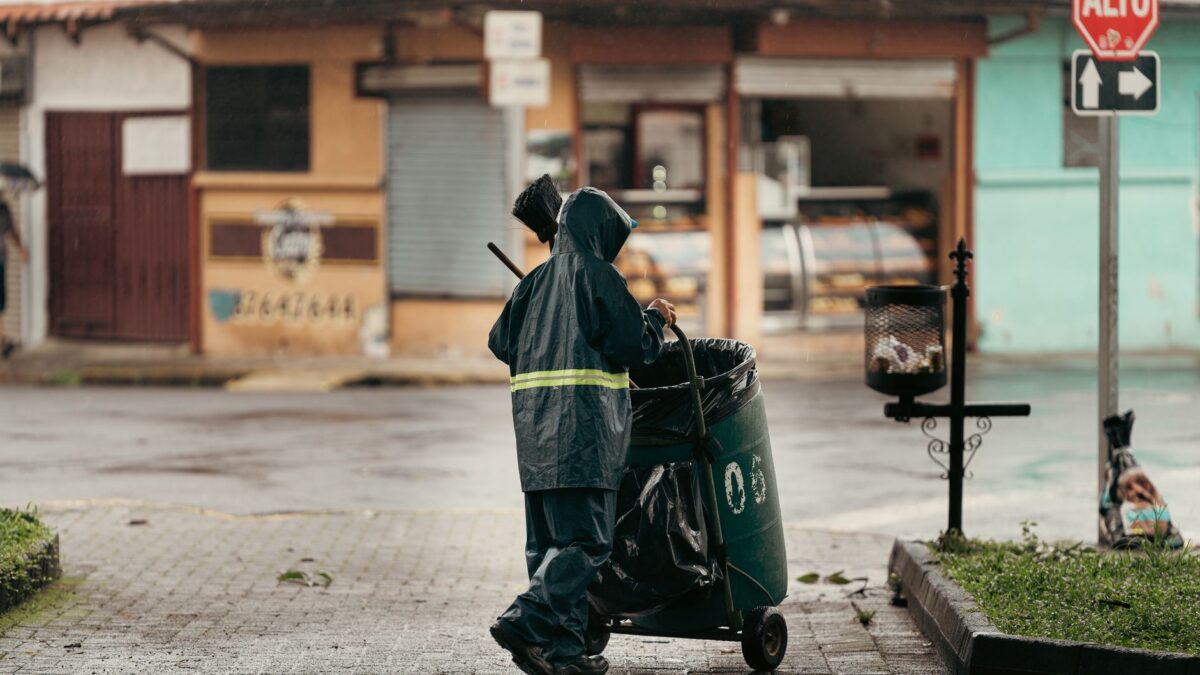
Costa Rica in September 2026: what travelers should know now
Costa Rica travel briefing for September 2026: weather, Independence Day events, museum closures, and transport alerts in San José.
 News & Updates
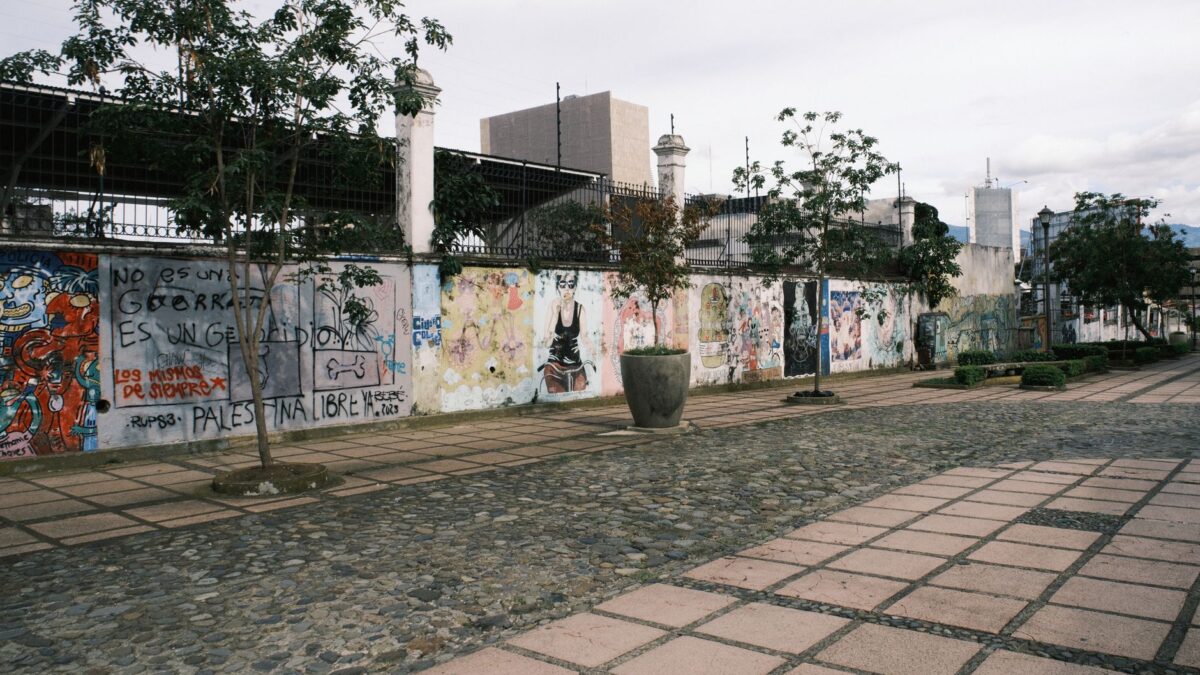
Costa Rica in August 2026: what travelers should know now
Costa Rica in August 2026: road closures on Route 1, power cuts, Romeo Santos buzz, Independence Month prep, and what things cost now. Read…
 Costs & Money
How much does a trip to Costa Rica cost?
Realistic Costa Rica trip costs in colones: sodas, hotels, buses, museum fees, and daily budgets for budget, mid-range, and comfortable travel in San José.
Central America
 Panama
Panama Travel Podcast with Javier Moreno
The rainy season from May to January fills rivers on the interior's steep, rugged mountains, slowing travel and changing how the country…
 Guatemala
Guatemala Travel Podcast with Ixchel Morales
The Pacific coast, unlike the Caribbean side, has no natural harbours, and the two mountain chains and northern Peten lowlands shape any…