

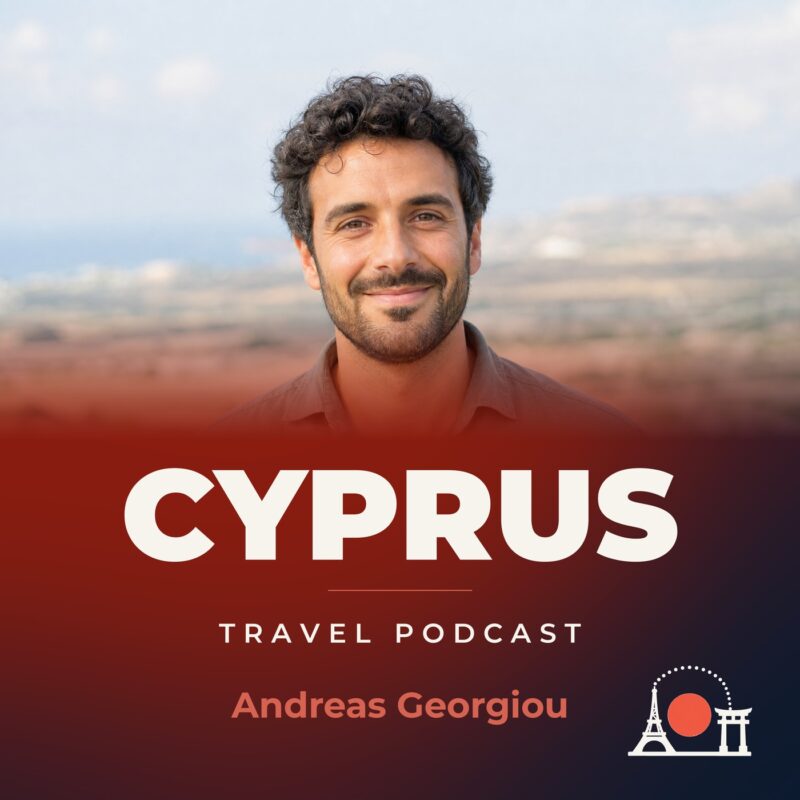
Cyprus Travel Podcast with Andreas Georgiou
Hosted by Andreas Georgiou — a new episode every day from Cyprus.
Andreas Georgiou travels Cyprus the way a resident would, settling in one place long enough to learn it, then moving somewhere connected to it. The island’s terrain makes this approach useful: a central plain, mountain ranges to the north and south, and a southern coast with scattered plains.
Along the way he covers the capital Nicosia, the southern cities of Paphos, Limassol and Larnaca, and the Mesaoria plain that lies between the northern and southern mountain ranges. The Troodos mountains also appear, not as a backdrop but as a landscape where the seasons change work and rest.
The show unfolds by returning. Andreas goes back to the same places at different times of year, watching how a street or a hillside changes between a hot, dry summer and a cool winter. Over time, conversations and observations accumulate into a way of knowing Cyprus that no single visit can give.
Recent episodes
Things to do in Cyprus
 Local Guided Dives (for certified/licensed divers)
 Likely to sell out
Zenobia wreck dives - CERTIFIED DIVERS ONLY!
Likely to sell out
Zenobia wreck dives - CERTIFIED DIVERS ONLY!
 Scuba Diving Experience (10+ Years) AND Free Edited Video
 Cyprus: Mt. Olympus, Troodos Mountains, Monasteries from Paphos
 Discover Scuba Diving
 wine tasting at your villa
 Private Jeep Safari Bath of Aphrodite including Adonis Waterfalls
 Double Trouble Adventure in Limassol
Plan your trip to Cyprus
Getting around
Staying connected
Cyprus at a glance
Cyprus in depth
Reference data on the country — geography, people, history, economy and transport.
Geography and climate
Location
Middle East, island in the Mediterranean Sea, south of Turkey; note - Cyprus views itself as part of Europe; geopolitically, it can be classified as falling within Europe, the Middle East, or both
Terrain
Central plain with mountains to north and south; scattered but significant plains along southern coast
Climate
Temperate; Mediterranean with hot, dry summers and cool winters
Elevation
- Highest point
- Mount Olympus 1,951 m
- Lowest point
- Mediterranean Sea 0 m
- Mean elevation
- 91 m
Area
- Total
- 9,251 sq km (of which 3,355 sq km are in north Cyprus)
- Land
- 9,241 sq km
- Water
- 10 sq km
Size comparison
About 0.6 times the size of Connecticut
Coastline
648 km
Land borders
- Total
- 156 km
- Border sovereign base areas
- Akrotiri 48 km; Dhekelia 108 km
Natural resources
Copper, pyrites, asbestos, gypsum, timber, salt, marble, clay earth pigment
Land use
- Agricultural land
- 14% (2023 est.)
- Arable land
- 10.6% (2023 est.)
- Permanent crops
- 3.1% (2023 est.)
- Permanent pasture
- 0.2% (2023 est.)
- Forest
- 18.6% (2023 est.)
- Other
- 67.1% (2023 est.)
Natural hazards
Moderate earthquake activity; droughts
Note
The third largest island in the Mediterranean Sea (after Sicily and Sardinia)
People and society
Population
- Total
- 1,332,293 (2025 est.)
- Male
- 681,128
- Female
- 651,165
Nationality
- Noun
- Cypriot(s)
- Adjective
- Cypriot
Ethnic groups
Greek 98.8%, other 1% (includes Maronite, Armenian, Turkish-Cypriot), unspecified 0.2% (2011 est.)
Languages
- Languages
- Greek (official) 80.9%, Turkish (official) 0.2%, English 4.1%, Romanian 2.9%, Russian 2.5%, Bulgarian 2.2%, Arabic 1.2%, Filipino 1.1%, other 4.3%, unspecified 0.6% (2011 est.)
- Major-language sample(s)
- Το Παγκόσμιο Βιβλίο Δεδομένων, η απαραίτητη πηγή βασικών πληροφοριών. (Greek)
Religions
Eastern Orthodox Christian 89.1%, Roman Catholic 2.9%, Protestant/Anglican 2%, Muslim 1.8%, Buddhist 1%, other (includes Maronite Catholic, Armenian Apostolic, Hindu) 1.4%, unknown 1.1%, none/atheist 0.6% (2011 est.)
Median age
- Total
- 39.9 years (2025 est.)
- Male
- 38.2 years
- Female
- 41 years
Life expectancy
- Total population
- 80.2 years (2024 est.)
- Male
- 77.4 years
- Female
- 83.1 years
Urbanisation
- Urban population
- 67% of total population (2023)
- Rate of urbanization
- 0.76% annual rate of change (2020-25 est.)
Where people live
Population concentrated in central Nicosia and in the major cities of the south: Paphos, Limassol, and Larnaca
Largest cities
269,000 NICOSIA (capital) (2018)
Background and government
Background
A former British colony, Cyprus became independent in 1960 after years of resistance to British rule. Tensions between the Greek Cypriot majority and Turkish Cypriot minority came to a head in December 1963, when violence broke out in the capital of Nicosia. Despite the deployment of UN peacekeepers in 1964, sporadic intercommunal violence continued and forced most Turkish Cypriots into enclaves throughout the island. In 1974, a Greek Government-sponsored attempt to overthrow the elected president of Cyprus was met by military intervention from Turkey, which soon controlled more than a third of the island. In 1983, the Turkish Cypriot administered area declared itself the "Turkish Republic of Northern Cyprus" (TRNC), but it is recognized only by Turkey. A UN-mediated agreement to reunite Cyprus, the Annan Plan, failed to win approval from both communities in 2004. The most recent round of reunification negotiations was suspended in 2017 after failure to achieve a breakthrough.
The entire island joined the EU in 2004, although the EU acquis -- the body of common rights and obligations -- applies only to the areas under the internationally recognized government and is suspended in the TRNC. However, individual Turkish Cypriots able to document their eligibility for Republic of Cyprus citizenship have the same legal rights accorded to citizens of other EU states.
Government
Republic of Cyprus - presidential republic; self-declared "Turkish Republic of Northern Cyprus" (TRNC) - parliamentary republic with enhanced presidency
Capital
Nicosia (Lefkosia/Lefkosa)
Time zone
UTC+2 (7 hours ahead of Washington, DC, during Standard Time)
Local name
Kypriaki Dimokratia (Greek)/ Kibris Cumhuriyeti (Turkish)
Independence
16 August 1960 (from the UK)
National day
Independence Day, 1 October (1960)
Economy and cost of living
Overview
Services-based, high-income EU island economy; heavy tourism; sustained growth between recovery of national banking system and COVID-19 trade restrictions; high living standards; a known financial hub, its stock exchange functions as an investment bridge between EU-and EEU-member countries
GDP per capita
- Real GDP per capita 2024
- $53,300 (2024 est.)
- Real GDP per capita 2023
- $52,200 (2023 est.)
- Real GDP per capita 2022
- $51,600 (2022 est.)
Inflation
- Inflation rate (consumer prices) 2024
- 1.8% (2024 est.)
- Inflation rate (consumer prices) 2023
- 3.5% (2023 est.)
- Inflation rate (consumer prices) 2022
- 8.4% (2022 est.)
Unemployment
- Unemployment rate 2024
- 5.7% (2024 est.)
- Unemployment rate 2023
- 6.1% (2023 est.)
- Unemployment rate 2022
- 6.9% (2022 est.)
Exchange rate
- Currency
- Euros (EUR) per US dollar -
- Exchange rates 2024
- 0.924 (2024 est.)
- Exchange rates 2023
- 0.925 (2023 est.)
- Exchange rates 2022
- 0.95 (2022 est.)
- Exchange rates 2021
- 0.845 (2021 est.)
- Exchange rates 2020
- 0.876 (2020 est.)
Main industries
Tourism, food and beverage processing, cement and gypsum, ship repair and refurbishment, textiles, light chemicals, metal products, wood, paper, stone and clay products
Agriculture
Milk, potatoes, sheep milk, pork, goat milk, wheat, chicken, olives, grapes, barley (2023)
Transport and connectivity
Airports
14 (2025)
Ports
- Total ports
- 6 (2024)
- Large
- 0
- Medium
- 0
- Small
- 3
- Very small
- 3
- Ports with oil terminals
- 4
- Key ports
- Dhekelia, Famagusta, Kyrenia, Larnaca, Limassol, Xeros
Internet domain
.cy
Internet users
Percent of population 91% (2023 est.)
Mobile subscriptions
- Total subscriptions
- 1.51 million (2024 est.)
- Subscriptions per 100 inhabitants
- 156 (2024 est.)
Environment
Environmental issues
Scarce water resources; salination; water pollution from sewage, industrial wastes, and pesticides; coastal degradation; erosion; loss of wildlife habitats from urbanization
Fresh water
780 million cubic meters (2022 est.)
UNESCO Global Geoparks
- Total global geoparks and regional networks
- 1
- Global geoparks and regional networks
- Troodos (2023)
Country reference figures are periodically revised. Check anything time-sensitive or safety-critical against an official source before you travel.
Cyprus travel guides
 News & Updates
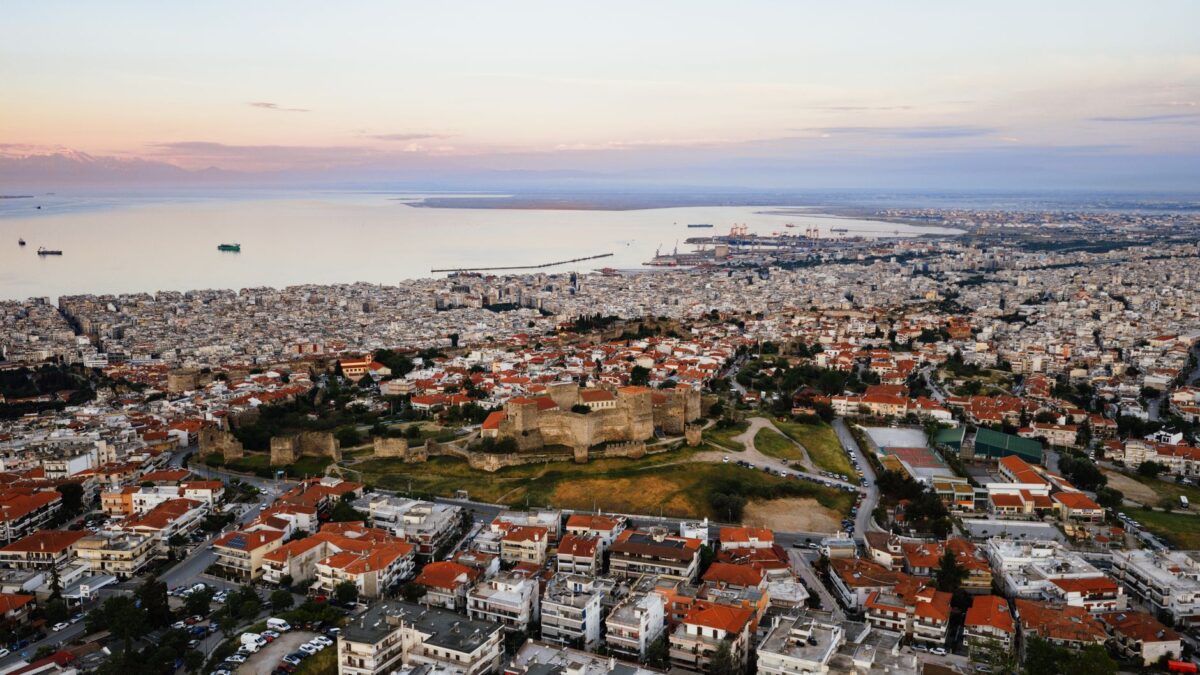
Cyprus in September 2026: what travelers should know now
Cyprus travel briefing for September 2026: weather tips, festival schedules, and practical updates for Nicosia.
 Costs & Money
A week in Nicosia on a mid-range budget
Discover the true cost of a week in Nicosia, Cyprus. Real prices for meals, hotels, and transit in this divided capital.
 Living Abroad
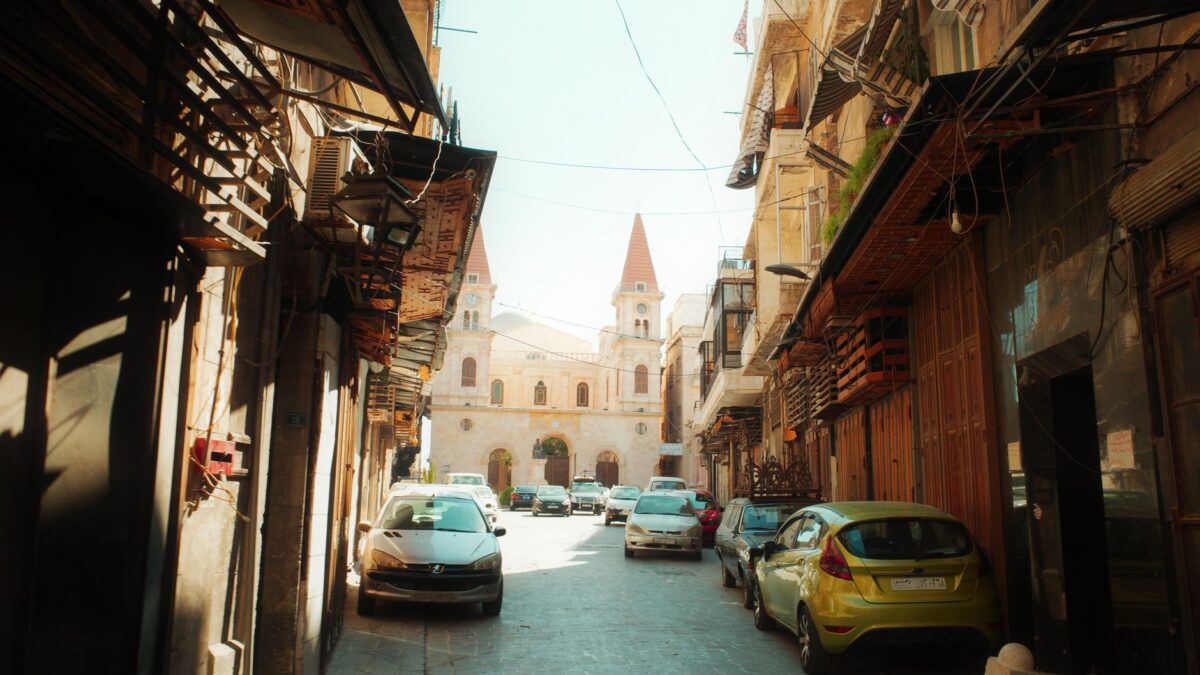
Moving to Cyprus: visas, banking and SIM cards
Moving to Cyprus? Get practical advice on visas, banking, SIM cards, and neighborhoods in Nicosia for your first week.
 Travel Tips
A first-timer’s guide to Cyprus
First time in Cyprus? Get practical tips for Nicosia and beyond: best time to visit, how long to stay, buses and the Green Line…
Western Asia
 Turkey
Turkey Travel Podcast with Emre Yilmaz
The Anatolian plateau, with its harsh interior climate, sits at the heart of a country whose largest city clusters around the Bosporus.
 United Arab Emirates
United Arab Emirates Travel Podcast with Omar Al Mansouri
The eastern Hajar Mountains rise sharply from the flat coastal plain, while the massive sand dunes of the Empty Quarter stretch beyond…
 Saudi Arabia
Saudi Arabia Travel Podcast with Layla Al Qahtani
A mostly sandy desert stretching between the Persian Gulf and the Red Sea makes Saudi Arabia the largest country on earth with…
 Israel
Israel Travel Podcast with Noa Shapira
The Negev desert, hot and dry in the south, gives way to a low coastal plain and central mountains; Hebrew and Arabic…