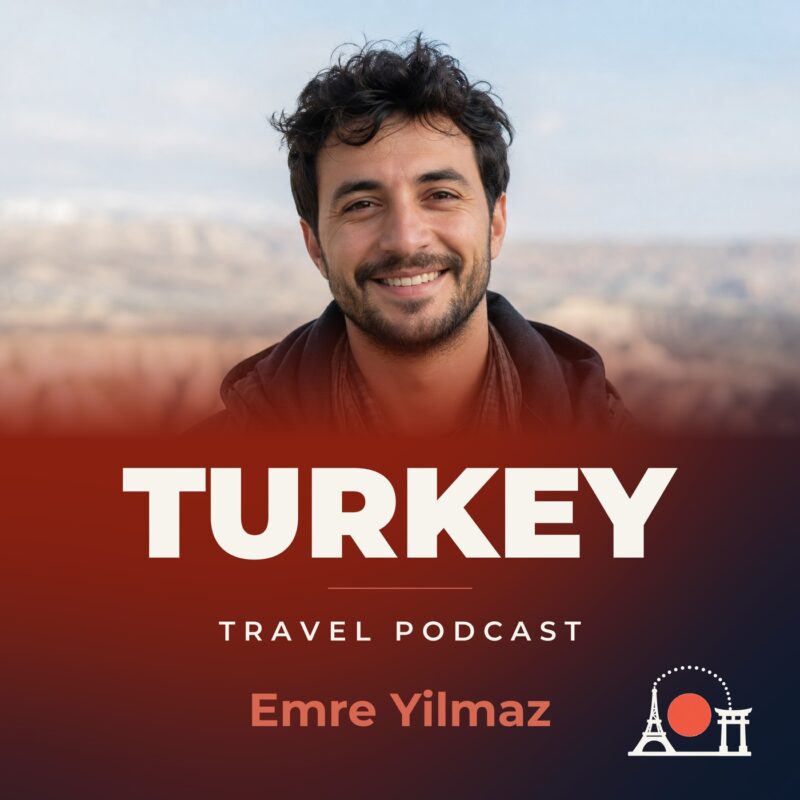
Turkey Travel Podcast with Emre Yilmaz
Hosted by Emre Yilmaz — a new episode every day from Turkey.
Turkey spans the high central plateau of Anatolia, a narrow coastal plain and several mountain ranges, with a strategic strip of territory north of the Turkish Straits lying in Europe. The show follows the realities of travelling in this landscape: dry hot summers, mild wet winters, and an interior that is harsher than the coasts.
He moves between Istanbul’s 15.8 million people and the smaller urban centres scattered through the interior; Ankara, Bursa and Gaziantep each appear as bases rather than stops. He also crosses the Turkish Straits into Eastern Thrace, the 3 per cent of the country that lies on the European side.
He returns to places after months away, watching how the light and the crowds change with the seasons. The interior of Anatolia, harsher in winter, becomes a different region by late spring. Episodes accumulate the way a long stay does, building a picture of Turkey from repeated visits to the same streets and landscapes.
Recent episodes
Things to do in Turkey
 Private and Guided Istanbul Food Tour: Taste of Istanbul
 Istanbul Photoshoot at ALL Top Sightseeings
 Alanya Holiday Photo Shoot – Families, Couples & Solo Travelers
 Hidden Beyoğlu Tour
 Full-Day Private Cappadocia Highlights Tour (Car&Licensed Guide)
 Daily Ertugrul Tour from Istanbul
 Bodrum Segway Experience
 Istanbul Photoshoot tour with Local Photographer
Plan your trip to Turkey
Getting around
Staying connected
Turkey at a glance
Turkey in depth
Reference data on the country — geography, people, history, economy and transport.
Geography and climate
Location
Southeastern Europe and Southwestern Asia (that portion of Turkey west of the Bosporus is geographically part of Europe), bordering the Black Sea, between Bulgaria and Georgia, and bordering the Aegean Sea and the Mediterranean Sea, between Greece and Syria
Terrain
High central plateau (Anatolia); narrow coastal plain; several mountain ranges
Climate
Temperate; hot, dry summers with mild, wet winters; harsher in interior
Elevation
- Highest point
- Mount Ararat 5,137 m
- Lowest point
- Mediterranean Sea 0 m
- Mean elevation
- 1,132 m
Area
- Total
- 783,562 sq km
- Land
- 769,632 sq km
- Water
- 13,930 sq km
Size comparison
Slightly larger than Texas
Coastline
7,200 km
Land borders
- Total
- 2,816 km
- Border countries
- Armenia 311 km; Azerbaijan 17 km; Bulgaria 223 km; Georgia 273 km; Greece 192 km; Iran 534 km; Iraq 367 km; Syria 899 km
Natural resources
Coal, iron ore, copper, chromium, antimony, mercury, gold, barite, borate, celestite (strontium), emery, feldspar, limestone, magnesite, marble, perlite, pumice, pyrites (sulfur), clay, arable land, hydropower
Land use
- Agricultural land
- 50.1% (2023 est.)
- Arable land
- 26.3% (2023 est.)
- Permanent crops
- 4.8% (2023 est.)
- Permanent pasture
- 19% (2023 est.)
- Forest
- 29.3% (2023 est.)
- Other
- 20.5% (2023 est.)
Natural hazards
Severe earthquakes, especially in northern Turkey, along an arc extending from the Sea of Marmara to Lake Van; landslides; flooding
Volcanism: limited volcanic activity; the three historically active volcanoes (Ararat, Nemrut Dagi, and Tendurek Dagi) have not erupted since the 19th century or earlier
Note
Strategic location controlling the Turkish Straits (Bosporus, Sea of Marmara, Dardanelles) that link the Black and Aegean Seas; the 3% of Turkish territory north of the Straits lies in Europe and goes by the names of European Turkey, Eastern Thrace, or Turkish Thrace; the 97% of the country in Asia is referred to as Anatolia; Istanbul, which straddles the Bosporus, is the only metropolis in the world located on two continents; Mount Ararat, reputed to be the landing place of Noah's ark, is in the far-eastern part of the country
People and society
Population
- Total
- 84,625,585 (2025 est.)
- Male
- 42,489,277
- Female
- 42,136,308
Nationality
- Noun
- Turk(s)
- Adjective
- Turkish
Ethnic groups
Turkish 70-75%, Kurdish 19%, other minorities 6-11% (2016 est.)
Languages
- Languages
- Turkish (official), Kurdish, other minority languages
- Major-language sample(s)
- The World Factbook, temel bilgi edinmek için vazgeçilmez bir kaynak. (Turkish)
Religions
Muslim 99.8% (mostly Sunni), other 0.2% (mostly Christians and Jews)
Median age
- Total
- 34.4 years (2025 est.)
- Male
- 33.4 years
- Female
- 34.6 years
Life expectancy
- Total population
- 76.7 years (2024 est.)
- Male
- 74.4 years
- Female
- 79.2 years
Urbanisation
- Urban population
- 77.5% of total population (2023)
- Rate of urbanization
- 1.11% annual rate of change (2020-25 est.)
Where people live
The most densely populated area is found around the Bosporus in the northwest, where 20% of the population lives in Istanbul; with the exception of Ankara, urban centers remain small and scattered throughout the interior of Anatolia; an overall pattern of peripheral development exists, particularly along the Aegean Sea coast in the west, and the Tigris and Euphrates River systems in the southeast
Largest cities
15.848 million Istanbul, 5.397 million ANKARA (capital), 3.088 million Izmir, 2.086 million Bursa, 1.836 million Adana, 1.805 million Gaziantep (2023)
Background and government
Background
Modern Turkey was founded in 1923 from the remnants of the Ottoman Empire by reformer and national hero Mustafa KEMAL, known as Ataturk or "Father of the Turks." One-party rule ended in 1950, and periods of instability and military coups have since fractured the multiparty democracy, in 1960, 1971, 1980, 1997, and 2016.
Turkey joined the UN in 1945 and NATO in 1952. In 1963, Turkey became an associate member of the European Community; it began accession talks with the EU in 2005. Turkey intervened militarily on Cyprus in 1974 to prevent a Greek takeover of the island and has since acted as patron state to the "Turkish Republic of Northern Cyprus," which only Turkey recognizes. The Kurdistan Workers' Party (PKK), a US-designated terrorist organization, began a separatist insurgency in Turkey in 1984, and the struggle has long dominated the attention of Turkish security forces. In 2013, the Turkish Government and the PKK conducted negotiations aimed at ending the violence, but intense fighting resumed in 2015.
The Turkish Government conducted a referendum in 2017 in which voters approved constitutional amendments changing Turkey from a parliamentary to a presidential system.
Government
Presidential republic
Capital
Ankara
Time zone
UTC+3 (8 hours ahead of Washington, DC, during Standard Time)
Local name
Turkey Cumhuriyeti
Independence
29 October 1923 (republic proclaimed, succeeding the Ottoman Empire)
National day
Republic Day, 29 October (1923)
Economy and cost of living
Overview
Upper-middle-income, diversified Middle Eastern economy; industrializing economy that maintains large agricultural base; key energy, tourism, and construction sectors; high inflation, interest rates, and foreign debt pose risk to financial stability
GDP per capita
- Real GDP per capita 2024
- $35,300 (2024 est.)
- Real GDP per capita 2023
- $34,300 (2023 est.)
- Real GDP per capita 2022
- $32,700 (2022 est.)
Inflation
- Inflation rate (consumer prices) 2024
- 58.5% (2024 est.)
- Inflation rate (consumer prices) 2023
- 53.9% (2023 est.)
- Inflation rate (consumer prices) 2022
- 72.3% (2022 est.)
Unemployment
- Unemployment rate 2024
- 8.5% (2024 est.)
- Unemployment rate 2023
- 9.4% (2023 est.)
- Unemployment rate 2022
- 10.5% (2022 est.)
Exchange rate
- Currency
- Turkish liras (TRY) per US dollar -
- Exchange rates 2024
- 32.806 (2024 est.)
- Exchange rates 2023
- 23.739 (2023 est.)
- Exchange rates 2022
- 16.549 (2022 est.)
- Exchange rates 2021
- 8.85 (2021 est.)
- Exchange rates 2020
- 7.009 (2020 est.)
Main industries
Textiles, food processing, automobiles, electronics, mining (coal, chromate, copper, boron), steel, petroleum, construction, lumber, paper
Agriculture
Sugar beets, wheat, milk, tomatoes, barley, maize, potatoes, apples, grapes, watermelons (2023)
Transport and connectivity
Airports
116 (2025)
Railways
- Total
- 11,497 km (2018)
- Standard gauge
- 11,497 km (2018) 1.435-m gauge (1.435 km high speed train)
Ports
- Total ports
- 54 (2024)
- Large
- 3
- Medium
- 3
- Small
- 6
- Very small
- 42
- Ports with oil terminals
- 28
- Key ports
- Haydarpasa, Istanbul, Izmir, Mersin, Nemrut Limani Bay, Samsun
Internet domain
.tr
Internet users
Percent of population 87% (2024 est.)
Mobile subscriptions
- Total subscriptions
- 94.3 million (2024 est.)
- Subscriptions per 100 inhabitants
- 108 (2024 est.)
Environment
Environmental issues
Water pollution from dumping of chemicals and detergents; air pollution, particularly in urban areas; deforestation; land degradation; conservation of biodiversity
Fresh water
211.6 billion cubic meters (2022 est.)
UNESCO Global Geoparks
- Total global geoparks and regional networks
- 1
- Global geoparks and regional networks
- Kula-Salihli (2023)
Country reference figures are periodically revised. Check anything time-sensitive or safety-critical against an official source before you travel.
Turkey travel guides
 Getting Around
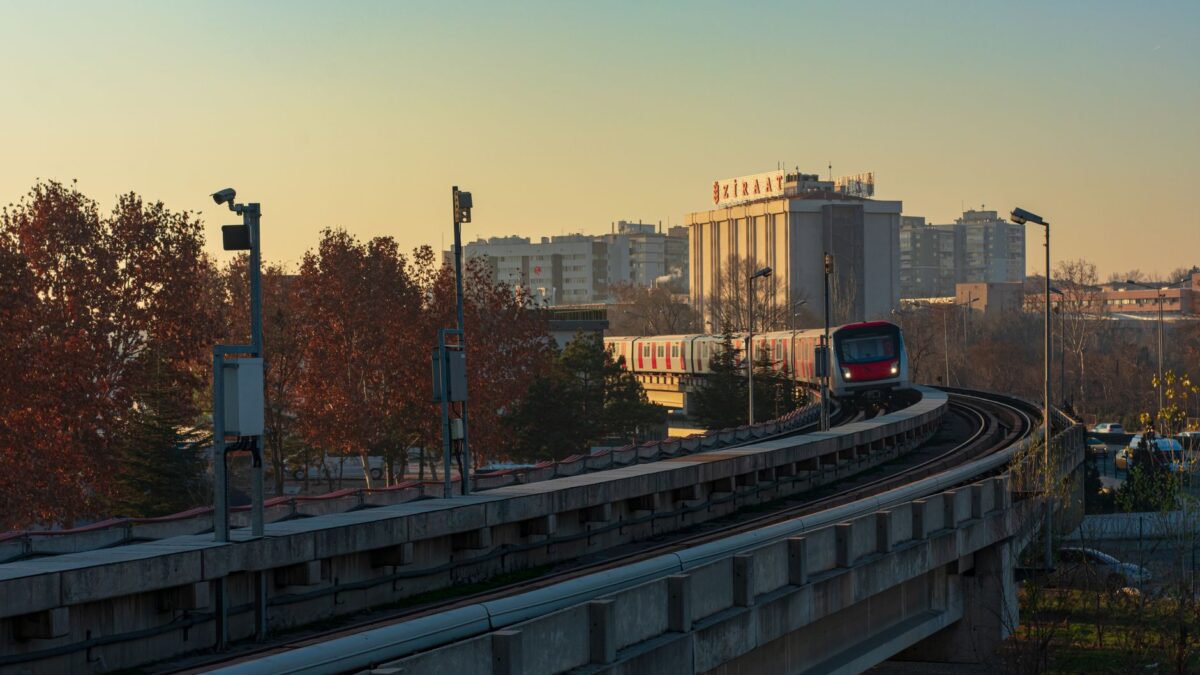
Getting around Ankara: metros, taxis and passes
Navigate Ankara's metros, taxis, and passes like a local. Practical tips on fares, safety, and walking the historic core of Turkey's capital.
 News & Updates
Turkey in September 2026: what travelers should know now
Turkey travel briefing for September 2026: weather, festivals, transport updates, and costs in Ankara.
 Living Abroad
Moving to Turkey: visas, banking and SIM cards
Your practical first-week guide to moving to Ankara, Turkey: residence permits, bank accounts with local banks, SIM cards, transit cards, and district tips.
 Food & Drink
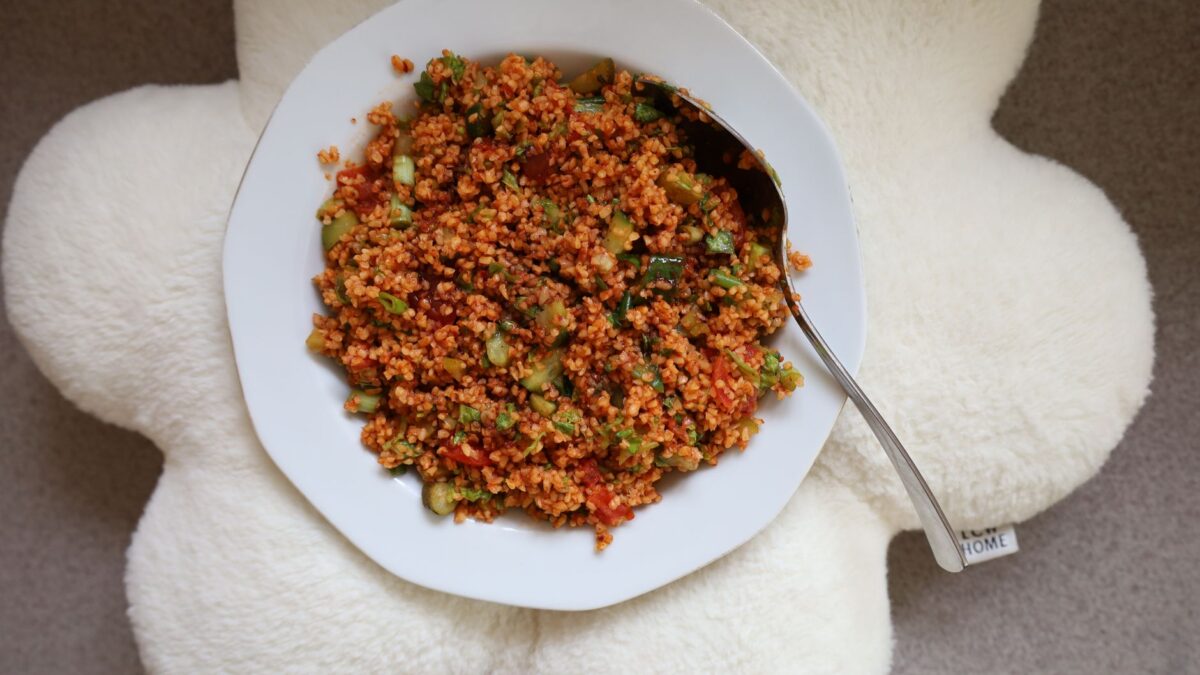
What to eat in Turkey — and what it costs
Discover what to eat in Turkey's capital Ankara — from Ankara tava to gözleme — with real prices in lira, local spots, and honest…
Western Asia
 United Arab Emirates
United Arab Emirates Travel Podcast with Omar Al Mansouri
The eastern Hajar Mountains rise sharply from the flat coastal plain, while the massive sand dunes of the Empty Quarter stretch beyond…
 Saudi Arabia
Saudi Arabia Travel Podcast with Layla Al Qahtani
A mostly sandy desert stretching between the Persian Gulf and the Red Sea makes Saudi Arabia the largest country on earth with…
 Israel
Israel Travel Podcast with Noa Shapira
The Negev desert, hot and dry in the south, gives way to a low coastal plain and central mountains; Hebrew and Arabic…
 Jordan
Jordan Travel Podcast with Faris Al Khouri
The Jordanian Highlands, a north-south spine west of the capital, channel winter rains towards the Dead Sea and the Jordan Valley.