

Egypt Travel Podcast with Nour Hassan
Hosted by Nour Hassan — a new episode every day from Egypt.
Egypt is a desert plateau interrupted by the Nile valley and delta, where nearly all the population lives. This show treats that geography as the starting point for travel: moving along the river, crossing the delta, and heading into the empty desert. It is about seeing the country through ordinary movement and residence, not quick stops.
The host’s range covers Cairo’s streets, Alexandria’s sea front, the Western Desert’s oases, and Bur Sa’id at the northern end of the Suez Canal. These are different kinds of Egyptian places, and the show moves between them the way a resident would, following connections of history and water rather than a tourist route.
She stays in one place long enough for its rhythms to become ordinary. As the hot, dry summers give way to moderate winters, the show returns to earlier stops, notices what has changed, and lets familiarity build. The result is a slow accumulation of knowing Egypt properly, one season and one connection at a time.
Recent episodes
Things to do in Egypt
 Full Day Private Luxor East & West Bank Tour With Egyptian Lunch
 Giza Pyramids, the Grand Egyptian museum " GEM "
 2 hrs Unique Pyramids Photoshoot ( Photo session )
 Luxor Day Tour from Hurghada
 Private VIP Tour : Giza Pyramids, Sphinx & Grand Egyptian Museum
 Cairo Street Food with a Local Family
 Private Guided Tour to Giza Pyramids Egyptian Museum & Khan El Kahlili Bazaar
 Special offer
Private Giza Pyramids, Saqqara & Memphis Tour with Egyptologist
Special offer
Private Giza Pyramids, Saqqara & Memphis Tour with Egyptologist
Plan your trip to Egypt
Getting around
Staying connected
Egypt at a glance
Egypt in depth
Reference data on the country — geography, people, history, economy and transport.
Geography and climate
Location
Northern Africa, bordering the Mediterranean Sea, between Libya and the Gaza Strip, and the Red Sea north of Sudan, and includes the Asian Sinai Peninsula
Terrain
Vast desert plateau interrupted by Nile valley and delta
Climate
Desert; hot, dry summers with moderate winters
Elevation
- Highest point
- Mount Catherine 2,629 m
- Lowest point
- Qattara Depression -133 m
- Mean elevation
- 321 m
Area
- Total
- 1,001,450 sq km
- Land
- 995,450 sq km
- Water
- 6,000 sq km
Size comparison
More than eight times the size of Ohio; slightly more than three times the size of New Mexico
Coastline
2,450 km
Land borders
- Total
- 2,612 km
- Border countries
- Gaza Strip 13 km; Israel 208 km; Libya 1,115 km; Sudan 1,276 km
Natural resources
Petroleum, natural gas, iron ore, phosphates, manganese, limestone, gypsum, talc, asbestos, lead, rare earth elements, zinc
Land use
- Agricultural land
- 4.1% (2023 est.)
- Arable land
- 3.1% (2023 est.)
- Permanent crops
- 1% (2023 est.)
- Permanent pasture
- 0% (2022 est.)
- Forest
- 0% (2023 est.)
- Other
- 95.9% (2023 est.)
Natural hazards
Periodic droughts; frequent earthquakes; flash floods; landslides; hot, driving windstorms called khamsin occur in spring; dust storms; sandstorms
Note
Controls Sinai Peninsula, the only land bridge between Africa and remainder of Eastern Hemisphere; controls Suez Canal, a sea link between Indian Ocean and Mediterranean Sea
People and society
Population
- Total
- 112,870,457 (2025 est.)
- Male
- 57,960,635
- Female
- 54,909,822
Nationality
- Noun
- Egyptian(s)
- Adjective
- Egyptian
Ethnic groups
Egyptian 99.7%, other 0.3% (2006 est.)
Languages
- Languages
- Arabic (official); English and French widely understood by educated classes
- Major-language sample(s)
- كتاب حقائق العالم، أفضل مصدر للمعلومات الأساسية (Arabic)
Religions
Muslim (predominantly Sunni) 90%, Christian (majority Coptic Orthodox, other Christians include Armenian Apostolic, Catholic, Maronite, Orthodox, and Anglican) 10%
Median age
- Total
- 24.6 years (2025 est.)
- Male
- 24.3 years
- Female
- 24.4 years
Life expectancy
- Total population
- 75 years (2024 est.)
- Male
- 73.8 years
- Female
- 76.2 years
Urbanisation
- Urban population
- 43.1% of total population (2023)
- Rate of urbanization
- 1.9% annual rate of change (2020-25 est.)
Where people live
Approximately 95% of the population lives within 20 km (12 mi) of the Nile River and its delta; vast areas of the country remain sparsely populated or uninhabited, as shown in this population distribution map
Largest cities
22.183 million CAIRO (capital), 5.588 million Alexandria, 778,000 Bur Sa'id (2023)
Background and government
Background
The regularity and richness of the annual Nile River flood, coupled with semi-isolation provided by deserts to the east and west, allowed for the development of one of the world's great civilizations in Egypt. A unified kingdom arose circa 3200 B.C., and a series of dynasties ruled in Egypt for the next three millennia. The last native dynasty fell to the Persians in 341 B.C., who in turn were replaced by the Greeks, Romans, and Byzantines. Arab conquerors introduced Islam and the Arabic language in the 7th century and ruled for the next six centuries. The Mamluks, a local military caste, took control around 1250 and continued to govern after the Ottoman Turks conquered Egypt in 1517.
Completion of the Suez Canal in 1869 elevated Egypt as an important world transportation hub. Ostensibly to protect its investments, Britain seized control of Egypt's government in 1882, but the country's nominal allegiance to the Ottoman Empire continued until 1914. Egypt gained partial independence from the UK in 1922 and full sovereignty in 1952. British forces evacuated the Suez Canal Zone in 1956. The completion of the Aswan High Dam in 1971 and the resultant Lake Nasser have reaffirmed the time-honored place of the Nile River in the agriculture and ecology of Egypt. A rapidly growing population (the largest in the Arab world), limited arable land, and dependence on the Nile all continue to overtax resources and stress society. The government has struggled to meet the demands of Egypt's fast-growing population as it implements large-scale infrastructure projects, energy cooperation, and foreign direct investment appeals.
Inspired by the 2010 Tunisian revolution, Egyptian opposition groups led demonstrations and labor strikes countrywide, culminating in President Hosni MUBARAK's ouster in 2011. Egypt's military assumed national leadership until a new legislature was in place in early 2012; later that same year, Muslim Brotherhood candidate Mohamed MORSI won the presidential election. Following protests throughout the spring of 2013 against MORSI's government and the Muslim Brotherhood, the Egyptian Armed Forces intervened and removed MORSI from power in July 2013 and replaced him with interim president Adly MANSOUR. Simultaneously, the government began enacting laws to limit freedoms of assembly and expression. In 2014, voters approved a new constitution by referendum and then elected former defense minister Abdel Fattah EL-SISI president. EL-SISI was reelected to a second four-year term in 2018 and a third term in December 2023.
Government
Presidential republic
Capital
Cairo
Time zone
UTC+2 (7 hours ahead of Washington, DC, during Standard Time)
Local name
Jumhuriyat Misr al-Arabiyah
Independence
28 February 1922 (from UK protectorate status; the military-led revolution that began on 23 July 1952 led to a republic being declared on 18 June 1953 and all British troops withdrawn on 18 June 1956)
National day
Revolution Day, 23 July (1952)
Economy and cost of living
Overview
Africa’s second-largest economy; 2030 Vision to diversify markets and energy infrastructure; improving fiscal, external, and current accounts; underperforming private sector; poor labor force participation; expanded credit access
GDP per capita
- Real GDP per capita 2024
- $16,800 (2024 est.)
- Real GDP per capita 2023
- $16,700 (2023 est.)
- Real GDP per capita 2022
- $16,400 (2022 est.)
Inflation
- Inflation rate (consumer prices) 2024
- 28.3% (2024 est.)
- Inflation rate (consumer prices) 2023
- 33.9% (2023 est.)
- Inflation rate (consumer prices) 2022
- 13.9% (2022 est.)
Unemployment
- Unemployment rate 2024
- 7.2% (2024 est.)
- Unemployment rate 2023
- 7.4% (2023 est.)
- Unemployment rate 2022
- 7.4% (2022 est.)
Exchange rate
- Currency
- Egyptian pounds (EGP) per US dollar -
- Exchange rates 2024
- 45.299 (2024 est.)
- Exchange rates 2023
- 30.626 (2023 est.)
- Exchange rates 2022
- 19.16 (2022 est.)
- Exchange rates 2021
- 15.645 (2021 est.)
- Exchange rates 2020
- 15.759 (2020 est.)
Main industries
Textiles, food processing, tourism, chemicals, pharmaceuticals, hydrocarbons, construction, cement, metals, light manufactures
Agriculture
Sugarcane, sugar beets, wheat, maize, potatoes, tomatoes, rice, milk, onions, oranges (2023)
Transport and connectivity
Airports
73 (2025)
Railways
- Total
- 5,085 km (2014)
- Standard gauge
- 5,085 km (2014) 1.435-m gauge (62 km electrified)
Ports
- Total ports
- 31 (2024)
- Large
- 5
- Medium
- 1
- Small
- 8
- Very small
- 16
- Size unknown
- 1
- Ports with oil terminals
- 17
- Key ports
- Ain Sukhna Terminal, Al Iskandariyh (Alexandria), As Suways, Bur Sa'id, Damietta, Ras Shukhier
Internet domain
.eg
Internet users
Percent of population 73% (2023 est.)
Mobile subscriptions
- Total subscriptions
- 113 million (2024 est.)
- Subscriptions per 100 inhabitants
- 97 (2024 est.)
Environment
Environmental issues
Rapid growth in population straining natural resources; increasing soil salination below Aswan High Dam; desertification; oil pollution in coastal ecosystems; water pollution from agricultural pesticides, raw sewage, and industrial effluents; limited natural freshwater resources away from the Nile
Fresh water
57.5 billion cubic meters (2022 est.)
Country reference figures are periodically revised. Check anything time-sensitive or safety-critical against an official source before you travel.
Egypt travel guides
 News & Updates
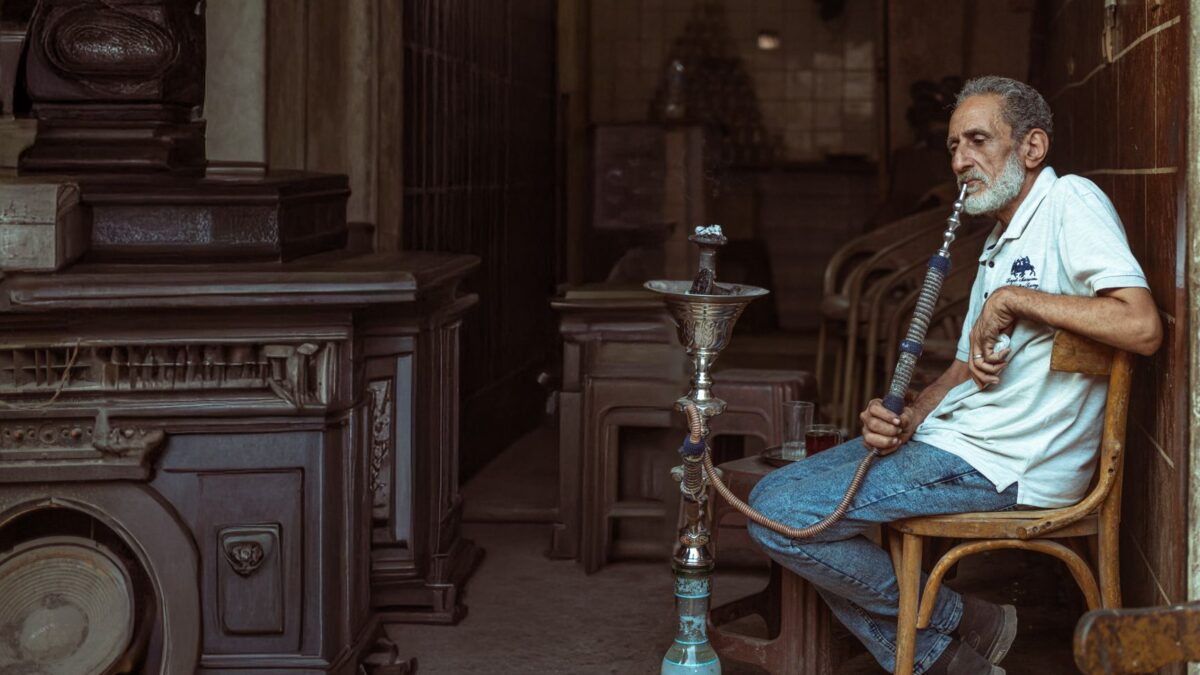
Egypt in September 2026: what travelers should know now
Egypt travel briefing for September 2026: weather, festivals, transport alerts, and local costs in Cairo.
 Costs & Money
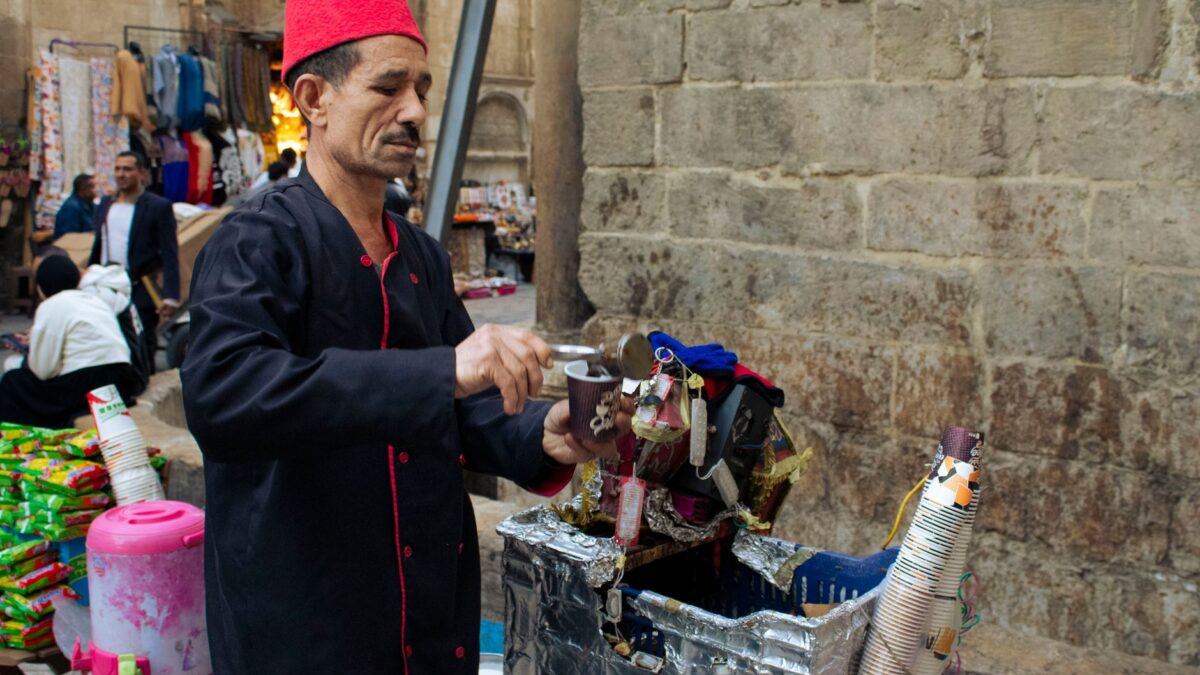
A week in Cairo on a mid-range budget
A realistic day-by-day budget guide for a week in Cairo, covering real prices for metro, koshari, hotels, and attractions in EGP.
 Getting Around
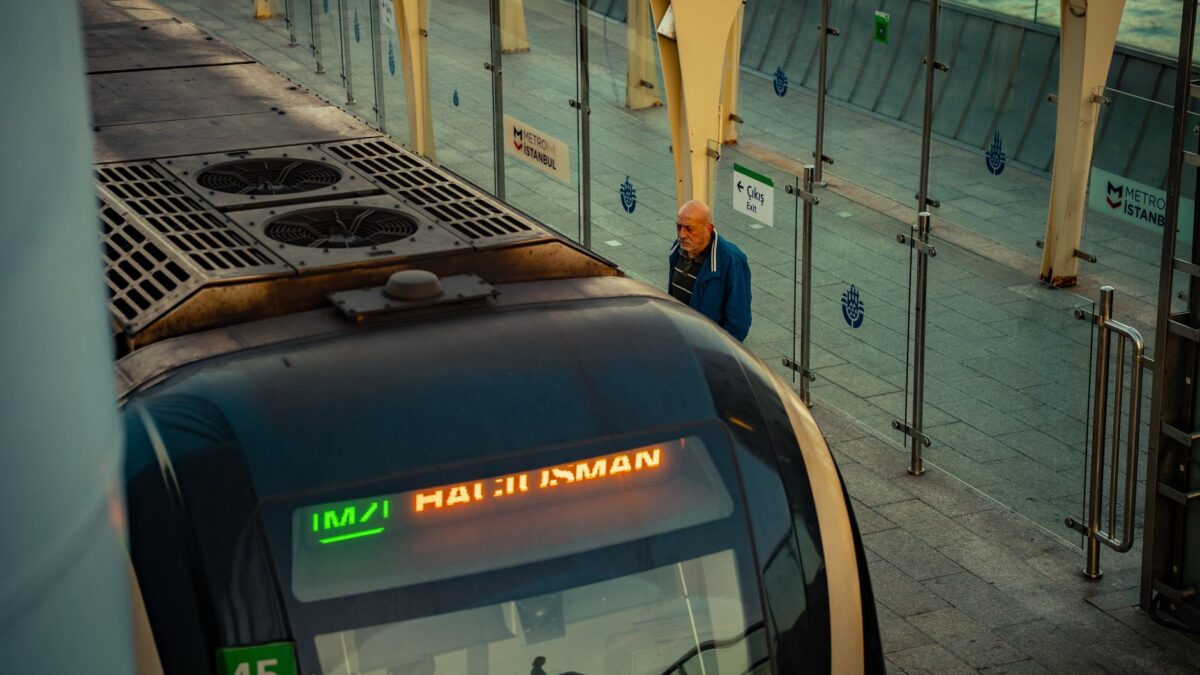
Getting around Cairo: metros, taxis and passes
Master Cairo's chaotic transit: metro fares, Uber tips, and walking routes in Egypt's capital. Local insights on costs, safety, and navigating the Nile city.
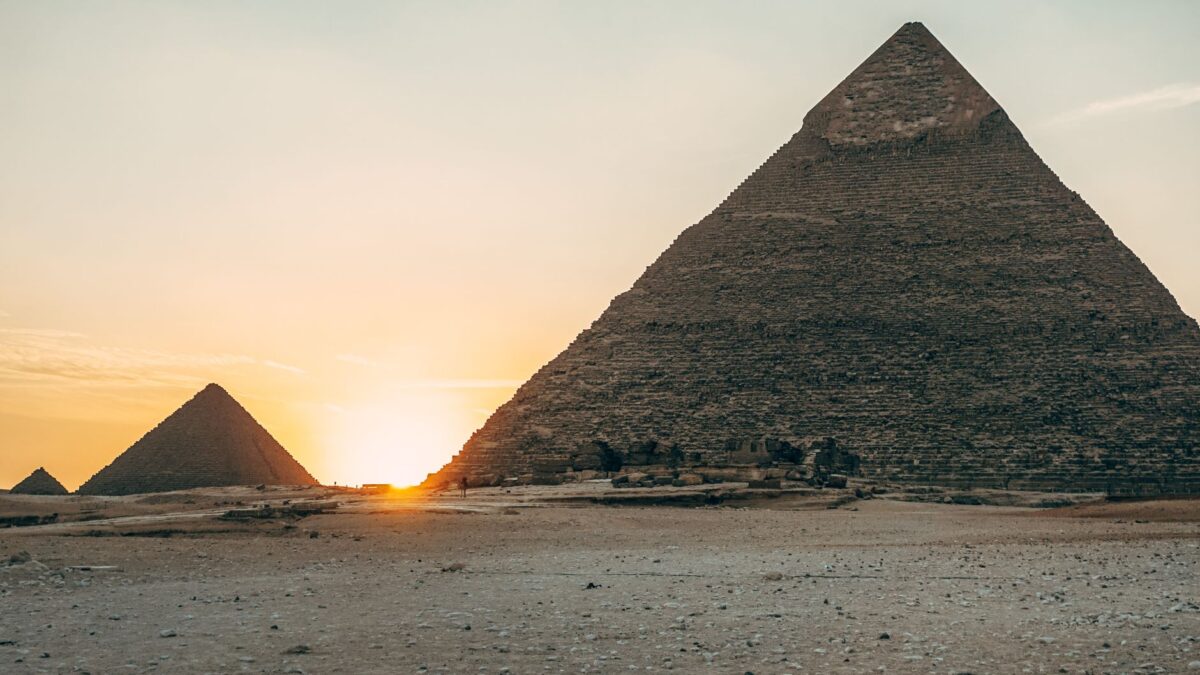 News & Updates
Egypt in August 2026: what travelers should know now
Cairo in August 2026: heat, festivals, GEM closure on Sept 2, metro updates, and local food tips. What travelers need to know now.
North Africa
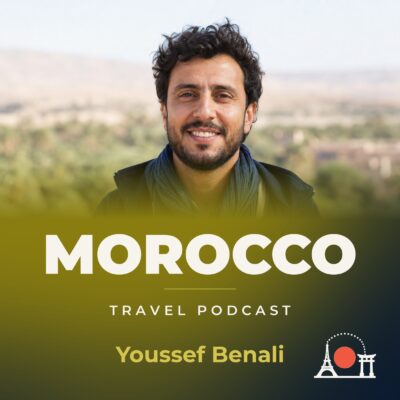 Morocco
Morocco Travel Podcast with Youssef Benali
The Atlantic coast brings cold offshore fog and heavy dew, while the Rif Mountains and the Sahara desert lie within a single…
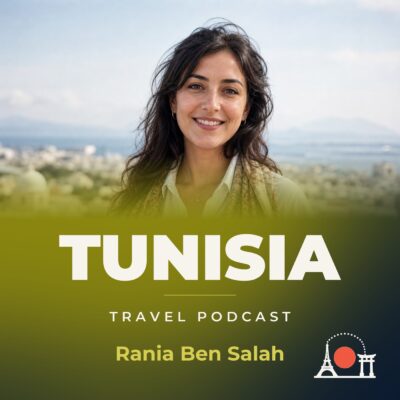 Tunisia
Tunisia Travel Podcast with Rania Ben Salah
The Sahara's northern edge in Tunisia is semiarid, while the central plain stays hot and dry and the northern mountains enjoy mild,…