


Nigeria Travel Podcast with Chidi Okafor
Hosted by Chidi Okafor — a new episode every day from Nigeria.
Travelling in Nigeria means crossing a country where equatorial rainforests give way to central plateaus and northern plains, and where the Niger River runs from the northwest to the Gulf of Guinea. The Nigeria Travel Podcast follows one host as he travels this country like a resident, treating movement between places as a way of understanding how it fits together.
The itinerary is broad: he settles in Lagos, learns the central plateau around Abuja, moves north to Kano and the surrounding plains, and later heads to Benin City before travelling into the mountains of the southeast. Each place is treated as a working base, not a stopover, and the distances between them are part of the story.
As the show unfolds, the seasons shape the route: harmattan dust in the north, heavy rain in the south, and the Niger flowing south through the centre. He returns to places he has already seen, follows connections between regions, and lets a second or third visit build the kind of knowledge that only time in a country can provide.
Recent episodes
Things to do in Nigeria
 Cairo Secrets Tour & Cairo Kept secrests Tour
 Mauritius Guided North Tour (Private)
 14 Days Exploring Nigeria, Benin, Togo, Ghana and Cote d'ivoire
 The Black Heritage - Badagry Tour with Lunch
 9 Days Four Country Tour Nigeria, Benin, Togo and Ghana
 Makoko Floating Slum An Authentic Experience with Son of Chief
 Two Days of Fun & Adventure In Lagos Nigeria
 Airport Transfer Service One way
Plan your trip to Nigeria
Getting around
Staying connected
Nigeria at a glance
Nigeria in depth
Reference data on the country — geography, people, history, economy and transport.
Geography and climate
Location
Western Africa, bordering the Gulf of Guinea, between Benin and Cameroon
Terrain
Southern lowlands merge into central hills and plateaus; mountains in southeast, plains in north
Climate
Varies; equatorial in south, tropical in center, arid in north
Elevation
- Highest point
- Chappal Waddi 2,419 m
- Lowest point
- Atlantic Ocean 0 m
- Mean elevation
- 380 m
Area
- Total
- 923,768 sq km
- Land
- 910,768 sq km
- Water
- 13,000 sq km
Size comparison
About six times the size of Georgia; slightly more than twice the size of California
Coastline
853 km
Land borders
- Total
- 4,477 km
- Border countries
- Benin 809 km; Cameroon 1,975 km; Chad 85 km; Niger 1,608 km
Natural resources
Natural gas, petroleum, tin, iron ore, coal, limestone, niobium, lead, zinc, arable land
Land use
- Agricultural land
- 76.2% (2023 est.)
- Arable land
- 40.5% (2023 est.)
- Permanent crops
- 8.1% (2023 est.)
- Permanent pasture
- 27.6% (2023 est.)
- Forest
- 19.1% (2023 est.)
- Other
- 4.7% (2023 est.)
Natural hazards
Periodic droughts; flooding
Note
The Niger River enters the country in the northwest and flows southward through tropical rainforests and swamps to its delta in the Gulf of Guinea
People and society
Population
- Total
- 244,344,065 (2025 est.)
- Male
- 123,511,557
- Female
- 120,832,508
Nationality
- Noun
- Nigerian(s)
- Adjective
- Nigerian
Ethnic groups
Hausa 30%, Yoruba 15.5%, Igbo (Ibo) 15.2%, Fulani 6%, Tiv 2.4%, Kanuri/Beriberi 2.4%, Ibibio 1.8%, Ijaw/Izon 1.8%, other 24.9% (2018 est.)
Languages
English (official), Hausa, Yoruba, Igbo (Ibo), Fulani, over 500 additional indigenous languages
Religions
Muslim 53.5%, Roman Catholic 10.6%, other Christian 35.3%, other 0.6% (2018 est.)
Median age
- Total
- 19.4 years (2025 est.)
- Male
- 19.1 years
- Female
- 19.6 years
Life expectancy
- Total population
- 62.2 years (2024 est.)
- Male
- 60.4 years
- Female
- 64.2 years
Urbanisation
- Urban population
- 54.3% of total population (2023)
- Rate of urbanization
- 3.92% annual rate of change (2020-25 est.)
Where people live
Largest population of any African nation; significant population clusters are scattered throughout the country, with the highest density areas being in the south and southwest, as shown in this population distribution map
Largest cities
15.946 million Lagos, 4.348 million Kano, 3.875 million Ibadan, 3.840 million ABUJA (capital), 3.480 million Port Harcourt, 1.905 million Benin City (2023)
Background and government
Background
In ancient and pre-colonial times, the area of present-day Nigeria was occupied by a variety of ethnic groups with different languages and traditions. These included large Islamic kingdoms such as Borno, Kano, and the Sokoto Caliphate dominating the north, the Benin and Oyo Empires that controlled much of modern western Nigeria, and more decentralized political entities and city states in the south and southeast. In 1914, the British amalgamated their separately administered northern and southern territories into a Colony and Protectorate of Nigeria.
Nigeria achieved independence from Britain in 1960 and transitioned to a federal republic with three constituent states in 1963 under President Nnamdi AZIKIWE. This structure served to enflame regional and ethnic tension, contributing to a bloody coup led by predominately southeastern military officers in 1966 and a countercoup later that year masterminded by northern officers. In the aftermath of this tension, the governor of Nigeria’s Eastern Region, centered on the southeast, declared the region independent as the Republic of Biafra. The ensuring civil war (1967-1970), resulted in more than a million deaths, many from starvation. While the war forged a stronger Nigerian state and national identity, it contributed to long-lasting mistrust of the southeast’s predominantly Igbo population. Wartime military leader Yakubu GOWON ruled until a bloodless coup by frustrated junior officers in 1975. This generation of officers, including Olusegun OBASANJO, Ibrahim BABANGIDA, and Muhammadu BUHARI, who would all later serve as president, continue to exert significant influence in Nigeria to the present day.
Military rule predominated until the first durable transition to civilian government and adoption of a new constitution in 1999. The elections of 2007 marked the first civilian-to-civilian transfer of power in the country's history. National and state elections in 2011 and 2015 were generally regarded as credible. The 2015 election was also heralded for the fact that the then-umbrella opposition party, the All Progressives Congress, defeated the long-ruling (since 1999) People's Democratic Party and assumed the presidency, marking the first peaceful transfer of power from one party to another. Presidential and legislative elections in 2019 and 2023 were deemed broadly free and fair despite voting irregularities, intimidation, and violence. The government of Africa's most populous nation continues to face the daunting task of institutionalizing democracy and reforming a petroleum-based economy whose revenues have been squandered through decades of corruption and mismanagement. In addition, Nigeria faces increasing violence from Islamic terrorism, largely in the northeast, large scale criminal banditry, secessionist violence in the southeast, and competition over land and resources nationwide.
Government
Federal presidential republic
Capital
Abuja
Time zone
UTC+1 (6 hours ahead of Washington, DC, during Standard Time)
Independence
1 October 1960 (from the UK)
National day
Independence Day (National Day), 1 October (1960)
Economy and cost of living
Overview
Largest African market economy; enormous but mostly lower middle income labor force; major oil exporter; key telecommunications and finance industries; susceptible to global energy price shocks; regional leader in critical infrastructure; primarily agrarian employment
GDP per capita
- Real GDP per capita 2024
- $5,700 (2024 est.)
- Real GDP per capita 2023
- $5,600 (2023 est.)
- Real GDP per capita 2022
- $5,600 (2022 est.)
Inflation
- Inflation rate (consumer prices) 2024
- 33.2% (2024 est.)
- Inflation rate (consumer prices) 2023
- 24.7% (2023 est.)
- Inflation rate (consumer prices) 2022
- 18.8% (2022 est.)
Unemployment
- Unemployment rate 2024
- 3% (2024 est.)
- Unemployment rate 2023
- 3.1% (2023 est.)
- Unemployment rate 2022
- 3.9% (2022 est.)
Exchange rate
- Currency
- Nairas (NGN) per US dollar -
- Exchange rates 2024
- 1,478.965 (2024 est.)
- Exchange rates 2023
- 645.194 (2023 est.)
- Exchange rates 2022
- 425.979 (2022 est.)
- Exchange rates 2021
- 401.152 (2021 est.)
- Exchange rates 2020
- 358.811 (2020 est.)
Main industries
Crude oil, coal, tin, columbite; rubber products, wood; hides and skins, textiles, cement and other construction materials, food products, footwear, chemicals, fertilizer, printing, ceramics, steel
Agriculture
Cassava, yams, maize, oil palm fruit, rice, taro, bananas, vegetables, sorghum, groundnuts (2023)
Transport and connectivity
Airports
50 (2025)
Railways
- Total
- 3,798 km (2014)
- Standard gauge
- 293 km (2014) 1.435-m gauge
- Narrow gauge
- 3,505 km (2014) 1.067-m gauge
Ports
- Total ports
- 28 (2024)
- Large
- 2
- Medium
- 1
- Small
- 1
- Very small
- 24
- Ports with oil terminals
- 23
- Key ports
- Antan Oil Terminal, Bonny, Lagos, Pennington Oil Terminal
Internet domain
.ng
Internet users
Percent of population 39% (2023 est.)
Mobile subscriptions
- Total subscriptions
- 165 million (2024 est.)
- Subscriptions per 100 inhabitants
- 71 (2024 est.)
Environment
Environmental issues
Urban air and water pollution; rapid deforestation; soil degradation; loss of arable land; water, air, and soil pollution from oil spills
Fresh water
286.2 billion cubic meters (2022 est.)
Country reference figures are periodically revised. Check anything time-sensitive or safety-critical against an official source before you travel.
Nigeria travel guides
 News & Updates
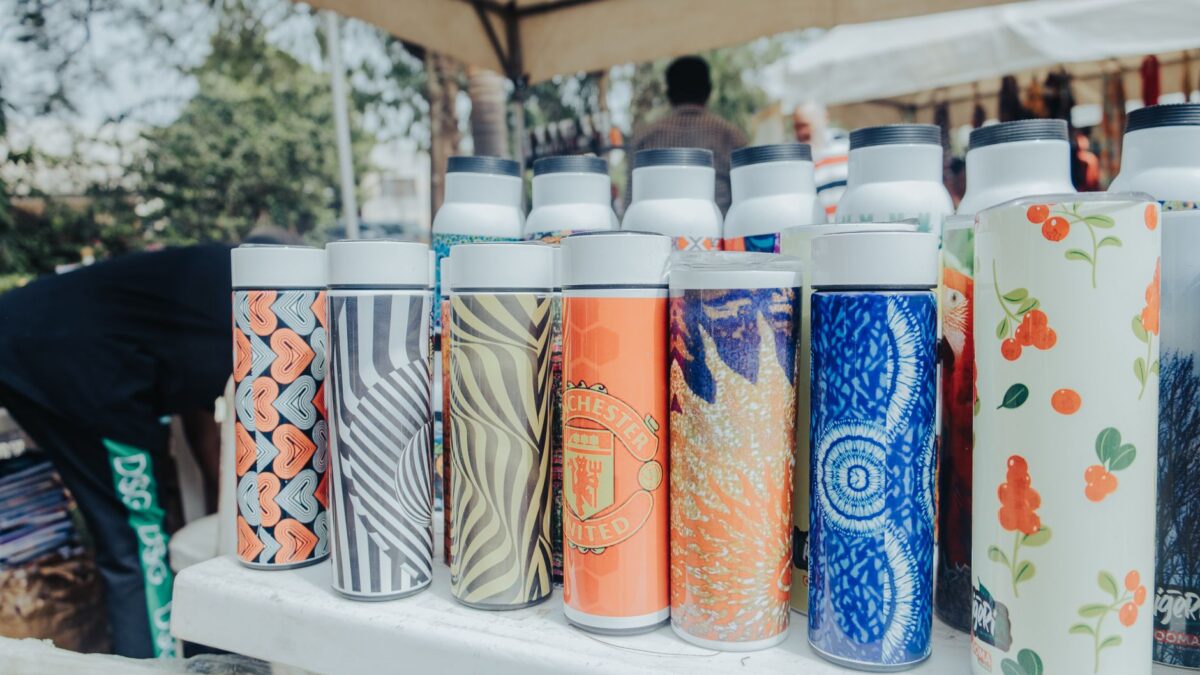
Nigeria in September 2026: what travelers should know now
Nigeria travel briefing for September 2026: weather updates, AITF festival, National Day prep, and safety tips for Abuja.
 Culture & Etiquette
Nigeria etiquette: the dos and don’ts
Essential Nigeria etiquette for Abuja visitors: greetings, tipping, dining, dress, and customs. Your local guide to being a considerate traveler in Nigeria.
 Food & Drink
What to eat in Nigeria — and what it costs
What to eat in Nigeria: Abuja street suya, bukka jollof, and sit-down meals — with real prices in naira and practical tips from a…
 News & Updates
Nigeria in August 2026: what travelers should know now
Nigeria in August 2026: Flash floods, tremor aftermath, and the Abuja Food Festival. Real naira prices, transit tips, and what to pack for the…
West Africa
 Ghana
GhanaGhana Travel Podcast with Ama Boateng
The Atlantic coast draws the densest settlement, while Lake Volta, the world's largest artificial lake, spreads behind the Akosombo Dam.
 Senegal
Senegal Travel Podcast with Fatou Diop
The harmattan dusts Dakar's streets from December to April, while the rainy season's strong southeast winds bring rain to the interior plains…