

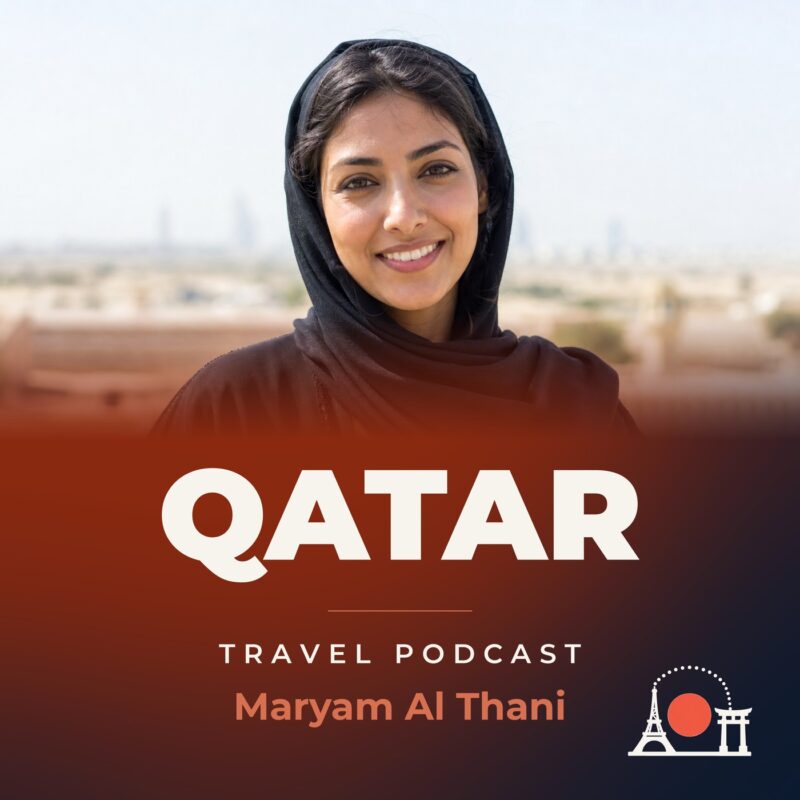
Qatar Travel Podcast with Maryam Al Thani
Hosted by Maryam Al Thani — a new episode every day from Qatar.
This podcast is a resident’s account of travelling in Qatar over time. The country is a flat, barren desert peninsula in the Persian Gulf, so journeys between places are often about exposure, distance and the changing light. Most people live around Doha on the eastern coast, which shapes the routes available.
The host moves through Doha, Ar-Rayyan, Al Zubarah and the inland dunes around Khor Al Adaid. Ar-Rayyan is a large city immediately west of the capital; Al Zubarah is a ruined fort town on the north-west coast; Khor Al Adaid is a tidal inlet where the desert meets the sea. Each place offers a different way into the peninsula’s history and terrain.
The show unfolds across seasons: mild winters for walking and camping, then humid summers that slow everything down. Places are revisited at different times of year, so a dune field or a corniche changes meaning as the weather shifts. Over time, the repetition builds a fuller picture of Qatar than a short visit could.
Recent episodes
Things to do in Qatar
 Doha Desert Safari Quad Bike Buggy Camel Ride and Inland Sea Tour
 Special offer
Doha Private Half Day Desert Safari with Camel Ride & Inland sea
Special offer
Doha Private Half Day Desert Safari with Camel Ride & Inland sea
 City Tour and Desert Safari with Camel Ride and Sand Boarding
 6 Hours Private Full Day Tour in Doha
 Special offer
Doha Desert Safari with ATV Quad bike, Buggy Ride & Inland Sea
Special offer
Doha Desert Safari with ATV Quad bike, Buggy Ride & Inland Sea
 Doha: Half Day Desert Safari with Camel Ride and Inland Sea Tour
 Doha Sightseeing Tour with Optional Sunset Dhow Cruise
 Doha Half Day Safari Dune bashing/Camel Ride/sandboard
Plan your trip to Qatar
Getting around
Staying connected
Qatar at a glance
Qatar in depth
Reference data on the country — geography, people, history, economy and transport.
Geography and climate
Location
Middle East, peninsula bordering the Persian Gulf and Saudi Arabia
Terrain
Mostly flat and barren desert
Climate
Arid; mild, pleasant winters; very hot, humid summers
Elevation
- Highest point
- Tuwayyir al Hamir 103 m
- Lowest point
- Persian Gulf 0 m
- Mean elevation
- 28 m
Area
- Total
- 11,586 sq km
- Land
- 11,586 sq km
- Water
- 0 sq km
Size comparison
Almost twice the size of Delaware; slightly smaller than Connecticut
Coastline
563 km
Land borders
- Total
- 87 km
- Border countries
- Saudi Arabia 87 km
Natural resources
Petroleum, fish, natural gas
Land use
- Agricultural land
- 6.4% (2023 est.)
- Arable land
- 1.8% (2023 est.)
- Permanent crops
- 0.3% (2023 est.)
- Permanent pasture
- 4.4% (2023 est.)
- Forest
- 0.1% (2023 est.)
- Other
- 93.4% (2023 est.)
Natural hazards
Haze, dust storms, sandstorms common
Note
The peninsula occupies a strategic location in the central Persian Gulf near major petroleum deposits
People and society
Population
- Total
- 2,568,426 (2025 est.)
- Male
- 1,970,605
- Female
- 597,821
Nationality
- Noun
- Qatari(s)
- Adjective
- Qatari
Ethnic groups
Non-Qatari 88.4%, Qatari 11.6% (2015 est.)
Languages
- Languages
- Arabic (official), English commonly used as a second language
- Major-language sample(s)
- كتاب حقائق العالم، المصدر الذي لا يمكن الاستغناء عنه للمعلومات الأساسية (Arabic)
Religions
Muslim 65.2%, Christian 13.7%, Hindu 15.9%, Buddhist 3.8%, folk religion <0.1%, Jewish <0.1%, other <1%, unaffiliated <1% (2020 est.)
Median age
- Total
- 34.4 years (2025 est.)
- Male
- 35.7 years
- Female
- 28.1 years
Life expectancy
- Total population
- 80.3 years (2024 est.)
- Male
- 78.2 years
- Female
- 82.4 years
Urbanisation
- Urban population
- 99.4% of total population (2023)
- Rate of urbanization
- 1.66% annual rate of change (2020-25 est.)
Where people live
Most of the population is clustered in or around the capital of Doha on the eastern side of the peninsula
Largest cities
798,000 Ar-Rayyan, 658,000 DOHA (capital) (2023)
Background and government
Background
Ruled by the Al Thani family since the mid-1800s, Qatar within the last 60 years transformed itself from a poor British protectorate noted mainly for pearling into an independent state with significant hydrocarbon revenues. Former Amir HAMAD bin Khalifa Al Thani, who overthrew his father in a bloodless coup in 1995, ushered in wide-sweeping political and media reforms, unprecedented economic investment, and a growing Qatari regional leadership role, in part through the creation of the pan-Arab satellite news network Al-Jazeera and Qatar's mediation of some regional conflicts. In the 2000s, Qatar resolved its longstanding border disputes with both Bahrain and Saudi Arabia, and by 2007, Doha had attained the highest per capita income in the world. Qatar did not experience domestic unrest or violence like that seen in other Near Eastern and North African countries in 2011, due in part to its immense wealth and patronage network. In mid-2013, HAMAD peacefully abdicated, transferring power to his son, the current Amir TAMIM bin Hamad. TAMIM is popular with the Qatari public for his role in shepherding the country through an economic embargo from some other regional countries, for his efforts to improve the country's healthcare and education systems, and for his expansion of the country's infrastructure in anticipation of hosting international sporting events. Qatar became the first country in the Arab world to host the FIFA Men’s World Cup in 2022.
Following the outbreak of regional unrest in 2011, Doha prided itself on its support for many popular revolutions, particularly in Libya and Syria. This stance was to the detriment of Qatar’s relations with Bahrain, Egypt, Saudi Arabia, and the United Arab Emirates (UAE), which temporarily recalled their respective ambassadors from Doha in 2014. TAMIM later oversaw a warming of Qatar’s relations with Bahrain, Egypt, Saudi Arabia, and the UAE in November 2014 following Kuwaiti mediation and signing of the Riyadh Agreement. This reconciliation, however, was short-lived. In 2017, Bahrain, Egypt, Saudi Arabia, and the UAE (the "Quartet") cut diplomatic and economic ties with Qatar in response to alleged violations of the agreement, among other complaints. They restored ties in 2021 after signing a declaration at the Gulf Cooperation Council Summit in Al Ula, Saudi Arabia. In 2022, the United States designated Qatar as a major non-NATO ally.
Government
Absolute monarchy
Capital
Doha
Time zone
UTC+3 (8 hours ahead of Washington, DC, during Standard Time)
Local name
Dawlat Qatar
Independence
3 September 1971 (from the UK)
National day
National Day, 18 December (1878), anniversary of Al Thani family accession to the throne; Independence Day, 3 September (1971)
Economy and cost of living
Overview
High-income, oil-and-gas-based Middle Eastern economy; implementing “National Vision 2030” government strategy for economic development, diversification, and favorable business conditions to boost investment and employment; expansion of LNG sector expected to boost growth; Islamic finance leader
GDP per capita
- Real GDP per capita 2024
- $110,900 (2024 est.)
- Real GDP per capita 2023
- $116,200 (2023 est.)
- Real GDP per capita 2022
- $114,700 (2022 est.)
Inflation
- Inflation rate (consumer prices) 2024
- 1.3% (2024 est.)
- Inflation rate (consumer prices) 2023
- 3% (2023 est.)
- Inflation rate (consumer prices) 2022
- 5% (2022 est.)
Unemployment
- Unemployment rate 2024
- 0.2% (2024 est.)
- Unemployment rate 2023
- 0.2% (2023 est.)
- Unemployment rate 2022
- 0.2% (2022 est.)
Exchange rate
- Currency
- Qatari rials (QAR) per US dollar -
- Exchange rates 2024
- 3.64 (2024 est.)
- Exchange rates 2023
- 3.64 (2023 est.)
- Exchange rates 2022
- 3.64 (2022 est.)
- Exchange rates 2021
- 3.64 (2021 est.)
- Exchange rates 2020
- 3.64 (2020 est.)
Main industries
Liquefied natural gas, crude oil production and refining, ammonia, fertilizer, petrochemicals, steel reinforcing bars, cement, commercial ship repair
Agriculture
Dates, chicken, tomatoes, camel milk, vegetables, cucumbers/gherkins, pumpkins/squash, eggs, sheep milk, eggplants (2023)
Transport and connectivity
Airports
8 (2025)
Ports
- Total ports
- 6 (2024)
- Large
- 0
- Medium
- 1
- Small
- 2
- Very small
- 3
- Ports with oil terminals
- 5
- Key ports
- Al Rayyan Terminal, Al Shaheen Terminal, Doha, Jazirat Halul, Ras Laffan, Umm Said
Internet domain
.qa
Internet users
Percent of population 100% (2023 est.)
Mobile subscriptions
- Total subscriptions
- 4.68 million (2024 est.)
- Subscriptions per 100 inhabitants
- 154 (2024 est.)
Environment
Environmental issues
Air, land, and water pollution; limited natural freshwater resources; limited conservation of oil and wildlife
Fresh water
58 million cubic meters (2022 est.)
Country reference figures are periodically revised. Check anything time-sensitive or safety-critical against an official source before you travel.
Qatar travel guides
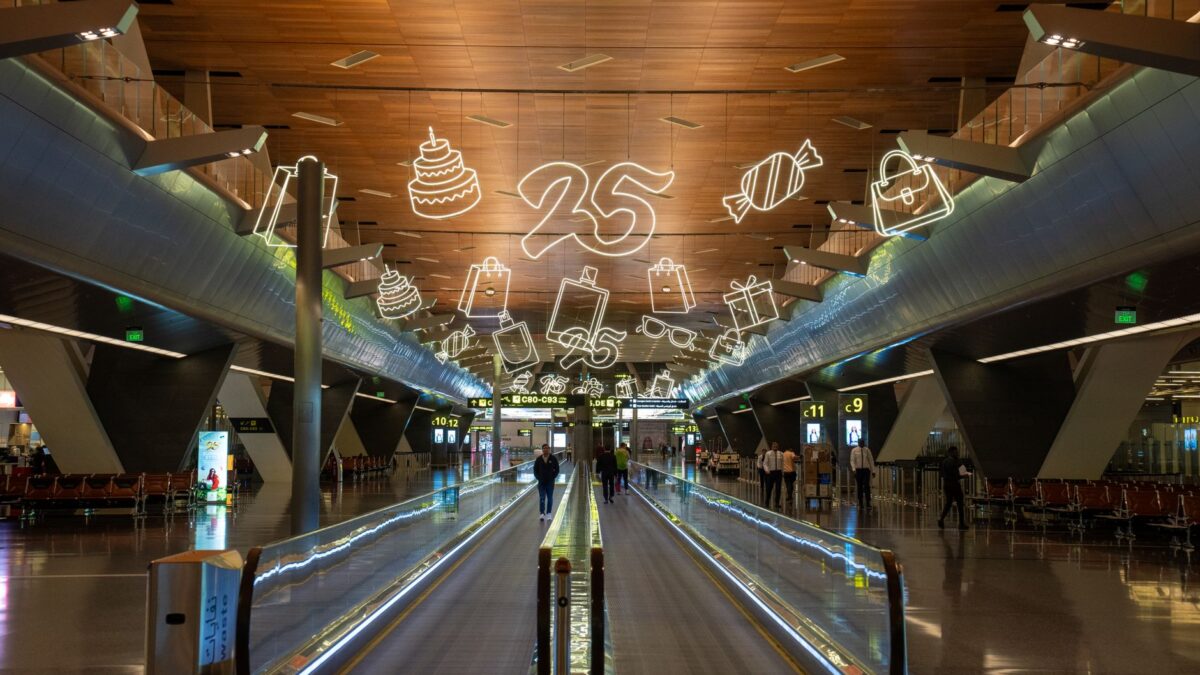 Getting Around
From the airport into Doha: every option and what it costs
Navigate from Hamad International Airport to Doha with our guide on metro, taxi, bus, and private transfer costs, times, and tips for September 2026.
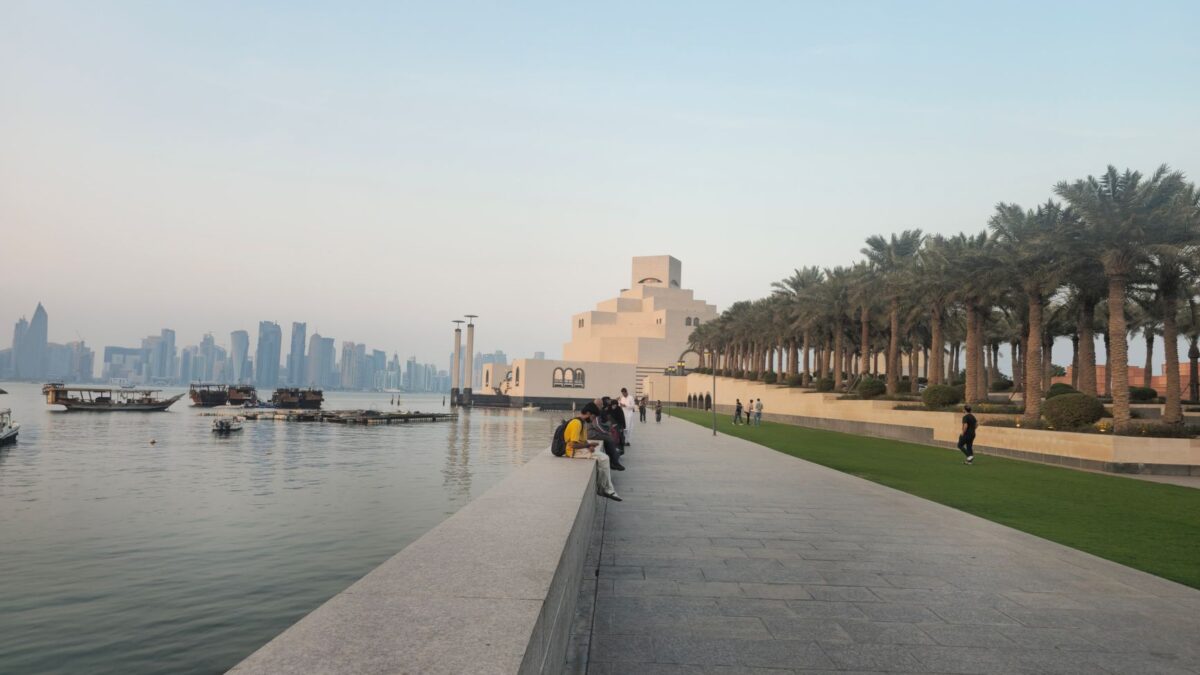 News & Updates
Qatar in September 2026: what travelers should know now
Qatar in September 2026: Doha's heat, events like Virtuocity and S'hail, metro costs, and practical tips for your trip this month.
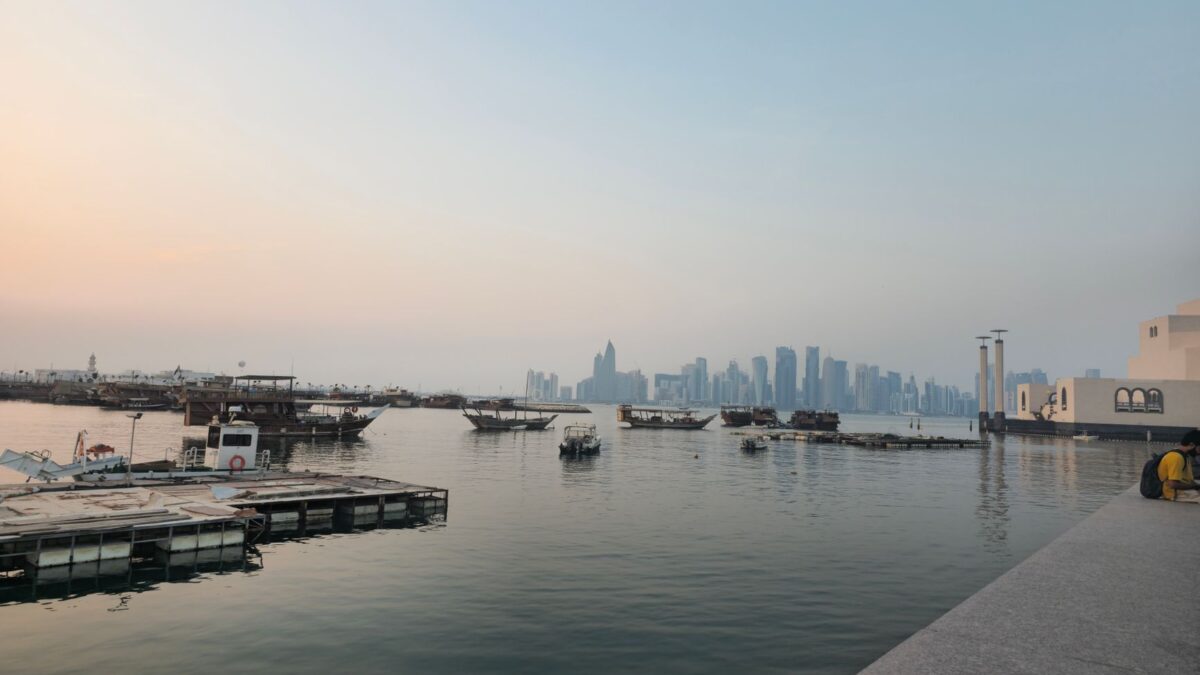 Costs & Money
How much does a trip to Qatar cost?
Plan your Qatar trip with this real budget breakdown: metro fares, meal costs, hotel prices, and daily totals in Qatari riyals for budget, mid-range,…
 Culture & Etiquette
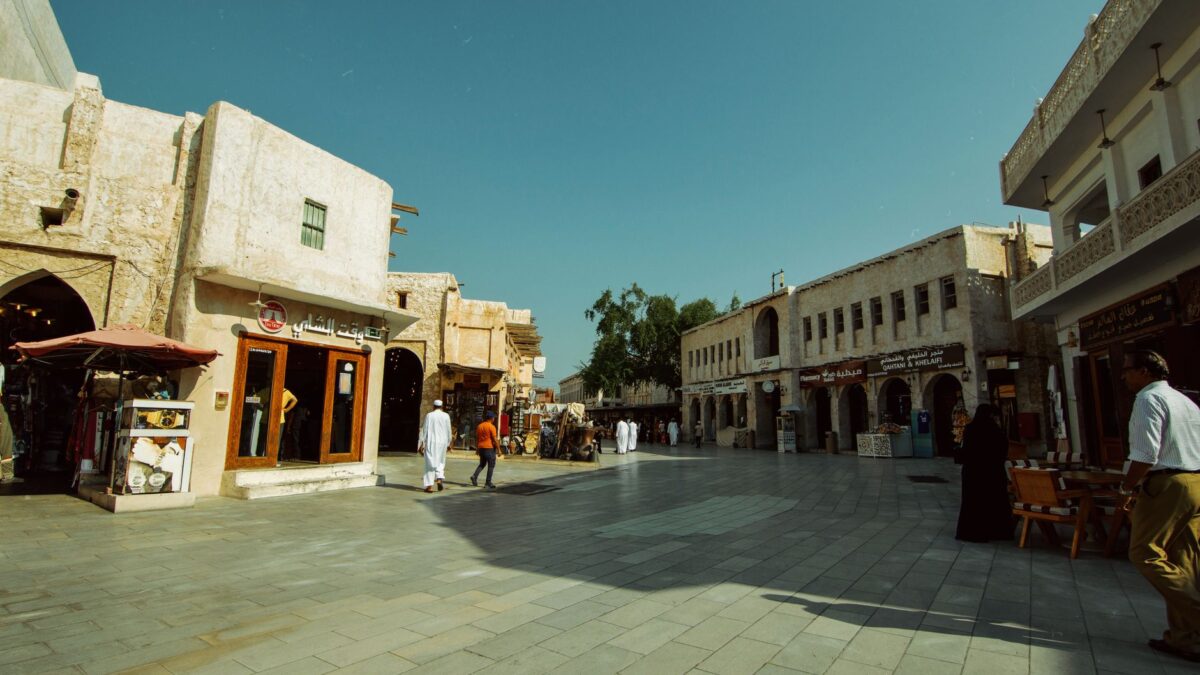
Qatar etiquette: the dos and don’ts
Qatar etiquette: greetings, tipping, dining, dress, and small customs—know the dos and don'ts to be a considerate visitor in Doha and beyond.
Western Asia
 Turkey
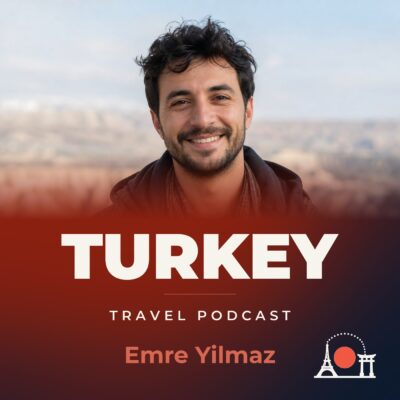
Turkey Travel Podcast with Emre Yilmaz
The Anatolian plateau, with its harsh interior climate, sits at the heart of a country whose largest city clusters around the Bosporus.
 United Arab Emirates
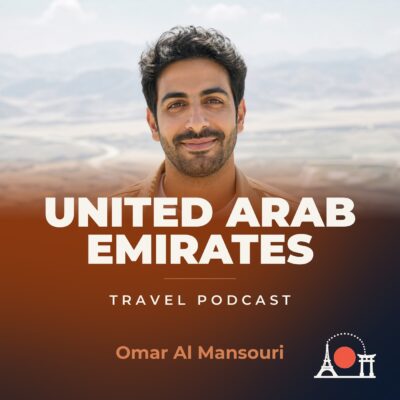
United Arab Emirates Travel Podcast with Omar Al Mansouri
The eastern Hajar Mountains rise sharply from the flat coastal plain, while the massive sand dunes of the Empty Quarter stretch beyond…
 Saudi Arabia
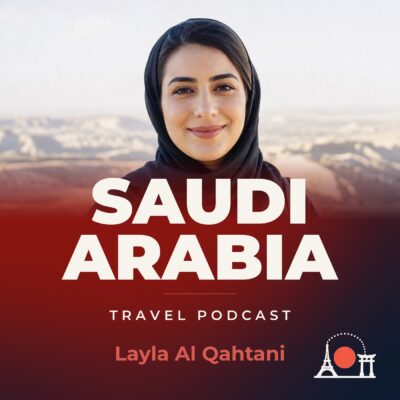
Saudi Arabia Travel Podcast with Layla Al Qahtani
A mostly sandy desert stretching between the Persian Gulf and the Red Sea makes Saudi Arabia the largest country on earth with…
 Israel
Israel Travel Podcast with Noa Shapira
The Negev desert, hot and dry in the south, gives way to a low coastal plain and central mountains; Hebrew and Arabic…