


South Korea Travel Podcast with Minjun Park
Hosted by Minjun Park — a new episode every day from South Korea.
This is a podcast about travelling through South Korea as a resident might, over months rather than days. The country’s hills and mountains dominate the interior, while wide coastal plains open up in the west and south. Cold winters and heavy summer rain set the rhythm, and most people live in dense lowland cities.
Episodes move from Seoul’s dense streets to Busan’s southern port, then to Gangwon Province in the northeast, where the population is thinnest. The host also spends time in Gwangju, in the southwest, and along the islands scattered off the western and southern coasts. Inland Daejeon and port Incheon appear as connections rather than stops.
As the seasons change, the show returns to places at different times of year. A city in cold winter is not the same city in humid summer. Over time, repeated visits build a layered understanding of how South Korea works, rather than a single snapshot. The rhythm follows a resident’s own pace: settling, learning, then moving on to somewhere connected.
Recent episodes
Things to do in South Korea
 Busan Small Group 100% Guaranteed Sky Capsule with Hotel Pickup
 Private DMZ Tour with North Korean Defector + N Korean Lunch
 Royal Seoul Cooking Class in a 100-Year-Old Hanok
 Seoul Vegan & Vegetarian Gwangjang Market Food Tour (11 Tastings)
 Make Traditional Korean Rice Wine (Makgeolli)
 Private Seoul or DMZ Tour
 DMZ 2nd Tunnel, Pocheon Sky Bridge & Waterfall Tour from Seoul
 Traditional Korean 6-Dish Cooking Class + Hidden Alley Tour Seoul
Plan your trip to South Korea
Getting around
Staying connected
South Korea at a glance
South Korea in depth
Reference data on the country — geography, people, history, economy and transport.
Geography and climate
Location
Eastern Asia, southern half of the Korean Peninsula bordering the Sea of Japan and the Yellow Sea
Terrain
Mostly hills and mountains; wide coastal plains in west and south
Climate
Temperate, with rainfall heavier in summer than winter; cold winters
Elevation
- Highest point
- Halla-san 1,950 m
- Lowest point
- Sea of Japan 0 m
- Mean elevation
- 282 m
Area
- Total
- 99,720 sq km
- Land
- 96,920 sq km
- Water
- 2,800 sq km
Size comparison
Slightly smaller than Pennsylvania; slightly larger than Indiana
Coastline
2,413 km
Land borders
- Total
- 237 km
- Border countries
- North Korea 237 km
Natural resources
Coal, tungsten, graphite, molybdenum, lead, hydropower potential
Land use
- Agricultural land
- 16.1% (2023 est.)
- Arable land
- 14.9% (2023 est.)
- Permanent crops
- 2.1% (2023 est.)
- Permanent pasture
- 0.6% (2023 est.)
- Forest
- 64.4% (2023 est.)
- Other
- 19.5% (2023 est.)
Natural hazards
Occasional typhoons bring high winds and floods; low-level seismic activity common in southwest
Volcanism: Halla (1,950 m) is considered historically active; it has not erupted in many centuries
Note
Strategic location on Korea Strait; about 3,000 mostly small and uninhabited islands lie off the western and southern coasts
People and society
Population
- Total
- 51,486,343 (2025 est.)
- Male
- 25,636,127
- Female
- 25,850,216
Nationality
- Noun
- Korean(s)
- Adjective
- Korean
Ethnic groups
Korean
Languages
- Languages
- Korean, English
- Major-language sample(s)
- 월드 팩트북, 필수적인 기본 정보 제공처 (Korean)
Religions
Protestant 17%, Buddhist 16%, Catholic 6%, none 60% (2021 est.)
Median age
- Total
- 47 years (2025 est.)
- Male
- 44 years
- Female
- 47.3 years
Life expectancy
- Total population
- 83.4 years (2024 est.)
- Male
- 80.3 years
- Female
- 86.6 years
Urbanisation
- Urban population
- 81.5% of total population (2023)
- Rate of urbanization
- 0.31% annual rate of change (2020-25 est.)
Where people live
The population is primarily concentrated in the lowland areas, where density is high; Gyeonggi Province in the northwest, which surrounds the capital of Seoul and contains the port of Incheon, is the most densely populated province; Gangwon in the northeast is the least populated
Largest cities
9.988 million SEOUL (capital), 3.472 million Busan, 2.849 million Incheon, 2.181 million Daegu (Taegu), 1.577 million Daejon (Taejon), 1.529 million Gwangju (Kwangju) (2023)
Background and government
Background
The first recorded kingdom (Choson) on the Korean Peninsula dates from approximately 2300 B.C. Over the subsequent centuries, three main kingdoms -- Kogoryo, Baekche, and Silla -- were established on the Peninsula. By the 5th century A.D., Kogoryo emerged as the most powerful, with control over much of the Peninsula and part of Manchuria (modern-day northeast China). However, Silla allied with the Chinese to create the first unified Korean state in 688. Following the collapse of Silla in the 9th century, Korea was unified under the Koryo (Goryeo; 918-1392) and the Chosen (Joseon; 1392-1910) dynasties.
Korea became the object of intense imperialistic rivalry among the Chinese (its traditional benefactor), Japanese, and Russian empires in the latter half of the 19th and early 20th centuries. After the Sino-Japanese War (1894-95) and the Russo-Japanese War (1904-1905), Korea was occupied by Imperial Japan. In 1910, Japan formally annexed the entire Peninsula. Korea regained its independence after Japan's surrender to the US and its allies in 1945. A US-supported democratic government (Republic of Korea, ROK) was set up in the southern half of the Korean Peninsula, while a communist-style government backed by the Soviet Union was installed in the north (North Korea; aka Democratic People's Republic of Korea, DPRK). During the Korean War (1950-53), US troops and UN forces fought alongside ROK soldiers to defend South Korea from a North Korean invasion supported by communist China and the Soviet Union. After the 1953 armistice, the two Koreas were separated by a demilitarized zone.
Syngman RHEE led the country as its first president from 1948 to 1960. PARK Chung-hee took over leadership of the country in a 1961 coup. During his controversial rule (1961-79), South Korea achieved rapid economic growth, with per capita income rising to roughly 17 times the level of North Korea by 1979. PARK was assassinated in 1979, and subsequent years were marked by political turmoil and continued military rule as the country's pro-democracy movement grew. South Korea held its first free presidential election under a revised democratic constitution in 1987, with former South Korean Army general ROH Tae-woo winning a close race. In 1993, KIM Young-sam became the first civilian president of South Korea's new democratic era. President KIM Dae-jung (1998-2003) won the Nobel Peace Prize in 2000 for his contributions to South Korean democracy and his "Sunshine Policy" of engagement with North Korea. President PARK Geun-hye, daughter of former South Korean President PARK Chung-hee, took office in 2013 as South Korea's first female leader. In 2016, the National Assembly passed an impeachment motion against PARK over her alleged involvement in a corruption and influence-peddling scandal, triggering an early presidential election in 2017 won by MOON Jae-in. In 2022, longtime prosecutor and political newcomer YOON Suk Yeol won the presidency by the slimmest margin in South Korean history.
Discord and tensions with North Korea, punctuated by North Korean military provocations, missile launches, and nuclear tests, have permeated inter-Korean relations for years. Relations remained strained, despite a period of respite in 2018-2019 ushered in by North Korea's participation in the 2018 Winter Olympic and Paralympic Games in South Korea and high-level diplomatic meetings, including historic US-North Korea summits. In 2024, Pyongyang announced it was ending all economic cooperation with South Korea, a move that followed earlier proclamations that it was scrapping a 2018 military pact to de-escalate tensions along their militarized border, abandoning the country’s decades-long pursuit of peaceful unification with South Korea, and designating the South as North Korea’s “principal enemy.”
Government
Presidential republic
Capital
Seoul
Time zone
UTC+9 (14 hours ahead of Washington, DC, during Standard Time)
Local name
Taehan-min'guk
Independence
15 August 1945 (from Japan)
National day
Liberation Day, 15 August (1945)
Economy and cost of living
Overview
High-income, export- and technology-oriented East Asian economy; manufacturing led by semiconductor and automotive industries; slow growth amid declining construction investment, export risks, and recent political instability; aging workforce; increased restraint in fiscal policy while maintaining industry support initiatives
GDP per capita
- Real GDP per capita 2023
- $50,400 (2023 est.)
- Real GDP per capita 2022
- $49,800 (2022 est.)
- Real GDP per capita 2021
- $48,400 (2021 est.)
Inflation
- Inflation rate (consumer prices) 2024
- 2.3% (2024 est.)
- Inflation rate (consumer prices) 2023
- 3.6% (2023 est.)
- Inflation rate (consumer prices) 2022
- 5.1% (2022 est.)
Unemployment
- Unemployment rate 2024
- 2.7% (2024 est.)
- Unemployment rate 2023
- 2.7% (2023 est.)
- Unemployment rate 2022
- 2.9% (2022 est.)
Exchange rate
- Currency
- South Korean won (KRW) per US dollar -
- Exchange rates 2024
- 1,363.375 (2024 est.)
- Exchange rates 2023
- 1,305.662 (2023 est.)
- Exchange rates 2022
- 1,291.447 (2022 est.)
- Exchange rates 2021
- 1,143.952 (2021 est.)
- Exchange rates 2020
- 1,180.266 (2020 est.)
Main industries
Electronics, telecommunications, automobile production, chemicals, shipbuilding, steel
Agriculture
Rice, vegetables, cabbages, milk, onions, pork, chicken, eggs, tangerines/mandarins, potatoes (2023)
Transport and connectivity
Airports
92 (2025)
Railways
- Total
- 3,979 km (2016)
- Standard gauge
- 3,979 km (2016) 1.435-m gauge (2,727 km electrified)
Ports
- Total ports
- 15 (2024)
- Large
- 2
- Medium
- 5
- Small
- 4
- Very small
- 4
- Ports with oil terminals
- 10
- Key ports
- Busan, Gwangyang Hang, Inchon, Masan, Mokpo, Pyeongtaek Hang, Ulsan
Internet domain
.kr
Internet users
Percent of population 97% (2023 est.)
Mobile subscriptions
- Total subscriptions
- 89.2 million (2024 est.)
- Subscriptions per 100 inhabitants
- 173 (2024 est.)
Environment
Environmental issues
Air pollution in large cities; acid rain; water pollution from sewage and industrial effluents; drift-net fishing; solid waste disposal; transboundary air pollution from China
Fresh water
69.7 billion cubic meters (2022 est.)
UNESCO Global Geoparks
- Total global geoparks and regional networks
- 7 (2025)
- Global geoparks and regional networks
- Cheongsong; Danyang; Gyeongbuk Donghaean; Hantangang; Jeju Island; Jeonbuk West Coast; Mudeungsan (2025)
Country reference figures are periodically revised. Check anything time-sensitive or safety-critical against an official source before you travel.
South Korea travel guides
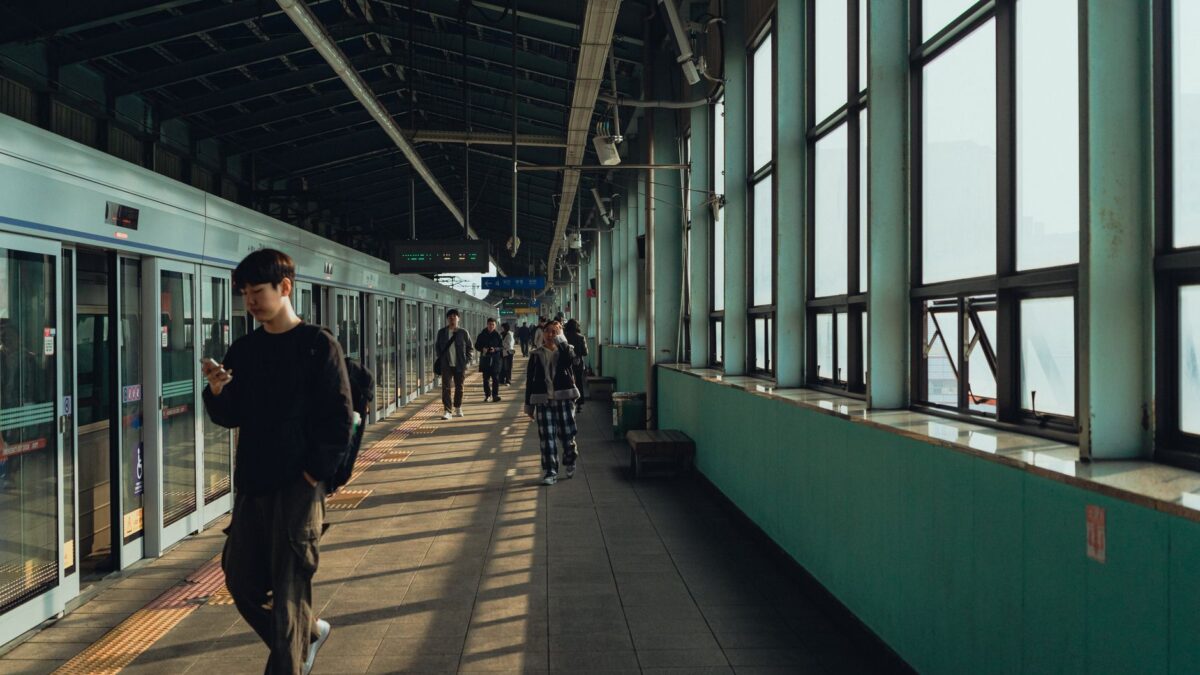 Getting Around
Getting around Seoul: metros, taxis and passes
Navigate Seoul like a local with our guide to metros, T-money cards, taxis, and walking routes. Practical tips for getting around Korea's capital.
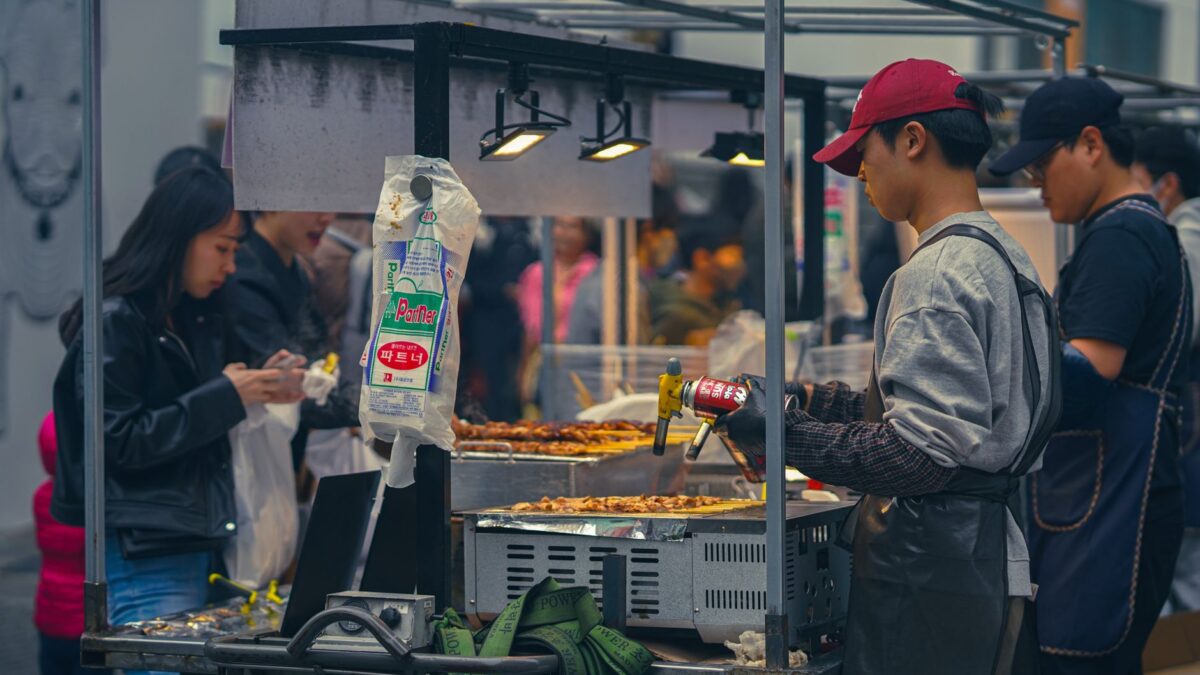 Culture & Etiquette
South Korea etiquette: the dos and don’ts
South Korea etiquette: essential dos and don'ts on greetings, tipping, dining, dress, and small customs from a local host — plus practical tips for…
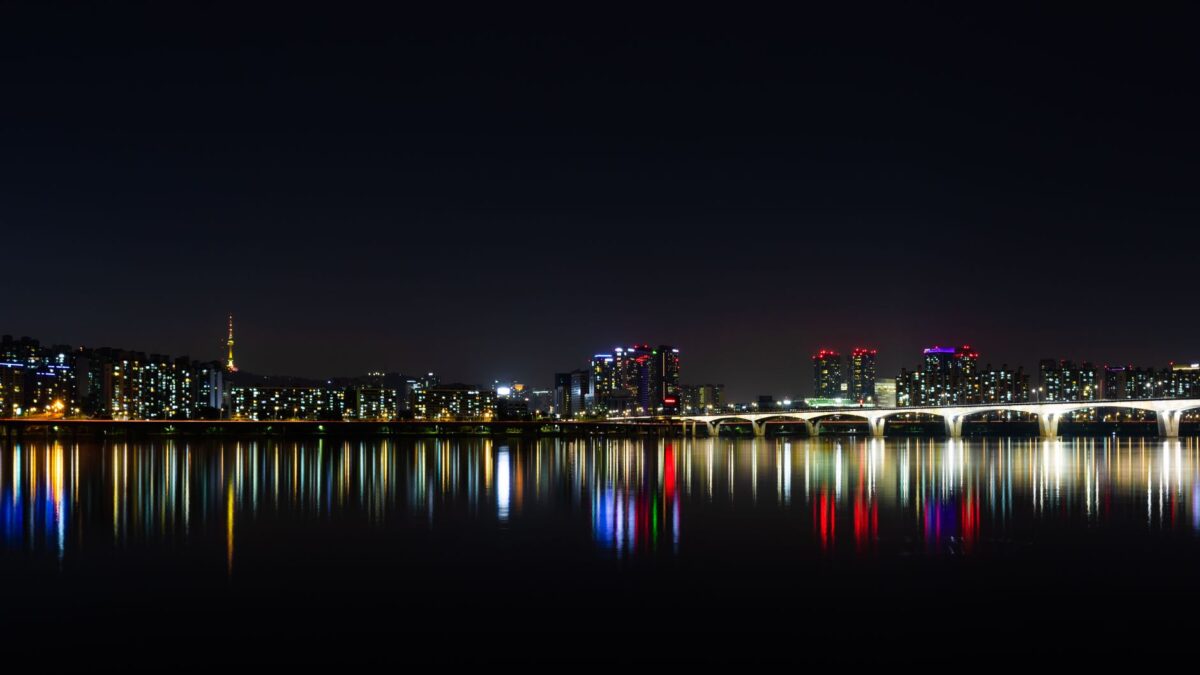 News & Updates
South Korea in August 2026: what travelers should know now
Seoul in August 2026: Liberation Day crowds, BIGBANG’s Han River show, final week for the Impressionism exhibit, and monsoon rain tips from a local.
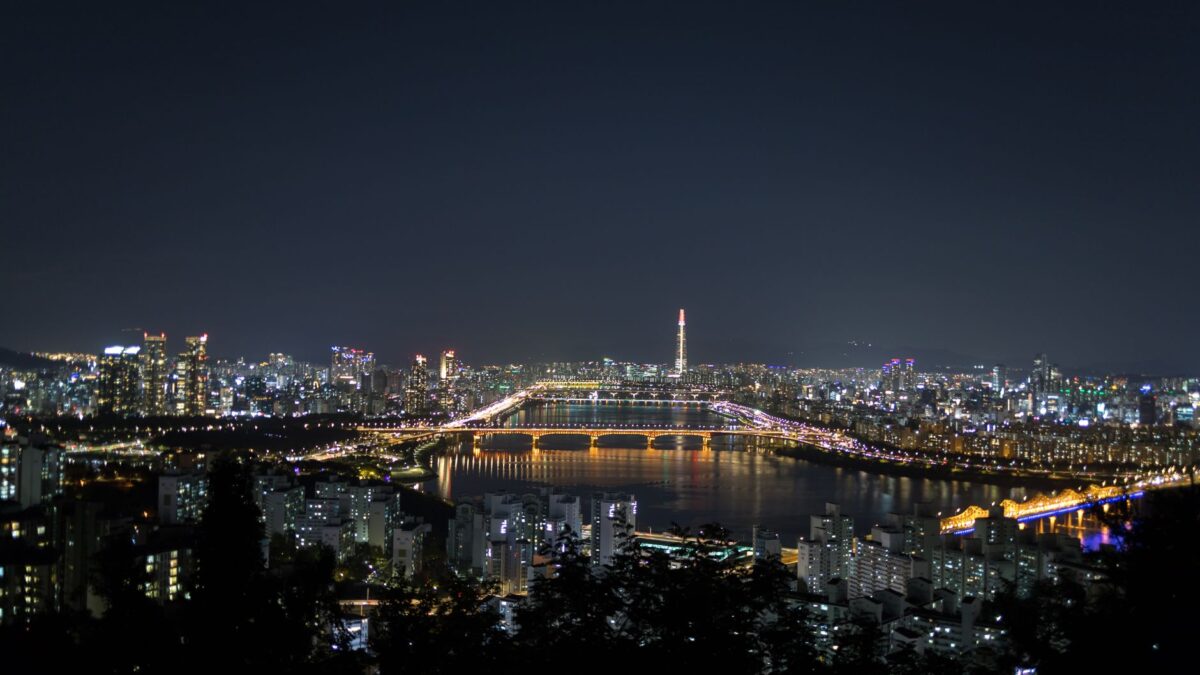 Costs & Money
How much does a trip to South Korea cost?
Discover the real cost of a trip to South Korea in 2026: daily budgets for budget, mid-range, and luxury travelers, with current Seoul prices…
East Asia
 Japan
JapanJapan Travel Podcast with Yuki Tanaka
The rugged mountains of Honshu, Japan's largest island, shape every journey, while the Kanto Plain holds a third of the country's people…
 China
ChinaChina Travel Podcast with Wei Chen
The Mandarin language, based on the Beijing dialect, is official across a country whose terrain ranges from tropical south to subarctic north.
 Taiwan
Taiwan Travel Podcast with Cheng-Han Lin
The eastern two-thirds of Taiwan rise into rugged mountains, while the west settles into plains where most people live along the coasts.