


Taiwan Travel Podcast with Cheng-Han Lin
Hosted by Cheng-Han Lin — a new episode every day from Taiwan.
This podcast follows one host as he learns Taiwan by living in a place, then moving to another connected to it. Travel in Taiwan means navigating a rugged eastern two-thirds, a gentler western plain, and a tropical climate that stays cloudy for much of the year.
The host covers a broad arc: Taipei in the north, Tainan in the south-west, Taichung on the western plain, and Taitung on the rugged east coast. These places are linked by the island’s shape and by the way people live along the coast. Tainan and Taichung sit on flat land; Taitung faces the Pacific beneath mountain slopes.
As the months pass, the southwest monsoon brings rain from June to August, and the cloud cover stays. The host returns to the same streets and hillsides at different points in the year, watching how a city changes when wet, dry, busy or quiet. Knowing Taiwan comes from these repeated visits rather than a single itinerary.
Recent episodes
Things to do in Taiwan
 Best E-bike Cycling Tour in Taipei - Includes Local Food & Drinks
 Private Day Trip to Jiufen, Shifen and Yehliu Park
 Likely to sell out
Street Food Cooking Class in Taipei : Gua Bao/Lu Rou Fan/Boba Tea
Likely to sell out
Street Food Cooking Class in Taipei : Gua Bao/Lu Rou Fan/Boba Tea
 Xiao Long Bao, Pork thick soup, Bubble milk tea. Taiwan Traditional Light Meals Experience-B (Taipei Cooking Class)
 Taipei: Disappearing Flavors of Taiwan Food Tour with 12+ Tasters
 Private Cruise Tour from Keelung: Trip to Taipei
 Taiwanese Food Culture and Cooking Class
 Traditional Market Cooking Class in Taipei
Plan your trip to Taiwan
Getting around
Staying connected
Taiwan at a glance
Taiwan in depth
Reference data on the country — geography, people, history, economy and transport.
Geography and climate
Location
Eastern Asia, islands bordering the East China Sea, Philippine Sea, South China Sea, and Taiwan Strait, north of the Philippines, off the southeastern coast of China
Terrain
Eastern two-thirds mostly rugged mountains; flat to gently rolling plains in west
Climate
Tropical; marine; rainy season during southwest monsoon (June to August); persistent and extensive cloudiness all year
Elevation
- Highest point
- Yu Shan 3,952 m
- Lowest point
- South China Sea 0 m
- Mean elevation
- 1,150 m
Area
- Total
- 35,980 sq km
- Land
- 32,260 sq km
- Water
- 3,720 sq km
Size comparison
Slightly smaller than Maryland and Delaware combined
Coastline
1,566.3 km
Land borders
Total 0 km
Natural resources
Small deposits of coal, natural gas, limestone, marble, asbestos, arable land
Land use
- Agricultural land
- 22% (2023 est.)
- Arable land
- 16.6% (2023 est.)
- Permanent crops
- 5.4% (2023 est.)
- Permanent pasture
- 0% (2022 est.)
- Forest
- 0% (2022 est.)
- Other
- 78% (2022 est.)
Natural hazards
Earthquakes; typhoons
Volcanism: Kueishantao Island (401 m), east of Taiwan, is the only historically active volcano, but it has not erupted in centuries
Note
Strategic location adjacent to both the Taiwan Strait and the Luzon Strait
People and society
Population
- Total
- 23,600,776 (2025 est.)
- Male
- 11,596,835
- Female
- 12,003,941
Nationality
- Noun
- Taiwan (singular and plural)
- Adjective
- Taiwan (or Taiwanese)
Ethnic groups
Han Chinese (including Holo, who compose approximately 70% of Taiwan's population, Hakka, and other groups originating in mainland China) more than 95%, indigenous Malayo-Polynesian peoples 2.3%
Languages
- Languages
- Mandarin (official), Min Nan, Hakka dialects, approximately 16 indigenous languages
- Major-language sample(s)
- 世界概況 – 不可缺少的基本消息來源 (Mandarin)
Religions
Buddhist 35.3%, Taoist 33.2%, Christian 3.9%, folk religion (includes Confucian) approximately 10%, none or unspecified 18.2% (2005 est.)
Median age
- Total
- 45.1 years (2025 est.)
- Male
- 43.6 years
- Female
- 45.5 years
Life expectancy
- Total population
- 81.6 years (2024 est.)
- Male
- 78.6 years
- Female
- 84.7 years
Urbanisation
- Urban population
- 80.1% of total population (2023)
- Rate of urbanization
- 0.65% annual rate of change (2020-25 est.)
Where people live
Distribution exhibits a peripheral coastal settlement pattern, with the largest populations on the north and west coasts
Largest cities
4.504 million New Taipei City, 2.754 million TAIPEI (capital), 2.319 million Taoyuan, 1.553 million Kaohsiung, 1.369 million Taichung, 863,000 Tainan (2023)
Background and government
Background
First inhabited by Austronesian people, Taiwan became home to Han immigrants beginning in the late Ming Dynasty (17th century). In 1895, military defeat forced China's Qing Dynasty to cede Taiwan to Japan, which then governed Taiwan for 50 years. Taiwan came under Chinese Nationalist (Kuomintang, KMT) control after World War II. With the communist victory in the Chinese civil war in 1949, the Nationalist-controlled Republic of China government and 2 million Nationalists fled to Taiwan and continued to claim to be the legitimate government for mainland China and Taiwan, based on a 1947 constitution drawn up for all of China. Until 1987, however, the Nationalist Government ruled Taiwan under a civil war martial law declaration dating to 1948. Beginning in the 1970s, Nationalist authorities gradually began to incorporate the native population into the governing structure beyond the local level.
The democratization process expanded rapidly in the 1980s, leading to the then-illegal founding of the Democratic Progressive Party (DPP), Taiwan’s first opposition party, in 1986 and the lifting of martial law the following year. Taiwan held legislative elections in 1992, the first in over 40 years, and its first direct presidential election in 1996. In the 2000 presidential elections, Taiwan underwent its first peaceful transfer of power with the KMT loss to the DPP and afterwards experienced two additional democratic transfers of power in 2008 and 2016. Throughout this period, the island prospered and turned into one of East Asia's economic "Tigers," becoming a major investor in mainland China after 2000 as cross-Strait ties matured. The dominant political issues continue to be economic reform and growth, as well as management of sensitive relations between Taiwan and China.
Government
Semi-presidential republic
Capital
Taipei
Time zone
UTC+8 (13 hours ahead of Washington, DC, during Standard Time)
Local name
None
National day
Republic Day (National Day), 10 October (1911)
Economy and cost of living
Overview
High-income East Asian economy; most technologically advanced computer microchip manufacturing; increasing Chinese interference threatens market capabilities; minimum wages rising; longstanding regional socioeconomic inequality
GDP per capita
- Real GDP per capita 2023
- $32,300 (2023 est.)
- Real GDP per capita 2022
- $32,600 (2022 est.)
- Real GDP per capita 2021
- $32,900 (2021 est.)
Inflation
- Inflation rate (consumer prices) 2024
- 2.2% (2024 est.)
- Inflation rate (consumer prices) 2023
- 2.5% (2023 est.)
- Inflation rate (consumer prices) 2022
- 2.9% (2022 est.)
Unemployment
- Unemployment rate 2024
- 3.4% (2024 est.)
- Unemployment rate 2023
- 3.5% (2023 est.)
- Unemployment rate 2022
- 3.7% (2022 est.)
Exchange rate
- Currency
- New Taiwan dollars (TWD) per US dollar -
- Exchange rates 2024
- 32.108 (2024 est.)
- Exchange rates 2023
- 31.15 (2023 est.)
- Exchange rates 2022
- 29.777 (2022 est.)
- Exchange rates 2021
- 28.022 (2021 est.)
- Exchange rates 2020
- 28.211 (2020 est.)
Main industries
Electronics, communications and information technology products, petroleum refining, chemicals, textiles, iron and steel, machinery, cement, food processing, vehicles, consumer products, pharmaceuticals
Agriculture
Rice, vegetables, pork, chicken, cabbages, milk, sugarcane, tropical fruits, pineapples, eggs (2023)
Transport and connectivity
Airports
57 (2025)
Railways
- Total
- 1,613.1 km (2018)
- Standard gauge
- 345 km (2018) 1.435-m gauge (345 km electrified)
- Narrow gauge
- 1,118.1 km (2018) 1.067-m gauge (793.9 km electrified)
Ports
- Total ports
- 8 (2024)
- Large
- 1
- Medium
- 3
- Small
- 2
- Very small
- 2
- Ports with oil terminals
- 8
- Key ports
- Chi-Lung, Hua-Lien Kang, Kao-Hsiung, Su-Ao
Internet domain
.tw
Internet users
Percent of population 90% (2021 est.)
Mobile subscriptions
- Total subscriptions
- 29.8 million (2024 est.)
- Subscriptions per 100 inhabitants
- 128 (2024 est.)
Environment
Environmental issues
Air pollution; water pollution from industrial emissions, raw sewage; contamination of drinking water supplies; trade in endangered species; low-level radioactive waste disposal
Fresh water
67 cubic meters (2011)
Country reference figures are periodically revised. Check anything time-sensitive or safety-critical against an official source before you travel.
Taiwan travel guides
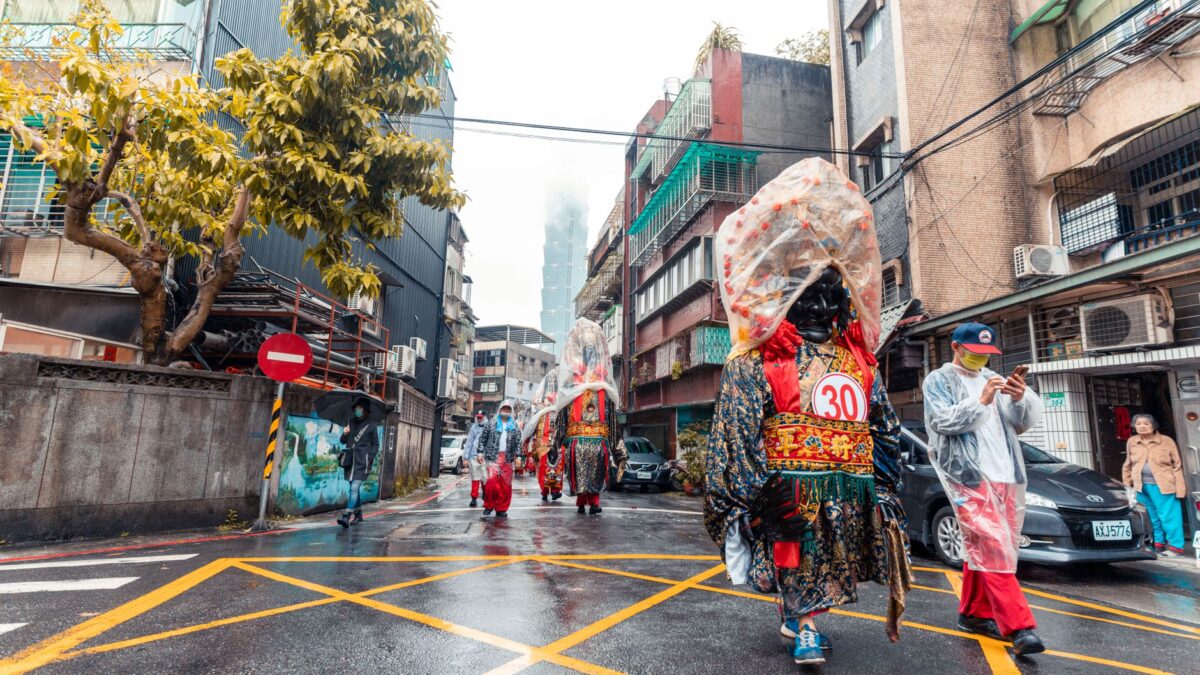 News & Updates
Taiwan in September 2026: what travelers should know now
Taiwan in September 2026: Weather, typhoon tips, MRT updates, and event alerts for travelers arriving now.
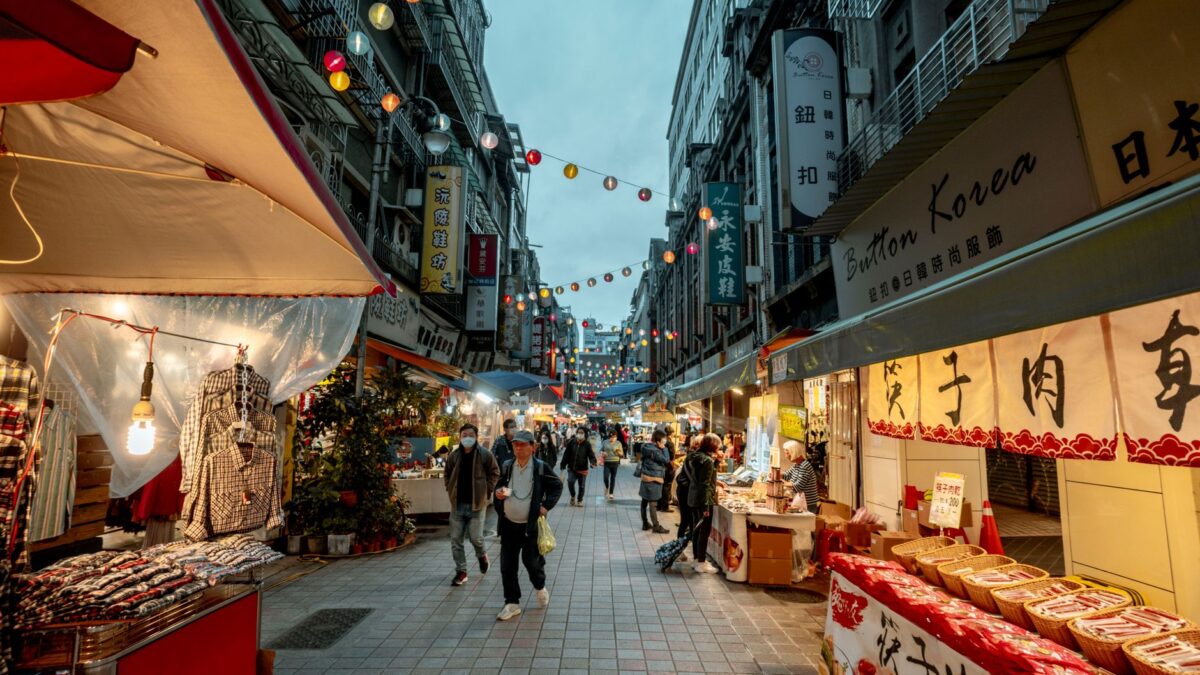 Costs & Money
How much does a trip to Taiwan cost?
Discover the real cost of a trip to Taiwan in 2026. A detailed budget breakdown for food, accommodation, and transport in Taipei, from budget…
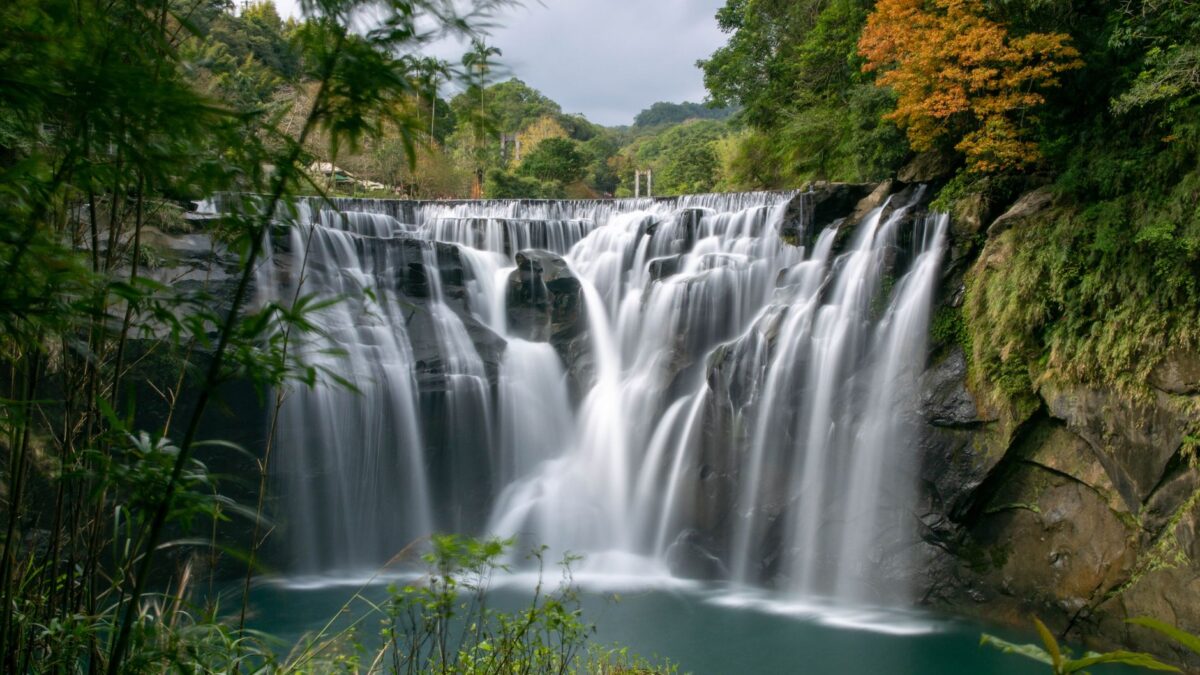 Travel Tips
The best time to visit Taiwan
When is the best time to visit Taiwan? Our season-by-season guide covers weather, crowds, prices, and festivals—from Ghost Month to cherry blossoms. Plan your…
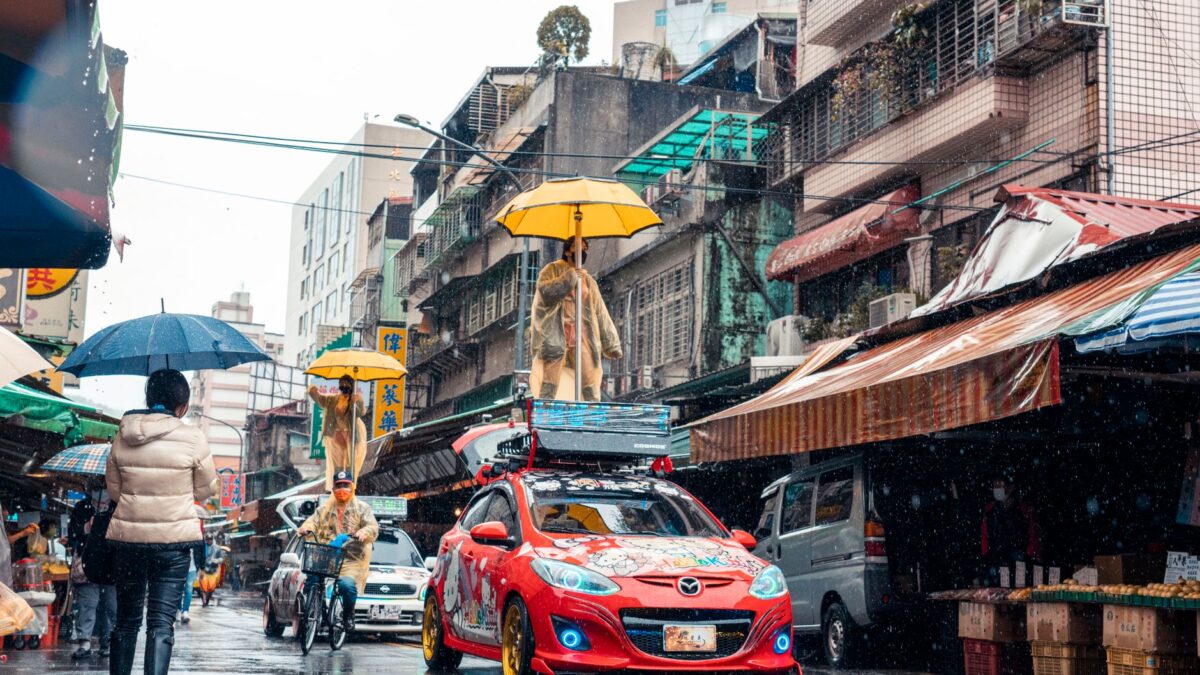 News & Updates
Taiwan in August 2026: what travelers should know now
Taiwan in August 2026: Ghost Month begins, Dadaocheng fireworks finale tonight, Trendy Taipei festival coming up. What to pack, do, and avoid this month.
East Asia
 Japan
JapanJapan Travel Podcast with Yuki Tanaka
The rugged mountains of Honshu, Japan's largest island, shape every journey, while the Kanto Plain holds a third of the country's people…
 South Korea
South Korea Travel Podcast with Minjun Park
The hills and mountains that cover most of South Korea give way to wide coastal plains in the west and south, where…
 China
ChinaChina Travel Podcast with Wei Chen
The Mandarin language, based on the Beijing dialect, is official across a country whose terrain ranges from tropical south to subarctic north.