

Japan Travel Podcast with Yuki Tanaka
Hosted by Yuki Tanaka — a new episode every day from Japan.
Japan is an archipelago of four main islands where rugged mountains crowd the interior and most people live on narrow coastal plains. The podcast follows a single host who settles somewhere long enough to learn it, because that is how travel here makes sense. She moves from place to place in the way a resident would, not a visitor.
Her range covers the Kanto Plain around Tokyo, the Pacific-coast cities of Shizuoka-Hamamatsu and Kitakyushu-Fukuoka, and the cool northern island of Hokkaido. She also spends time on Shikoku, the smallest of the Home Islands, and in the mountains of central Honshu. These are not just stops; they are places she returns to.
The show unfolds through the year, with seasons changing between visits. She comes back to places she has already learned, watches how a heavy snowfall alters Hokkaido or how the rains shape the mountain paths of Honshu. Knowledge accumulates slowly: the name of a local festival, the quiet street after a typhoon, the way a winter morning feels in Kyushu.
Recent episodes
Things to do in Japan
 Samurai Training Experience KENDO in Osaka
 Tokyo Private Discovery Tour | Unique Insights & Must Sees
 Private Tea Ceremony and Sake Tasting in Kyoto Samurai House
 Pixel Lab Tokyo: Gameboy Mod Workshop (Classic/Advance/SP)
 Private Tailor-made Akihabara Anime Tour with a Local Otaku Guide
 Kyoto Gion Walk with Local: Culture & Geisha World
 Osaka Sake Tasting & Takoyaki Cooking Experience
 Kamakura Walking Tour - The City of Shogun
Plan your trip to Japan
Getting around
Staying connected
Japan at a glance
Japan in depth
Reference data on the country — geography, people, history, economy and transport.
Geography and climate
Location
Eastern Asia, island chain between the North Pacific Ocean and the Sea of Japan, east of the Korean Peninsula
Terrain
Mostly rugged and mountainous
Climate
Varies from tropical in south to cool temperate in north
Elevation
- Highest point
- Mount Fuji 3,776 m
- Lowest point
- Hachiro-gata -4 m
- Mean elevation
- 438 m
Area
- Total
- 377,915 sq km
- Land
- 364,485 sq km
- Water
- 13,430 sq km
Size comparison
Slightly smaller than California
Coastline
29,751 km
Land borders
Total 0 km
Natural resources
Negligible mineral resources, fish
Land use
- Agricultural land
- 12.6% (2023 est.)
- Arable land
- 11.1% (2023 est.)
- Permanent crops
- 0.7% (2023 est.)
- Permanent pasture
- 0.9% (2023 est.)
- Forest
- 68.3% (2023 est.)
- Other
- 19% (2023 est.)
Natural hazards
Many dormant and some active volcanoes; about 1,500 seismic occurrences (mostly tremors but occasional severe earthquakes) every year; tsunamis; typhoons
Volcanism: both Unzen (1,500 m) and Sakura-jima (1,117 m), which lies near the densely populated city of Kagoshima, have been deemed Decade Volcanoes by the International Association of Volcanology and Chemistry of the Earth's Interior, worthy of study due to their explosive history and close proximity to human populations; other notable historically active volcanoes include Asama (Honshu Island's most active volcano), Aso, Bandai, Fuji, Iwo-Jima, Kikai, Kirishima, Komaga-take, Oshima, Suwanosejima, Tokachi, Yake-dake, and Usu; see note 2 under "Geography - note"
Note
Note 1: strategic location in northeast Asia; composed of four main islands (the "Home Islands") -- Hokkaido, Honshu (the largest, most populous, and site of Tokyo, the capital), Shikoku, and Kyushu
Note 2: a 2023 Geospatial Information Authority of Japan survey detected 100,000 islands and islets, but only the 14,125 islands with a circumference of at least 100 m (330 ft) were officially counted; about 260 of the islands are inhabited
Note 3: Japan annually records the most earthquakes in the world; it is one of the countries along the Ring of Fire, which is a belt bordering the Pacific Ocean that contains about 75% of the world's volcanoes and up to 90% of the world's earthquakes
People and society
Population
- Total
- 123,201,945 (2024 est.)
- Male
- 59,875,269
- Female
- 63,326,676
Nationality
- Noun
- Japanese (singular and plural)
- Adjective
- Japanese
Ethnic groups
Japanese 97.5%, Chinese 0.6%, Vietnam 0.4%, South Korean 0.3%, other 1.2% (includes Filipino, Brazilian, Nepalese, Indonesian, American, and Taiwanese) (2022 est.)
Languages
- Languages
- Japanese
- Major-language sample(s)
- 必要不可欠な基本情報の源、ワールド・ファクトブック(Japanese)
Religions
Shintoism 48.6%, Buddhism 46.4%, Christianity 1.1%, other 4% (2021 est.)
Median age
- Total
- 50.2 years (2025 est.)
- Male
- 48.3 years
- Female
- 51.3 years
Life expectancy
- Total population
- 85.2 years (2024 est.)
- Male
- 82.3 years
- Female
- 88.2 years
Urbanisation
- Urban population
- 92% of total population (2023)
- Rate of urbanization
- -0.25% annual rate of change (2020-25 est.)
Where people live
All primary and secondary regions of high population density lie on the coast; one third of the population resides in and around Tokyo on the central plain (Kanto Plain)
Largest cities
37.194 million TOKYO (capital), 19.013 million Osaka, 9.569 million Nagoya, 5.490 million Kitakyushu-Fukuoka, 2.937 million Shizuoka-Hamamatsu, 2.666 million Sapporo (2023)
Background and government
Background
In 1603, after decades of civil warfare, the Tokugawa shogunate (a military-led, dynastic government) ushered in a long period of relative political stability and isolation from foreign influence. For more than two centuries, this policy enabled Japan to enjoy a flowering of its indigenous culture. Japan opened its ports after signing the Treaty of Kanagawa with the US in 1854 and began to intensively modernize and industrialize. During the late 19th and early 20th centuries, Japan became a regional power that was able to defeat the forces of both China and Russia. It occupied Korea, Formosa (Taiwan), and southern Sakhalin Island. In 1931-32, Japan occupied Manchuria, and in 1937, it launched a full-scale invasion of China. Japan attacked US forces at Pearl Harbor, Hawaii, in 1941, triggering America's entry into World War II, and Japan soon occupied much of East and Southeast Asia. After its defeat in World War II, the country recovered to become an economic power and a US ally.
While the emperor retains his throne as a symbol of national unity, elected politicians hold the decision-making power. After three decades of unprecedented growth, Japan's economy experienced a major slowdown starting in the 1990s, but the country remains an economic power. In 2011, Japan's strongest-ever earthquake and an accompanying tsunami devastated the northeast part of Honshu, killed thousands, and damaged several nuclear power plants. ABE Shinzo was reelected as prime minister in 2012, and he embarked on ambitious economic and security reforms to improve Japan's economy and bolster the country's international standing. In 2019, ABE became Japan's longest-serving post-war prime minister; he resigned in 2020 and was succeeded by SUGA Yoshihide. KISHIDA Fumio became prime minister in 2021.
Government
Parliamentary constitutional monarchy
Capital
Tokyo
Time zone
UTC+9 (14 hours ahead of Washington, DC, during Standard Time)
Local name
Nihon-koku/Nippon-koku
Independence
3 May 1947 (current constitution adopted as amendment to Meiji Constitution); notable earlier dates: 11 February 660 B.C. (mythological date of Emperor JIMMU founding the nation); 29 November 1890 (Meiji Constitution provides for constitutional monarchy)
National day
Birthday of Emperor NARUHITO, 23 February (1960)
Economy and cost of living
Overview
Second-largest East Asian economy; trade-oriented and highly diversified; high public debt levels; following years of near-zero interest rates, gradual increases to address inflation and depreciation of yen; strong rebound in tourism; aging population poses challenges to labor force participation
GDP per capita
- Real GDP per capita 2024
- $46,100 (2024 est.)
- Real GDP per capita 2023
- $45,900 (2023 est.)
- Real GDP per capita 2022
- $45,000 (2022 est.)
Inflation
- Inflation rate (consumer prices) 2024
- 2.7% (2024 est.)
- Inflation rate (consumer prices) 2023
- 3.3% (2023 est.)
- Inflation rate (consumer prices) 2022
- 2.5% (2022 est.)
Unemployment
- Unemployment rate 2024
- 2.6% (2024 est.)
- Unemployment rate 2023
- 2.6% (2023 est.)
- Unemployment rate 2022
- 2.6% (2022 est.)
Exchange rate
- Currency
- Yen (JPY) per US dollar -
- Exchange rates 2024
- 151.366 (2024 est.)
- Exchange rates 2023
- 140.491 (2023 est.)
- Exchange rates 2022
- 131.498 (2022 est.)
- Exchange rates 2021
- 109.754 (2021 est.)
- Exchange rates 2020
- 106.775 (2020 est.)
Main industries
Motor vehicles, electronic equipment, machine tools, steel and nonferrous metals, ships, chemicals, textiles, processed foods
Agriculture
Rice, milk, sugar beets, vegetables, eggs, chicken, potatoes, onions, cabbages, pork (2023)
Transport and connectivity
Airports
280 (2025)
Railways
- Total
- 27,311 km (2015)
- Standard gauge
- 4,800 km (2015) 1.435-m gauge (4,800 km electrified)
- Narrow gauge
- 124 km (2015) 1.372-m gauge (124 km electrified)
- Dual gauge
- 132 km (2015) 1.435-1.067-m gauge (132 km electrified)
Ports
- Total ports
- 163 (2024)
- Large
- 11
- Medium
- 26
- Small
- 54
- Very small
- 71
- Size unknown
- 1
- Ports with oil terminals
- 99
- Key ports
- Kawasaki Ko, Kobe, Mikawa, Nagasaki, Nagoya Ko, Onomichi-Itozaki, Osaka, Tokyo Ko, Wakamatsu Ko, Wakayama-Shimotsu Ko, Yokohama Ko
Internet domain
.jp
Internet users
Percent of population 87% (2023 est.)
Mobile subscriptions
- Total subscriptions
- 219 million (2023 est.)
- Subscriptions per 100 inhabitants
- 168 (2022 est.)
Environment
Environmental issues
Air pollution from power plants results in acid rain; acidification of lakes and reservoirs degrading water quality; waste management issues; ongoing environmental clean-up in small area of Fukushima after nuclear accident in 2011
Fresh water
430 billion cubic meters (2022 est.)
UNESCO Global Geoparks
- Total global geoparks and regional networks
- 10
- Global geoparks and regional networks
- Aso UNESCO; Hakusan Tedorigawa; Itoigawa; Izu Peninsula; Mt. Apoi; Muroto; Oki Islands; San'in Kaigan; Toya - Usu; Unzen (2023)
Country reference figures are periodically revised. Check anything time-sensitive or safety-critical against an official source before you travel.
Japan travel guides
 Costs & Money
A week in Tokyo on a mid-range budget
Plan a realistic Tokyo itinerary with verified costs for hotels, transit, and food. A practical guide to surviving a week in Japan's capital on…
 Living Abroad
Moving to Japan: visas, banking and SIM cards
Moving to Tokyo? Yuki Tanaka covers visas, banking, SIM cards, and neighborhood tips for your first week in Japan.
 Costs & Money
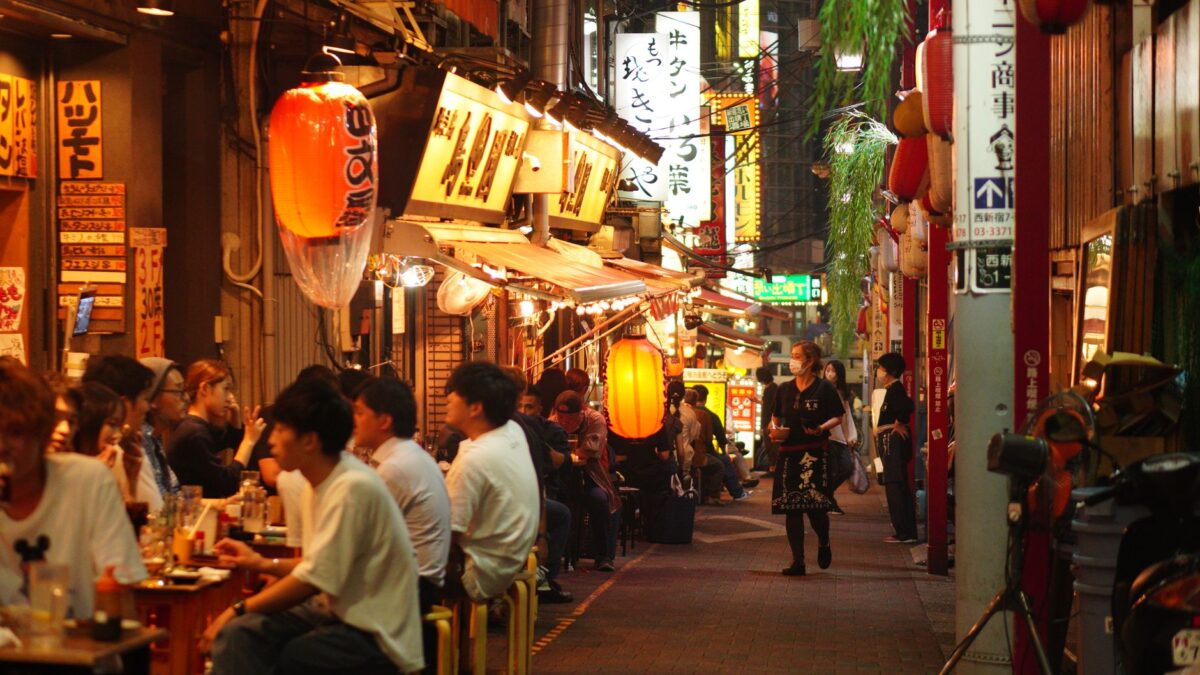
How much does a trip to Japan cost?
A realistic 2026 budget breakdown for Tokyo, Japan. Discover real costs for accommodation, food, and transport in JPY to plan your trip.
 News & Updates
Japan in September 2026: what travelers should know now
Tokyo in September 2026: what's on this month — matsuri, Yokosuka Line suspension, Respect for Aged Day, Louvre at Roppongi, crowds & pricing tips.
East Asia
 South Korea
South Korea Travel Podcast with Minjun Park
The hills and mountains that cover most of South Korea give way to wide coastal plains in the west and south, where…
 China
ChinaChina Travel Podcast with Wei Chen
The Mandarin language, based on the Beijing dialect, is official across a country whose terrain ranges from tropical south to subarctic north.
 Taiwan
Taiwan Travel Podcast with Cheng-Han Lin
The eastern two-thirds of Taiwan rise into rugged mountains, while the west settles into plains where most people live along the coasts.