

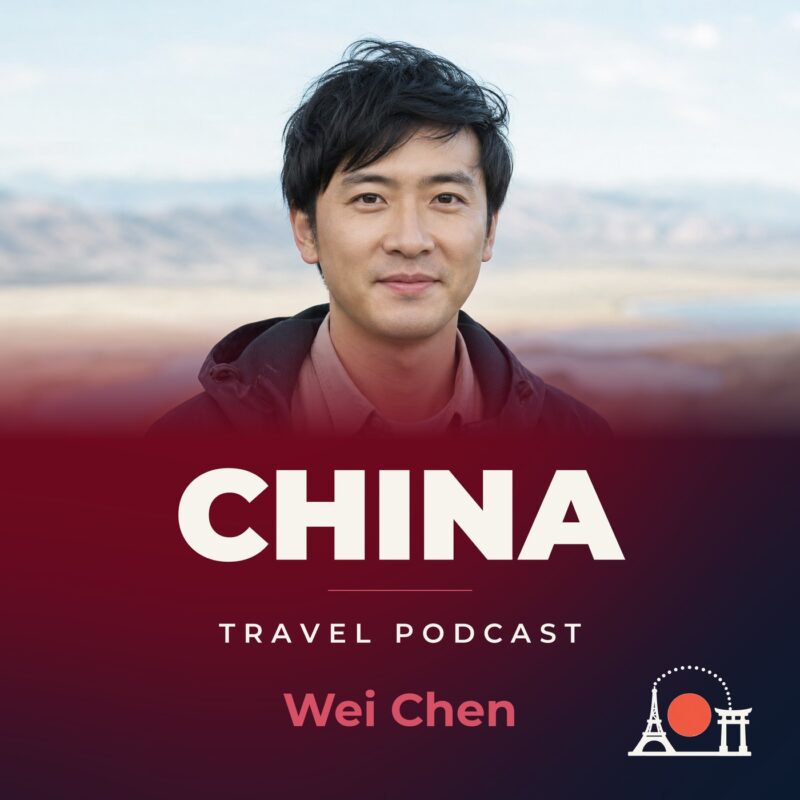
China Travel Podcast with Wei Chen
Hosted by Wei Chen — a new episode every day from China.
This podcast follows one resident’s attempt to know China by moving through it slowly, city by city, season by season. Travelling here means negotiating a country where the tropical south and the subarctic north are linked by high plateaus, deserts, and dense eastern river plains.
Across episodes, he moves from the hutongs and government buildings of Beijing to the high-altitude grasslands of Qinghai, from the karst hills around Guilin to the port cranes of Shenzhen. The route also pauses in places like Tianjin, where the patterns of daily life differ from the more famous nearby capital.
The show unfolds over time: one region is learned, then the next, often connected by a river, a railway line, or one of China’s regional languages. Seasons return to the same streets and wet markets, so a first impression is tested against a later one. That slow accumulation is the point of knowing a place as large and varied as China.
Recent episodes
Things to do in China
 Beijing: Mutianyu Great Wall Private Tour
 Beijing to Xi'an See Terracotta Warriors with Bullet Train Round Trip Transfer
 Beijing Capital Airport Layover Mutianyu Great Wall Private Tour
 Shanghai Breakfast Walking Tour of Former French Concession
 All-inclusive Private Day Tour to Mutianyu Great Wall
 Jinshanling Private Tour with Night View of Simatai and Gubei Water Town from Beijing
 Beijing :Mutianyu Great Wall and Summer Palace Private Tour
 Hangzhou Private Customized Day Trip from Shanghai by Bullet Train
Plan your trip to China
Getting around
Staying connected
China at a glance
China in depth
Reference data on the country — geography, people, history, economy and transport.
Geography and climate
Location
Eastern Asia, bordering the East China Sea, Korea Bay, Yellow Sea, and South China Sea, between North Korea and Vietnam
Terrain
Mostly mountains, high plateaus, deserts in west; plains, deltas, and hills in east
Climate
Extremely diverse; tropical in south to subarctic in north
Elevation
- Highest point
- Mount Everest (highest peak in Asia and highest point on earth above sea level) 8,849 m
- Lowest point
- Turpan Pendi (Turfan Depression) -154 m
- Mean elevation
- 1,840 m
Area
- Total
- 9,596,960 sq km
- Land
- 9,326,410 sq km
- Water
- 270,550 sq km
Size comparison
Slightly smaller than the US
Coastline
14,500 km
Land borders
- Total
- 22,457 km
- Border countries
- Afghanistan 91 km; Bhutan 477 km; Burma 2,129 km; India 2,659 km; Kazakhstan 1,765 km; North Korea 1,352 km; Kyrgyzstan 1,063 km; Laos 475 km; Mongolia 4,630 km; Nepal 1,389 km; Pakistan 438 km; Russia (northeast) 4,133 km and Russia (northwest) 46 km; Tajikistan 477 km; Vietnam 1,297 km
Natural resources
Coal, iron ore, helium, petroleum, natural gas, arsenic, bismuth, cobalt, cadmium, ferrosilicon, gallium, germanium, hafnium, indium, lithium, mercury, tantalum, tellurium, tin, titanium, tungsten, antimony, manganese, magnesium, molybdenum, selenium, strontium, vanadium, magnetite, aluminum, lead, zinc, rare earth elements, uranium, hydropower potential (world's largest), arable land
Land use
- Agricultural land
- 55.3% (2023 est.)
- Arable land
- 11.6% (2023 est.)
- Permanent crops
- 2.1% (2023 est.)
- Permanent pasture
- 41.7% (2023 est.)
- Forest
- 23.8% (2023 est.)
- Other
- 20.6% (2023 est.)
Natural hazards
Frequent typhoons (about five per year along southern and eastern coasts); damaging floods; tsunamis; earthquakes; droughts; land subsidence
Volcanism: China contains some historically active volcanoes including Changbaishan (also known as Baitoushan, Baegdu, or P'aektu-san), Hainan Dao, and Kunlun although most have been relatively inactive in recent centuries
Note
Note 1: world's fourth largest country (after Russia, Canada, and the US) and largest country situated entirely in Asia; Mount Everest, on the border with Nepal, is the world's tallest peak above sea level
Note 2: the largest cave chamber in the world is the Miao Room, in the Gebihe cave system at China's Ziyun Getu He Chuandong National Park, which encloses about 10.78 million cu m (380.7 million cu ft); the world's largest sinkhole is the Xiaoxhai Tiankeng sinkhole in Chongqing Municipality, which is 660 m deep, with a volume of 130 million cu m
People and society
Population
- Total
- 1,407,181,209 (2025 est.)
- Male
- 716,908,592
- Female
- 690,272,617
Nationality
- Noun
- Chinese (singular and plural)
- Adjective
- Chinese
Ethnic groups
Han Chinese 91.1%, ethnic minorities 8.9% (includes Zhang, Hui, Manchu, Uighur, Miao, Yi, Tujia, Tibetan, Mongol, Dong, Buyei, Yao, Bai, Korean, Hani, Li, Kazakh, Dai, and other nationalities) (2021 est.)
Languages
- Languages
- Standard Chinese or Mandarin (official; Putonghua, based on the Beijing dialect), Yue (Cantonese), Wu (Shanghainese), Minbei (Fuzhou), Minnan (Hokkien-Taiwanese), Xiang, Gan, Hakka dialects, minority languages; note - Zhuang is official in Guangxi Zhuang, Yue is official in Guangdong, Mongolian is official in Nei Mongol, Uyghur is official in Xinjiang Uygur, Kyrgyz is official in Xinjiang Uyghur, and Tibetan is official in Xizang (Tibet)
- Major-language sample(s)
- 世界概況 – 不可缺少的基本消息來源 (Standard Chinese)
Religions
Folk religion 21.9%, Buddhist 18.2%, Christian 5.1%, Muslim 1.8%, Hindu < 0.1%, Jewish < 0.1%, other 0.7% (includes Daoist (Taoist)), unaffiliated 52.1% (2021 est.)
Median age
- Total
- 40.8 years (2025 est.)
- Male
- 39 years
- Female
- 41.5 years
Life expectancy
- Total population
- 78.7 years (2024 est.)
- Male
- 76 years
- Female
- 81.7 years
Urbanisation
- Urban population
- 64.6% of total population (2023)
- Rate of urbanization
- 1.78% annual rate of change (2020-25 est.)
Where people live
Overwhelming majority of the population is found in the eastern half of the country; the west, with its vast mountainous and desert areas, remains sparsely populated; though ranked first in the world in total population, overall density is less than that of many Asian and European countries; high population density is found along the Yangtze and Yellow River valleys, the Xi Jiang River delta, the Sichuan Basin (around Chengdu), in and around Beijing, and the industrial area around Shenyang
Largest cities
29.211 million Shanghai, 21.766 million BEIJING (capital), 17.341 million Chongqing, 14.284 million Guangzhou, 14.239 million Tianjin, 13.073 million Shenzhen (2023)
Background and government
Background
China's historical civilization dates to at least the 13th century B.C., first under the Shang (to 1046 B.C.) and then the Zhou (1046-221 B.C.) dynasties. The imperial era of China began in 221 B.C. under the Qin Dynasty and lasted until the fall of the Qing Dynasty in 1912. During this period, China alternated between periods of unity and disunity under a succession of imperial dynasties. In the 19th century, the Qing Dynasty suffered heavily from overextension by territorial conquest, insolvency, civil war, imperialism, military defeats, and foreign expropriation of ports and infrastructure. It collapsed following the Revolution of 1911, and China became a republic under SUN Yat-sen of the Kuomintang (KMT or Nationalist) Party. However, the republic was beset by division, warlordism, and continued foreign intervention. In the late 1920s, a civil war erupted between the ruling KMT-controlled government, led by CHIANG Kai-shek, and the Chinese Communist Party (CCP). Japan occupied much of northeastern China in the early 1930s, and then launched a full-scale invasion of the country in 1937. The resulting eight years of warfare devastated the country and cost up to 20 million Chinese lives by the time of Japan’s defeat in 1945. The Nationalist-Communist civil war continued with renewed intensity after the end of World War II and culminated with a CCP victory in 1949, under the leadership of MAO Zedong.
MAO and the CCP established an autocratic socialist system that, while ensuring the PRC's sovereignty, imposed strict controls over everyday life and launched agricultural, economic, political, and social policies -- such as the Great Leap Forward (1958-1962) and the Cultural Revolution (1966-1976) -- that cost the lives of millions of people. MAO died in 1976. Beginning in 1978, leaders DENG Xiaoping, JIANG Zemin, and HU Jintao focused on market-oriented economic development and opening up the country to foreign trade, while maintaining the rule of the CCP. Since the change, China has been among the world’s fastest growing economies, with real gross domestic product averaging over 9% growth annually through 2021, lifting an estimated 800 million people out of poverty and dramatically improving overall living standards. By 2011, the PRC’s economy was the second largest in the world. Current leader XI Jinping has continued these policies but has also maintained tight political controls. Over the past decade, China has increased its global outreach, including military deployments, participation in international organizations, and a global connectivity plan in 2013 called the "Belt and Road Initiative" (BRI). Many nations have signed on to BRI agreements to attract PRC investment, but others have expressed concerns about such issues as the opaque nature of the projects, financing, and potentially unsustainable debt obligations. XI Jinping assumed the positions of General Secretary of the Chinese Communist Party and Chairman of the Central Military Commission in 2012 and President in 2013. In 2018, the PRC’s National People’s Congress passed an amendment abolishing presidential term limits, which allowed XI to gain a third five-year term in 2023.
Government
Communist party-led state
Capital
Beijing
Time zone
UTC+8 (13 hours ahead of Washington, DC, during Standard Time)
Local name
Zhonghua Renmin Gongheguo
Independence
1 October 1949 (People's Republic of China established); notable earlier dates: 221 B.C. (unification under the Qin Dynasty); 1 January 1912 (Qing Dynasty replaced by the Republic of China)
National day
National Day (anniversary of the founding of the People's Republic of China), 1 October (1949)
Economy and cost of living
Overview
World’s second-largest economy by nominal GDP; global leader in exports and manufacturing; historically strong growth slowing; challenges of aging workforce, weak productivity, rising youth unemployment, struggling property sector, and public debt; state-sponsored economic controls and infrastructure investments
GDP per capita
- Real GDP per capita 2024
- $23,800 (2024 est.)
- Real GDP per capita 2023
- $22,700 (2023 est.)
- Real GDP per capita 2022
- $21,500 (2022 est.)
Inflation
- Inflation rate (consumer prices) 2024
- 0.2% (2024 est.)
- Inflation rate (consumer prices) 2023
- 0.2% (2023 est.)
- Inflation rate (consumer prices) 2022
- 2% (2022 est.)
Unemployment
- Unemployment rate 2024
- 4.6% (2024 est.)
- Unemployment rate 2023
- 4.7% (2023 est.)
- Unemployment rate 2022
- 5% (2022 est.)
Exchange rate
- Currency
- Renminbi yuan (RMB) per US dollar -
- Exchange rates 2024
- 7.197 (2024 est.)
- Exchange rates 2023
- 7.084 (2023 est.)
- Exchange rates 2022
- 6.737 (2022 est.)
- Exchange rates 2021
- 6.449 (2021 est.)
- Exchange rates 2020
- 6.901 (2020 est.)
Main industries
World leader in gross value of industrial output; mining and ore processing, iron, steel, aluminum, and other metals, coal; machine building; armaments; textiles and apparel; petroleum; cement; chemicals; fertilizer; consumer products (including footwear, toys, and electronics); food processing; transportation equipment, including automobiles, railcars and locomotives, ships, aircraft; telecommunications equipment, commercial space launch vehicles, satellites
Agriculture
Maize, rice, vegetables, wheat, sugarcane, potatoes, cucumbers/gherkins, tomatoes, watermelons, pork (2023)
Transport and connectivity
Airports
552 (2025)
Railways
Total 150,000 km (2021) 1.435-m gauge (100,000 km electrified); 104,0000 traditional, 40,000 high-speed
Ports
- Total ports
- 66 (2024)
- Large
- 5
- Medium
- 9
- Small
- 25
- Very small
- 27
- Ports with oil terminals
- 48
- Key ports
- Chaozhou, Dalian, Fang-Cheng, Guangzhou, Hankow, Lon Shui Terminal, Qingdao Gang, Qinhuangdao, Shanghai, Shekou, Tianjin Xin Gang, Weihai, Wenzhou, Xiamen
Internet domain
.cn
Internet users
Percent of population 78% (2023 est.)
Mobile subscriptions
- Total subscriptions
- 1.87 billion (2024 est.)
- Subscriptions per 100 inhabitants
- 132 (2024 est.)
Environment
Environmental issues
Air pollution and acid rain from reliance on coal; carbon dioxide emissions from the burning of fossil fuels; water shortages, particularly in the north; water pollution from untreated wastes; coastal destruction due to land reclamation, industrial development, and aquaculture; deforestation and habitat destruction; poor land management leading to soil erosion, landslides, floods, droughts, dust storms, and desertification; trade in endangered species
Fresh water
2.84 trillion cubic meters (2022 est.)
UNESCO Global Geoparks
- Total global geoparks and regional networks
- 49 (2025)
- Global geoparks and regional networks
- Alxa; Arxan; Dali-Cangshan; Danxiashan; Dunhuang; Enshi Grand Canyon-Tenglongdong; Fangshan; Funiushan; Guangwushan-Noushuihe; Hexigten; Hong Kong; Huanggang Dabieshan; Huangshan; Jingpohu; Jiuhuashan; Kanbula; Keketuohai; Leiqiong; Leye Fengshan; Linxia; Longhushan; Longyan; Lushan; Mount Changbaishan; Mount Kunlun; Ningde; Qinling Zhongnanshan; Sanqingshan; Shennongjia; Shilin; Songshan; Taining; Taishan; Tianzhushan; Wangwushan-Daimeishan; Wudalianchi; Wugongshan; Xiangxi; Xingwen; Yingyi; Yandangshan; Yanqing; Yimengshan; Yuntaishan; Yunyang: Zhangjlajle; Zhangye; Zhijingdong Cave; Zigong (2025)
Country reference figures are periodically revised. Check anything time-sensitive or safety-critical against an official source before you travel.
China travel guides
 News & Updates
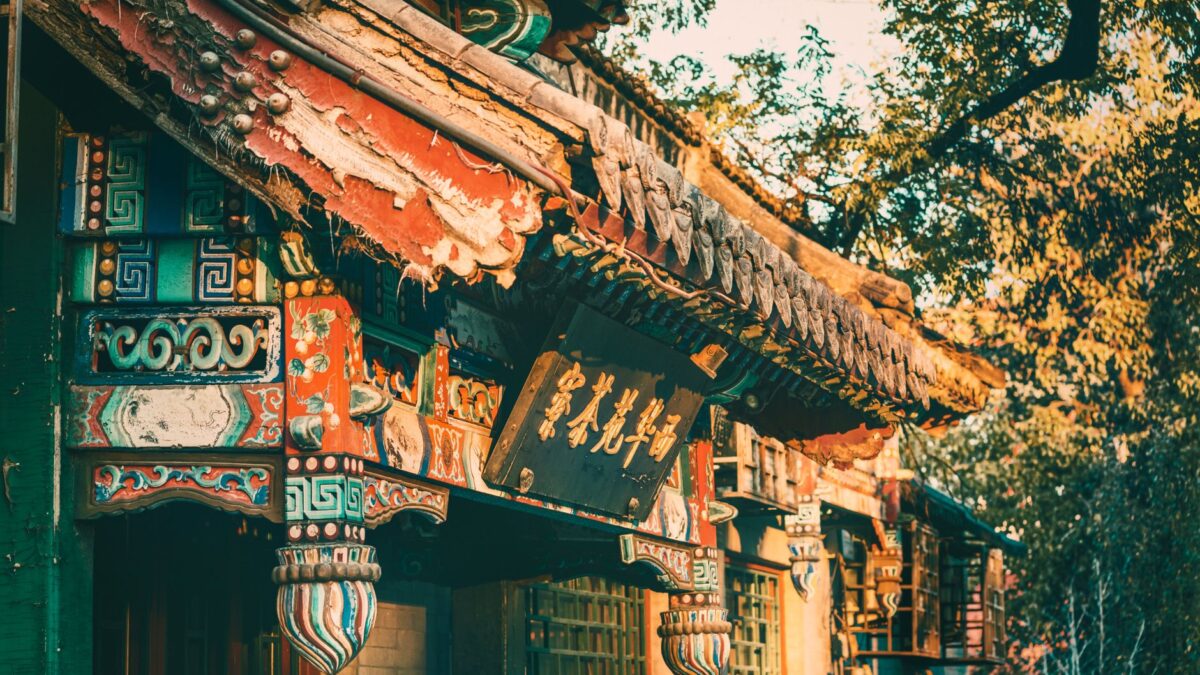
China in September 2026: what travelers should know now
China in September 2026: Weather, holiday crowds, and key events in Beijing for travelers arriving this month.
 Costs & Money
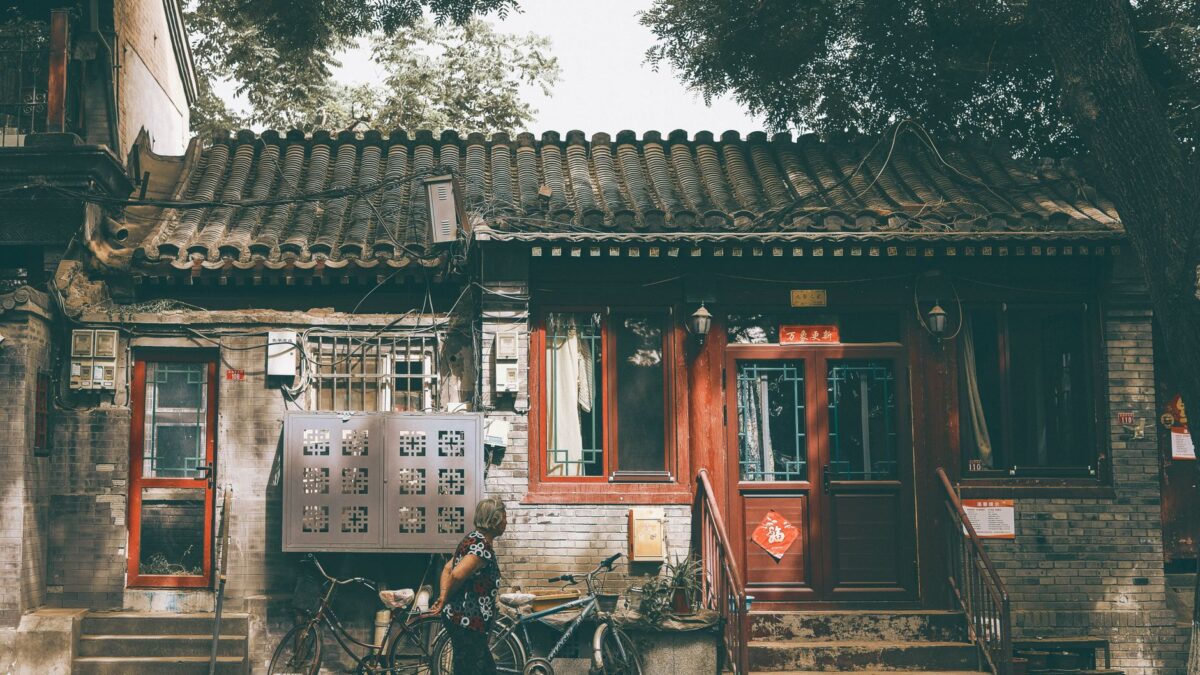
A week in Beijing on a mid-range budget
A realistic day-by-day budget for a week in Beijing, China, covering hotels, metro fares, and authentic meals at real prices.
 Costs & Money
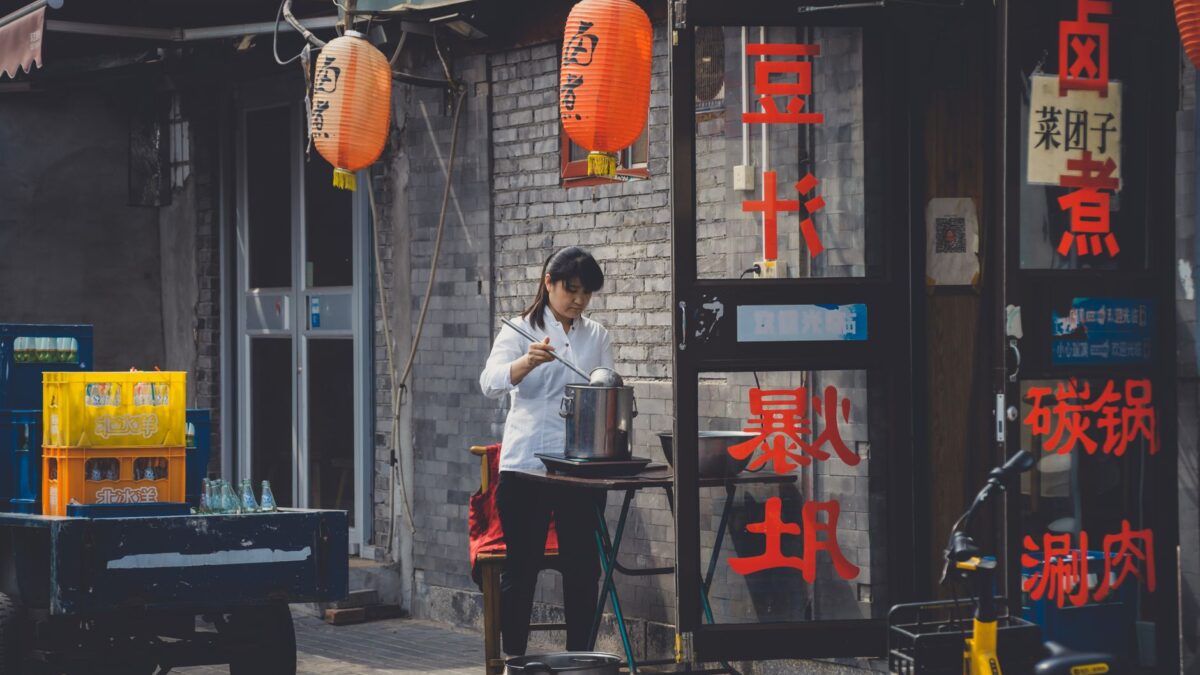
How much does a trip to China cost?
A realistic budget breakdown for a trip to China. Discover daily costs for accommodation, food, and transport in Beijing, with tips for budget and…
 News & Updates
China in August 2026: what travelers should know now
Beijing in August 2026: humanoid robot games end, Longfu Temple food festival, Mao Hall closed, and the heat breaks after Chushu. Practical tips for…
East Asia
 Japan
JapanJapan Travel Podcast with Yuki Tanaka
The rugged mountains of Honshu, Japan's largest island, shape every journey, while the Kanto Plain holds a third of the country's people…
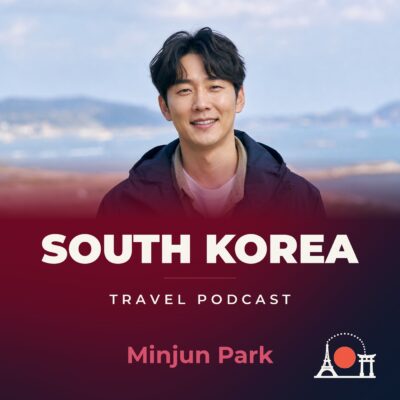 South Korea
South Korea Travel Podcast with Minjun Park
The hills and mountains that cover most of South Korea give way to wide coastal plains in the west and south, where…
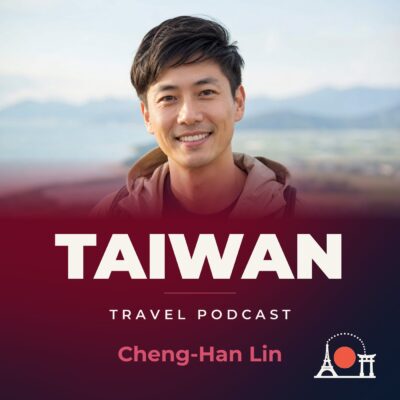 Taiwan
Taiwan Travel Podcast with Cheng-Han Lin
The eastern two-thirds of Taiwan rise into rugged mountains, while the west settles into plains where most people live along the coasts.