


Belgium Travel Podcast with Lucas Peeters
Hosted by Lucas Peeters — a new episode every day from Belgium.
Belgium rewards the slow traveller: a journey from flat coastal plains to rolling central hills and the rugged Ardennes in the southeast. Brussels, the capital, is also the seat of the EU and NATO, while most residents live in the northern two thirds of the country. The show explores that mix of dense city life and open landscape.
Over the series he gets to know Brussels and Antwerp, the two largest cities, and then moves outward: to the Dutch-speaking Flemish towns of the north, across the rolling central hills, and into the thinly populated Ardennes Forest in the southeast. He also spends time in the Kempen, a lesser-known region of heathland and sandy soils east of Antwerp.
Across the episodes, the seasons do the pacing: winter fogs over the plains, wet springs in the Ardennes, long summer light around Antwerp, and a return to each place only after months away. The show treats travel as accumulated knowledge, not a checklist, so the same canals, station squares and market halls reappear as he learns them properly.
Recent episodes
Things to do in Belgium
 Likely to sell out
Private Dinant's, Castle and Beer Monastery Expedition
Likely to sell out
Private Dinant's, Castle and Beer Monastery Expedition
 European Quarter Comedy Tour
 Handcraft your own silver ring in Bruges
 Private MAS Antwerp Aperitif Cruise (8 - 12 Guests)
 Likely to sell out
Private Liège to Aachen to Maastricht Border Crossing Tour
Likely to sell out
Private Liège to Aachen to Maastricht Border Crossing Tour
 "Edges of Brugge" Photo Tour - 2hr open city tour & workshop
 Private Guided Historical Walking Tour in Bruges Belgium
 Navigate through Brussels and Discover Beer and Chocolate
Plan your trip to Belgium
Getting around
Staying connected
Belgium at a glance
Belgium in depth
Reference data on the country — geography, people, history, economy and transport.
Geography and climate
Location
Western Europe, bordering the North Sea, between France and the Netherlands
Terrain
Flat coastal plains in northwest, central rolling hills, rugged mountains of Ardennes Forest in southeast
Climate
Temperate; mild winters, cool summers; rainy, humid, cloudy
Elevation
- Highest point
- Botrange 694 m
- Lowest point
- North Sea 0 m
- Mean elevation
- 181 m
Area
- Total
- 30,528 sq km
- Land
- 30,278 sq km
- Water
- 250 sq km
Size comparison
About the size of Maryland
Coastline
66.5 km
Land borders
- Total
- 1,297 km
- Border countries
- France 556 km; Germany 133 km; Luxembourg 130 km; Netherlands 478 km
Natural resources
Construction materials, silica sand, carbonates, arable land
Land use
- Agricultural land
- 44.4% (2023 est.)
- Arable land
- 28.3% (2023 est.)
- Permanent crops
- 0.8% (2023 est.)
- Permanent pasture
- 15.3% (2023 est.)
- Forest
- 22% (2023 est.)
- Other
- 33.6% (2023 est.)
Natural hazards
Flooding is a threat along rivers and in areas of reclaimed coastal land, protected from the sea by concrete dikes
Note
Crossroads of Western Europe; most West European capitals are within 1,000 km of Brussels, the seat of both the EU and NATO
People and society
Population
- Total
- 11,960,170 (2025 est.)
- Male
- 5,907,498
- Female
- 6,052,672
Nationality
- Noun
- Belgian(s)
- Adjective
- Belgian
Ethnic groups
Belgian 75.2%, Italian 4.1%, Moroccan 3.7%, French 2.4%, Turkish 2%, Dutch 2%, other 10.6% (2012 est.)
Languages
- Languages
- Dutch (official) 60%, French (official) 40%, German (official) less than 1%
- Major-language sample(s)
- Het Wereld Feitenboek, een onmisbare bron van informatie. (Dutch)
Religions
Roman Catholic 57.1%, Protestant 2.3%, other Christian, 2.8%, Muslim 6.8%, other 1.7%, atheist 9.1%, nonbeliever/agnostic 20.2% (2018 est.)
Median age
- Total
- 42.4 years (2025 est.)
- Male
- 40.8 years
- Female
- 43.1 years
Life expectancy
- Total population
- 82.3 years (2024 est.)
- Male
- 79.7 years
- Female
- 85 years
Urbanisation
- Urban population
- 98.2% of total population (2023)
- Rate of urbanization
- 0.38% annual rate of change (2020-25 est.)
Where people live
Most of the population is concentrated in the northern two thirds of the country; the southeast is more thinly populated; considered to have one of the highest population densities in the world, with approximately 97% living in urban areas
Largest cities
2.122 million BRUSSELS (capital), 1.057 million Antwerp (2023)
Background and government
Background
Belgium became independent from the Netherlands in 1830; it was occupied by Germany during World Wars I and II. The country prospered as a modern, technologically advanced European state and member of NATO and the EU. In recent years, longstanding tensions between the Dutch-speaking Flemish of the north and the French-speaking Walloons of the south have led to constitutional amendments granting these regions formal recognition and autonomy. The capital city of Brussels is home to numerous international organizations, including the EU and NATO.
Government
Federal parliamentary democracy under a constitutional monarchy
Capital
Brussels
Time zone
UTC+1 (6 hours ahead of Washington, DC, during Standard Time)
Local name
Royaume de Belgique (French)/Koninkrijk Belgie (Dutch)/Koenigreich Belgien (German)
Independence
4 October 1830 (a provisional government declared independence from the Netherlands); 21 July 1831 (King LEOPOLD I ascended to the throne)
National day
Belgian National Day (ascension to the throne of King LEOPOLD I), 21 July (1831)
Economy and cost of living
Overview
High-income, core EU and eurozone economy; slow growth with weakened domestic consumption and export demand; high public debt and structural deficits linked to social spending; aging workforce with weak productivity growth and participation rates
GDP per capita
- Real GDP per capita 2024
- $63,100 (2024 est.)
- Real GDP per capita 2023
- $62,900 (2023 est.)
- Real GDP per capita 2022
- $62,700 (2022 est.)
Inflation
- Inflation rate (consumer prices) 2024
- 3.1% (2024 est.)
- Inflation rate (consumer prices) 2023
- 4% (2023 est.)
- Inflation rate (consumer prices) 2022
- 9.6% (2022 est.)
Unemployment
- Unemployment rate 2024
- 5.5% (2024 est.)
- Unemployment rate 2023
- 5.6% (2023 est.)
- Unemployment rate 2022
- 5.6% (2022 est.)
Exchange rate
- Currency
- Euros (EUR) per US dollar -
- Exchange rates 2024
- 0.924 (2024 est.)
- Exchange rates 2023
- 0.925 (2023 est.)
- Exchange rates 2022
- 0.95 (2022 est.)
- Exchange rates 2021
- 0.845 (2021 est.)
- Exchange rates 2020
- 0.876 (2020 est.)
Main industries
Engineering and metal products, motor vehicle assembly, transportation equipment, scientific instruments, processed food and beverages, chemicals, pharmaceuticals, base metals, textiles, glass, petroleum
Agriculture
Sugar beets, milk, potatoes, wheat, pork, lettuce, maize, chicken, barley, pears (2023)
Transport and connectivity
Airports
48 (2025)
Railways
Total 3,602 km (2020) 3,160 km electrified
Ports
- Total ports
- 7 (2024)
- Large
- 1
- Medium
- 2
- Small
- 2
- Very small
- 2
- Ports with oil terminals
- 5
- Key ports
- Antwerpen, Bruxelles, Ghent, Oostende, Zeebrugge
Internet domain
.be
Internet users
Percent of population 95% (2023 est.)
Mobile subscriptions
- Total subscriptions
- 12.2 million (2024 est.)
- Subscriptions per 100 inhabitants
- 104 (2024 est.)
Environment
Environmental issues
Urbanization; possible risks from industry and intensive farming; air and water pollution
Fresh water
18.3 billion cubic meters (2022 est.)
UNESCO Global Geoparks
- Total global geoparks and regional networks
- 2 (2024)
- Global geoparks and regional networks
- Famenne-Ardenne; Schelde Delta (includes Netherlands) (2024)
Country reference figures are periodically revised. Check anything time-sensitive or safety-critical against an official source before you travel.
Belgium travel guides
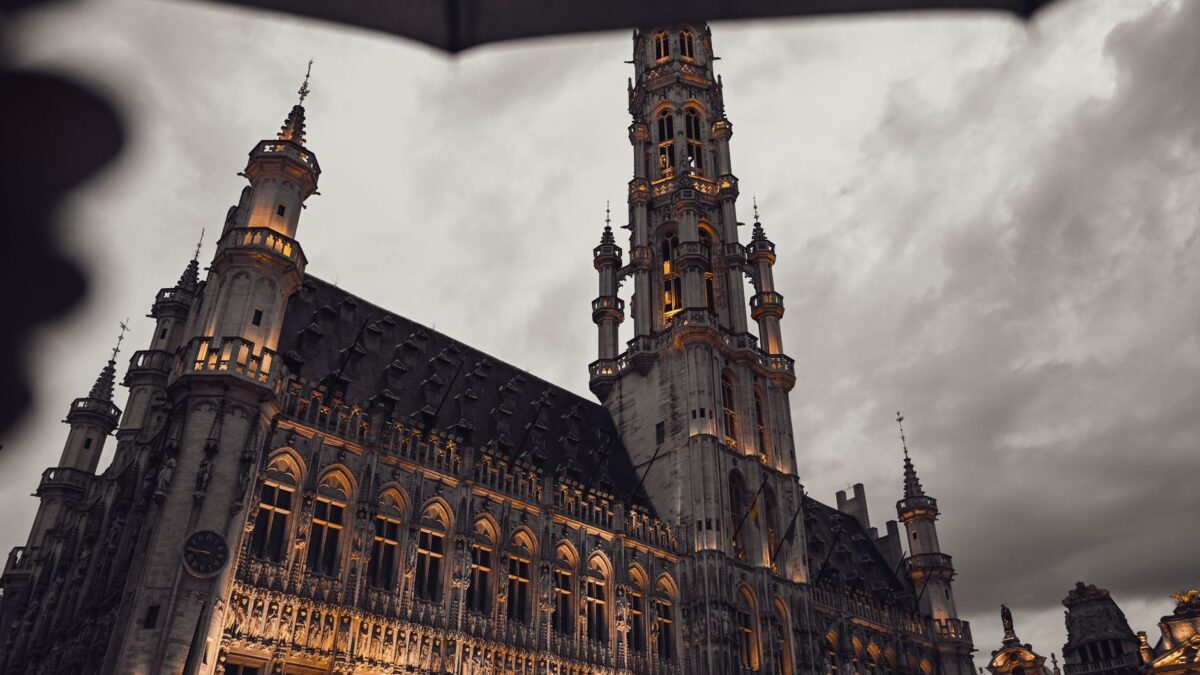 Costs & Money
A week in Brussels on a mid-range budget
Plan a week in Brussels on a mid-range budget. Real prices for hotels, food, and transit, plus a day-by-day itinerary covering the Beer Weekend…
 News & Updates
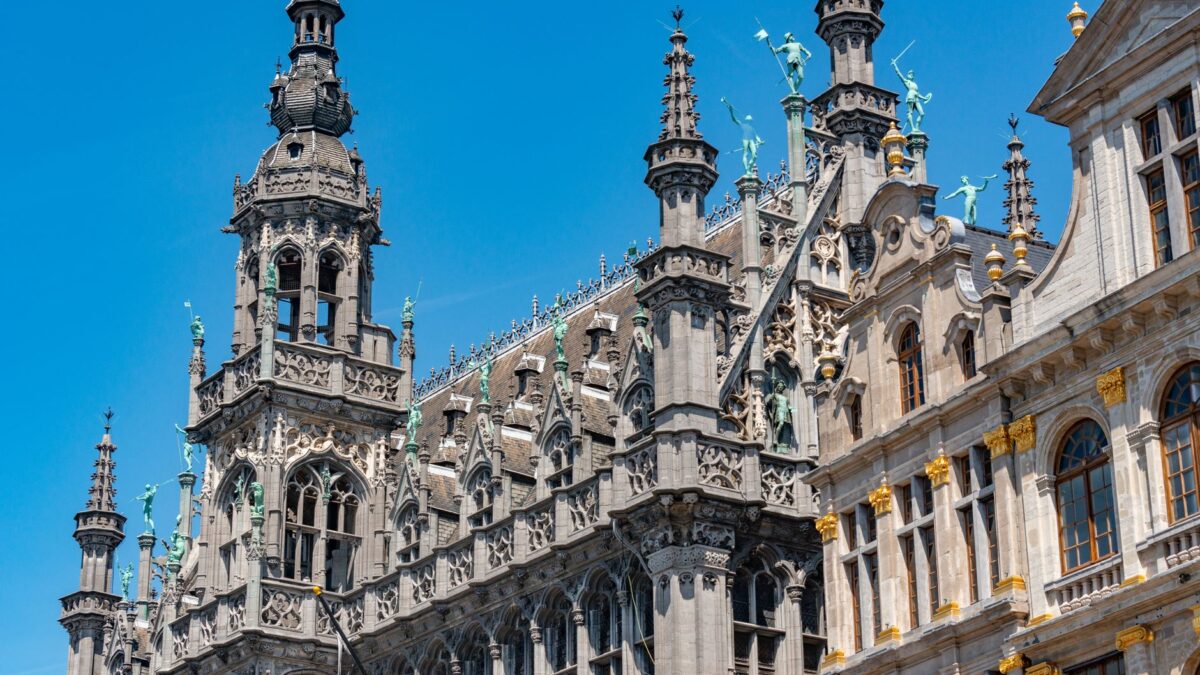
Belgium in September 2026: what travelers should know now
Brussels in September 2026: Beat the crowds, navigate the Beer Weekend & BRIFF, and pack for mild rain. Your timely local guide.
 News & Updates
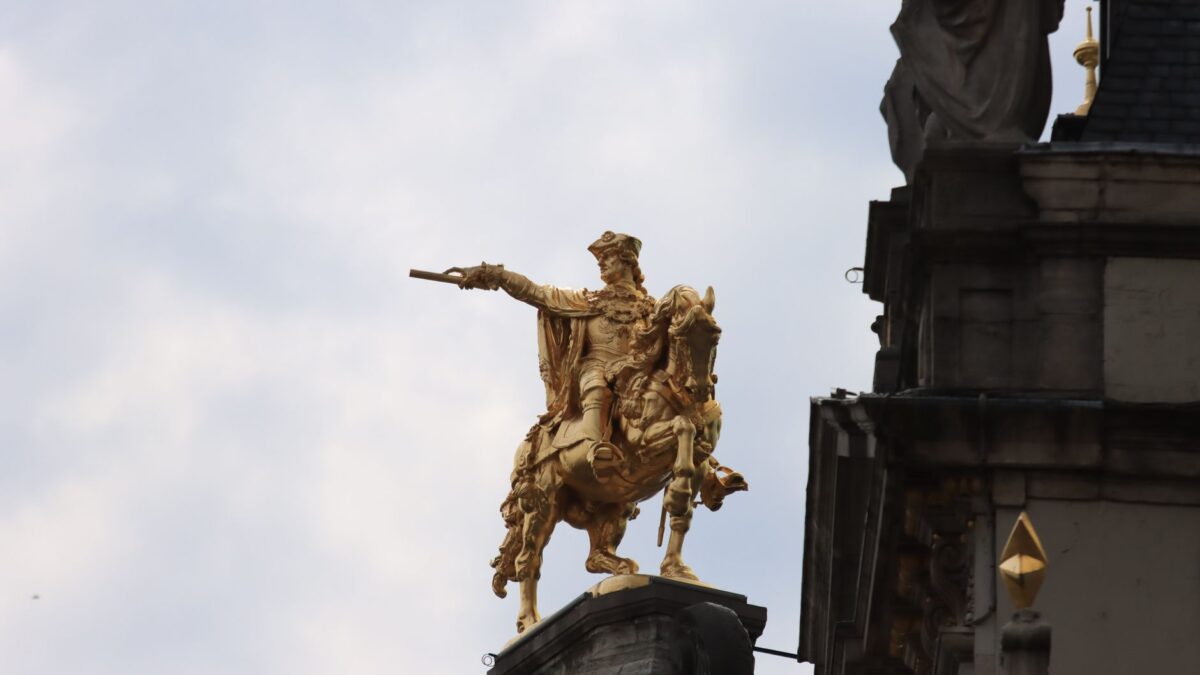
Belgium in August 2026: what travelers should know now
Belgium in August 2026: weather, Flower Carpet wrap-up, prices, transport tips, and neighborhoods—your current local briefing from Brussels.
Western Europe
 France
France Travel Podcast with Camille Laurent
The Rhône is the only major French river flowing southward to the Mediterranean, while the Seine, Loire, and Garonne run west to…
 Germany
Germany Travel Podcast with Lena Brandt
The Elbe flows northward through German lowlands and uplands before reaching the North Sea, shaping trade and weather along its course.
 Austria
Austria Travel Podcast with Felix Gruber
This podcast follows one resident's slow journey through Austria, from Vienna's eastern lowlands to the Alpine passes and Danube-side valleys that shape…
 Netherlands
Netherlands Travel Podcast with Sanne de Vries
The Randstad, anchored by Amsterdam, Rotterdam, The Hague and Utrecht, holds most of the country's population, while the north remains less densely…