Netherlands Travel Podcast with Sanne de Vries
Hosted by Sanne de Vries — a new episode every day from Netherlands.
This show is a slow, ground-level guide to a country that is mostly coastal lowland and reclaimed polder. Travelling here means moving through a dense western Randstad, quieter northern provinces and the delta of the Rhine, Meuse and Scheldt. The landscape is unmistakably Dutch: flat, wet, engineered and lived in.
Over the first year the host settles in Amsterdam, then moves outward to Rotterdam, The Hague and Utrecht. Later episodes reach Fryslân, where Frisian is an official language, the Zeeland delta, and the hills of South Limburg in the southeast — places beyond the Randstad tourist headline.
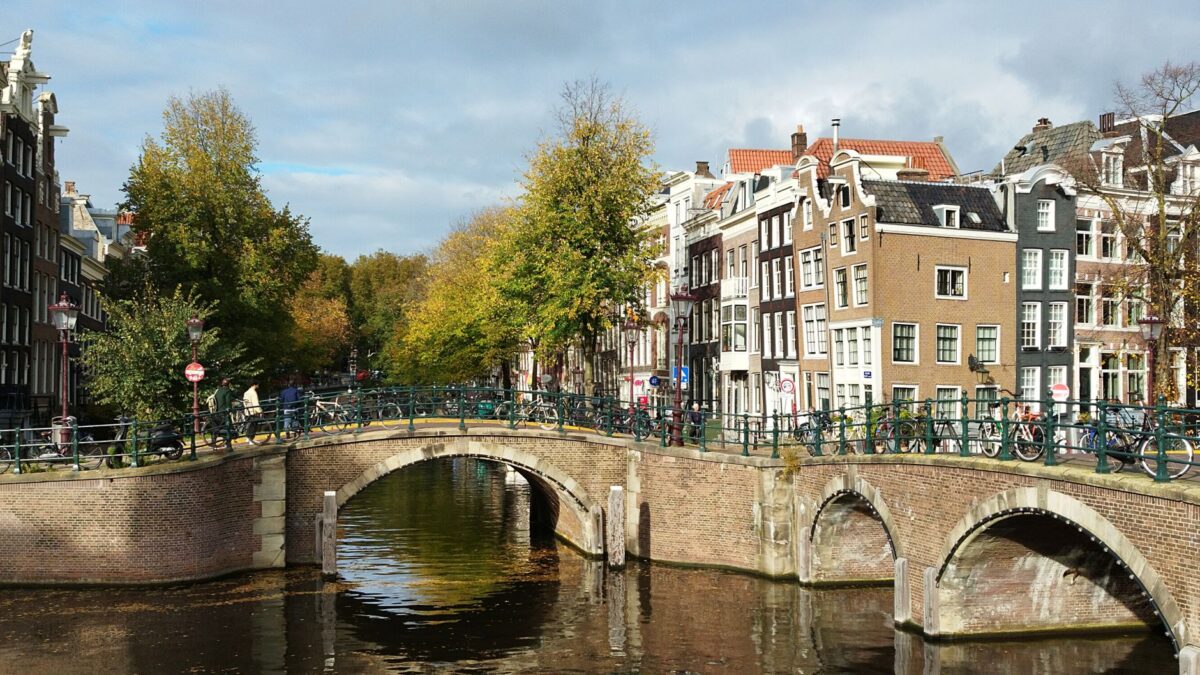
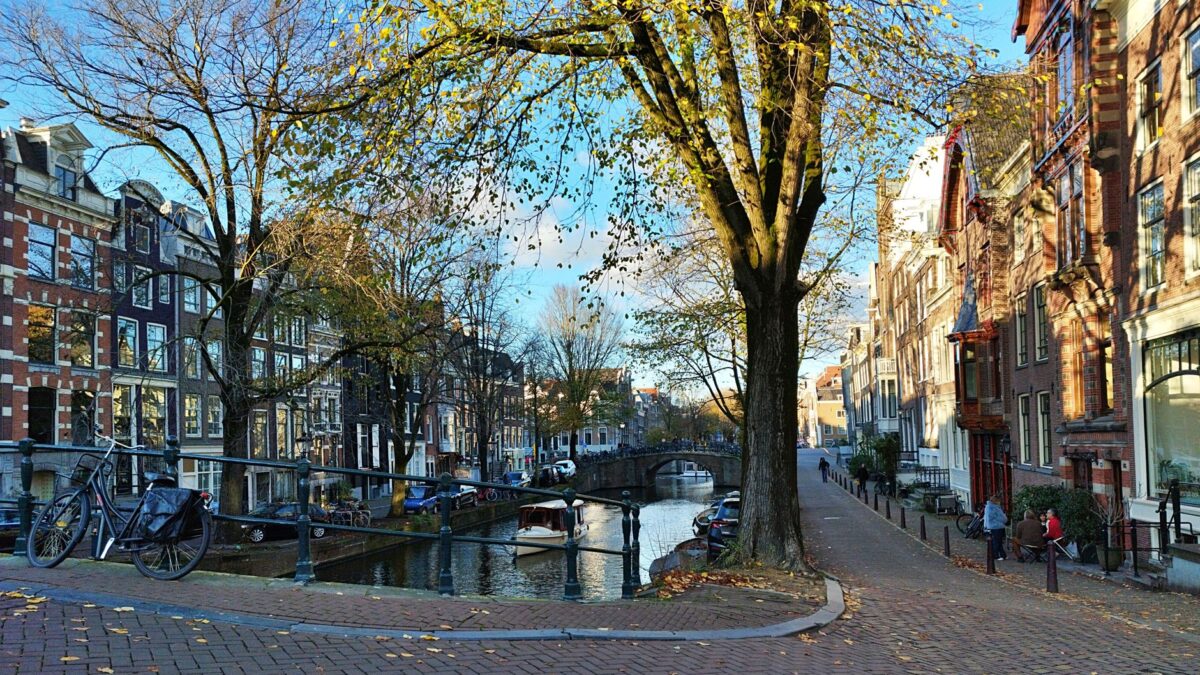
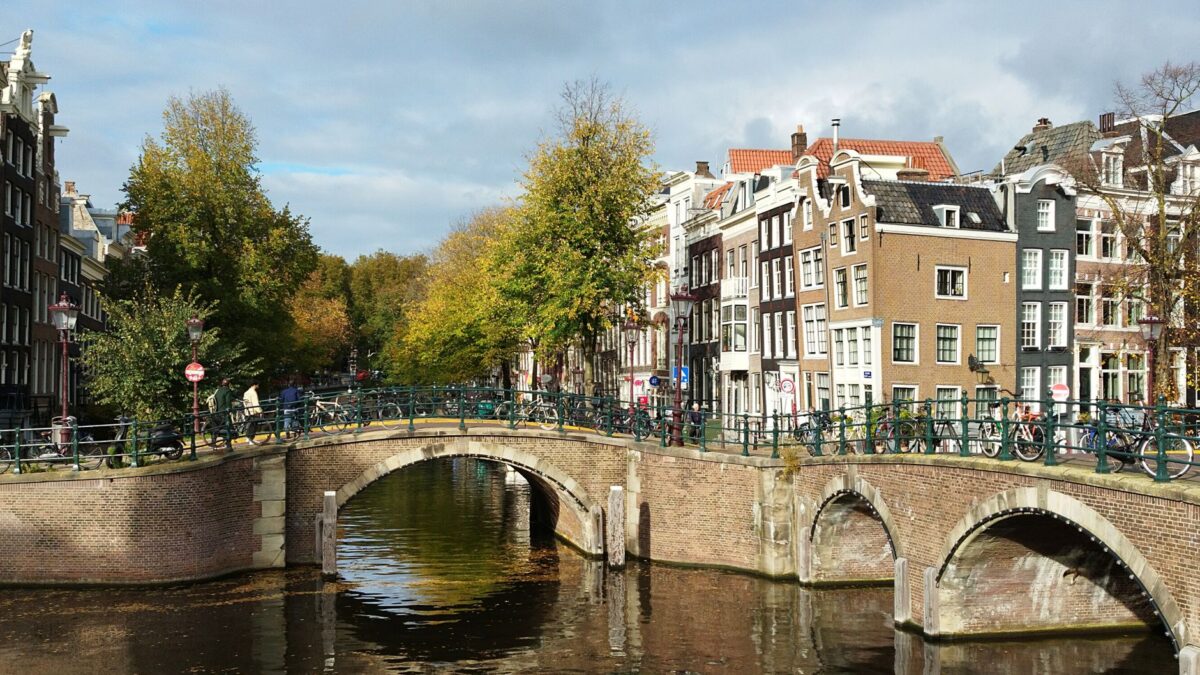
Across episodes the seasons change and places are revisited: a canal in Amsterdam in autumn, a Fryslân village in winter fog, a polder road in spring. The show works by accumulation, letting one region settle before moving to the next connected place. By the end, the Netherlands feels known the way a resident knows it, not the way a visitor passes through.
Recent episodes
Things to do in Netherlands
 Amsterdam Free tour World War II and Anne Frank
 Amsterdam Highlights and Hidden Gems Walking Tour with Fun Guide
 Explore Amsterdam in 75 Minutes – Pedicab Rickshaw City tour
 Amsterdam: Private Tour to Keukenhof and Flower-Farm with Ticket
 Small Group Alkmaar Cheese Market and City Tour *English*
 Private All-Inclusive Cruise with Captain
 Small-Group Guided Sunset Canoe Tour in Waterland with Dinner
 The Ultimate Craft Beer Adventure in Amsterdam!
Plan your trip to Netherlands
Getting around
Staying connected
Netherlands at a glance
Netherlands in depth
Reference data on the country — geography, people, history, economy and transport.
Geography and climate
Location
Western Europe, bordering the North Sea, between Belgium and Germany
Terrain
Mostly coastal lowland and reclaimed land (polders); some hills in southeast
Climate
Temperate; marine; cool summers and mild winters
Elevation
- Highest point
- Mount Scenery (on the island of Saba in the Caribbean, now considered an integral part of the Netherlands following the dissolution of the Netherlands Antilles) 862 m
- Lowest point
- Zuidplaspolder -7 m
- Mean elevation
- 30 m
Area
- Total
- 41,543 sq km
- Land
- 33,893 sq km
- Water
- 7,650 sq km
Size comparison
Slightly less than twice the size of New Jersey
Coastline
451 km
Land borders
- Total
- 1,053 km
- Border countries
- Belgium 478 km; Germany 575 km
Natural resources
Natural gas, petroleum, peat, limestone, salt, sand and gravel, arable land
Land use
- Agricultural land
- 53.5% (2023 est.)
- Arable land
- 30% (2023 est.)
- Permanent crops
- 1.1% (2023 est.)
- Permanent pasture
- 22.5% (2023 est.)
- Forest
- 10.9% (2023 est.)
- Other
- 35.5% (2023 est.)
Natural hazards
Flooding
Volcanism: Mount Scenery (887 m), located on the island of Saba in the Caribbean, last erupted in 1640; Round Hill (601 m), a dormant volcano also known as "The Quill," is located on the island of St. Eustatius in the Caribbean; these islands are at the northern end of the volcanic island arc of the Lesser Antilles that extends south to Grenada
Note
Located at mouths of three major European rivers (Rhine (Rijn), Meuse (Maas), and Scheldt (Schelde)); about a quarter of the country lies below sea level and only about half of the land exceeds one meter above sea level
People and society
Population
- Total
- 17,833,885 (2025 est.)
- Male
- 8,874,366
- Female
- 8,959,519
Nationality
- Noun
- Dutchman(men), Dutchwoman(women)
- Adjective
- Dutch
Ethnic groups
Dutch 75.4%, EU (excluding Dutch) 6.4%, Turkish 2.4%, Moroccan 2.4%, Surinamese 2.1%, Indonesian 2%, other 9.3% (2021 est.)
Languages
- Languages
- Dutch (official), Frisian (official in Fryslan province)
- Major-language sample(s)
- Het Wereld Feitenboek, een onmisbare bron van informatie. (Dutch)
Religions
Roman Catholic 20.1%, Protestant 14.8% (includes Dutch Reformed, Protestant Church of The Netherlands, Calvinist), Muslim 5%, other 5.9% (includes Hindu, Buddhist, Jewish), none 54.1% (2019 est.)
Median age
- Total
- 42.2 years (2025 est.)
- Male
- 40.9 years
- Female
- 43.5 years
Life expectancy
- Total population
- 81.9 years (2024 est.)
- Male
- 80.3 years
- Female
- 83.5 years
Urbanisation
- Urban population
- 93.2% of total population (2023)
- Rate of urbanization
- 0.59% annual rate of change (2020-25 est.)
Where people live
An area known as the Randstad, anchored by the cities of Amsterdam, Rotterdam, the Hague, and Utrecht, is the most densely populated region; the north tends to be less dense, but sizeable communities can be found throughout the entire country
Largest cities
1.174 million AMSTERDAM (capital), 1.018 million Rotterdam (2023)
Background and government
Background
The Dutch United Provinces declared their independence from Spain in 1581; during the 17th century, they became a leading seafaring and commercial power, with settlements and colonies around the world. After 18 years of French domination, the Netherlands regained its independence in 1813. In 1830, Belgium seceded and formed a separate kingdom. The Netherlands remained neutral in World War I but suffered German invasion and occupation in World War II. A modern, industrialized nation, the Netherlands is also a large exporter of agricultural products. The country was a founding member of NATO and the EEC (now the EU) and participated in the introduction of the euro in 1999. In 2010, the former Netherlands Antilles was dissolved and the three smallest islands -- Bonaire, Sint Eustatius, and Saba -- became special municipalities in the Netherlands administrative structure. The larger islands of Sint Maarten and Curacao joined the Netherlands and Aruba as constituent countries forming the Kingdom of the Netherlands.
In 2018, the Sint Eustatius island council (governing body) was dissolved and replaced by a government commissioner to restore the integrity of public administration. According to the Dutch Government, the intervention will be as "short as possible and as long as needed."
Government
Parliamentary constitutional monarchy; part of the Kingdom of the Netherlands
Capital
Amsterdam
Time zone
UTC+1 (6 hours ahead of Washington, DC, during Standard Time)
Local name
Koninkrijk der Nederlanden
Independence
26 July 1581
National day
King's Day (birthday of King WILLEM-ALEXANDER), 27 April (1967)
Economy and cost of living
Overview
High-income, core EU- and eurozone-member economy; strong services, logistics, and tech sectors; strongly trade-oriented with heightened risks from global tensions; declining inflation aided by easing energy prices and wage growth; rising but manageable deficits and public debt; strong ratings for innovation, competitiveness, and business climate
GDP per capita
- Real GDP per capita 2024
- $70,900 (2024 est.)
- Real GDP per capita 2023
- $70,700 (2023 est.)
- Real GDP per capita 2022
- $71,300 (2022 est.)
Inflation
- Inflation rate (consumer prices) 2024
- 3.3% (2024 est.)
- Inflation rate (consumer prices) 2023
- 3.8% (2023 est.)
- Inflation rate (consumer prices) 2022
- 10% (2022 est.)
Unemployment
- Unemployment rate 2024
- 3.6% (2024 est.)
- Unemployment rate 2023
- 3.6% (2023 est.)
- Unemployment rate 2022
- 3.6% (2022 est.)
Exchange rate
- Currency
- Euros (EUR) per US dollar -
- Exchange rates 2024
- 0.924 (2024 est.)
- Exchange rates 2023
- 0.925 (2023 est.)
- Exchange rates 2022
- 0.95 (2022 est.)
- Exchange rates 2021
- 0.845 (2021 est.)
- Exchange rates 2020
- 0.876 (2020 est.)
Main industries
Agroindustries, metal and engineering products, electrical machinery and equipment, chemicals, petroleum, construction, microelectronics, fishing
Agriculture
Milk, sugar beets, potatoes, onions, pork, wheat, chicken, tomatoes, carrots/turnips, beef (2023)
Transport and connectivity
Airports
44 (2025)
Railways
Total 3,055 km (2020) 2,310 km electrified
Ports
- Total ports
- 18 (2024)
- Large
- 2
- Medium
- 4
- Small
- 5
- Very small
- 7
- Ports with oil terminals
- 12
- Key ports
- Amsterdam, Dordrecht, Europoort, Rotterdam, Terneuzen, Vlissingen
Internet domain
.nl
Internet users
Percent of population 97% (2023 est.)
Mobile subscriptions
- Total subscriptions
- 23.4 million (2024 est.)
- Subscriptions per 100 inhabitants
- 129 (2024 est.)
Environment
Environmental issues
Water pollution, including industrial and agricultural chemicals in rivers; air pollution from vehicles and refining activities
Fresh water
91 billion cubic meters (2022 est.)
UNESCO Global Geoparks
- Total global geoparks and regional networks
- 2 (2024)
- Global geoparks and regional networks
- De Hondsrug; Schelde Delta (includes Belgium) (2024)
Country reference figures are periodically revised. Check anything time-sensitive or safety-critical against an official source before you travel.
Netherlands travel guides
 News & Updates
Netherlands in September 2026: what travelers should know now
Netherlands in September 2026: weather, festivals, and practical tips for travelers visiting Amsterdam this month.
 Travel Tips
The best time to visit Netherlands
When to visit the Netherlands: a month-by-month guide to weather, crowds, prices, and festivals from a local. Pick your perfect season.
 News & Updates
Netherlands in August 2026: what travelers should know now
Amsterdam in August 2026: Post-WorldPride calm, the Grachtenfestival's last days, Hartjesdag, and essential peak-season tips for costs, museums, and transport.
Western Europe
 France
France Travel Podcast with Camille Laurent
The Rhône is the only major French river flowing southward to the Mediterranean, while the Seine, Loire, and Garonne run west to…
 Germany
Germany Travel Podcast with Lena Brandt
The Elbe flows northward through German lowlands and uplands before reaching the North Sea, shaping trade and weather along its course.
 Austria
Austria Travel Podcast with Felix Gruber
This podcast follows one resident's slow journey through Austria, from Vienna's eastern lowlands to the Alpine passes and Danube-side valleys that shape…
 Switzerland
Switzerland Travel Podcast with Elena Vogt
The Alps in the south and the Jura in the northwest frame a central plateau of rolling hills, plains and large lakes.