

Germany Travel Podcast with Lena Brandt
Hosted by Lena Brandt — a new episode every day from Germany.
This show follows a single resident’s route across Germany, from a Berlin flat to a Bavarian mountain village, and pauses long enough for the country’s details to come into focus. Germany’s distinctiveness lies in its contrasts: the flat northern plain, the wooded central uplands, the alpine south, and rivers that all run toward different seas.
Episodes range from the Rhine valley and the Harz to the North Sea coast and Munich, with detours into the industrial west, where cities such as Cologne and Dortmund sit close together. The Harz is included deliberately: a forested upland with abandoned mines and narrow-gauge railways, rarely the first place visitors name.
In each place, the show settles for a season and then moves on to somewhere connected to it. Winter fog over the Oder, spring fruit blossom in the Altes Land, summer rain across the central uplands and autumn haze outside Munich become the measure of how a region changes.
Recent episodes
Things to do in Germany
 Special offer
Neuschwanstein & Linderhof Castle Luxury Private Tour from Munich
Special offer
Neuschwanstein & Linderhof Castle Luxury Private Tour from Munich
 Berlin Food & Cultural Tour: Must-Try German & Berliner Classics
 5hours: Guide, Chauffeur & Photographer in Berlin private Tour
 Bodyflying & Indoor Skydiving at FlyStation Munich
 Likely to sell out
Alsace wine tour and medieval villages. Small group guided tour
Likely to sell out
Alsace wine tour and medieval villages. Small group guided tour
 2 hours Segway Elbe Mini Tour
 Private Berlin Custom Half-Day Tour with Private Driver and Guide
 Special offer
Third Reich Walking Tour Munich - Nazi Origins - Max.16 per group
Special offer
Third Reich Walking Tour Munich - Nazi Origins - Max.16 per group
Plan your trip to Germany
Getting around
Staying connected
Germany at a glance
Germany in depth
Reference data on the country — geography, people, history, economy and transport.
Geography and climate
Location
Central Europe, bordering the Baltic Sea and the North Sea, between the Netherlands and Poland, south of Denmark
Terrain
Lowlands in north, uplands in center, Bavarian Alps in south
Climate
Temperate and marine; cool, cloudy, wet winters and summers; occasional warm mountain (foehn) wind
Elevation
- Highest point
- Zugspitze 2,963 m
- Lowest point
- Neuendorf bei Wilster -3.5 m
- Mean elevation
- 263 m
Area
- Total
- 357,022 sq km
- Land
- 348,672 sq km
- Water
- 8,350 sq km
Size comparison
Three times the size of Pennsylvania; slightly smaller than Montana
Coastline
2,389 km
Land borders
- Total
- 3,694 km
- Border countries
- Austria 801 km; Belgium 133 km; Czechia 704 km; Denmark 140 km; France 418 km; Luxembourg 128 km; Netherlands 575 km; Poland 447 km; Switzerland 348 km
Natural resources
Coal, lignite, natural gas, iron ore, copper, nickel, uranium, potash, salt, construction materials, timber, arable land
Land use
- Agricultural land
- 47.5% (2023 est.)
- Arable land
- 33.4% (2023 est.)
- Permanent crops
- 0.6% (2023 est.)
- Permanent pasture
- 13.5% (2023 est.)
- Forest
- 32.8% (2023 est.)
- Other
- 15% (2023 est.)
Natural hazards
Flooding
Note
Strategic location on North European Plain and along the entrance to the Baltic Sea; most major rivers in Germany -- the Rhine, Weser, Oder, Elbe -- flow northward; the Danube, which originates in the Black Forest, flows eastward
People and society
Population
- Total
- 84,012,284 (2025 est.)
- Male
- 41,517,301
- Female
- 42,494,983
Nationality
- Noun
- German(s)
- Adjective
- German
Ethnic groups
German 85.4%, Turkish 1.8%, Ukrainian 1.4%, Syrian 1.1%, Romanian 1%, Poland 1%, other/stateless/unspecified 8.3% (2022 est.)
Languages
- Languages
- German (official); note - Danish, Frisian, Sorbian, and Romani are official minority languages; Low German, Danish, North Frisian, Sater Frisian, Lower Sorbian, Upper Sorbian, and Romani are recognized as regional languages
- Major-language sample(s)
- Das World Factbook, die unverzichtbare Quelle für grundlegende Informationen. (German)
Religions
Roman Catholic 24.8%, Protestant 22.6%, Muslim 3.7%, other 5.1%, none 43.8% (2022 est.)
Median age
- Total
- 46.9 years (2025 est.)
- Male
- 45.5 years
- Female
- 48.3 years
Life expectancy
- Total population
- 81.9 years (2024 est.)
- Male
- 79.6 years
- Female
- 84.4 years
Urbanisation
- Urban population
- 77.8% of total population (2023)
- Rate of urbanization
- 0.13% annual rate of change (2020-25 est.)
Where people live
Second most populous country in Europe; a fairly even distribution throughout most of the country, with urban areas attracting larger and denser populations, particularly in the far-western part of the industrial state of North Rhine-Westphalia
Largest cities
3.574 million BERLIN (capital), 1.788 million Hamburg, 1.576 million Munich, 1.144 million Cologne, 796,000 Frankfurt (2023)
Background and government
Background
As Europe's largest economy and second most-populous nation (after Russia), Germany is a key member of the continent's economic, political, and defense organizations. European power struggles immersed Germany in two devastating world wars in the first half of the 20th century and left the country occupied by the victorious Allied powers of the US, UK, France, and the Soviet Union in 1945. With the advent of the Cold War, two German states were formed in 1949: the western Federal Republic of Germany (FRG) and the eastern German Democratic Republic (GDR). The democratic FRG embedded itself in key western economic and security organizations, including the EC (now the EU) and NATO, while the communist GDR was on the front line of the Soviet-led Warsaw Pact. The decline of the Soviet Union and the end of the Cold War allowed German reunification to occur in 1990. Since then, Germany has expended considerable funds to bring eastern productivity and wages up to western standards. In January 1999, Germany and 10 other EU countries introduced a common European exchange currency, the euro.
Government
Federal parliamentary republic
Capital
Berlin
Time zone
UTC+1 (6 hours ahead of Washington, DC, during Standard Time)
Local name
Bundesrepublik Deutschland
Independence
18 January 1871 (establishment of the German Empire); divided into four zones of occupation (UK, US, USSR, and France) in 1945 after World War II; Federal Republic of Germany (FRG or West Germany) proclaimed on 23 May 1949 and included the former UK, US, and French zones; German Democratic Republic (GDR or East Germany) proclaimed on 7 October 1949 and included the former USSR zone; West Germany and East Germany unified on 3 October 1990, with all four powers formally relinquishing rights on 15 March 1991; notable earlier dates: 10 August 843 (Eastern Francia established from the division of the Carolingian Empire); 2 February 962 (crowning of OTTO I, recognized as the first Holy Roman Emperor)
National day
German Unity Day, 3 October (1990)
Economy and cost of living
Overview
Leading export-driven, core EU and eurozone economy; key automotive, chemical, engineering, finance, and green energy industries; growth stalled by energy crisis and declining exports; tight labor market with falling working-age population; fiscal rebalancing with phaseout of energy price supports
GDP per capita
- Real GDP per capita 2024
- $62,800 (2024 est.)
- Real GDP per capita 2023
- $62,700 (2023 est.)
- Real GDP per capita 2022
- $62,900 (2022 est.)
Inflation
- Inflation rate (consumer prices) 2024
- 2.3% (2024 est.)
- Inflation rate (consumer prices) 2023
- 5.9% (2023 est.)
- Inflation rate (consumer prices) 2022
- 6.9% (2022 est.)
Unemployment
- Unemployment rate 2024
- 3.5% (2024 est.)
- Unemployment rate 2023
- 3.1% (2023 est.)
- Unemployment rate 2022
- 3.2% (2022 est.)
Exchange rate
- Currency
- Euros (EUR) per US dollar -
- Exchange rates 2024
- 0.924 (2024 est.)
- Exchange rates 2023
- 0.925 (2023 est.)
- Exchange rates 2022
- 0.95 (2022 est.)
- Exchange rates 2021
- 0.845 (2021 est.)
- Exchange rates 2020
- 0.876 (2020 est.)
Main industries
Iron, steel, coal, cement, chemicals, machinery, vehicles, machine tools, electronics, automobiles, food and beverages, shipbuilding, textiles
Agriculture
Milk, sugar beets, wheat, potatoes, barley, maize, rapeseed, pork, rye, triticale (2023)
Transport and connectivity
Airports
840 (2025)
Railways
Total 39,379 km (2020) 20,942 km electrified
Ports
- Total ports
- 35 (2024)
- Large
- 5
- Medium
- 4
- Small
- 11
- Very small
- 15
- Ports with oil terminals
- 12
- Key ports
- Brake, Bremen, Bremerhaven, Cuxhaven, Emden, Hamburg, Kiel, Lubeck, Rostock
Internet domain
.de
Internet users
Percent of population 94% (2024 est.)
Mobile subscriptions
- Total subscriptions
- 109 million (2024 est.)
- Subscriptions per 100 inhabitants
- 129 (2024 est.)
Environment
Environmental issues
Air pollution and acid rain from coal-burning utilities and industries; water pollution from raw sewage and industrial effluents; hazardous waste disposal
Fresh water
154 billion cubic meters (2022 est.)
UNESCO Global Geoparks
- Total global geoparks and regional networks
- 8
- Global geoparks and regional networks
- Bergstraße-Odenwald ; Harz, Braunschweiger Land; Swabian Alb; TERRA.vita; Vulkaneifel; Thuringia Inselsberg -Drei Gleichen; Muskauer Faltenbogen / Łuk Mużakowa (includes Poland); Ries (2023)
Country reference figures are periodically revised. Check anything time-sensitive or safety-critical against an official source before you travel.
Germany travel guides
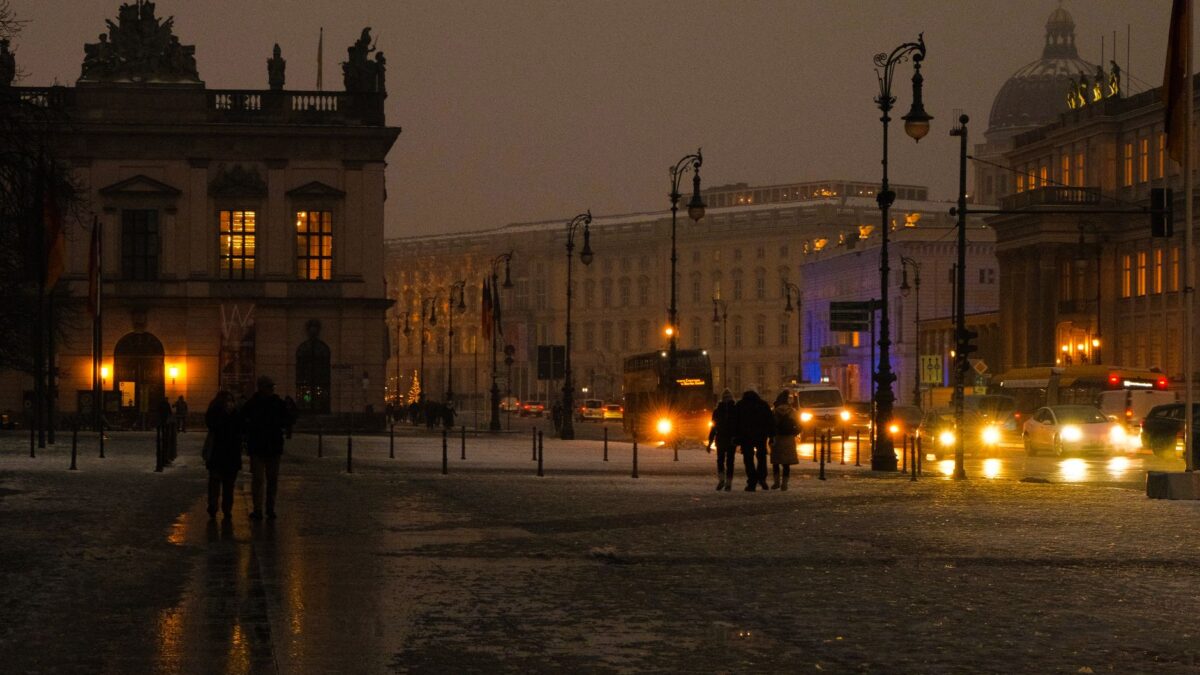 Living Abroad
Moving to Germany: visas, banking and SIM cards
Moving to Germany? Lena Brandt guides you through the essential first-week setup: Anmeldung, banking, SIM cards, and transit in Berlin.
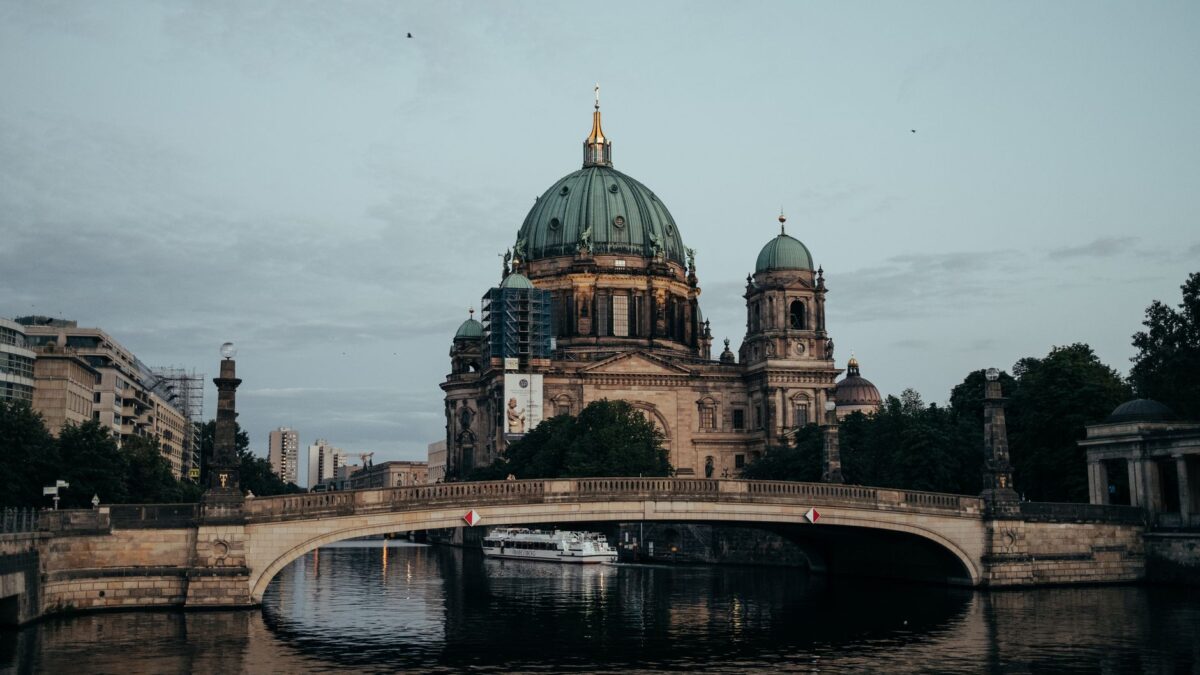 News & Updates
Germany in August 2026: what travelers should know now
Berlin in August 2026: Pop-Kultur Festival, S-Bahn closures to BER, Pergamonmuseum shut, A100 weekend closure, prices, Anmeldung & district tips.
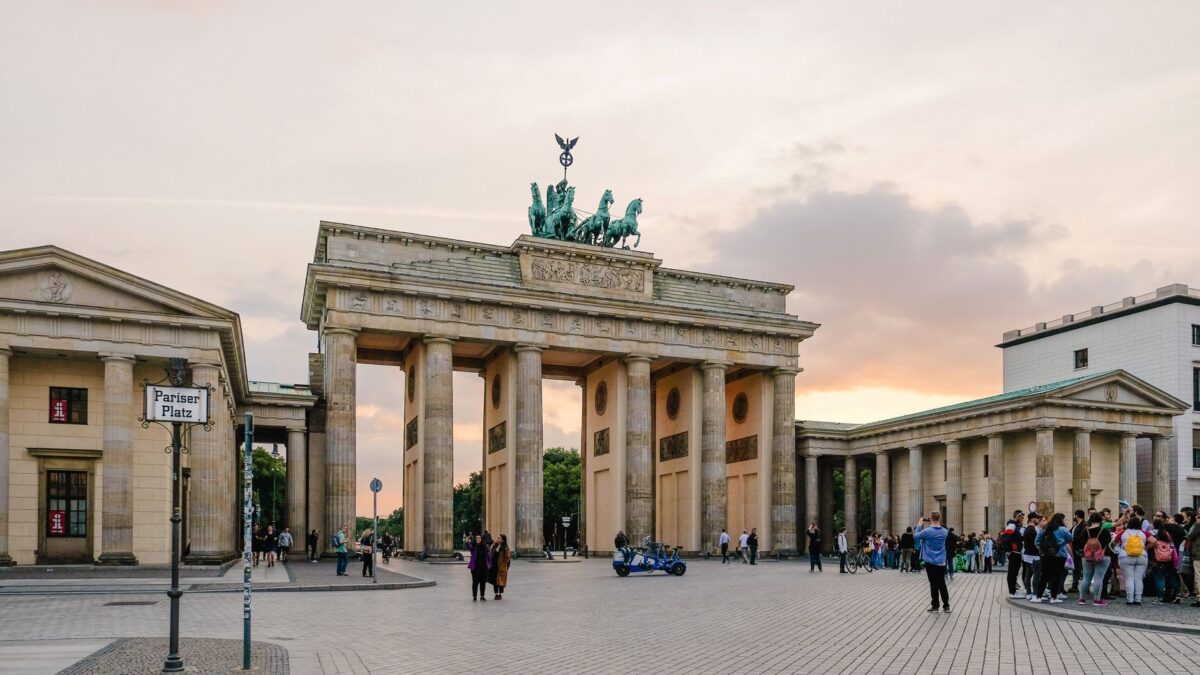 Culture & Etiquette
Germany etiquette: the dos and don’ts
Discover Germany etiquette from Berlin: greetings, tipping, dining manners, dress code, and transit customs. Learn dos and don'ts for a respectful visit.
Western Europe
 France
France Travel Podcast with Camille Laurent
The Rhône is the only major French river flowing southward to the Mediterranean, while the Seine, Loire, and Garonne run west to…
 Austria
Austria Travel Podcast with Felix Gruber
This podcast follows one resident's slow journey through Austria, from Vienna's eastern lowlands to the Alpine passes and Danube-side valleys that shape…
 Netherlands
Netherlands Travel Podcast with Sanne de Vries
The Randstad, anchored by Amsterdam, Rotterdam, The Hague and Utrecht, holds most of the country's population, while the north remains less densely…
 Switzerland
Switzerland Travel Podcast with Elena Vogt
The Alps in the south and the Jura in the northwest frame a central plateau of rolling hills, plains and large lakes.