

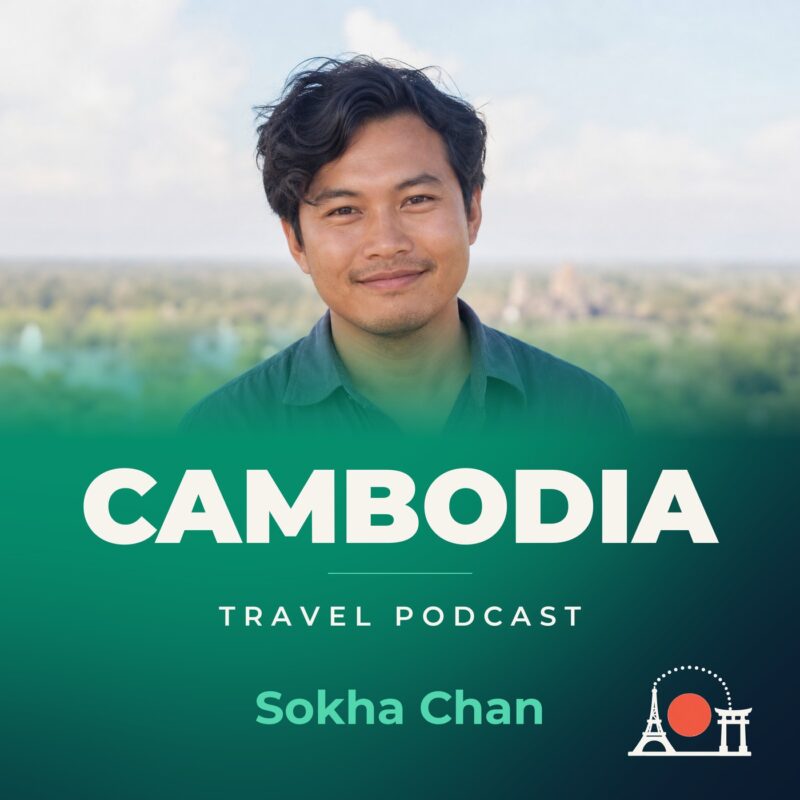
Cambodia Travel Podcast with Sokha Chan
Hosted by Sokha Chan — a new episode every day from Cambodia.
This podcast is about travelling in Cambodia as a matter of daily life, not just a list of sights. The monsoon season runs from May to November, the dry season from December to April, and the land is mostly low plains with mountains in the southwest and north. Those rhythms shape every journey.
The host moves through the country in connected stages: Phnom Penh, the capital on the Mekong; the Tonle Sap lake; the Cardamom Mountains in the southwest; and the river towns that rely on the annual flood pulse. Each place is considered on its own terms, away from the usual circuit.
Across a couple of years, the show builds its own calendar. He returns to the same towns in different seasons, watching the dry landscape brown out and then green up when the monsoon arrives. The pace is deliberate: settle, learn, move somewhere connected, and let the knowledge accumulate.
Recent episodes
Things to do in Cambodia
 Siem Reap Angkor Airport Taxis (from Airport to Hotel)
 2-Day Private Angkor Wat, Floating Village & Countryside Tour
 Private 3-Days tour at comfortable areas
 Siem Reap Floating Village Sunset Jeep Tour / SUV Car Available
 2-Days in temples and other areas
 From Siem Reap: Angkor Wat and Floating Village 3-Day Trip
 Siem Reap Angkor Driver Day Tours
 Likely to sell out
Foot Reflexology Massage
Likely to sell out
Foot Reflexology Massage
Plan your trip to Cambodia
Getting around
Staying connected
Cambodia at a glance
Cambodia in depth
Reference data on the country — geography, people, history, economy and transport.
Geography and climate
Location
Southeastern Asia, bordering the Gulf of Thailand, between Thailand, Vietnam, and Laos
Terrain
Mostly low, flat plains; mountains in southwest and north
Climate
Tropical; rainy, monsoon season (May to November); dry season (December to April); little seasonal temperature variation
Elevation
- Highest point
- Phnum Aoral 1,810 m
- Lowest point
- Gulf of Thailand 0 m
- Mean elevation
- 126 m
Area
- Total
- 181,035 sq km
- Land
- 176,515 sq km
- Water
- 4,520 sq km
Size comparison
1.5 times the size of Pennsylvania; slightly smaller than Oklahoma
Coastline
443 km
Land borders
- Total
- 2,530 km
- Border countries
- Laos 555 km; Thailand 817 km; Vietnam 1158 km
Natural resources
Oil and gas, timber, gemstones, iron ore, manganese, phosphates, hydropower potential, arable land
Land use
- Agricultural land
- 34.9% (2023 est.)
- Arable land
- 23.3% (2023 est.)
- Permanent crops
- 3% (2023 est.)
- Permanent pasture
- 8.5% (2023 est.)
- Forest
- 39.4% (2023 est.)
- Other
- 25.8% (2023 est.)
Natural hazards
Monsoonal rains (June to November); flooding; occasional droughts
Note
A land of paddies and forests dominated by the Mekong River and Tonle Sap (Southeast Asia's largest freshwater lake)
People and society
Population
- Total
- 17,230,333 (2025 est.)
- Male
- 8,362,224
- Female
- 8,868,109
Nationality
- Noun
- Cambodian(s)
- Adjective
- Cambodian
Ethnic groups
Khmer 95.4%, Cham 2.4%, Chinese 1.5%, other 0.7% (2019-20 est.)
Languages
- Languages
- Khmer (official) 95.8%, minority languages 2.9%, Chinese 0.6%, Vietnamese 0.5%, other 0.2% (2019 est.)
- Major-language sample(s)
- សៀវភៅហេតុការណនៅលើពិភពលោក។ ទីតាំងពត៏មានមូលដានគ្រឹះយាងសំខាន់។. (Khmer)
Religions
Buddhist (official) 97.1%, Muslim 2%, Christian 0.3%, other 0.5% (2019 est.)
Median age
- Total
- 28.3 years (2025 est.)
- Male
- 26.9 years
- Female
- 28.9 years
Life expectancy
- Total population
- 71.4 years (2024 est.)
- Male
- 69.6 years
- Female
- 73.3 years
Urbanisation
- Urban population
- 25.6% of total population (2023)
- Rate of urbanization
- 3.06% annual rate of change (2020-25 est.)
Where people live
Population concentrated in the southeast, particularly in and around the capital of Phnom Penh; further distribution is linked closely to the Tonle Sap and Mekong Rivers
Largest cities
2.281 million PHNOM PENH (capital) (2023)
Background and government
Background
Most Cambodians consider themselves to be Khmers, descendants of the Angkor Empire that extended over much of Southeast Asia and reached its zenith between the 10th and 13th centuries. Attacks by the Thai and Cham (from present-day Vietnam) weakened the empire, ushering in a long period of decline. The king placed the country under French protection in 1863, and it became part of French Indochina in 1887. Following Japanese occupation in World War II, Cambodia gained full independence from France in 1953. In 1975, after a seven-year struggle, communist Khmer Rouge forces captured Phnom Penh and evacuated all cities and towns. At least 1.5 million Cambodians died from execution, forced hardships, or starvation during the Khmer Rouge regime under POL POT. A 1978 Vietnamese invasion drove the Khmer Rouge into the countryside, began a 10-year Vietnamese occupation, and touched off 13 years of internecine warfare in which a coalition of Khmer Rouge, Cambodian nationalists, and royalist insurgents, with assistance from China, fought the Vietnamese-backed People’s Republic of Kampuchea (PRK).
The 1991 Paris Agreements ended the country’s civil war and mandated democratic elections, which took place in 1993 and ushered in a period of multi-party democracy with a constitutional monarchy. King Norodom SIHANOUK was reinstated as head of state, and the Cambodian People's Party (CPP) and the royalist FUNCINPEC party formed a coalition government. Nevertheless, the power-sharing arrangement proved fractious and fragile, and in 1997, a coup led by CPP leader and former PRK prime minister HUN SEN dissolved the coalition and sidelined FUNCINPEC. Despite further attempts at coalition governance, the CPP has since remained in power through elections criticized for lacking fairness, political and judicial corruption, media control, and influence over labor unions, all of which have been enforced with violence and intimidation. HUN SEN remained as prime minister until 2023, when he transferred power to his son, HUN MANET. HUN SEN has subsequently maintained considerable influence as the leader of the CPP and the Senate. The CPP has also placed limits on civil society, press freedom, and freedom of expression. Despite some economic growth and considerable investment from China over the past decade, Cambodia remains one of East Asia's poorest countries.
The remaining elements of the Khmer Rouge surrendered in 1999. A UN-backed special tribunal established in Cambodia in 1997 tried some of the surviving Khmer Rouge leaders for crimes against humanity and genocide. The tribunal concluded in 2022 with three convictions.
Government
Parliamentary constitutional monarchy
Capital
Phnom Penh
Time zone
UTC+7 (12 hours ahead of Washington, DC, during Standard Time)
Local name
Preahreacheanachakr Kampuchea (phonetic transliteration)
Independence
9 November 1953 (from France)
National day
Independence Day, 9 November (1953)
Economy and cost of living
Overview
One of the fastest growing Southeast Asian economies; rebounding tourism and clothing exports; substantial manufacturing and construction sectors; new trade agreements expanding agricultural markets; significant public debt; investing in new ports and roads
GDP per capita
- Real GDP per capita 2024
- $7,000 (2024 est.)
- Real GDP per capita 2023
- $6,700 (2023 est.)
- Real GDP per capita 2022
- $6,500 (2022 est.)
Inflation
- Inflation rate (consumer prices) 2023
- 2.1% (2023 est.)
- Inflation rate (consumer prices) 2022
- 5.3% (2022 est.)
- Inflation rate (consumer prices) 2021
- 2.9% (2021 est.)
Unemployment
- Unemployment rate 2024
- 0.3% (2024 est.)
- Unemployment rate 2023
- 0.3% (2023 est.)
- Unemployment rate 2022
- 0.3% (2022 est.)
Exchange rate
- Currency
- Riels (KHR) per US dollar -
- Exchange rates 2024
- 4,072.397 (2024 est.)
- Exchange rates 2023
- 4,110.653 (2023 est.)
- Exchange rates 2022
- 4,102.038 (2022 est.)
- Exchange rates 2021
- 4,098.723 (2021 est.)
- Exchange rates 2020
- 4,092.783 (2020 est.)
Main industries
Tourism, garments, construction, rice milling, fishing, wood and wood products, rubber, cement, gem mining, textiles
Agriculture
Cassava, rice, maize, sugarcane, vegetables, oil palm fruit, rubber, bananas, jute, pork (2023)
Transport and connectivity
Airports
12 (2025)
Railways
- Total
- 642 km (2014)
- Narrow gauge
- 642 km (2014) 1.000-m gauge
Ports
- Total ports
- 2 (2024)
- Large
- 0
- Medium
- 1
- Small
- 0
- Very small
- 1
- Ports with oil terminals
- 1
- Key ports
- Kampong Saom, Phsar Ream
Internet domain
.kh
Internet users
Percent of population 61% (2023 est.)
Mobile subscriptions
- Total subscriptions
- 20.5 million (2024 est.)
- Subscriptions per 100 inhabitants
- 116 (2024 est.)
Environment
Environmental issues
Habitat and biodiversity loss from illegal logging and strip mining; destruction of mangrove swamps; soil erosion; limited access to potable water in rural areas; illegal fishing and overfishing; deforestation leading to sediment build-up in coastal ecosystems
Fresh water
476.1 billion cubic meters (2022 est.)
Country reference figures are periodically revised. Check anything time-sensitive or safety-critical against an official source before you travel.
Cambodia travel guides
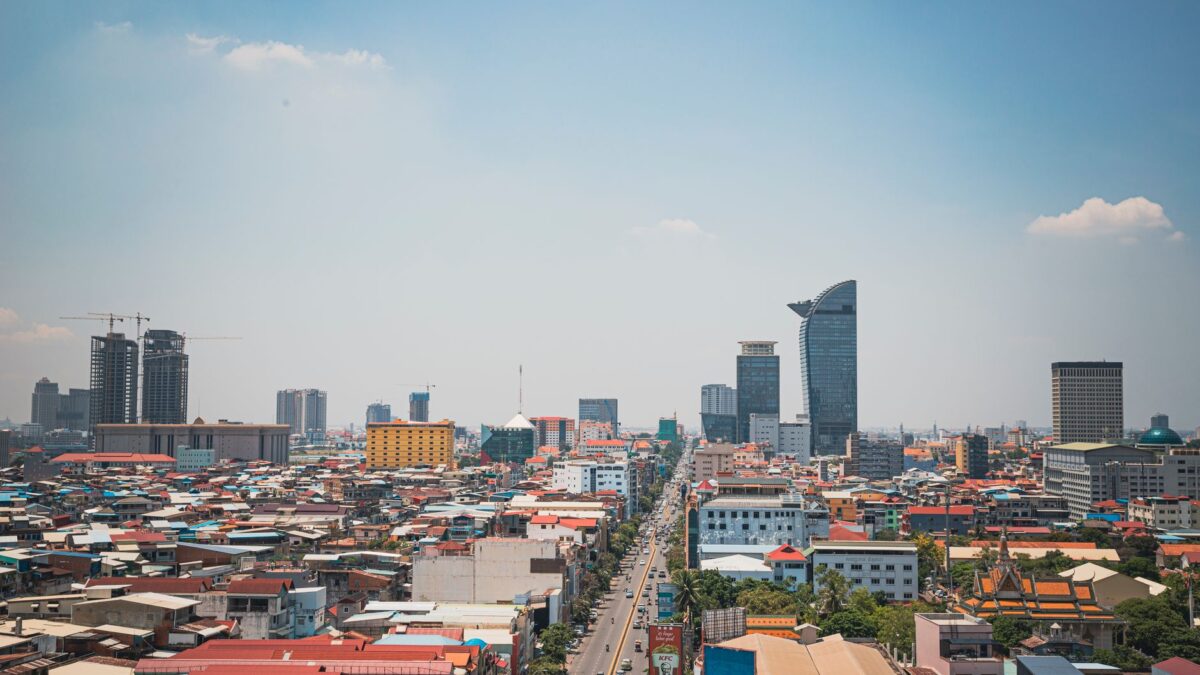 News & Updates
Cambodia in September 2026: what travelers should know now
Cambodia in September 2026: Weather, Constitution Day updates, safety tips, and practical travel advice for Phnom Penh.
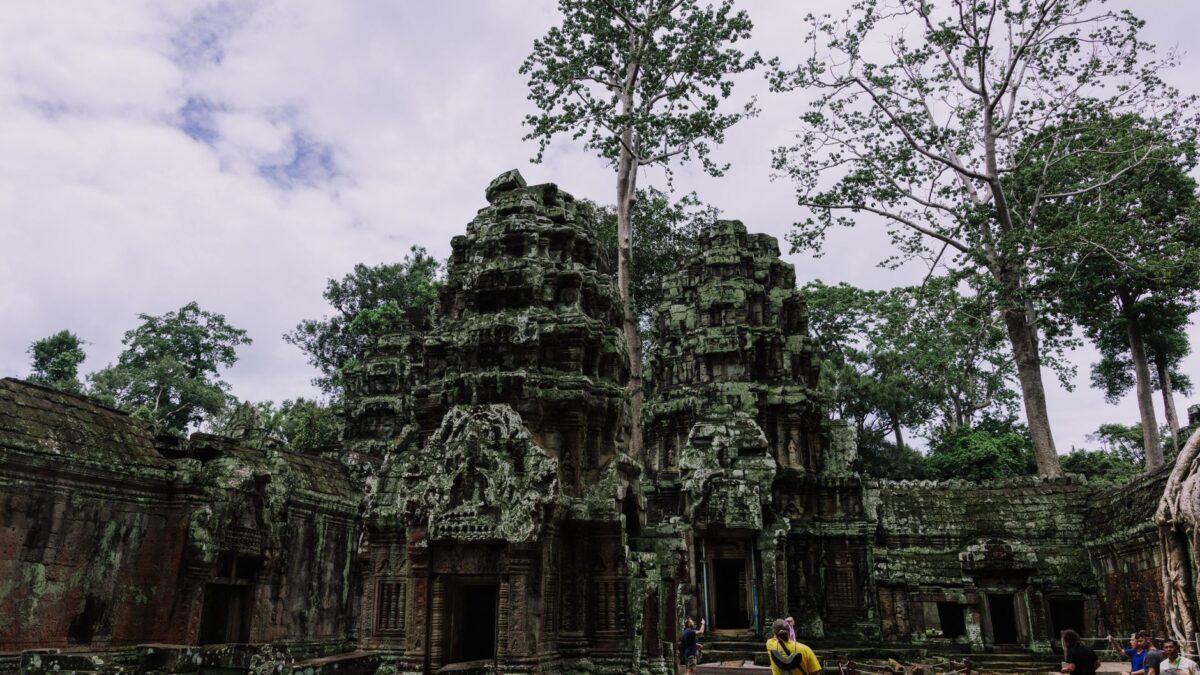 Travel Tips
The best time to visit Cambodia
Discover the best time to visit Cambodia, from monsoons to festivals. Compare seasons, prices, and local events to plan your perfect trip.
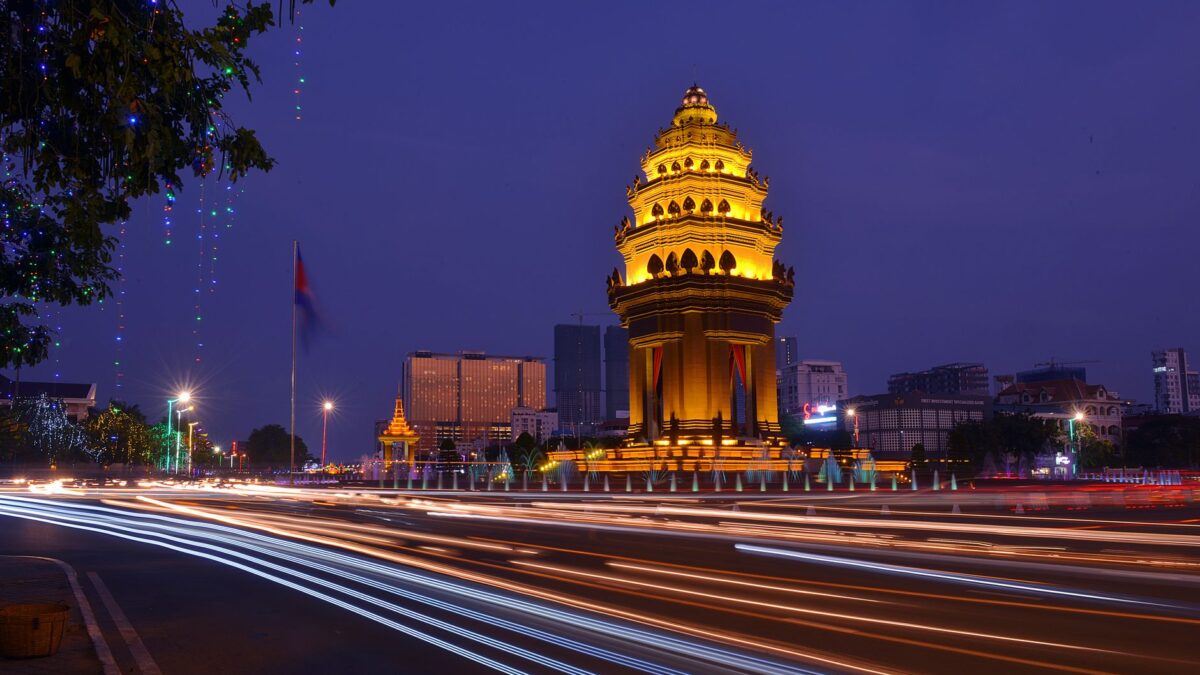 News & Updates
Cambodia in August 2026: what travelers should know now
Phnom Penh in August 2026: monsoon weather, WPT Cambodia, expo season, Chaktomuk Walk Street nights, and key safety tips. What to know now.
Southeast Asia
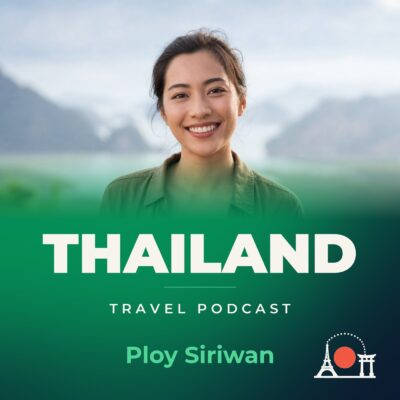 Thailand
Thailand Travel Podcast with Ploy Siriwan
The southwest monsoon brings rain and cloud from mid-May to September, shaping travel across the central plain and the mountains.
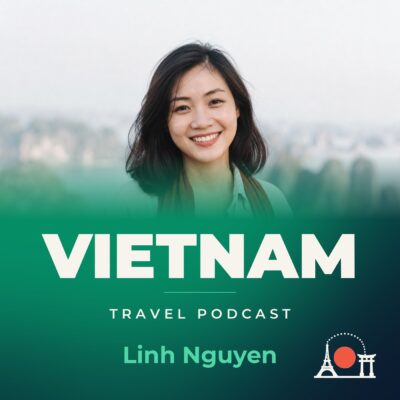 Vietnam
Vietnam Travel Podcast with Linh Nguyen
The monsoon climate of northern Vietnam brings a hot, rainy season from May to September and a warm, dry season from October…
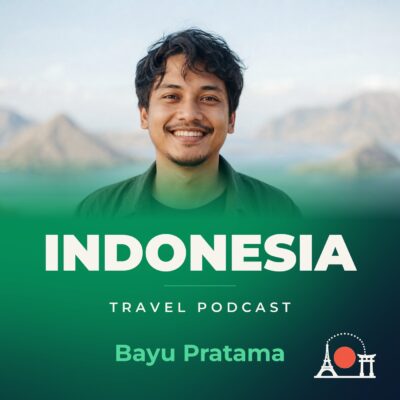 Indonesia
Indonesia Travel Podcast with Bayu Pratama
The island of Java, one of the most densely populated places on earth, is the demographic heart of the Indonesian archipelago.
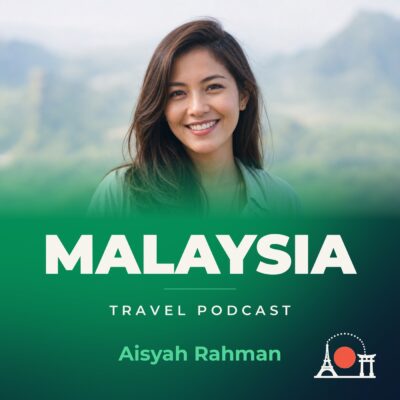 Malaysia
Malaysia Travel Podcast with Aisyah Rahman
The Strait of Malacca, separating the Malay Peninsula from Sumatra, has carried maritime trade and cultural influences from China, India, the Middle…