


Vietnam Travel Podcast with Linh Nguyen
Hosted by Linh Nguyen — a new episode every day from Vietnam.
The Vietnam Travel Podcast with Linh Nguyen is about getting to know Vietnam slowly, the way a resident does. Vietnam’s territory runs 1,650 km from north to south and narrows to 50 km at one point, so a short journey can shift from highland forest to delta water and from monsoonal rain to tropical heat.
Over the series, Linh Nguyen covers a broad arc: Hanoi’s old streets and the Red River Valley, the central highlands around Da Lat, Can Tho in the Mekong Delta, and the limestone landscapes of Phong Nha-Ke Bang National Park. These are places with different climates, languages and religious communities.
The show unfolds in connected moves: each place is given time, then revisited as the season changes. Northern monsoonal rains arrive from May to September; the tropical south stays warm. By paying attention to those shifts, the podcast builds a fuller picture of Vietnam than a short trip could.
Recent episodes
Things to do in Vietnam
 Likely to sell out
Number one top rated ethical cultural trekking and homestay by ETHOS
Likely to sell out
Number one top rated ethical cultural trekking and homestay by ETHOS
 Hanoi Motorbike Tour: Hanoi HIGHTLIGHTS & HIDDEN GEMS
 Da Nang Authentic Home Cooking Class
 Ho Chi Minh/Saigon Zero Tourist Food Tour
 The Central Highlands Explorer Loop
 Luxury Ninh Binh Full Day Tour From Hanoi (Trang An - Hoa Lu)
 Eat Like a Local: Saigon Michelin-selected Street Food by scooter
 VIETNAM BACKSTREET TOURS: Explore Bat Trang Ceramic Village By Minsk Motorcycle
Plan your trip to Vietnam
Getting around
Staying connected
Vietnam at a glance
Vietnam in depth
Reference data on the country — geography, people, history, economy and transport.
Geography and climate
Location
Southeastern Asia, bordering the Gulf of Thailand, Gulf of Tonkin, and South China Sea, as well as China, Laos, and Cambodia
Terrain
Low, flat delta in south and north; central highlands; hilly, mountainous in far north and northwest
Climate
Tropical in south; monsoonal in north with hot, rainy season (May to September) and warm, dry season (October to March)
Elevation
- Highest point
- Fan Si Pan 3,144 m
- Lowest point
- South China Sea 0 m
- Mean elevation
- 398 m
Area
- Total
- 331,210 sq km
- Land
- 310,070 sq km
- Water
- 21,140 sq km
Size comparison
About three times the size of Tennessee; slightly larger than New Mexico
Coastline
3,444 km (excludes islands)
Land borders
- Total
- 4,616 km
- Border countries
- Cambodia 1,158 km; China 1,297 km; Laos 2,161 km
Natural resources
Antimony, phosphates, coal, manganese, rare earth elements, bauxite, chromate, offshore oil and gas deposits, timber, hydropower, arable land
Land use
- Agricultural land
- 39.2% (2023 est.)
- Arable land
- 21.5% (2023 est.)
- Permanent crops
- 15.7% (2023 est.)
- Permanent pasture
- 2% (2023 est.)
- Forest
- 47% (2023 est.)
- Other
- 13.7% (2023 est.)
Natural hazards
Occasional typhoons (May to January) with extensive flooding, especially in the Mekong River delta
Note
Note 1: extending 1,650 km (1,025 mi) north to south, the country is only 50 km (31 mi) across at its narrowest point
Note 2: Son Doong in Phong Nha-Ke Bang National Park is the world's largest cave (greatest cross-sectional area) and is the largest known cave passage in the world by volume at 38.5 million cu m (about 1.35 billion cu ft); it connects to Thoong cave, but not yet officially -- when recognized, it will add an additional 1.6 million cu m; it is so massive that it contains its own jungle, underground river, and localized weather system, with clouds forming inside the cave and spewing from its exits
People and society
Population
- Total
- 106,688,169 (2025 est.)
- Male
- 53,597,784
- Female
- 53,090,385
Nationality
- Noun
- Vietnamese (singular and plural)
- Adjective
- Vietnamese
Ethnic groups
Kinh (Viet) 85.3%, Tay 1.9%, Thai 1.9%, Muong 1.5%, Khmer 1.4%, Mong 1.4%, Nung 1.1%, other 5.5% (2019 est.)
Languages
- Languages
- Vietnamese (official); English (often as a second language); some French, Chinese, and Khmer; mountain-area languages (including Mon-Khmer and Malayo-Polynesian)
- Major-language sample(s)
- Dữ kiện thế giới, là nguồn thông tin cơ bản không thể thiếu. (Vietnamese)
Religions
Catholic 6.1%, Buddhist 5.8%, Protestant 1%, other 0.8%, none 86.3% (2019 est.)
Median age
- Total
- 33.5 years (2025 est.)
- Male
- 32 years
- Female
- 34.2 years
Life expectancy
- Total population
- 76.1 years (2024 est.)
- Male
- 73.5 years
- Female
- 78.9 years
Urbanisation
- Urban population
- 39.5% of total population (2023)
- Rate of urbanization
- 2.7% annual rate of change (2020-25 est.)
Where people live
Though it has one of the highest population densities in the world, the population is not evenly dispersed; clustering is heaviest along the South China Sea and Gulf of Tonkin, with the Mekong Delta (in the south) and the Red River Valley (in the north) having the largest concentrations of people
Largest cities
9.321 million Ho Chi Minh City, 5.253 million HANOI (capital), 1.865 million Can Tho, 1.423 million Hai Phong, 1.221 million Da Nang, 1.111 million Bien Hoa (2023)
Background and government
Background
Vietnam's early history included periods of occupation by outside forces and eventual power consolidation under Vietnamese dynastic families. A succession of Han Chinese emperors ruled the area, which was centered on the Red River Valley, until approximately the 10th century. The Ly Dynasty (11th-13th century) created the first independent Vietnamese state, which was known as Dai Viet, and established their capital at Thang Long (Hanoi). Under the Tran Dynasty (13th-15th century), TRAN Hung Dao, one of Vietnam’s national heroes, led Dai Viet forces to fight off Mongol invaders in 1279. After a brief Chinese occupation in the early 1400s, Vietnamese resistance leader LE Thai To made himself emperor and established the Le Dynasty, which lasted until the late 18th century despite decades of political turmoil, civil war, and division. During this period, Dai Viet expanded southward to the Central Highlands and Mekong Delta, reaching the approximate boundaries of modern-day Vietnam by the 1750s. Dai Viet suffered additional civil war and division in the latter half of the 18th century, but it was reunited and renamed Vietnam under Emperor NGUYEN Phuc Anh (aka Gia Long) in 1802.
France began its conquest of Vietnam in 1858 and made Vietnam part of French Indochina in 1887. Vietnam declared independence after World War II, but the French continued to rule until communist forces under Ho Chi MINH defeated them in 1954. Under the Geneva Accords of 1954, Vietnam was divided into the communist North and anti-communist South. Fighting erupted between the two governments shortly afterwards with the North supporting communist rebels in the South and eventually committing thousands of combat troops. The US provided to the South significant economic and military assistance, including large numbers of US military forces, which reached a peak strength of over 500,000 troops in 1968. US combat forces were withdrawn following a cease-fire agreement in 1973. Two years later, North Vietnamese forces overran the South, reuniting the country under communist rule. The conflict, known as the Second Indochina War (1955-1975), devastated Vietnam, spilled over into the neighboring countries of Cambodia and Laos, and is estimated to have resulted in the deaths of up to 3 million Vietnamese civilians and soldiers. It also caused more than 58,000 US combat and non-combat deaths and created deep domestic divisions in the US.
Despite the return of peace, the country experienced little economic growth for over a decade because of its diplomatic isolation, leadership policies, and the persecution and mass exodus of citizens, many of them successful South Vietnamese merchants. However, since the enactment of Vietnam's "doi moi" (renovation) policy in 1986, the economy has seen strong growth, particularly in agricultural and industrial production, construction, exports, foreign investment, and tourism. Nevertheless, the Communist Party maintains tight political and social control of the country, and Vietnam faces many related challenges, such as rising income inequality and corruption.
Government
Communist party-led state
Capital
Hanoi (Ha Noi)
Time zone
UTC+7 (12 hours ahead of Washington, DC, during Standard Time)
Local name
Cong Hoa Xa Hoi Chu Nghia Viet Nam
Independence
2 September 1945 (from France)
National day
Independence Day (National Day), 2 September (1945)
Economy and cost of living
Overview
Lower middle-income socialist East Asian economy; rapid economic growth since Đổi Mới reforms; strong investment and productivity growth; tourism and manufacturing hub; TPP signatory; declining poverty aside from ethnic minorities; systemic corruption
GDP per capita
- Real GDP per capita 2024
- $14,400 (2024 est.)
- Real GDP per capita 2023
- $13,500 (2023 est.)
- Real GDP per capita 2022
- $13,000 (2022 est.)
Inflation
- Inflation rate (consumer prices) 2024
- 3.6% (2024 est.)
- Inflation rate (consumer prices) 2023
- 3.3% (2023 est.)
- Inflation rate (consumer prices) 2022
- 3.2% (2022 est.)
Unemployment
- Unemployment rate 2024
- 1.5% (2024 est.)
- Unemployment rate 2023
- 1.7% (2023 est.)
- Unemployment rate 2022
- 1.6% (2022 est.)
Exchange rate
- Currency
- Dong (VND) per US dollar -
- Exchange rates 2024
- 24,164.886 (2024 est.)
- Exchange rates 2023
- 23,787.319 (2023 est.)
- Exchange rates 2022
- 23,271.212 (2022 est.)
- Exchange rates 2021
- 23,159.783 (2021 est.)
- Exchange rates 2020
- 23,208.368 (2020 est.)
Main industries
Food processing, garments, shoes, machine-building; mining, coal, steel; cement, chemical fertilizer, glass, tires, oil, mobile phones
Agriculture
Rice, vegetables, sugarcane, cassava, maize, pork, fruits, bananas, coconuts, coffee (2023)
Transport and connectivity
Airports
36 (2025)
Railways
- Total
- 2,600 km (2014)
- Standard gauge
- 178 km (2014) 1.435-m gauge; 253 km mixed gauge
- Narrow gauge
- 2,169 km (2014) 1.000-m gauge
Ports
- Total ports
- 16 (2024)
- Large
- 0
- Medium
- 1
- Small
- 6
- Very small
- 9
- Ports with oil terminals
- 12
- Key ports
- Da Nang, Hai Phong, Nghe Tinh, Nha Trang, Thanh Ho Chi Minh, Vinh Cam Ranh, Vung Tau
Internet domain
.vn
Internet users
Percent of population 78% (2023 est.)
Mobile subscriptions
- Total subscriptions
- 129 million (2024 est.)
- Subscriptions per 100 inhabitants
- 128 (2024 est.)
Environment
Environmental issues
Deforestation and soil degradation from logging and slash-and-burn agriculture; water pollution; overfishing; groundwater contamination limits potable water supply; air pollution
Fresh water
884.12 billion cubic meters (2022 est.)
UNESCO Global Geoparks
- Total global geoparks and regional networks
- 4 (2025)
- Global geoparks and regional networks
- Dak Nong; Dong Van Karst Plateau; Lang Son; Non nuoc Cao Bang (2025)
Country reference figures are periodically revised. Check anything time-sensitive or safety-critical against an official source before you travel.
Vietnam travel guides
 News & Updates
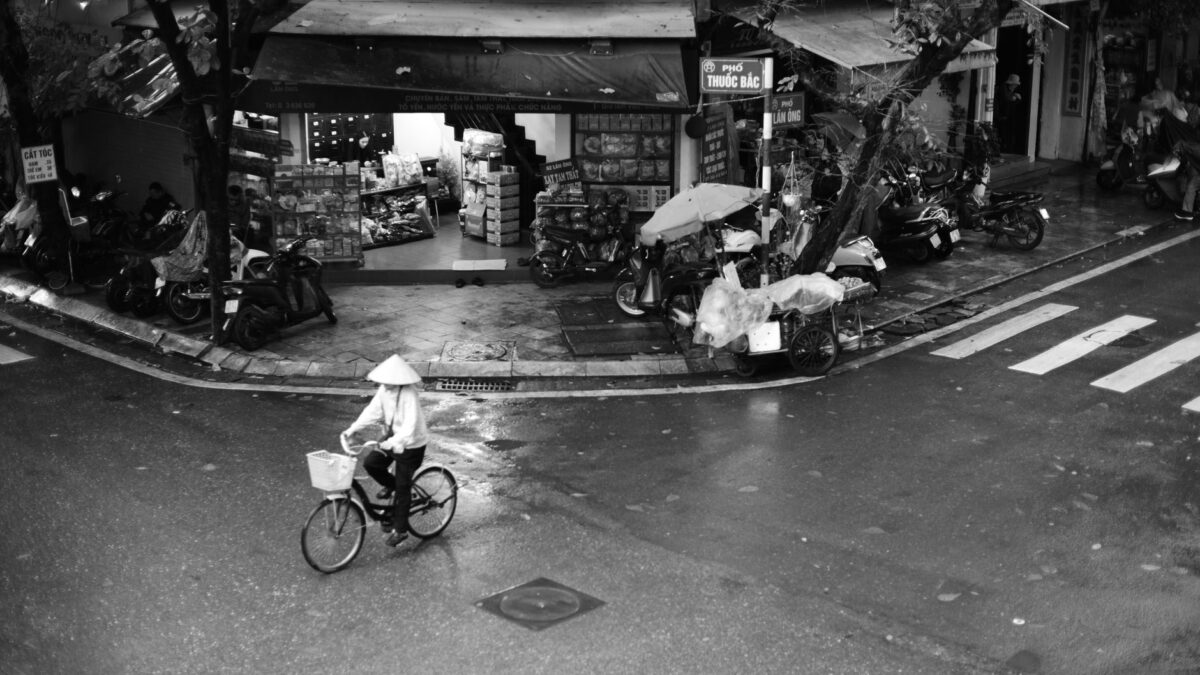
Vietnam in September 2026: what travelers should know now
Vietnam in September 2026: Weather updates, festival alerts, transport changes, and cost tips for travelers visiting Hanoi this month.
 News & Updates
Vietnam in August 2026: what travelers should know now
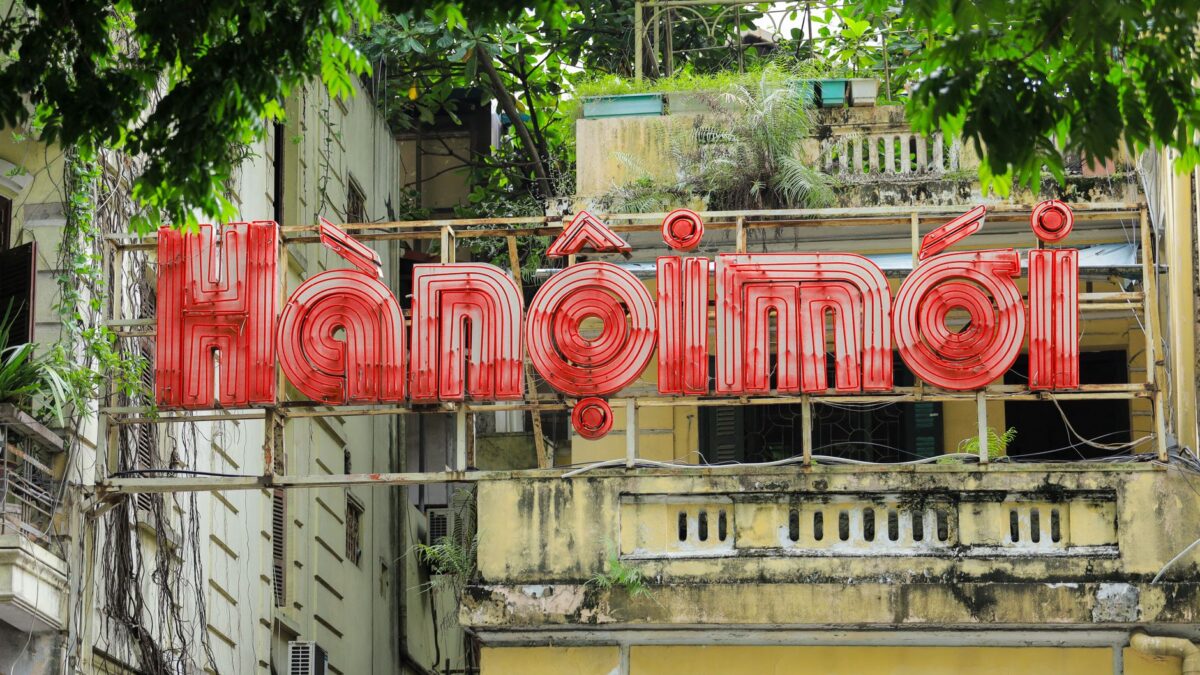
Vietnam in August 2026: Hanoi's heat, rain, mooncake stalls, National Day prep, metro digs, and street food prices — a local's timely guide.
 Food & Drink
What to eat in Vietnam — and what it costs
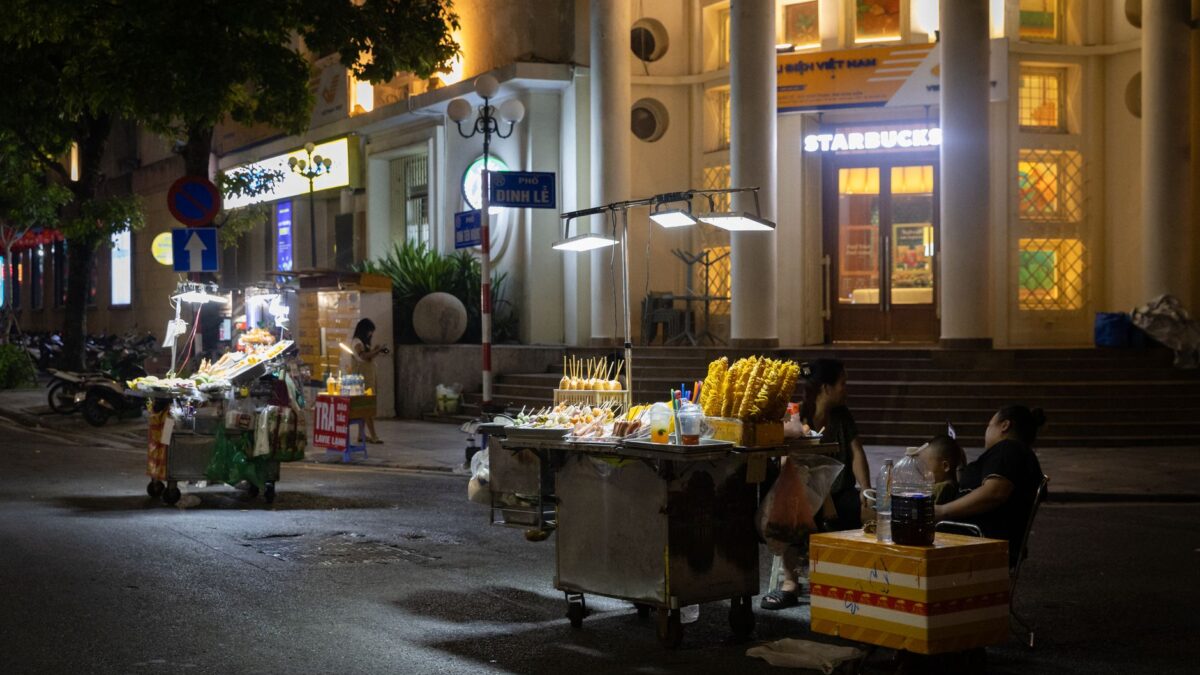
Discover what to eat in Hanoi, Vietnam — from street pho to mooncakes. Honest 2026 prices in VND and USD, real local spots, and…
Southeast Asia
 Thailand
Thailand Travel Podcast with Ploy Siriwan
The southwest monsoon brings rain and cloud from mid-May to September, shaping travel across the central plain and the mountains.
 Indonesia
Indonesia Travel Podcast with Bayu Pratama
The island of Java, one of the most densely populated places on earth, is the demographic heart of the Indonesian archipelago.
 Malaysia
Malaysia Travel Podcast with Aisyah Rahman
The Strait of Malacca, separating the Malay Peninsula from Sumatra, has carried maritime trade and cultural influences from China, India, the Middle…
 Singapore
Singapore Travel Podcast with Rachel Tan
The northeastern monsoon, from December to March, brings wet weather that shapes daily life across Singapore's lowlying central plateau and its urbanised…