

Ireland Travel Podcast with Saoirse Byrne
Hosted by Saoirse Byrne — a new episode every day from Ireland.
This podcast follows one resident host as she lives in Ireland the way a local would, settling somewhere, learning it, then moving on. Travelling in Ireland means reading the temperate maritime weather, understanding the Atlantic’s pull, and noticing that most people live near Dublin while the west stays exposed and thinly populated.
Her route moves through Dublin, then the Burren’s limestone terraces, Connemara’s boggy hills, and the Antrim Coast’s basalt cliffs. Each of these places changes how you move: city pavements, bare karst, mountain roads, sea edge. The range covers landscapes shaped by different histories and geology.
The show unfolds in seasons, not itineraries. The same bog, cliff path or village square returns across episodes as winter’s overcast gives way to spring growth, summer crowds, autumn storms. By lingering, the host builds a picture of Ireland that comes from accumulating small observations rather than rushing between sights.
Recent episodes
Things to do in Ireland
 Likely to sell out
Dunmore East Sea Safari to Hook Lighthouse
Likely to sell out
Dunmore East Sea Safari to Hook Lighthouse
 Dublin LGBTQ Pride Historical and Cultural Walking Tour
 Authentic Dublin private car tour Top Ranked Dubliner guide Éamon
 The Irish Dance Experience in Galway, Ireland
 Private Tour of Ring of Kerry & Valentia Island
 Boat Tour of Kinsale Harbour and Bandon River
 4 Hours Dingle Peninsula Private Tour
 Dublin Airport Transfers: Luxury Transfer To/From DUB Per Vehicle
Plan your trip to Ireland
Getting around
Staying connected
Ireland at a glance
Ireland in depth
Reference data on the country — geography, people, history, economy and transport.
Geography and climate
Location
Western Europe, occupying five-sixths of the island of Ireland in the North Atlantic Ocean, west of Great Britain
Terrain
Mostly flat to rolling interior plain surrounded by rugged hills and low mountains; sea cliffs on west coast
Climate
Temperate maritime; modified by North Atlantic Current; mild winters, cool summers; consistently humid; overcast about half the time
Elevation
- Highest point
- Carrauntoohil 1,041 m
- Lowest point
- Atlantic Ocean 0 m
- Mean elevation
- 118 m
Area
- Total
- 70,273 sq km
- Land
- 68,883 sq km
- Water
- 1,390 sq km
Size comparison
Slightly larger than West Virginia
Coastline
1,448 km
Land borders
- Total
- 490 km
- Border countries
- UK 499 km
Natural resources
Natural gas, peat, copper, lead, zinc, silver, barite, gypsum, limestone, dolomite
Land use
- Agricultural land
- 60.8% (2023 est.)
- Arable land
- 6.4% (2023 est.)
- Permanent crops
- 0% (2023 est.)
- Permanent pasture
- 54.4% (2023 est.)
- Forest
- 11.9% (2023 est.)
- Other
- 27.3% (2023 est.)
Natural hazards
Rare extreme weather events
Note
Strategic location on major air and sea routes between North America and northern Europe; over 40% of the population resides within 100 km of Dublin
People and society
Population
- Total
- 5,233,461 (2024 est.)
- Male
- 2,590,542
- Female
- 2,642,919
Nationality
- Noun
- Irishman(men), Irishwoman(women), Irish (collective plural)
- Adjective
- Irish
Ethnic groups
Irish 76.6%, Irish travelers 0.6%, other White 9.9%, Asian 3.3%, Black 1.5%, other (includes Arab, Roma, and persons of mixed backgrounds) 2%, unspecified 2.6% (2022 est.)
Languages
English (official, the language generally used), Irish (Gaelic or Gaeilge) (official, spoken by approximately 37.7% of the population)
Religions
Roman Catholic 69.2% (includes lapsed), Protestant 3.7% (Church of Ireland/England/Anglican/Episcopalian 2.5%, other Protestant 1.2%), Orthodox 2%, other Christian 0.9%, Muslim 1.6%, other 1.4%, agnostic/atheist 0.1%, none 14.5%, unspecified 6.7% (2022 est.)
Median age
- Total
- 40.5 years (2025 est.)
- Male
- 39.7 years
- Female
- 40.6 years
Life expectancy
- Total population
- 82 years (2024 est.)
- Male
- 80.3 years
- Female
- 83.9 years
Urbanisation
- Urban population
- 64.5% of total population (2023)
- Rate of urbanization
- 1.15% annual rate of change (2020-25 est.)
Where people live
Population distribution is weighted to the eastern side of the island, with the largest concentration in and around Dublin; populations in the west are small due to mountainous land, poorer soil, and lack of transport routes
Largest cities
1.270 million DUBLIN (capital) (2023)
Background and government
Background
Celtic tribes arrived in Ireland between 600 and 150 B.C. Norse invasions that began in the late 8th century finally ended when King Brian BORU defeated the Danes in 1014. Norman invasions began in the 12th century and set off more than seven centuries of Anglo-Irish struggle marked by fierce rebellions and harsh repressions. The Irish famine of the mid-19th century caused an almost 25-percent decline in the island's population through starvation, disease, and emigration. The population of the island continued to fall until the 1960s, but over the last 50 years, Ireland's high birthrate has made it demographically one of the youngest populations in the EU.
The modern Irish state traces its origins to the failed 1916 Easter Monday Uprising that galvanized nationalist sentiment. The ensuing guerrilla war led to independence from the UK in 1921 with the signing of the Anglo-Irish Treaty and the creation of the Irish Free State. The treaty was deeply controversial in Ireland, in part because it helped solidify the country's partition, with six of the 32 counties remaining in the UK as Northern Ireland. The split between pro-Treaty and anti-Treaty partisans led to the Irish Civil War (1922-23). The traditionally dominant political parties in Ireland, Fine Gael and Fianna Fail, are de facto descendants of the opposing sides of the treaty debate. Ireland declared itself a republic in 1949 and formally left the British Dominion.
Beginning in the 1960s, deep sectarian divides between the Catholic and Protestant populations and systemic discrimination in Northern Ireland erupted into years of violence known as the Troubles. In 1998, the governments of Ireland and the UK, along with most political parties in Northern Ireland, reached the Belfast/Good Friday Agreement with the support of the US. This agreement helped end the Troubles and initiated a new phase of cooperation between the Irish and British Governments.
Ireland was neutral in World War II and continues its policy of military neutrality. Ireland joined the European Community in 1973 and the euro-zone currency union in 1999. The economic boom years of the Celtic Tiger (1995-2007) saw rapid economic growth that came to an abrupt end in 2008 with the meltdown of the Irish banking system. As a small, open economy, Ireland has excelled at courting foreign direct investment, especially from US multi-nationals, which has helped the economy recover from the financial crisis and insulated it somewhat from the economic shocks of the COVID-19 pandemic.
Government
Parliamentary republic
Capital
Dublin
Time zone
UTC 0 (5 hours ahead of Washington, DC, during Standard Time)
Local name
None
Independence
6 December 1921 (from the UK); 6 December 1922 (Irish Free State established); 18 April 1949 (Republic of Ireland Act enabled)
National day
Saint Patrick's Day, 17 March
Economy and cost of living
Overview
High-income, export-oriented EU economy; large multinational business sector contributes to growth and tax revenues but poses volatility risks; high living standards; strong labor market challenged by skill shortages and aging workforce
GDP per capita
- Real GDP per capita 2024
- $115,300 (2024 est.)
- Real GDP per capita 2023
- $115,500 (2023 est.)
- Real GDP per capita 2022
- $124,500 (2022 est.)
Inflation
- Inflation rate (consumer prices) 2024
- 2.1% (2024 est.)
- Inflation rate (consumer prices) 2023
- 6.3% (2023 est.)
- Inflation rate (consumer prices) 2022
- 7.8% (2022 est.)
Unemployment
- Unemployment rate 2024
- 4.4% (2024 est.)
- Unemployment rate 2023
- 4.3% (2023 est.)
- Unemployment rate 2022
- 4.6% (2022 est.)
Exchange rate
- Currency
- Euros (EUR) per US dollar -
- Exchange rates 2024
- 0.924 (2024 est.)
- Exchange rates 2023
- 0.925 (2023 est.)
- Exchange rates 2022
- 0.95 (2022 est.)
- Exchange rates 2021
- 0.845 (2021 est.)
- Exchange rates 2020
- 0.876 (2020 est.)
Main industries
Pharmaceuticals, chemicals, computer hardware and software, food products, beverages and brewing; medical devices
Agriculture
Milk, barley, beef, wheat, potatoes, pork, oats, chicken, rapeseed, beans (2023)
Transport and connectivity
Airports
100 (2025)
Railways
Total 1,688 km (2020) 53 km electrified
Ports
- Total ports
- 21 (2024)
- Large
- 1
- Medium
- 3
- Small
- 3
- Very small
- 14
- Ports with oil terminals
- 8
- Key ports
- Cobh, Cork, Dublin, Foynes
Internet domain
.ie
Internet users
Percent of population 97% (2023 est.)
Mobile subscriptions
- Total subscriptions
- 5.76 million (2023 est.)
- Subscriptions per 100 inhabitants
- 113 (2022 est.)
Environment
Environmental issues
Water pollution, especially of lakes, from agricultural runoff; deforestation, including problems with acid rain
Fresh water
52 billion cubic meters (2022 est.)
UNESCO Global Geoparks
- Total global geoparks and regional networks
- 3
- Global geoparks and regional networks
- Burren & Cliffs of Moher; Copper Coast; Marble Arch Caves (includes United Kingdom) (2023)
Country reference figures are periodically revised. Check anything time-sensitive or safety-critical against an official source before you travel.
Ireland travel guides
 News & Updates
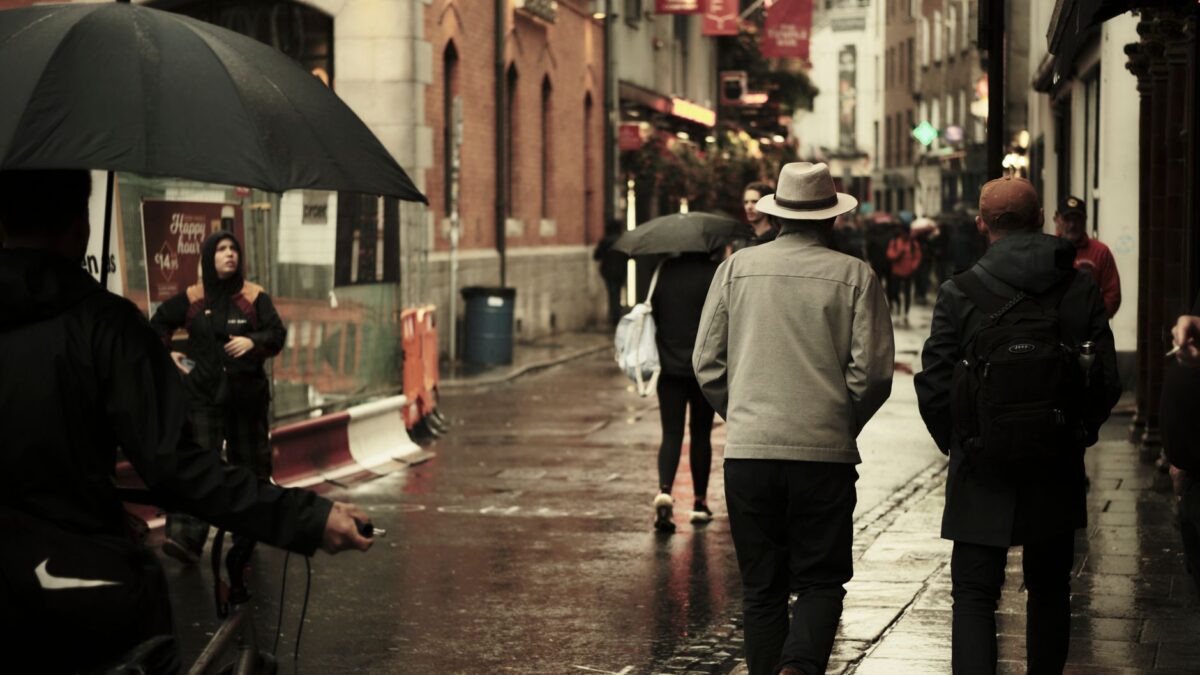
Ireland in September 2026: what travelers should know now
Ireland travel briefing September 2026: Liffey Festival, transport fare hikes, packing tips, and current events in Dublin.
 Costs & Money
How much does a trip to Ireland cost?
Realistic budget breakdown for a trip to Dublin in 2026. Costs for accommodation, food, transport, and attractions based on current local prices.
 News & Updates
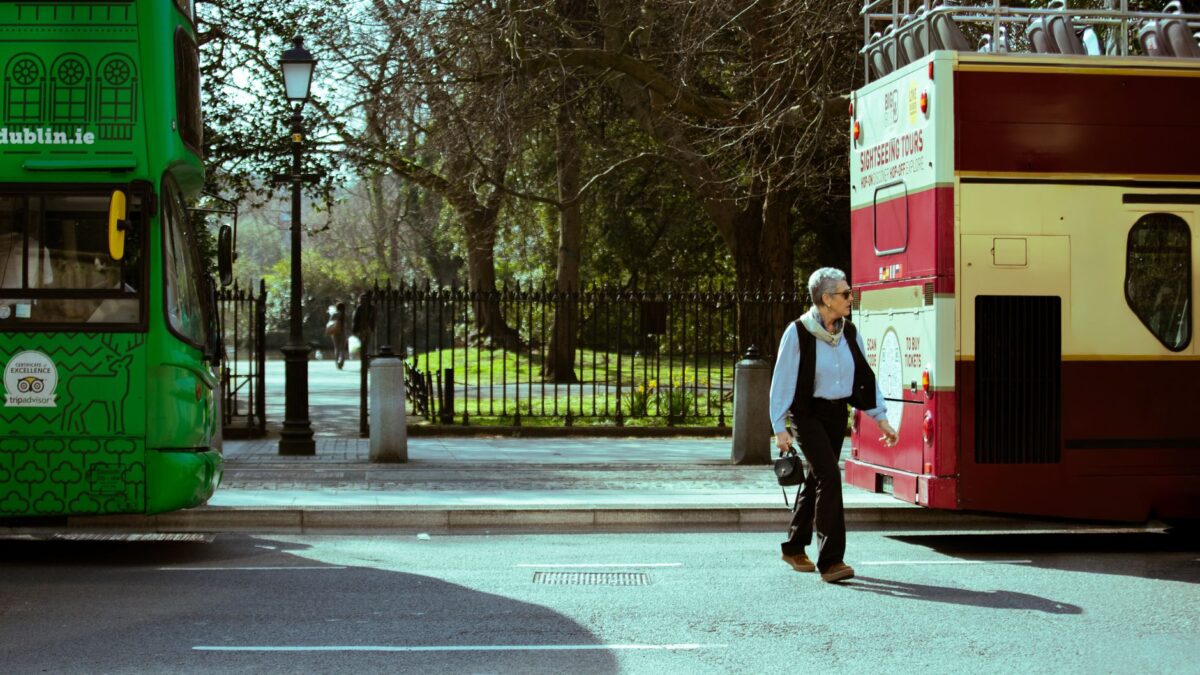
Ireland in August 2026: what travelers should know now
Ireland in August 2026: weather, prices, festivals, and local tips for Dublin from resident host Saoirse Byrne.
 Getting Around
From the airport into Dublin: every option and what it costs
Get from Dublin Airport to the city: bus, coach, taxi, or private transfer—real fares, journey times, and insider tips for Ireland's capital.
Northern Europe
 United Kingdom
United Kingdom Travel Podcast with Oliver Hughes
The Scottish lowlands between Edinburgh and Glasgow sit under overcast skies brought by the North Atlantic Current and prevailing southwest winds.
 Denmark
Denmark Travel Podcast with Freja Andersen
The Danish Archipelago's low, gently rolling terrain means no point in the country lies far from the coast, and its more than…
 Sweden
Sweden Travel Podcast with Anton Lindqvist
The Baltic coast holds most of Sweden's population clusters, while the interior north remains sparsely populated and subarctic, and the Danish Straits…
 Norway
Norway Travel Podcast with Ingrid Solberg
A listener gains a resident's perspective on Norway's high plateaus, deep fjords and arctic tundra, learned by living in one place at…