


Jordan Travel Podcast with Faris Al Khouri
Hosted by Faris Al Khouri — a new episode every day from Jordan.
This podcast is the work of a resident slowly making sense of Jordan: its arid plateau, the Rift Valley cutting through the west, and the winter rains that return each November. Travelling here means moving between sparse desert, deep valleys and a capital that concentrates most of the population.
The host moves between Amman, where most Jordanians live, and the Jordan Valley, the Dead Sea and the Gulf of Aqaba. He also spends time in the Jordanian Highlands, where the western rainy season makes the landscape distinctly less arid. From there he follows connections south and west, returning to places rather than ticking them off.
The show is built around a slow return to the same ground. Autumn rains change how the western desert and highlands smell and look; by spring the valleys are greener, and by summer the heat pushes attention back to the Rift Valley and Aqaba. Revisiting places with the host builds a layered sense of Jordan as the seasons turn.
Recent episodes
Things to do in Jordan
 Private Flexible Transportation from Amman to Jordan’s Cities .
 Private Two Day Tour To Petra, Wadi Rum and Dead Sea from Amman
 Petra & Dead Sea - One day Private tour
 From Amman: Private Dead Sea, Madaba and Mount Nebo Full day tour
 Private Transportation-Nayl-fdool
 2-Hour Private Scuba Experience in Aqaba
 Take advantage of a half-day boat dive experience in Red sea of Aqaba.
 Amman Airport private Transfers From/To multi destinations
Plan your trip to Jordan
Getting around
Staying connected
Jordan at a glance
Jordan in depth
Reference data on the country — geography, people, history, economy and transport.
Geography and climate
Location
Middle East, northwest of Saudi Arabia, between Israel (to the west) and Iraq
Terrain
Mostly arid desert plateau; a great north-south geological rift along the west of the country is the dominant topographical feature and includes the Jordan River Valley, the Dead Sea, and the Jordanian Highlands
Climate
Mostly arid desert; rainy season in west (November to April)
Elevation
- Highest point
- Jabal Umm ad Dami 1,854 m
- Lowest point
- Dead Sea -431 m
- Mean elevation
- 812 m
Area
- Total
- 89,342 sq km
- Land
- 88,802 sq km
- Water
- 540 sq km
Size comparison
About three-quarters the size of Pennsylvania; slightly smaller than Indiana
Coastline
26 km
Land borders
- Total
- 1,744 km
- Border countries
- Iraq 179 km; Israel 307 km; Saudi Arabia 731 km; Syria 379 km; West Bank 148 km
Natural resources
Phosphates, potash, shale oil
Land use
- Agricultural land
- 11.5% (2023 est.)
- Arable land
- 2.3% (2023 est.)
- Permanent crops
- 0.9% (2023 est.)
- Permanent pasture
- 8.4% (2023 est.)
- Forest
- 0.8% (2023 est.)
- Other
- 87.7% (2023 est.)
Natural hazards
Droughts; periodic earthquakes; flash floods
Note
Strategic location at the head of the Gulf of Aqaba; the Arab country that shares the longest border with Israel and the West Bank; the Dead Sea, the lowest point in Asia and the second saltiest body of water in the world (after Lac Assal in Djibouti), lies on Jordan's western border with Israel and the West Bank; Jordan is almost landlocked but does have a 26 km southwestern coastline with a single port, Al 'Aqabah (Aqaba)
People and society
Population
- Total
- 11,312,507 (2025 est.)
- Male
- 5,908,853
- Female
- 5,403,654
Nationality
- Noun
- Jordanian(s)
- Adjective
- Jordanian
Ethnic groups
Jordanian 69.3%, Syrian 13.3%, Palestinian 6.7%, Egyptian 6.7%, Iraqi 1.4%, other 2.6% (2015 est.)
Languages
- Languages
- Arabic (official), English (widely understood among upper and middle classes)
- Major-language sample(s)
- كتاب حقائق العالم، المصدر الذي لا يمكن الاستغناء عنه للمعلومات الأساسية (Arabic)
Religions
Muslim 97.1% (official; predominantly Sunni), Christian 2.1% (majority Greek Orthodox, but some Greek and Roman Catholics, Syrian Orthodox, Coptic Orthodox, Armenian Orthodox, and Protestant denominations), Buddhist 0.4%, Hindu 0.1%, Jewish <0.1%, folk <0.1%, other <0.1%, unaffiliated <0.1% (2020 est.)
Median age
- Total
- 25.4 years (2025 est.)
- Male
- 25.5 years
- Female
- 24.4 years
Life expectancy
- Total population
- 76.5 years (2024 est.)
- Male
- 75 years
- Female
- 78.1 years
Urbanisation
- Urban population
- 92% of total population (2023)
- Rate of urbanization
- 0.98% annual rate of change (2020-25 est.)
Where people live
Population heavily concentrated in the west, and particularly the northwest, in and around the capital of Amman; a sizeable but smaller population is located in the southwest along the shore of the Gulf of Aqaba
Largest cities
2.232 million AMMAN (capital) (2023)
Background and government
Background
After World War I and the dissolution of the Ottoman Empire, the League of Nations awarded Britain the mandate to govern much of the Middle East. In 1921, Britain demarcated from Palestine a semi-autonomous region of Transjordan and recognized ABDALLAH I from the Hashemite family as the country's first leader. The Hashemites also controlled the Hijaz, or the western coastal area of modern-day Saudi Arabia, until 1925, when IBN SAUD and Wahhabi tribes pushed them out. The country gained its independence in 1946 and thereafter became the Hashemite Kingdom of Jordan.
The country has had four kings. Long-time ruler King HUSSEIN (r. 1953-99) successfully navigated competing pressures from the major powers (US, UK, and Soviet Union), various Arab states, Israel, and Palestinian militants, the latter of which led to a brief civil war in 1970 that is known as "Black September" and ended in King HUSSEIN ousting the militants.
Jordan's borders have changed since it gained independence. In 1948, Jordan took control of the West Bank and East Jerusalem in the first Arab-Israeli War, eventually annexing those territories in 1950 and granting its new Palestinian residents Jordanian citizenship. In 1967, Jordan lost the West Bank and East Jerusalem to Israel in the Six-Day War but retained administrative claims to the West Bank until 1988, when King HUSSEIN permanently relinquished Jordanian claims to the West Bank in favor of the Palestine Liberation Organization (PLO). King HUSSEIN signed a peace treaty with Israel in 1994, after Israel and the PLO signed the Oslo Accords in 1993.
Jordanian kings continue to claim custodianship of the Muslim holy sites in Jerusalem by virtue of their Hashemite heritage as descendants of the Prophet Mohammad and agreements with Israel and Jerusalem-based religious and Palestinian leaders. After Israel captured East Jerusalem in the 1967 War, it authorized the Jordanian-controlled Islamic Trust, or Waqf, to continue administering the Al Haram ash Sharif/Temple Mount holy compound, and the Jordan-Israel peace treaty reaffirmed Jordan's "special role" in administering the Muslim holy shrines in Jerusalem. Jordanian kings claim custodianship of the Christian sites in Jerusalem on the basis of the 7th-century Pact of Omar, when the Muslim leader, after conquering Jerusalem, agreed to permit Christian worship.
King HUSSEIN died in 1999 and was succeeded by his eldest son and current King ABDALLAH II. In 2009, ABDALLAH II designated his son HUSSEIN as the Crown Prince. During his reign, ABDALLAH II has contended with a series of challenges, including the Arab Spring influx of refugees from neighboring states, the COVID-19 pandemic, the effects of the war in Ukraine, a perennially weak economy, and the Israel-HAMAS conflict that began in October 2023.
Government
Parliamentary constitutional monarchy
Capital
Amman
Time zone
UTC+3 (8 hours ahead of Washington, DC, during Standard Time)
Local name
Al Mamlakah al Urduniyah al Hashimiyah
Independence
25 May 1946 (from League of Nations mandate under British administration)
National day
Independence Day, 25 May (1946)
Economy and cost of living
Overview
Upper-middle-income Middle Eastern economy; high debt and unemployment, especially for youth and women; global events triggering trade slump and decreased revenue from tourism; growing manufacturing and agricultural sectors; key US foreign assistance recipient; natural-resource-poor and import-reliant
GDP per capita
- Real GDP per capita 2024
- $9,500 (2024 est.)
- Real GDP per capita 2023
- $9,400 (2023 est.)
- Real GDP per capita 2022
- $9,300 (2022 est.)
Inflation
- Inflation rate (consumer prices) 2024
- 1.6% (2024 est.)
- Inflation rate (consumer prices) 2023
- 2.1% (2023 est.)
- Inflation rate (consumer prices) 2022
- 4.2% (2022 est.)
Unemployment
- Unemployment rate 2024
- 18% (2024 est.)
- Unemployment rate 2023
- 18% (2023 est.)
- Unemployment rate 2022
- 18.2% (2022 est.)
Exchange rate
- Currency
- Jordanian dinars (JOD) per US dollar -
- Exchange rates 2024
- 0.71 (2024 est.)
- Exchange rates 2023
- 0.71 (2023 est.)
- Exchange rates 2022
- 0.71 (2022 est.)
- Exchange rates 2021
- 0.71 (2021 est.)
- Exchange rates 2020
- 0.71 (2020 est.)
Main industries
Tourism, information technology, clothing, fertilizer, potash, phosphate mining, pharmaceuticals, petroleum refining, cement, inorganic chemicals, light manufacturing
Agriculture
Tomatoes, milk, chicken, potatoes, olives, cucumbers/gherkins, onions, chillies/peppers, peaches/nectarines, sheep milk (2023)
Transport and connectivity
Airports
18 (2025)
Railways
- Total
- 509 km (2020)
- Narrow gauge
- 509 km (2014) 1.050-m gauge
Ports
- Total ports
- 1 (2024)
- Large
- 0
- Medium
- 0
- Small
- 0
- Very small
- 1
- Ports with oil terminals
- 1
- Key ports
- Al Aqabah
Internet domain
.jo
Internet users
Percent of population 93% (2023 est.)
Mobile subscriptions
- Total subscriptions
- 8.05 million (2024 est.)
- Subscriptions per 100 inhabitants
- 70 (2024 est.)
Environment
Environmental issues
Limited natural freshwater resources; declining water table; salination; deforestation; overgrazing; soil erosion; desertification; biodiversity and ecosystem damage/loss
Fresh water
937 million cubic meters (2022 est.)
Country reference figures are periodically revised. Check anything time-sensitive or safety-critical against an official source before you travel.
Jordan travel guides
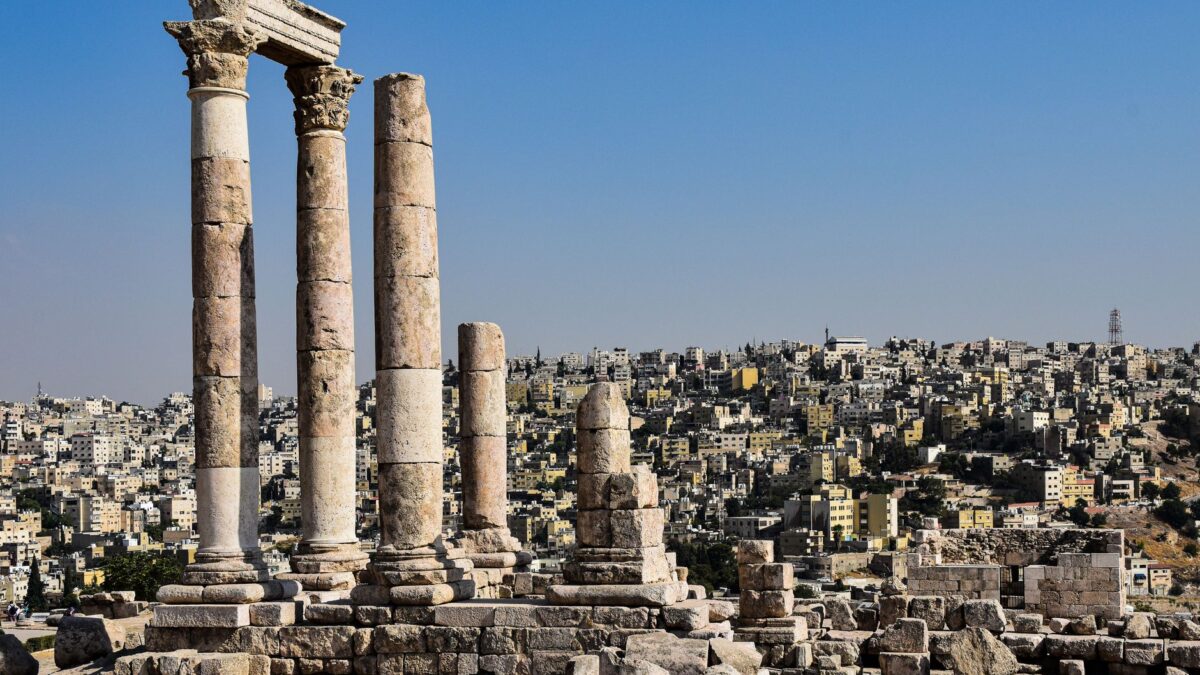 Costs & Money
How much does a trip to Jordan cost?
A realistic budget breakdown for Jordan in 2026. From 0.50 JOD falafel to hotel costs, discover how much a trip to Jordan really costs…
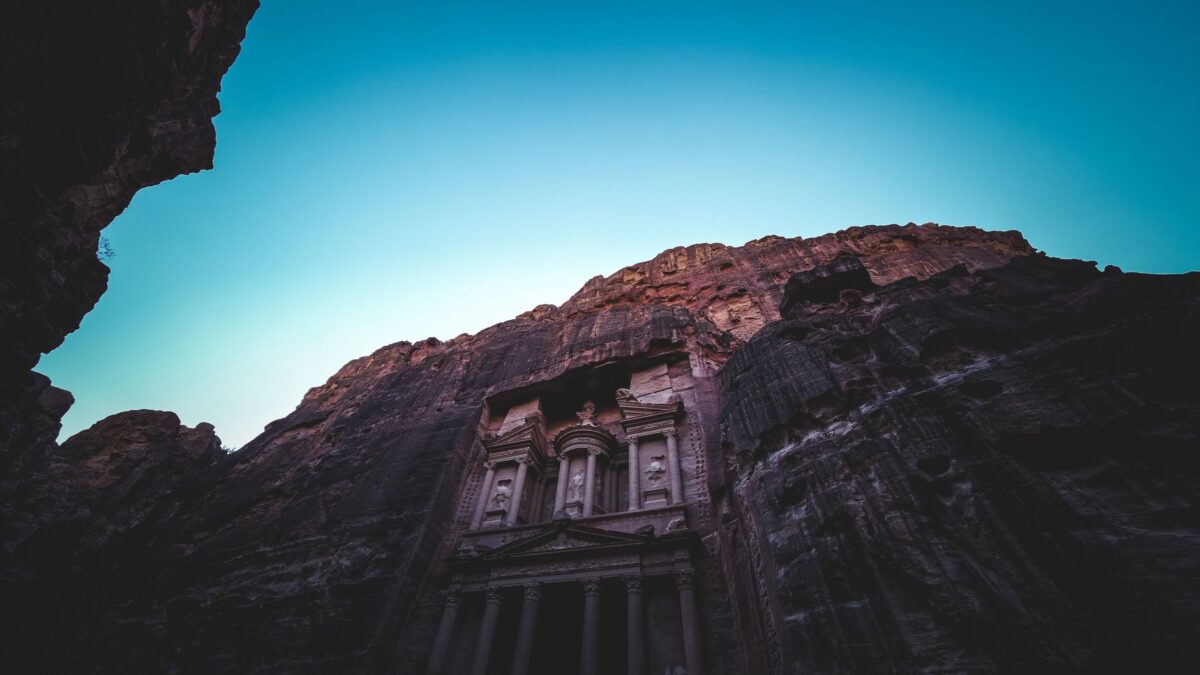 Travel Tips
A first-timer’s guide to Jordan
Practical first-timer's guide to Jordan: best time to visit, how long to stay, getting around, money, visa tips, and local secrets from Amman.
 News & Updates
Jordan in August 2026: what travelers should know now
Jordan in August 2026: Amman festivals, weather, street closures, costs, and travel tips. What to know now for your trip.
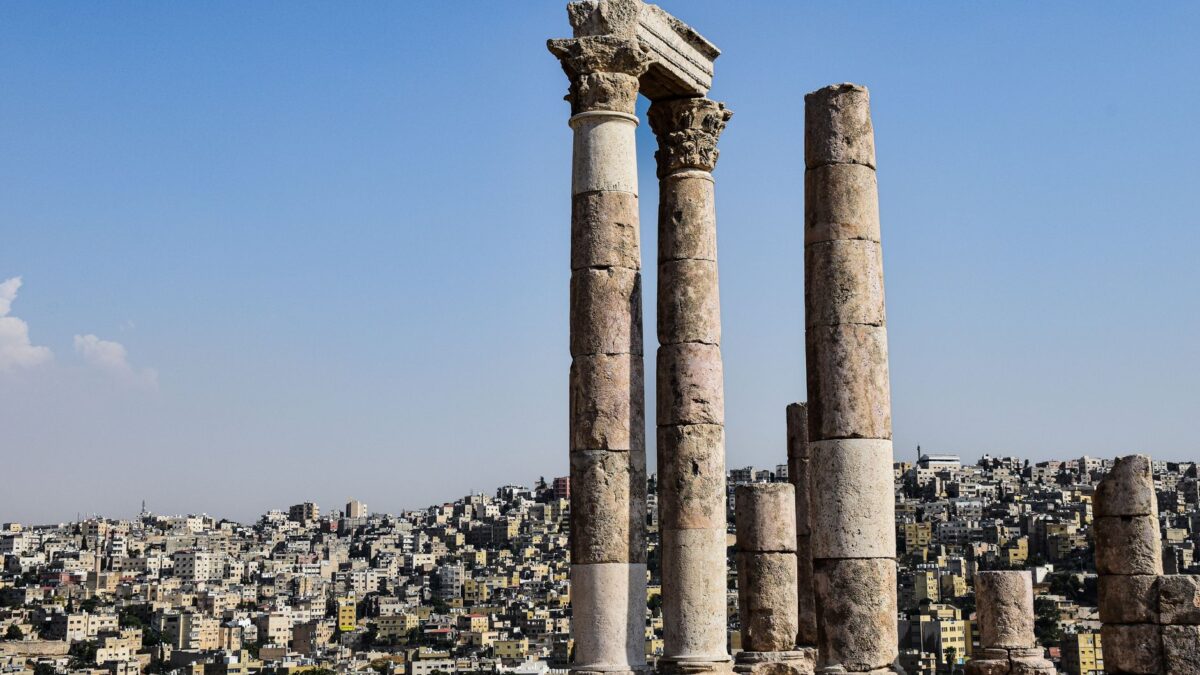 Costs & Money
A week in Amman on a mid-range budget
A week in Amman on a mid-range budget: real prices for hotels, meals, transit, and sights in Jordan's capital. Day-by-day breakdown, honest costs.
Western Asia
 Turkey
Turkey Travel Podcast with Emre Yilmaz
The Anatolian plateau, with its harsh interior climate, sits at the heart of a country whose largest city clusters around the Bosporus.
 United Arab Emirates
United Arab Emirates Travel Podcast with Omar Al Mansouri
The eastern Hajar Mountains rise sharply from the flat coastal plain, while the massive sand dunes of the Empty Quarter stretch beyond…
 Saudi Arabia
Saudi Arabia Travel Podcast with Layla Al Qahtani
A mostly sandy desert stretching between the Persian Gulf and the Red Sea makes Saudi Arabia the largest country on earth with…
 Israel
Israel Travel Podcast with Noa Shapira
The Negev desert, hot and dry in the south, gives way to a low coastal plain and central mountains; Hebrew and Arabic…