Montenegro Travel Podcast with Anja Vuković
Hosted by Anja Vuković — a new episode every day from Montenegro.
This podcast follows one resident as she settles in Montenegro and learns it by living there. The country’s terrain makes travel specific: a narrow Adriatic coast, a rugged limestone interior, and Podgorica at the centre. Mediterranean summers on the coast contrast with heavy winter snow inland.
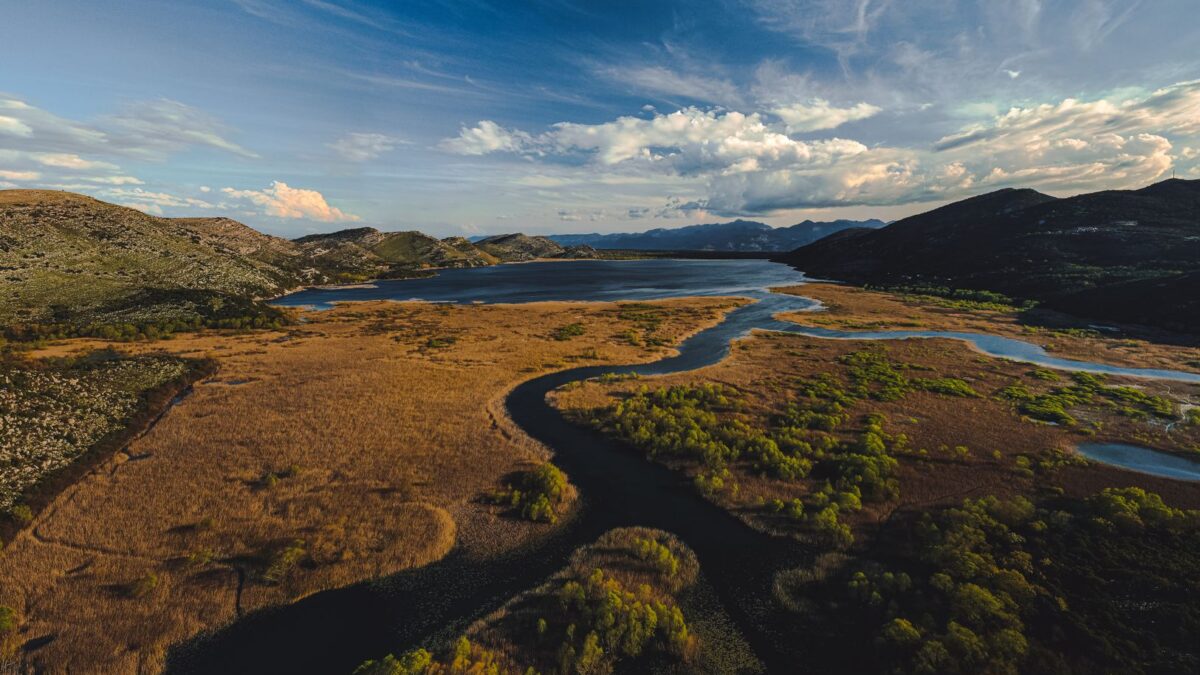
The host’s range runs from Kotor, through Cetinje, to the Prokletije range in the east and Lake Skadar. These are different Montenegros: a bay, an old royal capital, a mountain borderland, and a wetland shared with Albania. Each episode marks a new base, and the places are connected by roads that climb quickly inland.
The show unfolds by staying, not rushing. She spends a season in one place, returns to it later, then moves somewhere connected to it. A winter in the high mountains makes the Mediterranean coast feel different. The same route changes with the weather. Snow falls inland while the bay below stays open to the sea.
Recent episodes
Things to do in Montenegro
 Nevidio Canyoning
 Private tour: Homemade food and wine tasting at my family home
 Private transfers from Podgorica Airport and city to Budva
 Exciting And Historical Perast - Private tour
 Kotor private cooking class with lunch and Old town guided tour
 Perast-Our Lady Of The Rocks &Blue Cave-Private Tour Black Pearl
 Lady of the Rocks & Perast Old Town Private Tour (up to 5 people)
 Wine and food tasting in the traditional winery
Plan your trip to Montenegro
Getting around
Staying connected
Montenegro at a glance
Montenegro in depth
Reference data on the country — geography, people, history, economy and transport.
Geography and climate
Location
Southeastern Europe, between the Adriatic Sea and Serbia
Terrain
Highly indented coastline with narrow coastal plain backed by rugged high limestone mountains and plateaus
Climate
Mediterranean climate, hot dry summers and autumns and relatively cold winters with heavy snowfalls inland
Elevation
- Highest point
- Zia Kolata 2,534 m
- Lowest point
- Adriatic Sea 0 m
- Mean elevation
- 1,086 m
Area
- Total
- 13,812 sq km
- Land
- 13,452 sq km
- Water
- 360 sq km
Size comparison
Slightly smaller than Connecticut; slightly larger than twice the size of Delaware
Coastline
293.5 km
Land borders
- Total
- 680 km
- Border countries
- Albania 186 km; Bosnia and Herzegovina 242 km; Croatia 19 km; Kosovo 76 km; Serbia 157 km
Natural resources
Bauxite, hydroelectricity
Land use
- Agricultural land
- 19.6% (2023 est.)
- Arable land
- 0.7% (2023 est.)
- Permanent crops
- 0.4% (2023 est.)
- Permanent pasture
- 18.5% (2023 est.)
- Forest
- 61.5% (2023 est.)
- Other
- 18.9% (2023 est.)
Natural hazards
Destructive earthquakes
Note
Strategic location along the Adriatic coast
People and society
Population
- Total
- 599,849 (2024 est.)
- Male
- 294,482
- Female
- 305,367
Nationality
- Noun
- Montenegrin(s)
- Adjective
- Montenegrin
Ethnic groups
Montenegrin 45%, Serbian 28.7%, Bosniak 8.7%, Albanian 4.9%, Muslim 3.3%, Romani 1%, Croat 1%, other 2.6%, unspecified 4.9% (2011 est.)
Languages
- Languages
- Serbian 42.9%, Montenegrin (official) 37%, Bosnian 5.3%, Albanian 5.3%, Serbo-Croat 2%, other 3.5%, unspecified 4% (2011 est.)
- Major-language sample(s)
- Knjiga svetskih činjenica, neophodan izvor osnovnih informacija. (Serbian)
Religions
Orthodox 72.1%, Muslim 19.1%, Catholic 3.4%, atheist 1.2%, other 1.5%, unspecified 2.6% (2011 est.)
Median age
- Total
- 41.5 years (2025 est.)
- Male
- 39.5 years
- Female
- 42.5 years
Life expectancy
- Total population
- 78.2 years (2024 est.)
- Male
- 75.8 years
- Female
- 80.7 years
Urbanisation
- Urban population
- 68.5% of total population (2023)
- Rate of urbanization
- 0.45% annual rate of change (2020-25 est.)
Where people live
Highest population density is concentrated in the south and southwest; the extreme eastern border is the least populated area
Largest cities
177,000 PODGORICA (capital) (2018)
Background and government
Background
The use of the name Crna Gora or Black Mountain (Montenegro) began in the 13th century in reference to a highland region in the Serbian province of Zeta. Under Ottoman control beginning in 1496, Montenegro was a semi-autonomous theocracy ruled by a series of bishop princes until 1852, when it became a secular principality. Montenegro fought a series of wars with the Ottomans and eventually won recognition as an independent sovereign principality at the Congress of Berlin in 1878. In 1918, the country was absorbed by the Kingdom of Serbs, Croats, and Slovenes, which became the Kingdom of Yugoslavia in 1929. At the end of World War II, Montenegro joined the Socialist Federal Republic of Yugoslavia (SFRY). When the SFRY dissolved in 1992, Montenegro and Serbia created the Federal Republic of Yugoslavia (FRY), which shifted in 2003 to a looser State Union of Serbia and Montenegro. Montenegro voted to restore its independence on 3 June 2006. Montenegro became an official EU candidate in 2010 and joined NATO in 2017.
Government
Parliamentary republic
Capital
Podgorica
Time zone
UTC+1 (6 hours ahead of Washington, DC, during Standard Time)
Local name
None
Independence
3 June 2006 (from the State Union of Serbia and Montenegro); notable earlier dates: 13 March 1852 (Principality of Montenegro established); 13 July 1878 (Congress of Berlin recognizes Montenegrin independence); 28 August 1910 (Kingdom of Montenegro established)
National day
Statehood Day, 13 July (1878, 1941)
Economy and cost of living
Overview
Upper-middle-income, small Balkan economy; uses euro as de facto currency; reduced growth due to slowdown in tourism and industrial production; new impetus for EU accession under Europe Now government; energy price cap and declining food and services prices easing inflation rate
GDP per capita
- Real GDP per capita 2024
- $27,900 (2024 est.)
- Real GDP per capita 2023
- $27,000 (2023 est.)
- Real GDP per capita 2022
- $25,400 (2022 est.)
Inflation
- Inflation rate (consumer prices) 2024
- 3.3% (2024 est.)
- Inflation rate (consumer prices) 2023
- 8.6% (2023 est.)
- Inflation rate (consumer prices) 2022
- 13% (2022 est.)
Unemployment
- Unemployment rate 2024
- 14.1% (2024 est.)
- Unemployment rate 2023
- 14.7% (2023 est.)
- Unemployment rate 2022
- 14.9% (2022 est.)
Exchange rate
- Currency
- Euros (EUR) per US dollar -
- Exchange rates 2024
- 0.924 (2024 est.)
- Exchange rates 2023
- 0.925 (2023 est.)
- Exchange rates 2022
- 0.951 (2022 est.)
- Exchange rates 2021
- 0.845 (2021 est.)
- Exchange rates 2020
- 0.877 (2020 est.)
Main industries
Steelmaking, aluminum, agricultural processing, consumer goods, tourism
Agriculture
Milk, potatoes, watermelons, grapes, sheep milk, cabbages, oranges, eggs, goat milk, figs (2023)
Transport and connectivity
Airports
5 (2025)
Railways
- Total
- 250 km (2017)
- Standard gauge
- 250 km (2017) 1.435-m gauge (224 km electrified)
Ports
- Total ports
- 4 (2024)
- Large
- 0
- Medium
- 0
- Small
- 1
- Very small
- 3
- Ports with oil terminals
- 1
- Key ports
- Bar, Kotor, Risan, Tivat
Internet domain
.me
Internet users
Percent of population 90% (2023 est.)
Mobile subscriptions
- Total subscriptions
- 1.31 million (2023 est.)
- Subscriptions per 100 inhabitants
- 203 (2022 est.)
Environment
Environmental issues
Pollution of coastal waters from sewage outlets; serious air pollution in some cities from lignite power plants and household use of coal and wood for heating
Country reference figures are periodically revised. Check anything time-sensitive or safety-critical against an official source before you travel.
Montenegro travel guides
 Costs & Money
A week in Podgorica on a mid-range budget
Plan a week in Podgorica on a mid-range budget. Real prices for hotels, burek, buses, and free cultural events like FIAT in Montenegro's capital.
 Getting Around
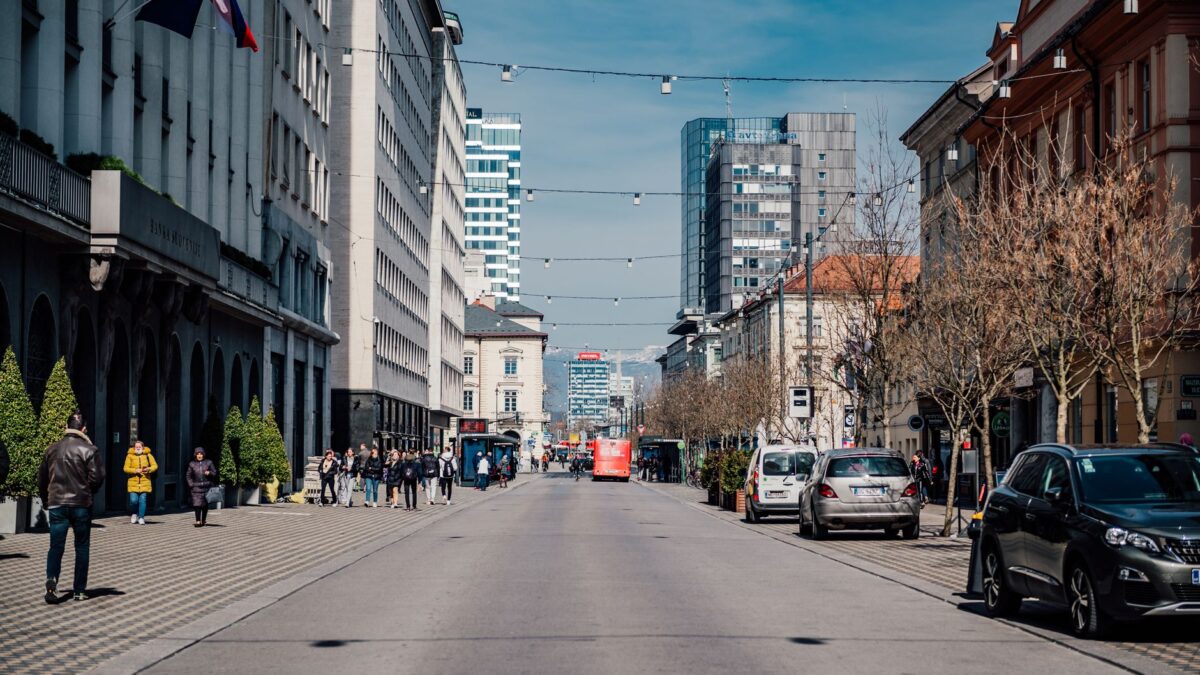
Getting around Podgorica: metros, taxis and passes
How to get around Podgorica using buses, taxis, and walking. Local tips on fares, passes, and navigating traffic.
 Travel Tips
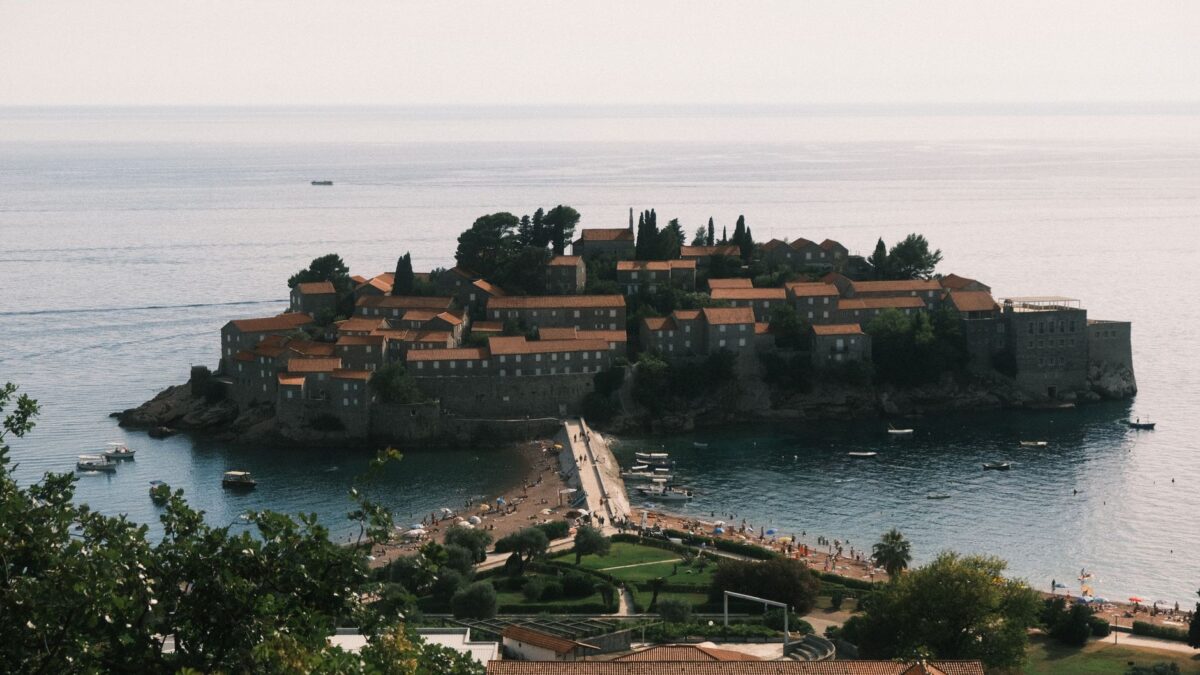
The best time to visit Montenegro
Discover the best time to visit Montenegro with a season-by-season guide on weather, crowds, festivals, and costs—from a local's perspective.
 News & Updates
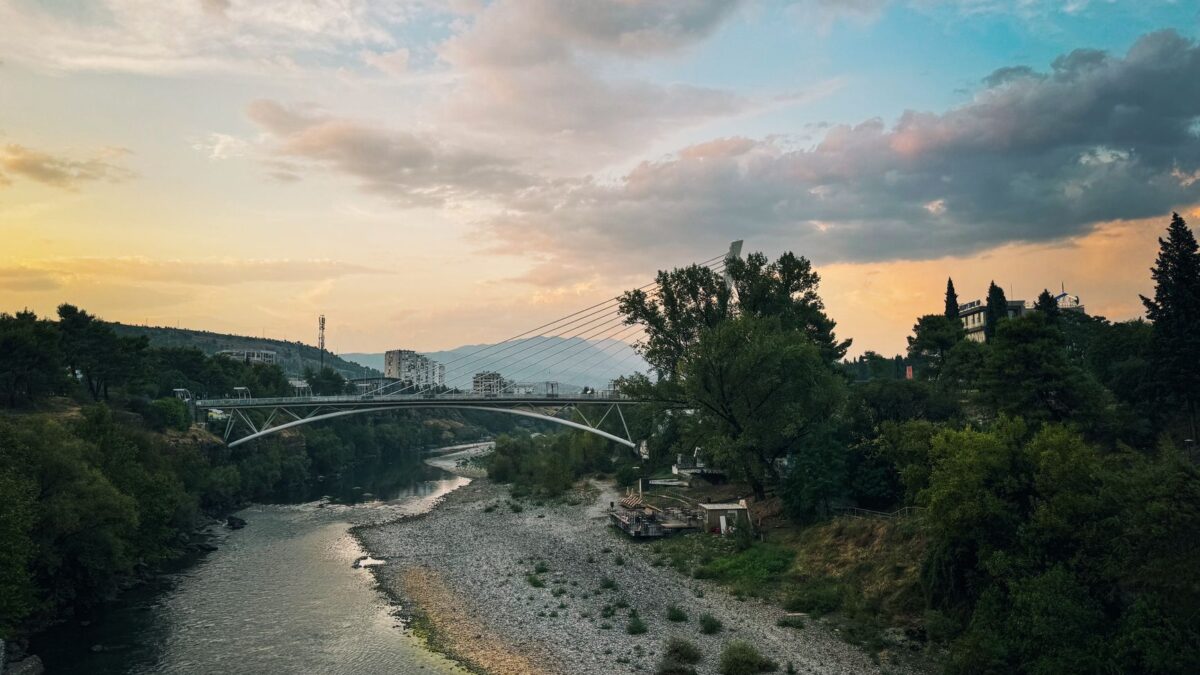
Montenegro in August 2026: what travelers should know now
Montenegro in August 2026: Current weather, peak-season prices, and local tips from Podgorica. What to pack, where to eat, and how to navigate this…
Southern Europe
 Spain
SpainSpain Travel Podcast with Mateo Herrera
The Pyrenees run along the northern border; Madrid and Barcelona anchor Spain's largest urban settlements, and the interior summers are hot and…
 Italy
ItalyItaly Travel Podcast with Sofia Romano
The Po River Valley, with its dense population and plains, contrasts sharply with the mountainous terrain that dominates most of Italy.
 Greece
Greece Travel Podcast with Nikos Pappas
The Peloponnese is a mountainous peninsula with ranges that reach into the Aegean as island chains, while Athens holds one third of…
 Portugal
Portugal Travel Podcast with Inês Carvalho
The westward sweep of the Tagus River divides Portugal’s mountainous north from the rolling southern plains, shaping two distinct worlds in one…