

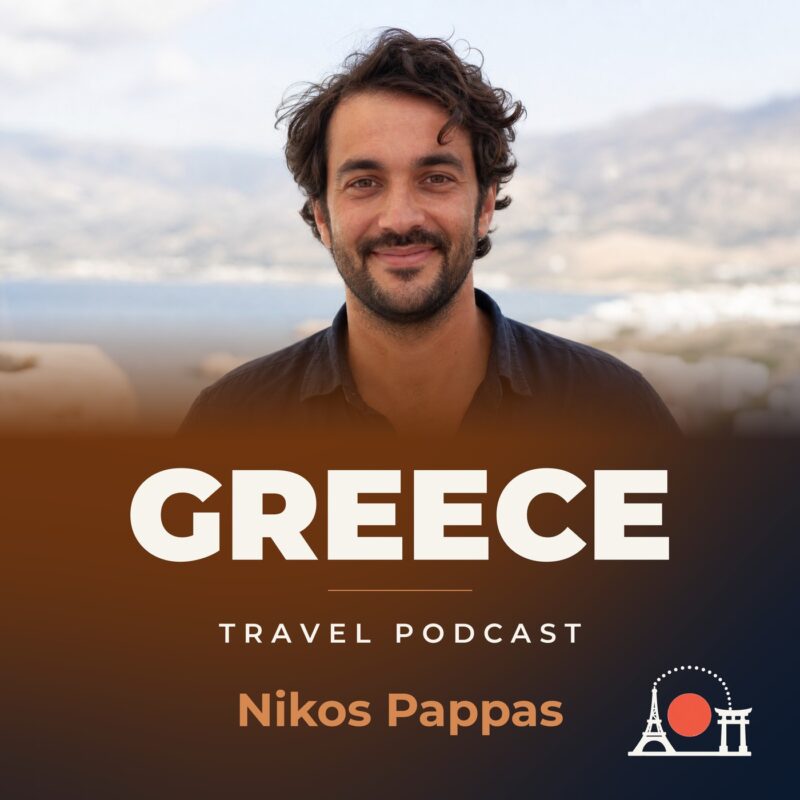
Greece Travel Podcast with Nikos Pappas
Hosted by Nikos Pappas — a new episode every day from Greece.
A podcast about travelling in Greece as a resident would, this show treats the country not as a checklist but as a landscape of mountain ranges, sea passages and small cities. Because a third of the population lives around Athens, travel here often means moving between the capital’s urban density and the quieter island and mainland regions beyond it.
Over episodes the show moves between Athens and Thessaloniki, the country’s two largest cities, then out to the mountainous Peloponnese, the Cycladic islands, and Epirus in the northwest. That range reflects the geography: steep mainland valleys, island chains, and urban clusters around Athens and Thessaloniki.
The show unfolds over repeated visits, so the same place appears in winter rain, summer heat and the quieter weeks either side. Each return adds knowledge of roads, ferries and local rhythms, and the picture of Greece builds up slowly, the way it would for someone settling in each region before moving on.
Recent episodes
Things to do in Greece
 Milos oneiro-kleftiko sailing experience with local guide
 Sailing trip to the Top Coasts of Crete, Daily/Multi-day
 Best Of Santorini Private Tailor Made Tour
 Private Full-Day Cruise in Rhodes with Lunch and Drinks
 Santorini Private Full-Day Tour – Customizable Island Experience
 Likely to sell out
The Greek Food Experience (Max 8 persons)
Likely to sell out
The Greek Food Experience (Max 8 persons)
 Rock Climbing at Kardamili- West Mani
 Athens Greek Cooking Class: Pita Gyros from Scratch –The Original
Plan your trip to Greece
Getting around
Staying connected
Greece at a glance
Greece in depth
Reference data on the country — geography, people, history, economy and transport.
Geography and climate
Location
Southern Europe, bordering the Aegean Sea, Ionian Sea, and the Mediterranean Sea, between Albania and Turkey
Terrain
Mountainous with ranges extending into the sea as peninsulas or chains of islands
Climate
Temperate; mild, wet winters; hot, dry summers
Elevation
- Highest point
- Mount Olympus 2,917
- Lowest point
- Mediterranean Sea 0 m
- Mean elevation
- 498 m
Area
- Total
- 131,957 sq km
- Land
- 130,647 sq km
- Water
- 1,310 sq km
Size comparison
Slightly smaller than Alabama
Coastline
13,676 km
Land borders
- Total
- 1,110 km
- Border countries
- Albania 212 km; Bulgaria 472 km; North Macedonia 234 km; Turkey 192 km
Natural resources
Lignite, petroleum, iron ore, bauxite, lead, zinc, nickel, magnesite, marble, salt, hydropower potential
Land use
- Agricultural land
- 41.7% (2023 est.)
- Arable land
- 14.4% (2023 est.)
- Permanent crops
- 8% (2023 est.)
- Permanent pasture
- 19.2% (2023 est.)
- Forest
- 36.9% (2023 est.)
- Other
- 21.3% (2023 est.)
Natural hazards
Severe earthquakes
Volcanism: Santorini (367 m) has been deemed a Decade Volcano by the International Association of Volcanology and Chemistry of the Earth's Interior, worthy of study due to its explosive history and close proximity to human populations; Methana and Nisyros in the Aegean are also classified as historically active
Note
Strategic location dominating the Aegean Sea and southern approach to Turkish Straits; a peninsular country, with an archipelago of about 2,000 islands
People and society
Population
- Total
- 10,424,536 (2025 est.)
- Male
- 5,105,879
- Female
- 5,318,657
Nationality
- Noun
- Greek(s)
- Adjective
- Greek
Ethnic groups
Greek 91.6%, Albanian 4.4%, other 4% (2011 est.)
Languages
- Languages
- Greek (official) 99%, other (includes English and French) 1%
- Major-language sample(s)
- Το Παγκόσμιο Βιβλίο Δεδομένων, η απαραίτητη πηγή βασικών πληροφοριών. (Greek)
Religions
Greek Orthodox 81-90%, Muslim 2%, other 3%, none 4-15%, unspecified 1% (2015 est.)
Median age
- Total
- 46.8 years (2025 est.)
- Male
- 44.6 years
- Female
- 48.3 years
Life expectancy
- Total population
- 81.9 years (2024 est.)
- Male
- 79.4 years
- Female
- 84.6 years
Urbanisation
- Urban population
- 80.7% of total population (2023)
- Rate of urbanization
- 0.11% annual rate of change (2020-25 est.)
Where people live
One third of the population lives in and around metropolitan Athens; the remainder of the country has moderate population density mixed with sizeable urban clusters
Largest cities
3.154 million ATHENS (capital), 815,000 Thessaloniki (2023)
Background and government
Background
Greece won independence from the Ottoman Empire in 1830 and became a kingdom. During the second half of the 19th century and the first half of the 20th century, it gradually added neighboring islands and territories, most with Greek-speaking populations. In World War II, Greece was first invaded by Italy (1940) and subsequently occupied by Germany (1941-44); fighting endured in a protracted civil war between supporters of the king and other anti-communist and communist rebels. The communists were defeated in 1949, and Greece joined NATO in 1952. In 1967, a military coup forced the king to flee the country. The ensuing military dictatorship collapsed in 1974, and Greece abolished the monarchy to become a parliamentary republic.
In 1981, Greece joined the EC (now the EU); it became the 12th member of the European Economic and Monetary Union in 2001. From 2009 until 2019, Greece suffered a severe economic crisis due to nearly a decade of chronic overspending and structural rigidities. Beginning in 2010, Greece entered three bailout agreements -- the first two with the European Commission, the European Central Bank, and the IMF; and the third in 2015 with the European Stability Mechanism -- worth in total about $300 billion. The Greek Government formally exited the third bailout in 2018, and Greece's economy has since improved significantly. In 2022, the country finalized its early repayment to the IMF and graduated on schedule from the EU's enhanced surveillance framework.
Government
Parliamentary republic
Capital
Athens
Time zone
UTC+2 (7 hours ahead of Washington, DC, during Standard Time)
Local name
Elliniki Dimokratia
Independence
3 February 1830 (from the Ottoman Empire)
National day
Independence Day, 25 March (1821)
Economy and cost of living
Overview
High-income EU and eurozone economy; growth above euro average, supported by private consumption and EU fund investments; structural reforms strengthening public finances and enhancing resilience within banking system; declining unemployment but low labor productivity and skill shortages
GDP per capita
- Real GDP per capita 2024
- $37,800 (2024 est.)
- Real GDP per capita 2023
- $36,900 (2023 est.)
- Real GDP per capita 2022
- $35,900 (2022 est.)
Inflation
- Inflation rate (consumer prices) 2024
- 2.7% (2024 est.)
- Inflation rate (consumer prices) 2023
- 3.5% (2023 est.)
- Inflation rate (consumer prices) 2022
- 9.6% (2022 est.)
Unemployment
- Unemployment rate 2024
- 10.2% (2024 est.)
- Unemployment rate 2023
- 11.1% (2023 est.)
- Unemployment rate 2022
- 12.5% (2022 est.)
Exchange rate
- Currency
- Euros (EUR) per US dollar -
- Exchange rates 2024
- 0.924 (2024 est.)
- Exchange rates 2023
- 0.925 (2023 est.)
- Exchange rates 2022
- 0.95 (2022 est.)
- Exchange rates 2021
- 0.845 (2021 est.)
- Exchange rates 2020
- 0.876 (2020 est.)
Main industries
Tourism, food and tobacco processing, textiles, chemicals, metal products; mining, petroleum
Agriculture
Maize, wheat, sheep milk, oranges, tomatoes, milk, peaches/nectarines, grapes, watermelons, barley (2023)
Transport and connectivity
Airports
82 (2025)
Railways
Total 2,345 km (2020) 731 km electrified
Ports
- Total ports
- 57 (2024)
- Large
- 1
- Medium
- 7
- Small
- 7
- Very small
- 42
- Ports with oil terminals
- 13
- Key ports
- Alexandroupoli, Iraklion, Kerkira, Ormos Aliveriou, Piraievs, Soudha, Thessaloniki, Volos
Internet domain
.gr
Internet users
Percent of population 85% (2023 est.)
Mobile subscriptions
- Total subscriptions
- 11.4 million (2024 est.)
- Subscriptions per 100 inhabitants
- 114 (2024 est.)
Environment
Environmental issues
Air pollution; air emissions from transport and electricity power stations; water pollution; degradation of coastal zones; loss of biodiversity; municipal and industrial waste disposal
Fresh water
68 billion cubic meters (2022 est.)
UNESCO Global Geoparks
- Total global geoparks and regional networks
- 9 (2024)
- Global geoparks and regional networks
- Chelmos Vouraikos; Grevena - Kozani; Kefalonia-Ithaca; Lavreotiki; Lesvos Island; Meteora Pyli; Psiloritis; Sitia; Vikos - Aoos (2024)
Country reference figures are periodically revised. Check anything time-sensitive or safety-critical against an official source before you travel.
Greece travel guides
 Costs & Money
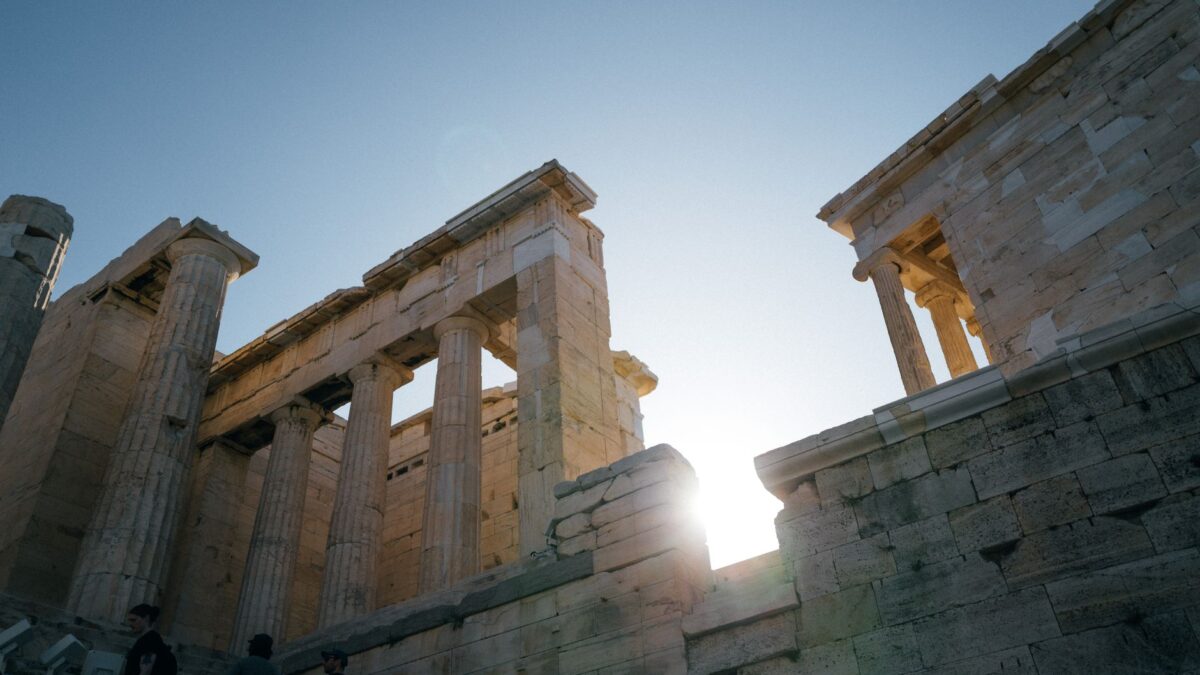
How much does a trip to Greece cost?
Realistic 2026 budget breakdown for Athens: accommodation, food, transport & attractions. Learn how much a trip to Greece costs for budget, mid-range, and comfortable…
 News & Updates
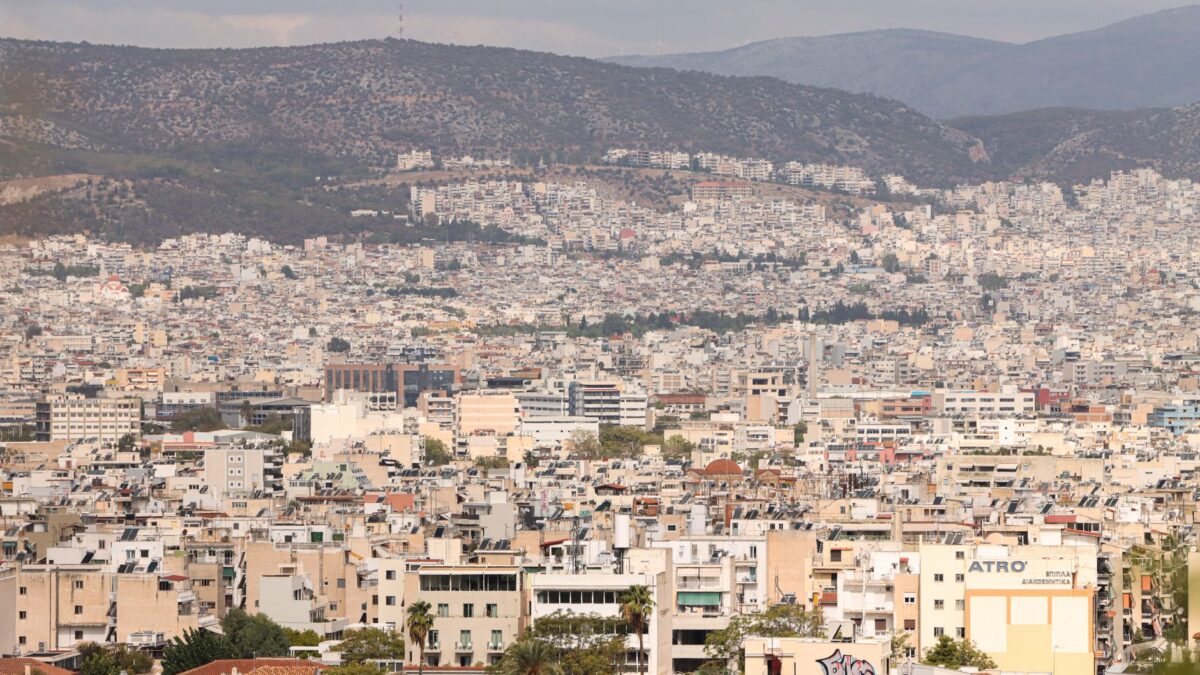
Greece in September 2026: what travelers should know now
Greece in September 2026: Weather, festivals, transport closures, and costs in Athens. Your timely guide for the cultural kickoff.
 Costs & Money
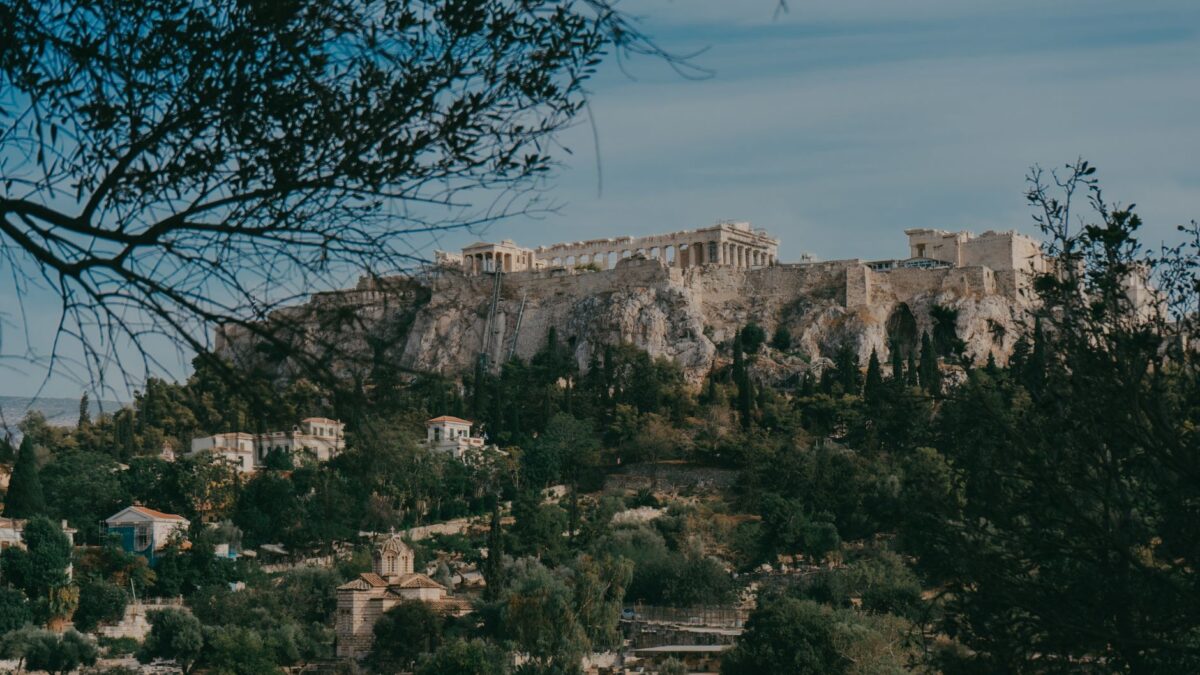
A week in Athens on a mid-range budget
A realistic 7-day Athens budget guide for mid-range travelers: real costs for hotels, meals, transit, and ancient sites in Greece's sun-soaked capital.
 Getting Around
Getting around Athens: metros, taxis and passes
Local's guide to Athens transport: metro fares, passes, taxis, walking tips, and summer timetables. Real prices and insider advice from a lifelong Athenian.
Southern Europe
 Spain
SpainSpain Travel Podcast with Mateo Herrera
The Pyrenees run along the northern border; Madrid and Barcelona anchor Spain's largest urban settlements, and the interior summers are hot and…
 Italy
ItalyItaly Travel Podcast with Sofia Romano
The Po River Valley, with its dense population and plains, contrasts sharply with the mountainous terrain that dominates most of Italy.
 Portugal
Portugal Travel Podcast with Inês Carvalho
The westward sweep of the Tagus River divides Portugal’s mountainous north from the rolling southern plains, shaping two distinct worlds in one…
 Croatia
Croatia Travel Podcast with Ivana Marić
The Adriatic coast's low mountains and highlands rise behind scattered islands, while most of the country's population lives in the northern half,…