
Spain Travel Podcast with Mateo Herrera
Hosted by Mateo Herrera — a new episode every day from Spain.
Travelling in Spain means moving between a dry, hot plateau and a greener coast, between dense city life and emptied inland villages. This podcast follows a single narrator settling in Spain for years at a time, learning each place by living in it rather than passing through. It treats travel as ordinary knowledge, built from repeated visits and local daily rhythms.
The route includes Madrid and the Pyrenees, but it also reaches Galicia’s Atlantic estuaries, the Ebro valley, and Extremadura’s slow towns. Each place is chosen because it connects to the next, so the movement between them makes geographical sense. The show does not pretend to cover all of Spain; it follows one person’s inhabited route through its regions.
The episodes move with the seasons, returning to the same streets and paths as they change. Summer heat stays in the interior while winter damp gathers along the coasts, and a town seen in December is not the same town in June. Knowing a place properly takes that repetition and time.
Recent episodes
Things to do in Spain
 Small Group Skip-the-Line Tour of the Prado Museum
 Madrid Food Tour in a Neighborhood Market with Churros
 Private Tour With A Different Perspective of Alhambra
 RECREATIONAL DIVE (certified divers only) : Explore Canarian Sealife
 Likely to sell out
Montserrat Private Tour from Barcelona with Pick-up
Likely to sell out
Montserrat Private Tour from Barcelona with Pick-up
 Likely to sell out
90' Stand Up Paddle tour in a small group in Cala Ratjada
Likely to sell out
90' Stand Up Paddle tour in a small group in Cala Ratjada
 Canyoning Adventure Rio Verde in Granada
 Scuba Diving in Lanzarote (for certified divers only)
Plan your trip to Spain
Getting around
Staying connected
Spain at a glance
Spain in depth
Reference data on the country — geography, people, history, economy and transport.
Geography and climate
Location
Southwestern Europe, bordering the Mediterranean Sea, North Atlantic Ocean, Bay of Biscay, and Pyrenees Mountains; southwest of France
Terrain
Large, flat to dissected plateau surrounded by rugged hills; Pyrenees Mountains in north
Climate
Temperate; clear, hot summers in interior, more moderate and cloudy along coast; cloudy, cold winters in interior, partly cloudy and cool along coast
Elevation
- Highest point
- Pico de Teide (Tenerife) on Canary Islands 3,718 m
- Lowest point
- Atlantic Ocean 0 m
- Mean elevation
- 660 m
Area
- Total
- 505,370 sq km
- Land
- 498,980 sq km
- Water
- 6,390 sq km
Size comparison
Almost five times the size of Kentucky; slightly more than twice the size of Oregon
Coastline
4,964 km
Land borders
- Total
- 1,952.7 km
- Border countries
- Andorra 63 km; France 646 km; Gibraltar 1.2 km; Portugal 1,224 km; Morocco (Ceuta) 8 km and Morocco (Melilla) 10.5 km
Natural resources
Coal, lignite, iron ore, copper, lead, zinc, uranium, tungsten, mercury, pyrites, magnesite, fluorspar, gypsum, sepiolite, kaolin, potash, hydropower, arable land
Land use
- Agricultural land
- 49.6% (2023 est.)
- Arable land
- 23% (2023 est.)
- Permanent crops
- 10.2% (2023 est.)
- Permanent pasture
- 19.8% (2023 est.)
- Forest
- 38.2% (2023 est.)
- Other
- 12.3% (2023 est.)
Natural hazards
Periodic droughts, occasional flooding
Volcanism: volcanic activity in the Canary Islands, located off Africa's northwest coast; Teide (3,715 m) has been deemed a Decade Volcano by the International Association of Volcanology and Chemistry of the Earth's Interior, worthy of study due to its explosive history and close proximity to human populations; La Palma (2,426 m) is the most active of the Canary Islands volcanoes; Lanzarote is the only other historically active volcano
Note
Strategic location along approaches to Strait of Gibraltar; Spain controls a number of territories in northern Morocco, including the enclaves of Ceuta and Melilla and the islands of Penon de Velez de la Gomera, Penon de Alhucemas, and Islas Chafarinas; Spain's Canary Islands are one of four North Atlantic archipelagos that make up Macaronesia; the others are the Azores (Portugal), Madeira (Portugal), and Cabo Verde
People and society
Population
- Total
- 47,280,433 (2024 est.)
- Male
- 23,069,327
- Female
- 24,211,106
Nationality
- Noun
- Spaniard(s)
- Adjective
- Spanish
Ethnic groups
Spanish 84.8%, Moroccan 1.7%, Romanian 1.2%, other 12.3% (2021 est.)
Languages
- Languages
- Castilian Spanish (official) 74%, Catalan (official in Catalonia, the Balearic Islands, and the Valencian Community) 17%, Galician (official in Galicia) 7%, Basque (official in the Basque Country and Navarre) 2%, Aranese (official in part of Catalonia) <5,000 speakers
- Major-language sample(s)
- La Libreta Informativa del Mundo, la fuente indispensable de información básica. (Spanish)
Religions
Roman Catholic 58.2%, atheist 16.2%, agnostic 10.8%, other 2.7%, non-believer 10.5%, unspecified 1.7% (2021 est.)
Median age
- Total
- 47.2 years (2025 est.)
- Male
- 45.7 years
- Female
- 47.8 years
Life expectancy
- Total population
- 83 years (2024 est.)
- Male
- 80.3 years
- Female
- 85.8 years
Urbanisation
- Urban population
- 81.6% of total population (2023)
- Rate of urbanization
- 0.24% annual rate of change (2020-25 est.)
Where people live
With the notable exception of Madrid, Sevilla, and Zaragoza, the largest urban agglomerations are found along the Mediterranean and Atlantic coasts; numerous smaller cities are spread throughout the interior; very dense settlement around the capital of Madrid, as well as the port city of Barcelona
Largest cities
6.751 million MADRID (capital), 5.687 million Barcelona, 838,000 Valencia (2023)
Background and government
Background
Spain's powerful world empire of the 16th and 17th centuries ultimately yielded command of the seas to England. Spain remained neutral during both World Wars but suffered through a devastating civil war (1936-39) resulting in a dictatorship. A peaceful transition to democracy after the death of dictator Francisco FRANCO in 1975 and rapid economic modernization after Spain joined the EU in 1986 gave Spain a dynamic and rapidly growing economy. After a severe recession in the wake of the global financial crisis in 2008, Spain has posted solid years of GDP growth above the EU average. Unemployment has fallen but remains high, especially among youth. Spain is the euro-zone's fourth-largest economy. The country has faced increased domestic turmoil in recent years due to the independence movement in its restive Catalonia region.
Government
Parliamentary constitutional monarchy
Capital
Madrid
Time zone
UTC+1 (6 hours ahead of Washington, DC, during Standard Time)
Local name
Reino de España
Independence
1492
National day
National Day (Hispanic Day), 12 October (1492)
Economy and cost of living
Overview
High-income, core-EU and eurozone economy; strong growth driven by public consumption, tourism, and other service exports; tight labor market despite high structural unemployment; efforts to narrow persistent fiscal deficits through tax and spending measures; high but declining unemployment supported by job growth and immigration
GDP per capita
- Real GDP per capita 2024
- $48,400 (2024 est.)
- Real GDP per capita 2023
- $47,300 (2023 est.)
- Real GDP per capita 2022
- $46,600 (2022 est.)
Inflation
- Inflation rate (consumer prices) 2024
- 2.8% (2024 est.)
- Inflation rate (consumer prices) 2023
- 3.5% (2023 est.)
- Inflation rate (consumer prices) 2022
- 8.4% (2022 est.)
Unemployment
- Unemployment rate 2024
- 11.4% (2024 est.)
- Unemployment rate 2023
- 12.2% (2023 est.)
- Unemployment rate 2022
- 13% (2022 est.)
Exchange rate
- Currency
- Euros (EUR) per US dollar -
- Exchange rates 2024
- 0.924 (2024 est.)
- Exchange rates 2023
- 0.925 (2023 est.)
- Exchange rates 2022
- 0.95 (2022 est.)
- Exchange rates 2021
- 0.845 (2021 est.)
- Exchange rates 2020
- 0.876 (2020 est.)
Main industries
Textiles and apparel (including footwear), food and beverages, metals and metal manufactures, chemicals, shipbuilding, automobiles, machine tools, tourism, clay and refractory products, footwear, pharmaceuticals, medical equipment
Agriculture
Milk, olives, pork, grapes, wheat, tomatoes, barley, sugar beets, maize, oranges (2023)
Transport and connectivity
Airports
365 (2025)
Railways
Total 15,489 km (2020) 9,953 km electrified
Ports
- Total ports
- 52 (2024)
- Large
- 3
- Medium
- 14
- Small
- 9
- Very small
- 24
- Size unknown
- 2
- Ports with oil terminals
- 13
- Key ports
- Alicante, Barcelona, Cadiz, Ceuta, Ferrol, Huelva, Las Palmas, Malaga, Palma de Mallorca, Puerto de Bilbao, Puerto de Pasajes, Santa Cruz de Tenerife, Santander, Sevilla, Tarragona, Valencia, Vigo
Internet domain
.es
Internet users
Percent of population 95% (2023 est.)
Mobile subscriptions
- Total subscriptions
- 61.2 million (2023 est.)
- Subscriptions per 100 inhabitants
- 124 (2022 est.)
Environment
Environmental issues
Pollution of the Mediterranean Sea from raw sewage and effluents from oil and gas production; drought; air pollution; deforestation; desertification
Fresh water
111.5 billion cubic meters (2022 est.)
UNESCO Global Geoparks
- Total global geoparks and regional networks
- 18 (2025)
- Global geoparks and regional networks
- Basque Coast UNESCO; Cabo de Gata-Níjar; Cabo Ortegal; Calatrava Volcanoes. Ciudad Real; Central Catalonia; Costa Quebrada; Courel Mountains; El Hierro; Granada; Lanzarote and Chinijo Islands; Las Loras; Maestrazgo; Molina-Alto; Origens; Sierra Norte de Sevilla; Sierras Subbéticas; Sobrarbe-Pirineos: Villuercas Ibores Jara (2025)
Country reference figures are periodically revised. Check anything time-sensitive or safety-critical against an official source before you travel.
Spain travel guides
 Costs & Money
How much does a trip to Spain cost?
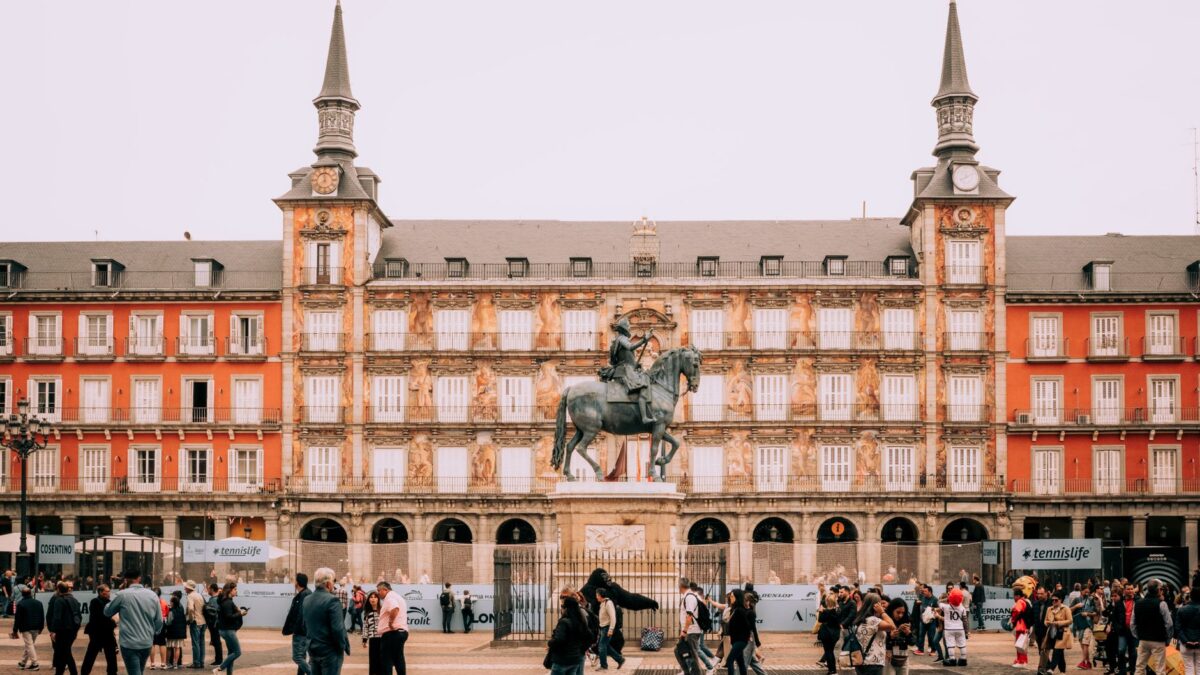
Realistic budget breakdown for Madrid: accommodation, food, transport & attractions. Daily costs for budget, mid-range & comfortable trips in EUR.
 News & Updates
Spain in August 2026: what travelers should know now
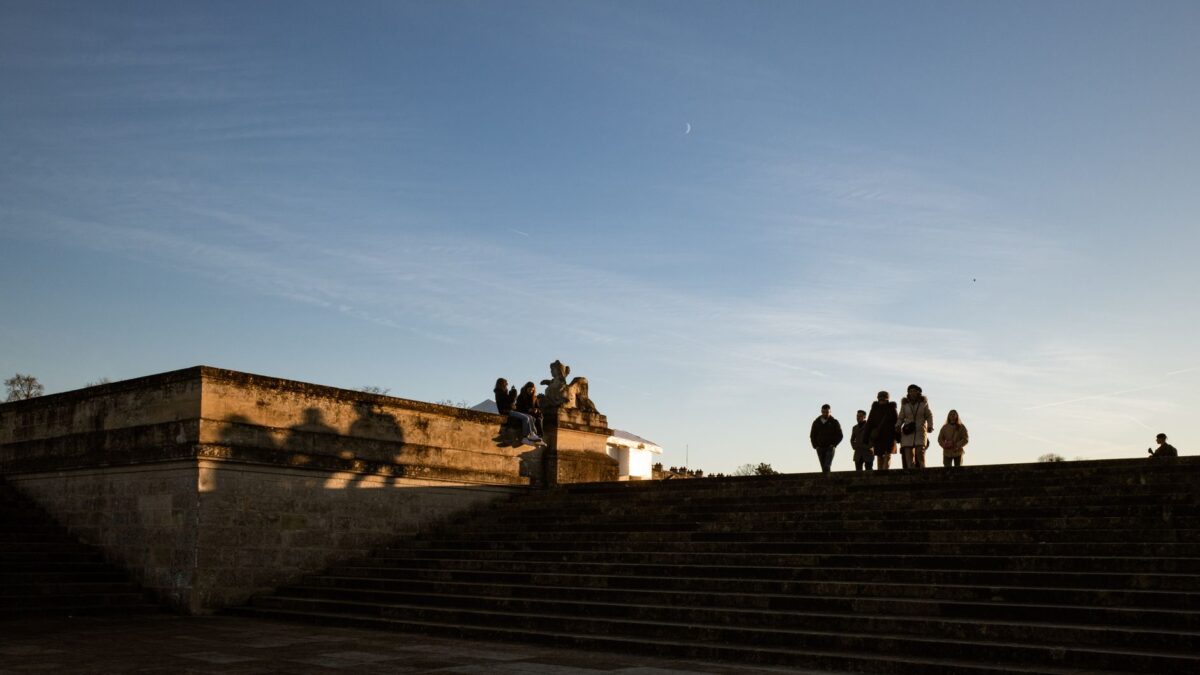
Spain in August 2026: Madrid's last summer week with festivals, metro closures, September holidays, and insider tips from local host Mateo Herrera.
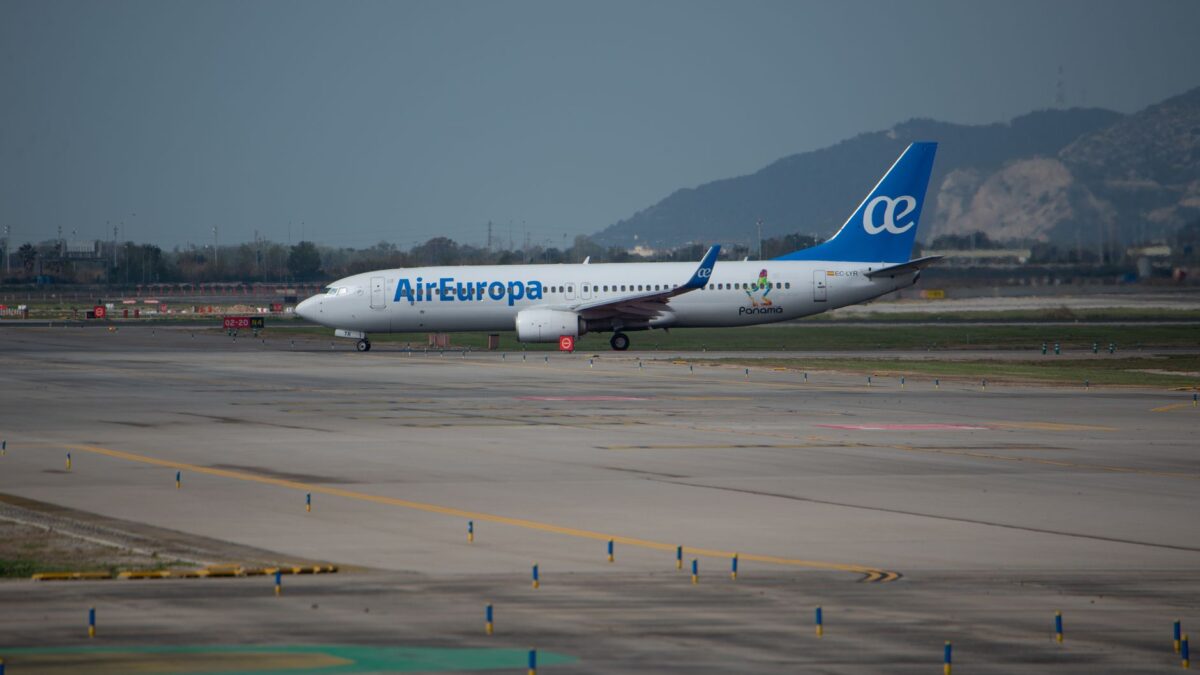 Getting Around
From the airport into Madrid: every option and what it costs
From Barajas to Madrid: metro, train, bus, taxi, and private transfer with real 2026 fares, times, and tips. Choose the best option for your…
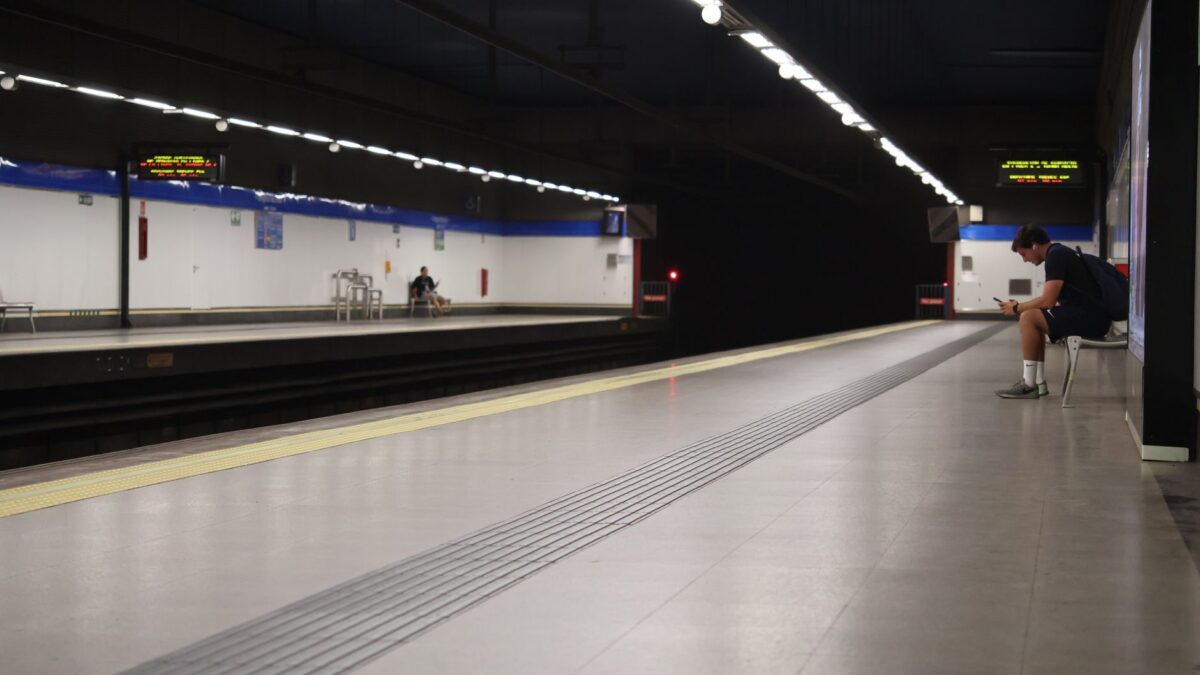 Getting Around
Getting around Madrid: metros, taxis and passes
Locals' guide to Madrid transport in August 2026: metro closures on lines 6, 7, 10, Cercanías works, taxi costs, and the best transit passes…
Southern Europe
 Italy
ItalyItaly Travel Podcast with Sofia Romano
The Po River Valley, with its dense population and plains, contrasts sharply with the mountainous terrain that dominates most of Italy.
 Greece
Greece Travel Podcast with Nikos Pappas
The Peloponnese is a mountainous peninsula with ranges that reach into the Aegean as island chains, while Athens holds one third of…
 Portugal
Portugal Travel Podcast with Inês Carvalho
The westward sweep of the Tagus River divides Portugal’s mountainous north from the rolling southern plains, shaping two distinct worlds in one…
 Croatia
Croatia Travel Podcast with Ivana Marić
The Adriatic coast's low mountains and highlands rise behind scattered islands, while most of the country's population lives in the northern half,…