

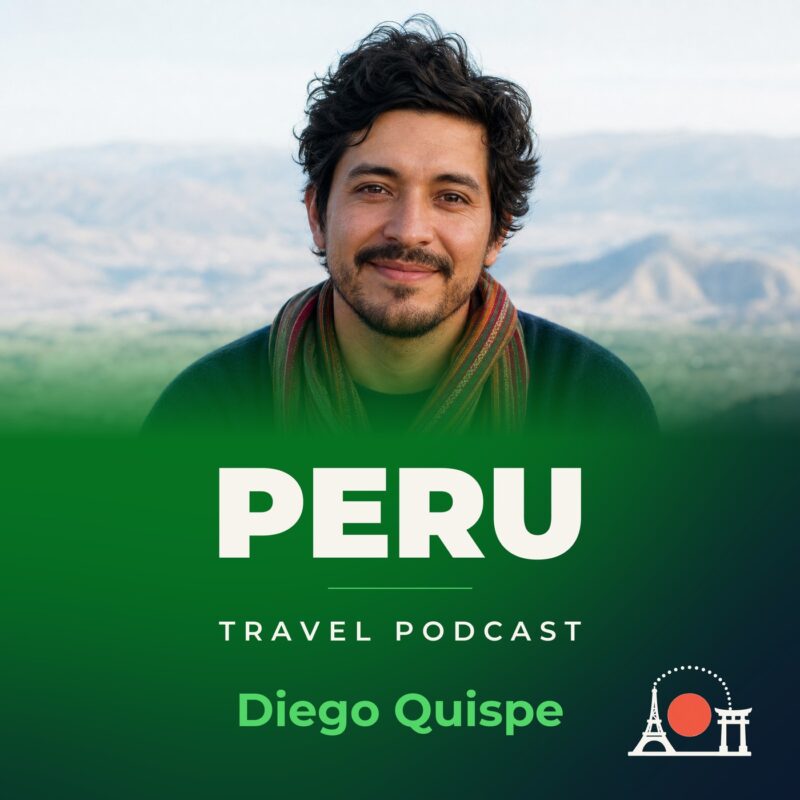
Peru Travel Podcast with Diego Quispe
Hosted by Diego Quispe — a new episode every day from Peru.
Peru Travel Podcast follows one resident’s slow route through a country where the western coastal plain, the Andean sierra and the Amazon Basin sit within a few hours of one another. That variety is the basis of every journey: dry desert, high cold mountains and tropical lowland forests.
The host ranges from Lima, the capital on the desert coast, to Arequipa in the southern sierra, and on to the Amazonian lowlands beyond Cusco. He also spends time in Trujillo, on the north coast, where the climate and history differ sharply from the highlands.
The show unfolds in slow arcs across the calendar. Seasons change as the host stays in one place long enough to know its markets and fiestas, then moves somewhere connected to it. Returning to earlier places later builds a layered picture of Peru over time.
Recent episodes
Things to do in Peru
 Anthropologist-Led Horseback: Moon Temple & Mysticism (Max 5)
 Food and Culture Full day Tour in the Sacred Valley
 4-Day Inca Jungle Trek to Machu Picchu: Biking, Rafting & Zipline
 The Textile Workshop Experience in Cusco Region
 Likely to sell out
4-Day Machu Picchu , Sacred Valley and Cusco-Private Guided Tour
Likely to sell out
4-Day Machu Picchu , Sacred Valley and Cusco-Private Guided Tour
 Likely to sell out
Machu Picchu Full Day Tour
Likely to sell out
Machu Picchu Full Day Tour
 Lima Street Food Tour & Market Experience
 Half Day Private Tour Machu Picchu Cusco Peru
Plan your trip to Peru
Getting around
Staying connected
Peru at a glance
Peru in depth
Reference data on the country — geography, people, history, economy and transport.
Geography and climate
Location
Western South America, bordering the South Pacific Ocean, between Chile and Ecuador
Terrain
Western coastal plain (costa), high and rugged Andes in center (sierra), eastern lowland jungle of Amazon Basin (selva)
Climate
Varies from tropical in east to dry desert in west; temperate to frigid in Andes
Elevation
- Highest point
- Nevado Huascaran 6,746 m
- Lowest point
- Pacific Ocean 0 m
- Mean elevation
- 1,555 m
Area
- Total
- 1,285,216 sq km
- Land
- 1,279,996 sq km
- Water
- 5,220 sq km
Size comparison
Almost twice the size of Texas; slightly smaller than Alaska
Coastline
2,414 km
Land borders
- Total
- 7,062 km
- Border countries
- Bolivia 1,212 km; Brazil 2,659 km; Chile 168 km; Colombia 1,494 km; Ecuador 1,529 km
Natural resources
Copper, silver, gold, petroleum, timber, fish, iron ore, coal, phosphate, potash, hydropower, natural gas
Land use
- Agricultural land
- 19.1% (2023 est.)
- Arable land
- 3.1% (2023 est.)
- Permanent crops
- 1.8% (2023 est.)
- Permanent pasture
- 14.2% (2023 est.)
- Forest
- 52.9% (2023 est.)
- Other
- 28% (2023 est.)
Natural hazards
Earthquakes, tsunamis, flooding, landslides, mild volcanic activity
Volcanism: volcanic activity in the Andes Mountains; Ubinas (5,672 m) is the country's most active volcano; other historically active volcanoes include El Misti, Huaynaputina, Sabancaya, and Yucamane; see note 2 under "Geography - note"
Note
Note 1: shares control of Lago Titicaca, world's highest navigable lake, with Bolivia; a remote slope of Nevado Mismi, a 5,316-m (17,441-ft) peak, is the ultimate source of the Amazon River
Note 2: Peru is one of the countries along the Ring of Fire, which is a belt bordering the Pacific Ocean that contains about 75% of the world's volcanoes and up to 90% of the world's earthquakes
Note 3: on 19 February 1600, Mount Huaynaputina in the southern Peruvian Andes erupted in the largest volcanic explosion in South America in historical times; intermittent eruptions lasted until 5 March 1600 and pumped an estimated 16 to 32 million metric tons of particulates into the atmosphere, reducing the amount of sunlight reaching the earth's surface and affecting weather worldwide; over the next two-and-a-half years, millions died around the globe in famines from bitterly cold winters, cool summers, and the loss of crops and animals
People and society
Population
- Total
- 32,768,614 (2025 est.)
- Male
- 16,016,448
- Female
- 16,752,166
Nationality
- Noun
- Peruvian(s)
- Adjective
- Peruvian
Ethnic groups
Mestizo (mixed Indigenous and White) 60.2%, Indigenous 25.8%, White 5.9%, African descent 3.6%, other (includes Chinese and Japanese descent) 1.2%, unspecified 3.3% (2017 est.)
Languages
- Languages
- Spanish (official) 82.9%, Quechua (official) 13.6%, Aymara (official) 1.6%, Ashaninka 0.3%, other native languages (includes many minor Amazonian languages) 0.8%, other 0.2%, none 0.1%, unspecified 0.7% (2017 est.)
- Major-language sample(s)
- La Libreta Informativa del Mundo, la fuente indispensable de información básica. (Spanish)
Religions
Catholic 76%, Evangelical Christian 15.7%, no religion 5.1%, other religions 3.2% (2017 est.)
Median age
- Total
- 30.4 years (2025 est.)
- Male
- 29.1 years
- Female
- 31.3 years
Life expectancy
- Total population
- 68.9 years (2024 est.)
- Male
- 65.4 years
- Female
- 72.7 years
Urbanisation
- Urban population
- 78.9% of total population (2023)
- Rate of urbanization
- 1.33% annual rate of change (2020-25 est.)
Where people live
Approximately one third of the population resides along the desert coastal belt in the west, with a strong focus on the capital city of Lima; the Andean highlands, or sierra, contain roughly half of the population; the eastern slopes of the Andes and adjoining rainforest are sparsely populated
Largest cities
11.204 million LIMA (capital), 959,000 Arequipa, 904,000 Trujillo (2023)
Background and government
Background
Ancient Peru was the seat of several prominent Andean civilizations, most notably that of the Incas whose empire was captured by Spanish conquistadors in 1533. Peru declared its independence in 1821, and remaining Spanish forces were defeated in 1824. After a dozen years of military rule, Peru returned to democratic leadership in 1980 but experienced economic problems and the growth of a violent insurgency. President Alberto FUJIMORI's election in 1990 ushered in a decade that saw a dramatic turnaround in the economy and significant progress in curtailing guerrilla activity. Nevertheless, an economic slump and the president's increasing reliance on authoritarian measures in the late 1990s generated mounting dissatisfaction with his regime, which led to his resignation in 2000.
A caretaker government oversaw a new election in 2001 that installed Alejandro TOLEDO Manrique as the new head of government - Peru's first democratically elected president of indigenous ethnicity. The presidential election of 2006 saw the return of Alan GARCIA Perez who, after a disappointing presidential term from 1985 to 1990, presided over a robust economic rebound. Former army officer Ollanta HUMALA Tasso was elected president in 2011 and carried on the market-oriented economic policies of the three preceding administrations. Pedro Pablo KUCZYNSKI Godard won a very narrow runoff in the 2016 presidential election. Facing impeachment after evidence surfaced of his involvement in a vote-buying scandal, KUCZYNSKI offered his resignation in 2018, and First Vice President Martin Alberto VIZCARRA Cornejo was sworn in as president. In 2019, VIZCARRA invoked his constitutional authority to dissolve Peru's Congress after months of battling with the body over anticorruption reforms. New congressional elections in 2020 resulted in an opposition-led legislature. The Congress impeached VIZCARRA for a second time and removed him from office after accusations of corruption and mishandling of the COVID-19 pandemic. Because of vacancies in the vice-presidential positions, the President of the Peruvian Congress, Manuel MERINO, became the next president. His ascension to office was not well received, and large protests forced his resignation later in 2020. Francisco SAGASTI assumed the position of President of Peru after being appointed President of the Congress the previous day. Jose Pedro CASTILLO Terrones won presidential election in 2021 but was impeached and ousted the following year; his vice president, Dina BOLUARTE, assumed the presidency by constitutional succession in 2022.
Government
Presidential republic
Capital
Lima
Time zone
UTC-5 (same time as Washington, DC, during Standard Time)
Local name
República del Perú
Independence
28 July 1821 (from Spain)
National day
Independence Day, 28-29 July (1821)
Economy and cost of living
Overview
Upper-middle-income South American economy; strong post-COVID rebound tempered by political uncertainty and climate risks; exports driven by mineral extraction and agriculture; large informal sector and uneven access to public services; stable fiscal position and financial sector
GDP per capita
- Real GDP per capita 2024
- $15,700 (2024 est.)
- Real GDP per capita 2023
- $15,300 (2023 est.)
- Real GDP per capita 2022
- $15,600 (2022 est.)
Inflation
- Inflation rate (consumer prices) 2024
- 2% (2024 est.)
- Inflation rate (consumer prices) 2023
- 6.5% (2023 est.)
- Inflation rate (consumer prices) 2022
- 8.3% (2022 est.)
Unemployment
- Unemployment rate 2024
- 4.9% (2024 est.)
- Unemployment rate 2023
- 4.9% (2023 est.)
- Unemployment rate 2022
- 3.9% (2022 est.)
Exchange rate
- Currency
- Nuevo sol (PEN) per US dollar -
- Exchange rates 2023
- 3.744 (2023 est.)
- Exchange rates 2022
- 3.835 (2022 est.)
- Exchange rates 2021
- 3.881 (2021 est.)
- Exchange rates 2020
- 3.495 (2020 est.)
- Exchange rates 2019
- 3.337 (2019 est.)
Main industries
Mining and refining of minerals; steel, metal fabrication; petroleum extraction and refining, natural gas and natural gas liquefaction; fishing and fish processing, cement, glass, textiles, clothing, food processing, beer, soft drinks, rubber, machinery, electrical machinery, chemicals, furniture
Agriculture
Sugarcane, potatoes, rice, bananas, milk, maize, chicken, oil palm fruit, cassava, grapes (2023)
Transport and connectivity
Airports
174 (2025)
Railways
- Total
- 1,854.4 km (2017)
- Standard gauge
- 1,730.4 km (2014) 1.435-m gauge (34 km electrified)
- Narrow gauge
- 124 km (2014) 0.914-m gauge
Ports
- Total ports
- 20 (2024)
- Large
- 0
- Medium
- 1
- Small
- 3
- Very small
- 16
- Ports with oil terminals
- 16
- Key ports
- Bahia de Matarani, Iquitos, Puerto del Callao, Talara
Internet domain
.pe
Internet users
Percent of population 80% (2023 est.)
Mobile subscriptions
- Total subscriptions
- 42.6 million (2024 est.)
- Subscriptions per 100 inhabitants
- 125 (2024 est.)
Environment
Environmental issues
Deforestation (some the result of illegal logging); overgrazing leading to soil erosion; desertification; air pollution in Lima; pollution of rivers and coastal waters from municipal and mining wastes; overfishing
Fresh water
1.88 trillion cubic meters (2022 est.)
UNESCO Global Geoparks
- Total global geoparks and regional networks
- 1
- Global geoparks and regional networks
- Colca y Volcanes de Andagua (2023)
Country reference figures are periodically revised. Check anything time-sensitive or safety-critical against an official source before you travel.
Peru travel guides
 Travel Tips
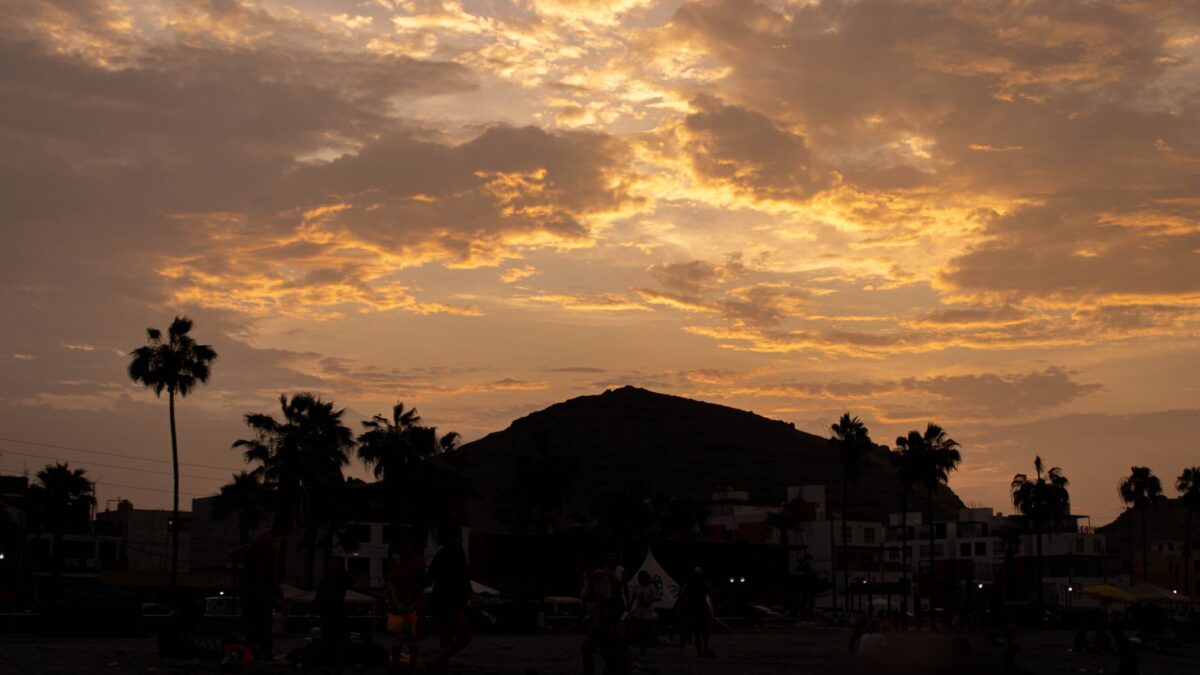
A first-timer’s guide to Peru
A practical first-timer's guide to Peru: best times to visit, costs in Soles, getting around Lima, and essential tips for navigating Peru's capital.
 News & Updates
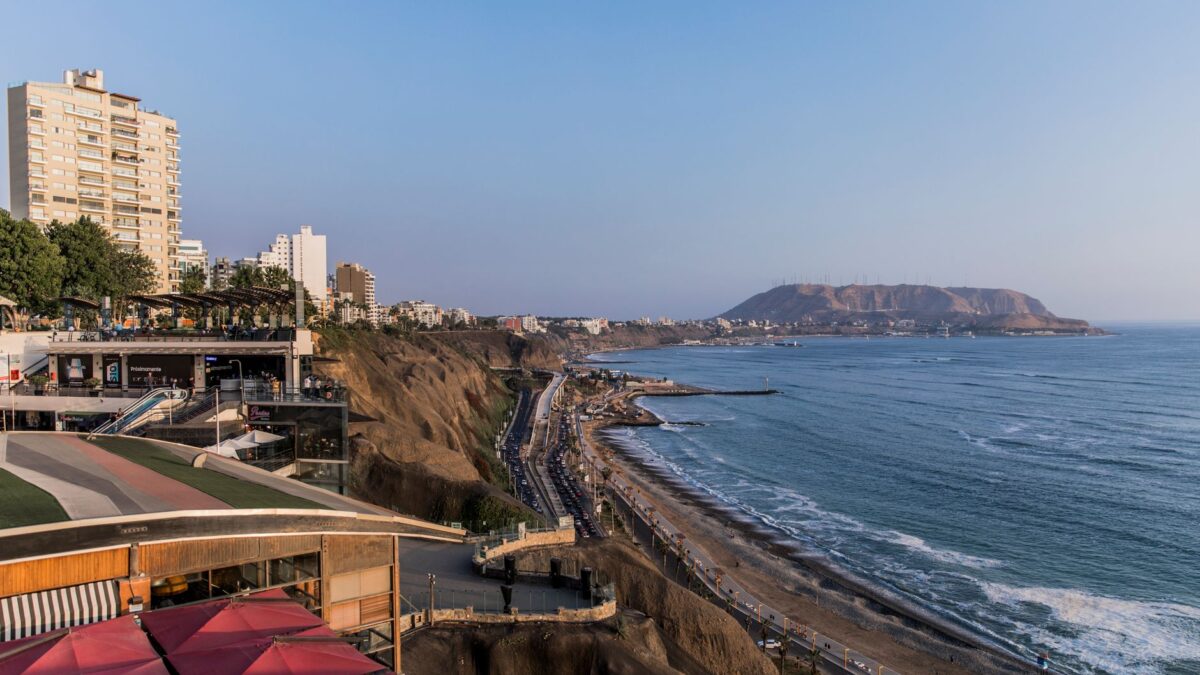
Peru in September 2026: what travelers should know now
Peru travel briefing for September 2026: weather, costs, safety, and key updates for Lima visitors right now.
 News & Updates
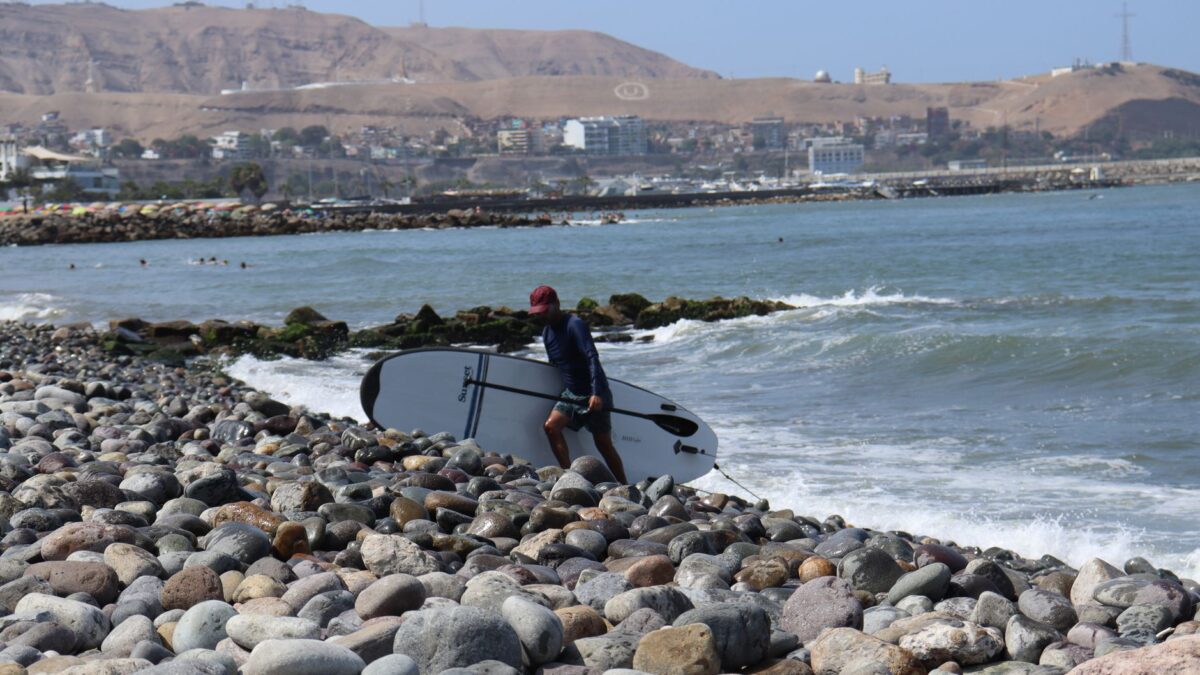
Peru in August 2026: what travelers should know now
Peru in August 2026: a local's guide to Lima's Santa Rosa festival, coffee fairs, garúa weather, costs, and practical tips for this week.
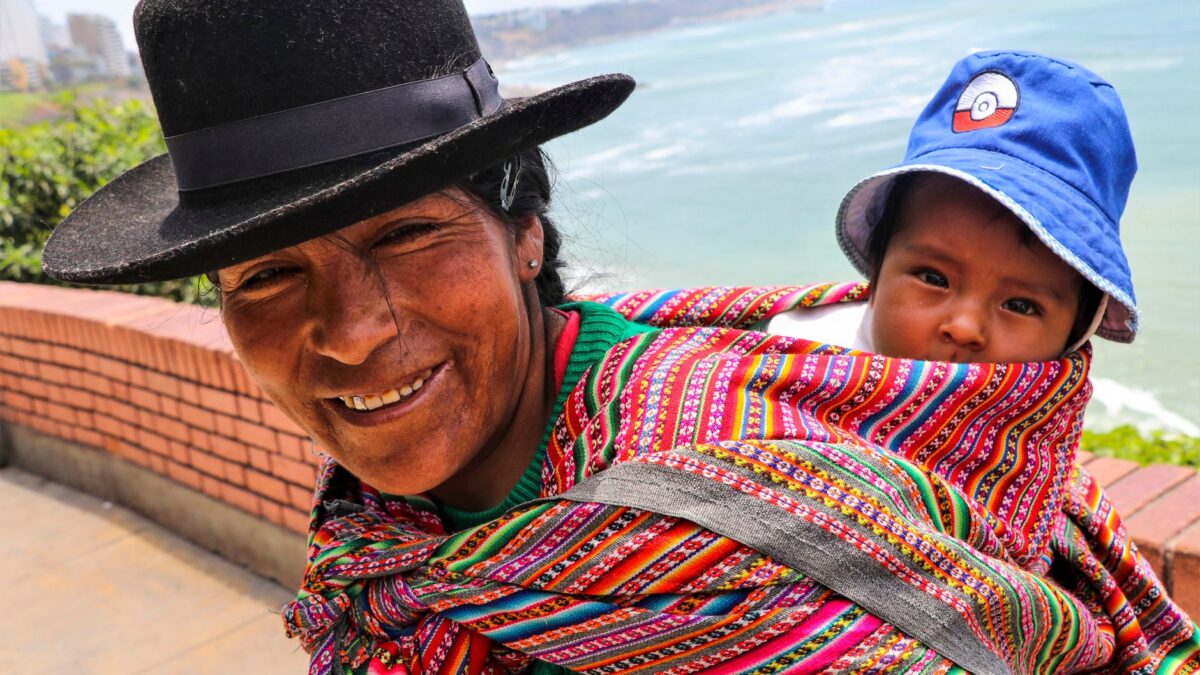 Culture & Etiquette
Peru etiquette: the dos and don’ts
Peru etiquette: greetings, tipping, dining, dress, and local customs from a Limeño's perspective. Be a considerate visitor in Lima.
South America
 Brazil
Brazil Travel Podcast with Rafael Costa
The Pantanal, the world's largest tropical wetland, spreads across west central Brazil, a seasonal floodplain that rewards slow, repeated visits.
 Argentina
Argentina Travel Podcast with Camila Duarte
The Pampas, Argentina's rich plains in the northern half, feed the country's cattle and wheat; Buenos Aires, home to a third of…
 Colombia
Colombia Travel Podcast with Mariana Ospina
The llanos make up roughly 60% of Colombia, a vast grassland sparsely populated while most people live in the north and west.
 Chile
ChileChile Travel Podcast with Tomás Fuentes
For a listener, this podcast gives a resident’s slow route through Chile, from Santiago’s central valley to the Atacama desert, and the…