


Sri Lanka Travel Podcast with Tharushi Perera
Hosted by Tharushi Perera — a new episode every day from Sri Lanka.
This podcast follows travelling through Sri Lanka as a process of living somewhere long enough to read its landscapes. The island’s character comes from its monsoon rhythms: the southwest wet zone lush through June to October, the northern and eastern coasts drying under the northeast monsoon from December to March.
The range she covers runs from the legislative capital at Sri Jayewardenepura Kotte to the northern peninsula, where Tamil culture has its own rhythm, and from the mountain towns of the south-central interior to the old capitals of Anuradhapura and Polonnaruwa. She also follows the limestone shoals of Adam’s Bridge off the northwest coast, a chain that once connected the island to India.
The show unfolds in seasons, returning to places as the rain shifts and the landscape changes. A road that feels empty during the southwest monsoon becomes busy again under the northeast winds; a temple compound in Anuradhapura is seen first in dry dust, then after a storm. Knowing Sri Lanka this way is cumulative, built from repeated visits and the small differences between them.
Recent episodes
Things to do in Sri Lanka
 Likely to sell out
Private City Day Tour in Anuradhapura
Likely to sell out
Private City Day Tour in Anuradhapura
 Private Car & Driver for 07 Days Tour In Sri Lanka
 Chauffeur guide and Tour organizer
 Highly recommended multi day tour in Sri Lanka
 Udawalawe National Park Half Day Jeep Safari (Private Tour)
 Private Traditional Sri Lankan Cooking Class in Kandy with Hotel Transfers
 Kandy City Tour By Best Guide Lanka Tours
 Private Cooking Class - Personalized menu with glutenfree & vegan
Plan your trip to Sri Lanka
Getting around
Staying connected
Sri Lanka at a glance
Sri Lanka in depth
Reference data on the country — geography, people, history, economy and transport.
Geography and climate
Location
Southern Asia, island in the Indian Ocean, south of India
Terrain
Mostly low, flat to rolling plain; mountains in south-central interior
Climate
Tropical monsoon; northeast monsoon (December to March); southwest monsoon (June to October)
Elevation
- Highest point
- Pidurutalagala 2,524 m
- Lowest point
- Indian Ocean 0 m
- Mean elevation
- 228 m
Area
- Total
- 65,610 sq km
- Land
- 64,630 sq km
- Water
- 980 sq km
Size comparison
Slightly larger than West Virginia
Coastline
1,340 km
Land borders
Total 0 km
Natural resources
Limestone, graphite, mineral sands, gems, phosphates, clay, hydropower, arable land
Land use
- Agricultural land
- 48.6% (2023 est.)
- Arable land
- 22.2% (2023 est.)
- Permanent crops
- 19.3% (2023 est.)
- Permanent pasture
- 7.1% (2023 est.)
- Forest
- 34.4% (2023 est.)
- Other
- 16.7% (2023 est.)
Natural hazards
Occasional cyclones and tornadoes
Note
Strategic location near major Indian Ocean sea lanes; Adam's Bridge is a chain of limestone shoals between the southeastern coast of India and the northwestern coast of Sri Lanka; geological evidence suggests that this 50-km (31-mi) bridge once connected India and Sri Lanka; ancient records seem to indicate that a foot passage was possible between the two land masses until the 15th century, when the land bridge broke up in a cyclone
People and society
Population
- Total
- 22,050,561 (2025 est.)
- Male
- 10,668,528
- Female
- 11,382,033
Nationality
- Noun
- Sri Lankan(s)
- Adjective
- Sri Lankan
Ethnic groups
Sinhalese 74.9%, Sri Lankan Tamil 11.2%, Sri Lankan Moors 9.2%, Indian Tamil 4.2%, other 0.5% (2012 est.)
Languages
Sinhala (official) 87%, Tamil (official) 28.5%, English 23.8% (2012 est.)
Religions
Buddhist (official) 70.2%, Hindu 12.6%, Muslim 9.7%, Roman Catholic 6.1%, other Christian 1.3%, other 0.05% (2012 est.)
Median age
- Total
- 34.2 years (2025 est.)
- Male
- 32.2 years
- Female
- 35.8 years
Life expectancy
- Total population
- 76.8 years (2024 est.)
- Male
- 73.7 years
- Female
- 79.9 years
Urbanisation
- Urban population
- 19.2% of total population (2023)
- Rate of urbanization
- 1.22% annual rate of change (2020-25 est.)
Where people live
The population is primarily concentrated within a broad wet zone in the southwest, urban centers along the eastern coast, and on the Jaffna Peninsula in the north
Largest cities
103,000 Sri Jayewardenepura Kotte (legislative capital) (2018), 633,000 COLOMBO (capital) (2023)
Background and government
Background
The first Sinhalese arrived in Sri Lanka late in the 6th century B.C., probably from northern India. Buddhism was introduced circa 250 B.C., and the first kingdoms developed at the cities of Anuradhapura (from about 200 B.C. to about A.D. 1000) and Polonnaruwa (from about A.D. 1070 to 1200). In the 14th century, a South Indian dynasty established a Tamil kingdom in northern Sri Lanka. The Portuguese controlled the coastal areas of the island in the 16th century, followed by the Dutch in the 17th century. The island was ceded to the British in 1796, became a crown colony in 1802, and was formally united under British rule by 1815. As Ceylon, it became independent in 1948; the name was changed to Sri Lanka in 1972. Prevailing tensions between the Sinhalese majority and Tamil separatists erupted into war in 1983. Fighting between the government and Liberation Tigers of Tamil Eelam (LTTE) continued for over a quarter-century. Although Norway brokered peace negotiations that led to a cease-fire in 2002, the fighting slowly resumed and was again in full force by 2006. The government defeated the LTTE in 2009.
During the post-conflict years under then-President Mahinda RAJAPAKSA, the government initiated infrastructure development projects, many of which were financed by loans from China. His regime faced allegations of human rights violations and a shrinking democratic space for civil society. In 2015, a new coalition government headed by President Maithripala SIRISENA of the Sri Lanka Freedom Party and Prime Minister Ranil WICKREMESINGHE of the United National Party came to power with pledges to advance economic, political, and judicial reforms. However, implementation of these reforms was uneven. In 2019, Gotabaya RAJAPAKSA won the presidential election and appointed his brother Mahinda prime minister. Civil society raised concerns about the RAJAPAKSA administration’s commitment to pursuing justice, human rights, and accountability reforms, as well as the risks to foreign creditors that Sri Lanka faced given its ongoing economic crisis. A combination of factors including the COVID-19 pandemic; severe shortages of food, medicine, and fuel; and power outages triggered increasingly violent protests in Columbo beginning in 2022. In response, WICKREMESINGHE -- who had already served as prime minister five times -- was named to replace the prime minister, but he became president within a few months when Gotabaya RAJAPAKSA fled the country.
Government
Presidential republic
Capital
Colombo (commercial capital); Sri Jayewardenepura Kotte (legislative capital)
Time zone
UTC+5.5 (10.5 hours ahead of Washington, DC, during Standard Time)
Local name
Shri Lanka Prajatantrika Samajavadi Janarajaya (Sinhala)/ Ilankai Jananayaka Choshalichak Kutiyarachu (Tamil)
Independence
4 February 1948 (from the UK)
National day
Independence Day (National Day), 4 February (1948)
Economy and cost of living
Overview
Economic contraction in 2022-23 marked by increased poverty and significant inflation; IMF two-year debt relief program following 2022 sovereign default; structural challenges from non-diversified economy and rigid labor laws; heavy dependence on tourism receipts and remittances
GDP per capita
- Real GDP per capita 2024
- $13,800 (2024 est.)
- Real GDP per capita 2023
- $13,000 (2023 est.)
- Real GDP per capita 2022
- $13,200 (2022 est.)
Inflation
- Inflation rate (consumer prices) 2024
- -0.4% (2024 est.)
- Inflation rate (consumer prices) 2023
- 16.5% (2023 est.)
- Inflation rate (consumer prices) 2022
- 49.7% (2022 est.)
Unemployment
- Unemployment rate 2024
- 5% (2024 est.)
- Unemployment rate 2023
- 6% (2023 est.)
- Unemployment rate 2022
- 4.6% (2022 est.)
Exchange rate
- Currency
- Sri Lankan rupees (LKR) per US dollar -
- Exchange rates 2023
- 327.507 (2023 est.)
- Exchange rates 2022
- 322.633 (2022 est.)
- Exchange rates 2021
- 198.764 (2021 est.)
- Exchange rates 2020
- 185.593 (2020 est.)
- Exchange rates 2019
- 178.745 (2019 est.)
Main industries
Processing of rubber, tea, coconuts, tobacco and other agricultural commodities; tourism; clothing and textiles; mining
Agriculture
Rice, coconuts, tea, sugarcane, plantains, milk, fiber crops, cassava, chicken, pumpkins/squash (2023)
Transport and connectivity
Airports
18 (2025)
Railways
- Total
- 1,562 km (2016)
- Broad gauge
- 1,562 km (2016) 1.676-m gauge
Ports
- Total ports
- 6 (2024)
- Large
- 0
- Medium
- 2
- Small
- 1
- Very small
- 1
- Size unknown
- 2
- Ports with oil terminals
- 2
- Key ports
- Batticaloa Roads, Colombo, Galle Harbor, Hambantota, Kankesanturai, Trincomalee Harbor
Internet domain
.lk
Internet users
Percent of population 51% (2023 est.)
Mobile subscriptions
- Total subscriptions
- 30.6 million (2024 est.)
- Subscriptions per 100 inhabitants
- 133 (2024 est.)
Environment
Environmental issues
Deforestation; soil erosion; poaching; effects of urbanization; coastal degradation from mining activities and pollution; coral reef destruction; freshwater resources polluted by industrial wastes and sewage runoff; waste disposal; air pollution in Colombo
Fresh water
52.8 billion cubic meters (2022 est.)
Country reference figures are periodically revised. Check anything time-sensitive or safety-critical against an official source before you travel.
Sri Lanka travel guides
 News & Updates
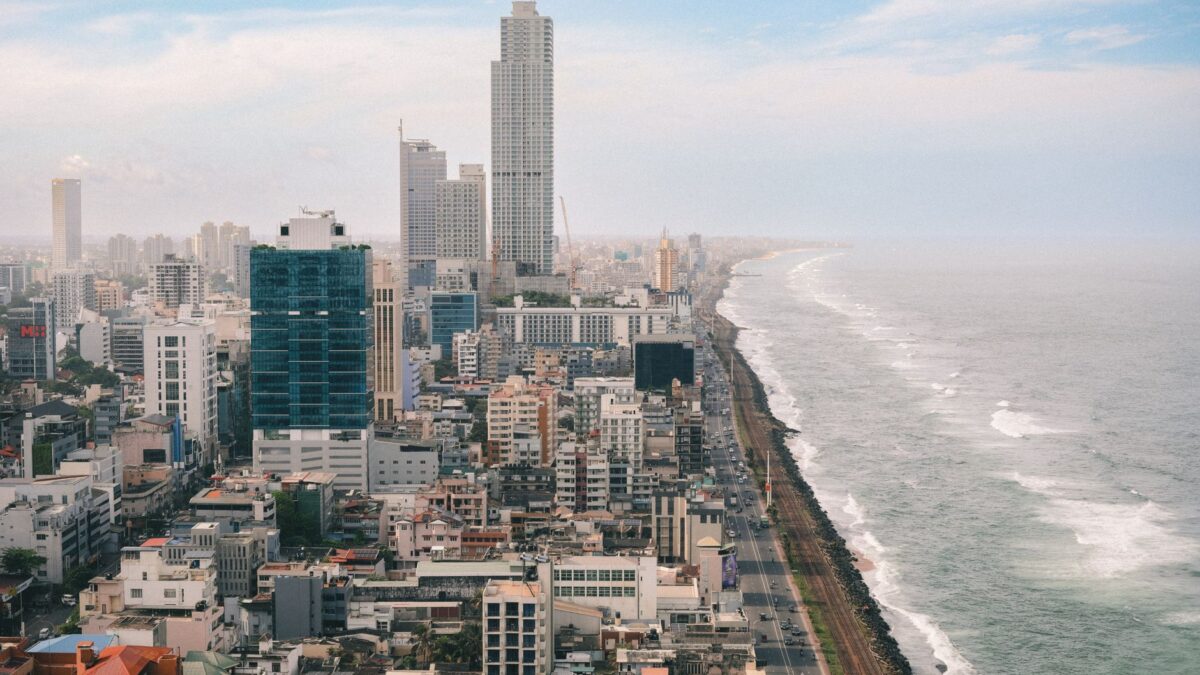
Sri Lanka in September 2026: what travelers should know now
Sri Lanka travel update for September 2026: weather, marathon closures, court shutdowns, and current costs in Colombo.
 Getting Around
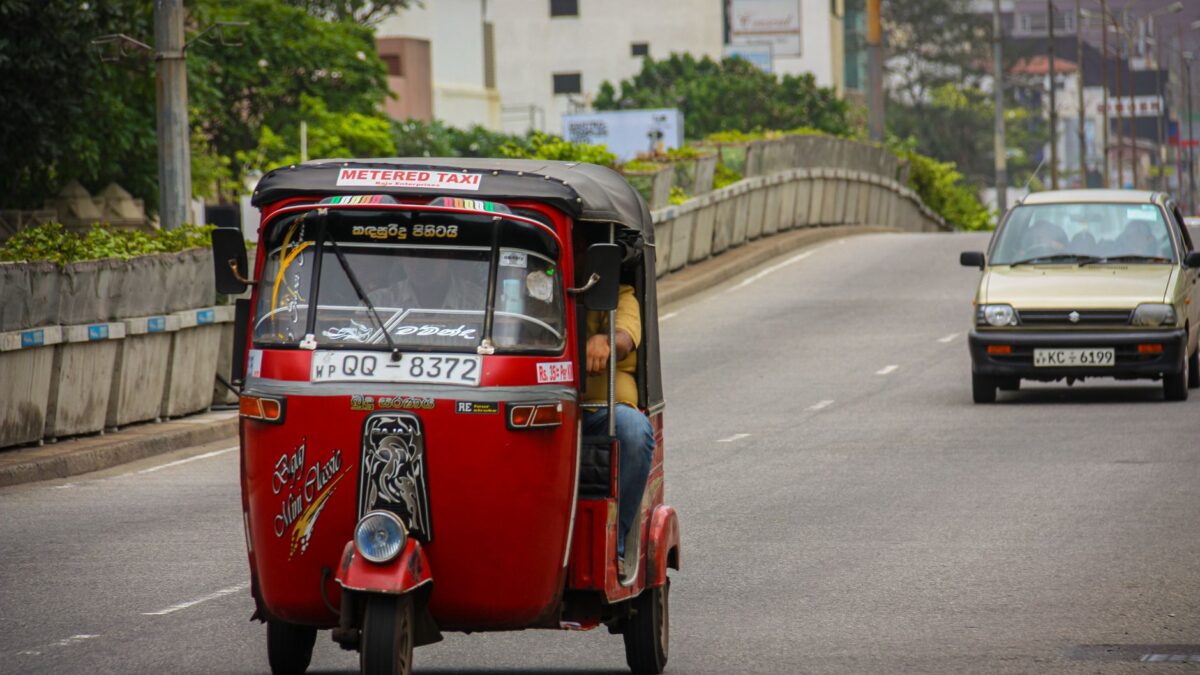
From the airport into Colombo: every option and what it costs
From Sri Lanka's Bandaranaike Airport to Colombo: real train, bus, taxi, and tuk-tuk costs, times, and honest picks for your style.
 News & Updates
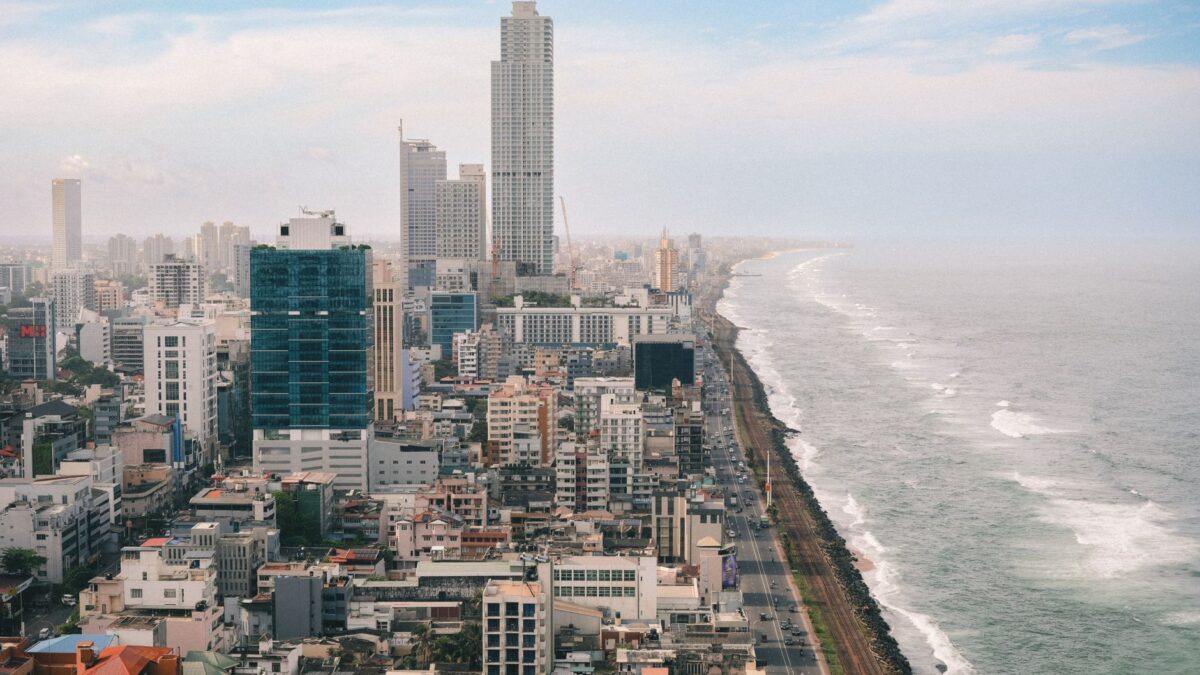
Sri Lanka in August 2026: what travelers should know now
Colombo in August 2026: cricket at SSC, theatre festival, POP Culture at Port City, dengue cautions, new Vietjet route, and real local prices.
 Getting Around
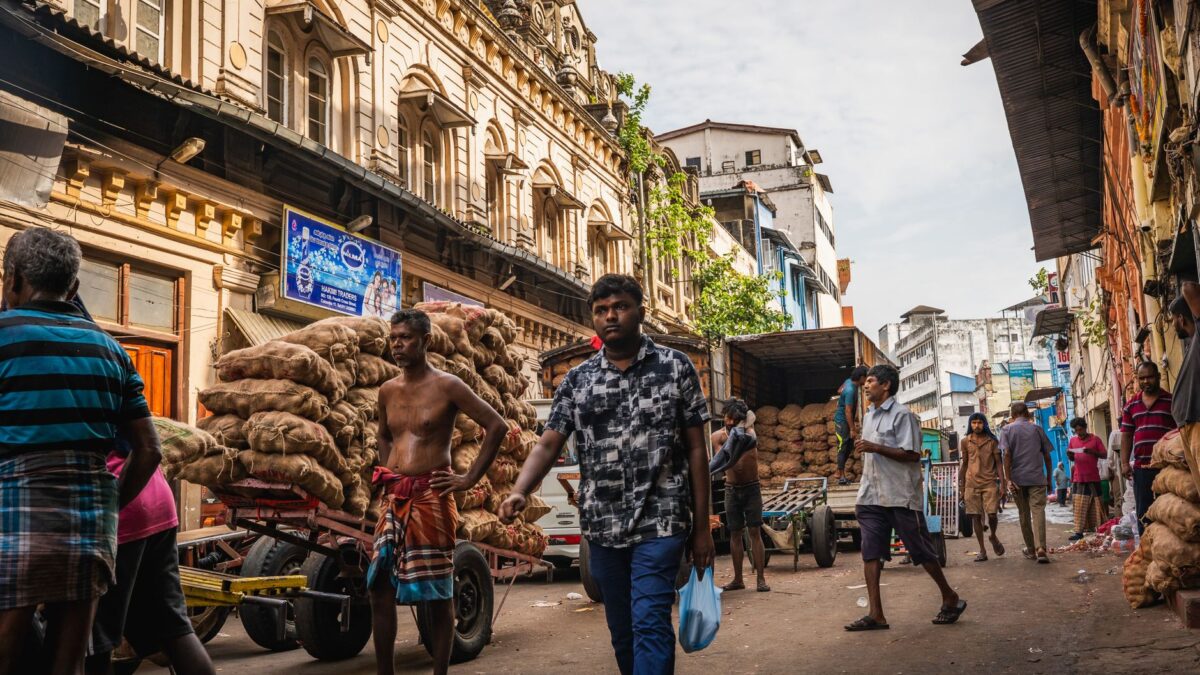
Getting around Colombo: metros, taxis and passes
Discover how locals navigate Colombo in 2026: buses, trains, tuk-tuk costs, and walking tips. Real fares, festival traffic, and monsoon advice from a Sri…
South Asia
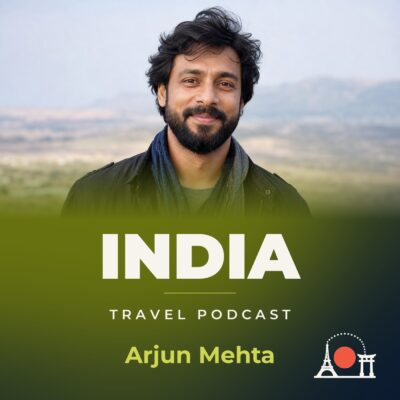 India
IndiaIndia Travel Podcast with Arjun Mehta
The Ganges plain holds India’s densest population, while the Deccan Plateau in the south and the Himalayan mountain fringe in the north…
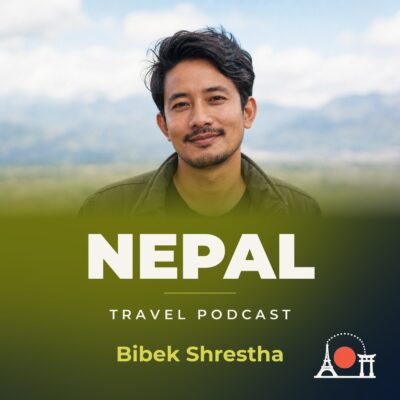 Nepal
NepalNepal Travel Podcast with Bibek Shrestha
The Tarai plains hold nearly half the population and share a lowland geography with the Ganges river system that shapes life in…
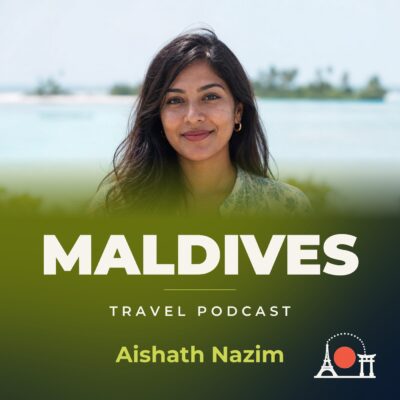 Maldives
Maldives Travel Podcast with Aishath Nazim
The northeast monsoon brings drier weather from November to March, when the archipelago’s flat coral atolls and white sandy beaches emerge from…
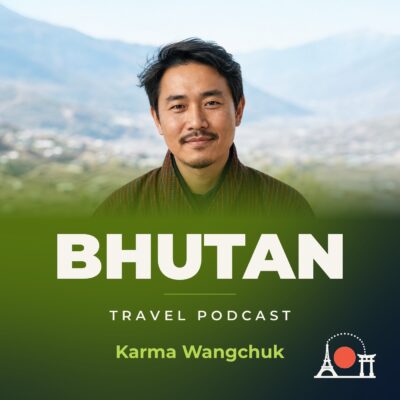 Bhutan
Bhutan Travel Podcast with Karma Wangchuk
The capital, Thimphu, sits in a central valley where summers turn hot and winters stay cool, while Himalayan passes control routes between…