
Israel Travel Podcast with Noa Shapira
Hosted by Noa Shapira — a new episode every day from Israel.
This podcast follows one resident as she settles in different parts of Israel over successive seasons. Travelling here means moving between the cool central mountains, the coastal plain around Tel Aviv-Yafo, the Jordan Rift Valley and the Negev desert in the south. The country is small, but each region changes its character quickly.
Over the series she moves between Jerusalem and Tel Aviv-Yafo, then further north to Haifa and the Sea of Galilee. She also spends time in the Negev desert and near the Dead Sea, visiting places such as Mount Sodom and the Gulf of Aqaba. The south is sparsely populated, apart from the shore of the Gulf, and that shapes how travel works there.
The show does not rush from one sight to the next. She returns to the same streets and landscapes in different seasons, watching how the heat of the Negev, the rain in the central mountains and the calm of the Sea of Galilee alter a familiar place. Knowing Israel this way is a slow accumulation, not a checklist.
Recent episodes
Things to do in Israel
 Best seller! Jerusalem old city four quarters tour
 Likely to sell out
Private Tour Jerusalem Old City
Likely to sell out
Private Tour Jerusalem Old City
 JERUSALEM private tour with ELAD VAZANA - Life in Israel & Palestine Then & Now
 Walking Tour of Akko (Half-day)
 In the Footsteps of Jesus: Nazareth and the Sea of Galilee
 Rappelling Down the Ramon Crater Cliff
 Morning Private Tour to Discover Jerusalem
 Neve Tzedek with Tomer
Plan your trip to Israel
Getting around
Staying connected
Israel at a glance
Israel in depth
Reference data on the country — geography, people, history, economy and transport.
Geography and climate
Location
Middle East, bordering the Mediterranean Sea, between Egypt and Lebanon
Terrain
Negev desert in the south; low coastal plain; central mountains; Jordan Rift Valley
Climate
Temperate; hot and dry in southern and eastern desert areas
Elevation
- Highest point
- Mitspe Shlagim 2,224 m; note - this is the highest named point, the actual highest point is an unnamed dome slightly to the west of Mitspe Shlagim at 2,236 m; both points are on the northeastern border of Israel, along the southern end of the Anti-Lebanon mountain range
- Lowest point
- Dead Sea -431 m
- Mean elevation
- 508 m
Area
- Total
- 21,937 sq km
- Land
- 21,497 sq km
- Water
- 440 sq km
Size comparison
Slightly larger than New Jersey
Coastline
273 km
Land borders
- Total
- 1,068 km
- Border countries
- Egypt 208 km; Gaza Strip 59 km; Jordan 327 km (20 km are within the Dead Sea); Lebanon 81 km; Syria 83 km; West Bank 330 km
Natural resources
Timber, potash, copper ore, natural gas, phosphate rock, magnesium bromide, clays, sand
Land use
- Agricultural land
- 24.8% (2023 est.)
- Arable land
- 12.5% (2023 est.)
- Permanent crops
- 4.7% (2023 est.)
- Permanent pasture
- 7.6% (2023 est.)
- Forest
- 6.7% (2023 est.)
- Other
- 68.5% (2023 est.)
Natural hazards
Sandstorms may occur during spring and summer; droughts; periodic earthquakes
Note
Note 1: Lake Tiberias (Sea of Galilee) is an important freshwater source; the Dead Sea is the second saltiest body of water in the world (after Lake Assal in Djibouti)
Note 2: the Malham Cave in Mount Sodom is the world's longest salt cave at 10 km (6 mi); Mount Sodom is a hill about 220 m (722 ft) high that is 80% salt, with multiple salt layers covered by a veneer of rock
People and society
Population
- Total
- 9,402,617 (2024 est.)
- Male
- 4,731,275
- Female
- 4,671,342
Nationality
- Noun
- Israeli(s)
- Adjective
- Israeli
Ethnic groups
Jewish 73.5% (of which Israel-born 79.7%, Europe/America/Oceania-born 14.3%, Africa-born 3.9%, Asia-born 2.1%), Arab 21.1%, other 5.4% (2022 est.)
Languages
- Languages
- Hebrew (official), Arabic (special status under Israeli law), English (most commonly used foreign language)
- Major-language sample(s)
- ספר עובדות העולם, המקור החיוני למידע בסיסי (Hebrew)
Religions
Jewish 73.5%, Muslim 18.1%, Christian 1.9%, Druze 1.6%, other 4.9% (2022 est.)
Median age
- Total
- 30.2 years (2025 est.)
- Male
- 29.6 years
- Female
- 30.7 years
Life expectancy
- Total population
- 83.1 years (2024 est.)
- Male
- 81.1 years
- Female
- 85.1 years
Urbanisation
- Urban population
- 92.9% of total population (2023)
- Rate of urbanization
- 1.51% annual rate of change (2020-25 est.)
Where people live
Population concentrated in and around Tel-Aviv, as well as around the Sea of Galilee; the south remains sparsely populated, with the exception of the shore of the Gulf of Aqaba
Largest cities
4.421 million Tel Aviv-Yafo, 1.174 million Haifa, 970,000 JERUSALEM (capital) (2023)
Background and government
Background
Israel has become a regional economic and military powerhouse, leveraging its prosperous high-tech sector, large defense industry, and concerns about Iran to foster partnerships around the world. The State of Israel was established in 1948. The UN General Assembly proposed in 1947 partitioning the British Mandate for Palestine into an Arab and Jewish state. The Jews accepted the proposal, but the local Arabs and the Arab states rejected the UN plan and launched a war. The Arabs were subsequently defeated in the 1947-1949 war that followed the UN proposal and the British withdrawal. Israel joined the UN in 1949 and saw rapid population growth, primarily due to Jewish refugee migration from Europe and the Middle East. Israel and its Arab neighbors fought wars in 1956, 1967, and 1973, and Israel signed peace treaties with Egypt in 1979 and Jordan in 1994. Israel took control of the West Bank, the eastern part of Jerusalem, the Gaza Strip, the Sinai Peninsula, and the Golan Heights in the course of the 1967 war. It ceded the Sinai back to Egypt in the 1979-1982 period but has continued to administer the other territories through military authorities. Israel and Palestinian officials signed interim agreements in the 1990s that created a period of Palestinian self-rule in parts of the West Bank and Gaza. Israel withdrew from Gaza in 2005. The most recent formal efforts between Israel and the Palestinian Authority to negotiate final status issues occurred in 2013 and 2014, and the US continues its efforts to advance peace. Israel signed the US-brokered normalization agreements (the Abraham Accords) with Bahrain, the UAE, and Morocco in 2020 and reached an agreement with Sudan in 2021. Immigration to Israel continues, with more than 44,000 estimated new immigrants, mostly Jewish, in the first 11 months of 2023.
Former Prime Minister Benjamin NETANYAHU returned to office in 2022, continuing his dominance of Israel's political landscape at the head of Israel's most rightwing and religious government. NETANYAHU previously served as premier from 1996 to 1999 and from 2009 to 2021, becoming Israel's longest serving prime minister.
On 7 October 2023, HAMAS militants launched a combined unguided rocket and ground terrorist attack from Gaza into southern Israel. The same day Israel’s Air Force launched air strikes inside Gaza and initiated a sustained air campaign against HAMAS targets across the Gaza Strip. The following day, NETANYAHU formally declared war on HAMAS, and on 28 October, the Israel Defense Forces launched a large-scale ground assault inside Gaza.
The Israeli economy has undergone a dramatic transformation in the last 30 years, led by cutting-edge high-tech sectors. Offshore gas discoveries in the Mediterranean place Israel at the center of a potential regional natural gas market. In 2022, a US-brokered agreement between Israel and Lebanon established their maritime boundary, allowing Israel to begin production on additional gas fields in the Mediterranean. However, Israel's economic development has been uneven. Structural issues such as low labor-force participation among religious and minority populations, low workforce productivity, high costs for housing and consumer staples, and high income inequality concern both economists and the general population. The current war with Hamas disrupted Israel’s solid economic fundamentals, but it is not likely to have long-term structural implications for the economy.
Government
Parliamentary democracy
Capital
Jerusalem
Time zone
UTC+2 (7 hours ahead of Washington, DC, during Standard Time)
Local name
Medinat Yisra'el
Independence
14 May 1948 (following League of Nations mandate under British administration)
National day
Independence Day, 14 May (1948)
Economy and cost of living
Overview
High-income, technology- and industrial-based economy; economic contraction and fiscal deficits resulting from war in Gaza; labor force stabilizing following military reservist mobilization; high-tech industry remains resilient while construction and tourism among hardest-hit sectors
GDP per capita
- Real GDP per capita 2024
- $47,300 (2024 est.)
- Real GDP per capita 2023
- $47,500 (2023 est.)
- Real GDP per capita 2022
- $48,100 (2022 est.)
Inflation
- Inflation rate (consumer prices) 2024
- 3.1% (2024 est.)
- Inflation rate (consumer prices) 2023
- 4.2% (2023 est.)
- Inflation rate (consumer prices) 2022
- 4.4% (2022 est.)
Unemployment
- Unemployment rate 2024
- 3.2% (2024 est.)
- Unemployment rate 2023
- 3.6% (2023 est.)
- Unemployment rate 2022
- 3.7% (2022 est.)
Exchange rate
- Currency
- New Israeli shekels (ILS) per US dollar -
- Exchange rates 2024
- 3.7 (2024 est.)
- Exchange rates 2023
- 3.667 (2023 est.)
- Exchange rates 2022
- 3.36 (2022 est.)
- Exchange rates 2021
- 3.23 (2021 est.)
- Exchange rates 2020
- 3.442 (2020 est.)
Main industries
High-technology products (including aviation, communications, computer-aided design and manufactures, medical electronics, fiber optics), wood and paper products, potash and phosphates, food, beverages, and tobacco, caustic soda, cement, pharmaceuticals, construction, metal products, chemical products, plastics, cut diamonds, textiles, footwear
Agriculture
Milk, chicken, potatoes, tomatoes, tangerines/mandarins, bananas, eggs, avocados, beef, carrots/turnips (2023)
Transport and connectivity
Airports
40 (2025)
Railways
- Total
- 1,497 km (2021) (2019)
- Standard gauge
- 1,497 km (2021) 1.435-m gauge
Ports
- Total ports
- 5 (2024)
- Large
- 0
- Medium
- 1
- Small
- 2
- Very small
- 2
- Ports with oil terminals
- 4
- Key ports
- Ashdod, Ashqelon, Elat, Hadera, Haifa
Internet domain
.il
Internet users
Percent of population 87% (2023 est.)
Mobile subscriptions
- Total subscriptions
- 13.8 million (2022 est.)
- Subscriptions per 100 inhabitants
- 152 (2022 est.)
Environment
Environmental issues
Limited arable land and restricted natural freshwater resources; desertification; air pollution from industrial and vehicle emissions; groundwater pollution from industrial and domestic waste, chemical fertilizers, and pesticides
Fresh water
1.78 billion cubic meters (2022 est.)
Country reference figures are periodically revised. Check anything time-sensitive or safety-critical against an official source before you travel.
Israel travel guides
 Travel Tips
A first-timer’s guide to Israel
Your practical guide to Israel: best times to visit, getting around with Rav-Kav, real costs in shekels, and essential tips for first-timers.
 News & Updates
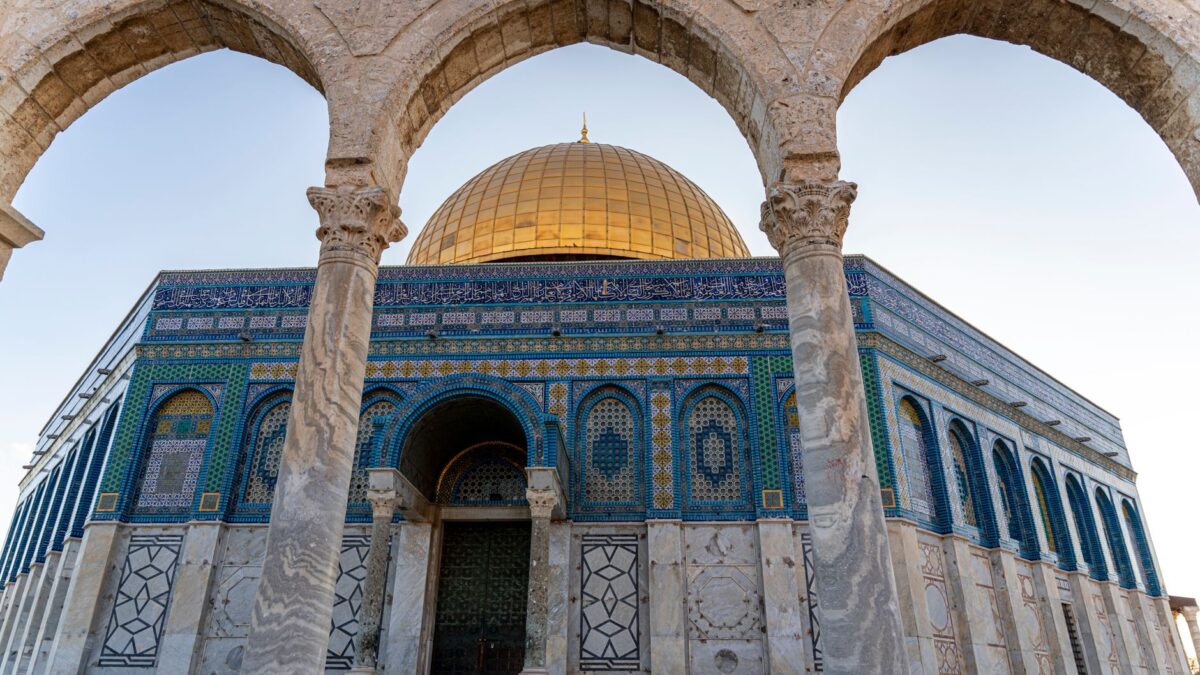
Israel in September 2026: what travelers should know now
Israel in September 2026: Weather, festivals, construction alerts, and costs in Jerusalem. What travelers need to know right now.
 Culture & Etiquette
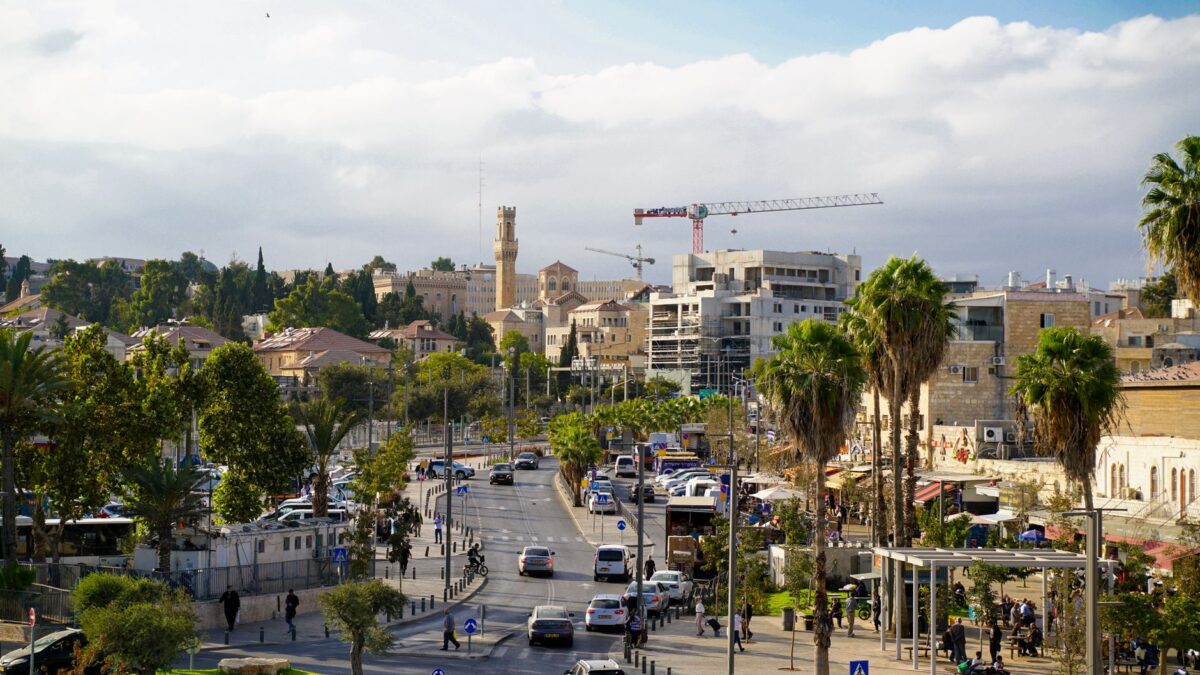
Israel etiquette: the dos and don’ts
Master Israel etiquette: greetings, tipping, dining, and Shabbat customs in Jerusalem. Your guide to respectful, immersive travel in the Holy City.
 Living Abroad
Moving to Israel: visas, banking and SIM cards
Moving to Israel? Your first-week guide: ETA-IL, teudat zehut, bank accounts, SIM cards, Rav-Kav, and health funds in Jerusalem.
Western Asia
 Turkey
Turkey Travel Podcast with Emre Yilmaz
The Anatolian plateau, with its harsh interior climate, sits at the heart of a country whose largest city clusters around the Bosporus.
 United Arab Emirates
United Arab Emirates Travel Podcast with Omar Al Mansouri
The eastern Hajar Mountains rise sharply from the flat coastal plain, while the massive sand dunes of the Empty Quarter stretch beyond…
 Saudi Arabia
Saudi Arabia Travel Podcast with Layla Al Qahtani
A mostly sandy desert stretching between the Persian Gulf and the Red Sea makes Saudi Arabia the largest country on earth with…
 Jordan
Jordan Travel Podcast with Faris Al Khouri
The Jordanian Highlands, a north-south spine west of the capital, channel winter rains towards the Dead Sea and the Jordan Valley.