Estonia Travel Podcast with Kristjan Tamm
Hosted by Kristjan Tamm — a new episode every day from Estonia.
This podcast travels through Estonia at the pace of someone learning it properly. The mainland is flat, boggy and partly wooded, while more than 1,500 islands lie offshore, and the maritime climate keeps winters wet and summers cool. That combination shapes how you move around and what you notice.
The host covers a real range: Tallinn, the capital of 454,000; Tartu, the university city in the hilly south; Soomaa, a flat, boggy lowland; and Saaremaa, the largest of the offshore islands. There is also Narva, on the eastern border, where the mix of Estonian and Russian speakers is part of everyday life.
Across the series, the host returns to places as the seasons change: wet winter lowlands, cool summer beaches, the bogs in autumn light. One episode may follow a route inland and the next loops back to a smaller town. That slower pattern lets a place accumulate meaning.
Recent episodes
Things to do in Estonia
 Tallinn Medieval Photo
 Likely to sell out
Estonian cuisine Cooking Class
Likely to sell out
Estonian cuisine Cooking Class
 Go West – Private 1 Day Trip to West Coast
 Tales of Reval - The Immersive Old Town Tour
 Guided Tallinn Old Town Walking Tour
 Tallinn Winter Bike Tour with Cafe Stop
 Tallinn Old Town Private Walking Tour with Native Estonian Guide
 Soviet Tallinn and Cold War Private Walking Tour
Plan your trip to Estonia
Getting around
Staying connected
Estonia at a glance
Estonia in depth
Reference data on the country — geography, people, history, economy and transport.
Geography and climate
Location
Eastern Europe, bordering the Baltic Sea and Gulf of Finland, between Latvia and Russia
Terrain
Marshy, lowlands; flat in the north, hilly in the south
Climate
Maritime; wet, moderate winters, cool summers
Elevation
- Highest point
- Suur Munamagi 318 m
- Lowest point
- Baltic Sea 0 m
- Mean elevation
- 61 m
Area
- Total
- 45,228 sq km
- Land
- 42,388 sq km
- Water
- 2,840 sq km
Size comparison
About twice the size of New Jersey
Coastline
3,794 km
Land borders
- Total
- 657 km
- Border countries
- Latvia 333 km; Russia 324 km
Natural resources
Oil shale, peat, rare earth elements, phosphorite, clay, limestone, sand, dolomite, arable land, sea mud
Land use
- Agricultural land
- 23.1% (2023 est.)
- Arable land
- 16.6% (2023 est.)
- Permanent crops
- 0.1% (2023 est.)
- Permanent pasture
- 6.4% (2023 est.)
- Forest
- 57.2% (2023 est.)
- Other
- 19.6% (2023 est.)
Natural hazards
Sometimes flooding occurs in the spring
Note
The mainland terrain is flat, boggy, and partly wooded; over 1,500 islands lie offshore
People and society
Population
- Total
- 1,340,478 (2025 est.)
- Male
- 634,988
- Female
- 705,490
Nationality
- Noun
- Estonian(s)
- Adjective
- Estonian
Ethnic groups
Estonian 69.1%, Russian 23.7%, Ukrainian 2.1%, other 4.6%, unspecified 0.5% (2021 est.)
Languages
Estonian (official) 67.2%, Russian 28.5%, other 3.7%, unspecified 0.6% (2021est.)
Religions
Orthodox 16.5%, Protestant 9.2% (Lutheran 7.7%, other Protestant 1.5%), other 3% (includes Roman Catholic, Muslim, Jehovah's Witness, Pentecostal, Buddhist, and Taara Believer), none 58.4%, unspecified 12.9% (2021 est.)
Median age
- Total
- 42.9 years (2025 est.)
- Male
- 41.9 years
- Female
- 48.2 years
Life expectancy
- Total population
- 78.4 years (2024 est.)
- Male
- 73.8 years
- Female
- 83.2 years
Urbanisation
- Urban population
- 69.8% of total population (2023)
- Rate of urbanization
- -0.03% annual rate of change (2020-25 est.)
Where people live
A fairly even distribution throughout most of the country, with urban areas attracting larger and denser populations
Largest cities
454,000 TALLINN (capital) (2023)
Background and government
Background
After centuries of Danish, Swedish, German, and Russian rule, Estonia attained independence in 1918. Forcibly incorporated into the USSR in 1940 -- an action never recognized by the US and many other countries -- it regained its freedom in 1991 with the collapse of the Soviet Union. Since the last Russian troops left in 1994, Estonia has been free to promote economic and political ties with the West. It joined both NATO and the EU in 2004, formally joined the OECD in 2010, and adopted the euro as its official currency in 2011.
Government
Parliamentary republic
Capital
Tallinn
Time zone
UTC+2 (7 hours ahead of Washington, DC, during Standard Time)
Local name
Eesti Vabariik
Independence
24 February 1918 (from Soviet Russia); 20 August 1991 (declared from the Soviet Union); 6 September 1991 (recognized by the Soviet Union)
National day
Independence Day, 24 February (1918)
Economy and cost of living
Overview
High-income, service-based EU and eurozone economy; rebound in exports playing a role in economic recovery; rising food prices contributing to inflation; decrease in labor force participation and rising unemployment rate; recovery depends on boosting private investment and productivity rates
GDP per capita
- Real GDP per capita 2024
- $41,500 (2024 est.)
- Real GDP per capita 2023
- $41,700 (2023 est.)
- Real GDP per capita 2022
- $43,700 (2022 est.)
Inflation
- Inflation rate (consumer prices) 2024
- 3.5% (2024 est.)
- Inflation rate (consumer prices) 2023
- 9.2% (2023 est.)
- Inflation rate (consumer prices) 2022
- 19.4% (2022 est.)
Unemployment
- Unemployment rate 2024
- 7.9% (2024 est.)
- Unemployment rate 2023
- 6.4% (2023 est.)
- Unemployment rate 2022
- 5.6% (2022 est.)
Exchange rate
- Currency
- Euros (EUR) per US dollar -
- Exchange rates 2024
- 0.924 (2024 est.)
- Exchange rates 2023
- 0.925 (2023 est.)
- Exchange rates 2022
- 0.95 (2022 est.)
- Exchange rates 2021
- 0.845 (2021 est.)
- Exchange rates 2020
- 0.876 (2020 est.)
Main industries
Food, engineering, electronics, wood and wood products, textiles; information technology, telecommunications
Agriculture
Milk, wheat, barley, rapeseed, peas, oats, potatoes, rye, pork, triticale (2023)
Transport and connectivity
Airports
34 (2025)
Railways
Total 1,441 km (2020) 225 km electrified
Ports
- Total ports
- 20 (2024)
- Large
- 4
- Medium
- 1
- Small
- 4
- Very small
- 11
- Ports with oil terminals
- 5
- Key ports
- Muuga - Port of Tallin, Paldiski Lounasadam, Paljassaare, Sillamae, Vanasadam - Port of Tallinn
Internet domain
.ee
Internet users
Percent of population 93% (2023 est.)
Mobile subscriptions
- Total subscriptions
- 2.06 million (2024 est.)
- Subscriptions per 100 inhabitants
- 151 (2024 est.)
Environment
Environmental issues
Air pollution from sulfur dioxide from oil-shale-burning power plants; coastal seawater pollution
Fresh water
12.806 billion cubic meters (2022 est.)
Country reference figures are periodically revised. Check anything time-sensitive or safety-critical against an official source before you travel.
Estonia travel guides
 Food & Drink
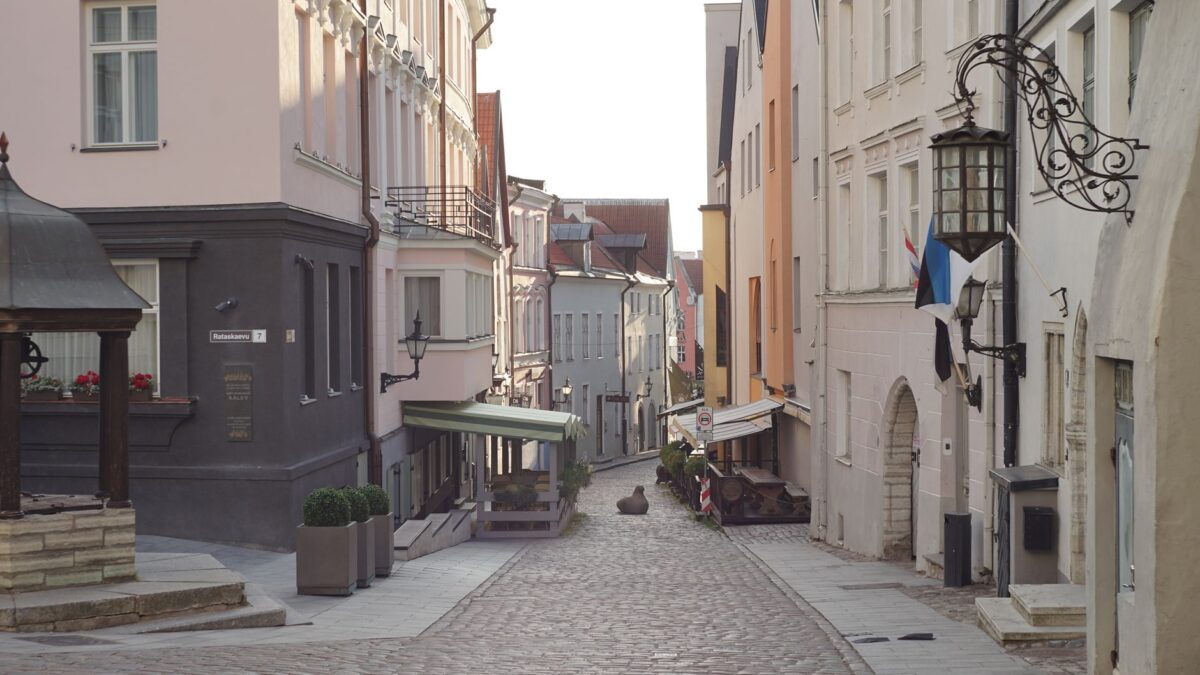
What to eat in Estonia — and what it costs
Discover the best food in Estonia: from €5 lunch specials in Tallinn to traditional dishes and market stalls. Honest prices and real venue recommendations.
 News & Updates
Estonia in September 2026: what travelers should know now
Estonia travel briefing September 2026: Weather, marathon closures, new tram routes, and key festivals like the Architecture Biennale.
 Getting Around
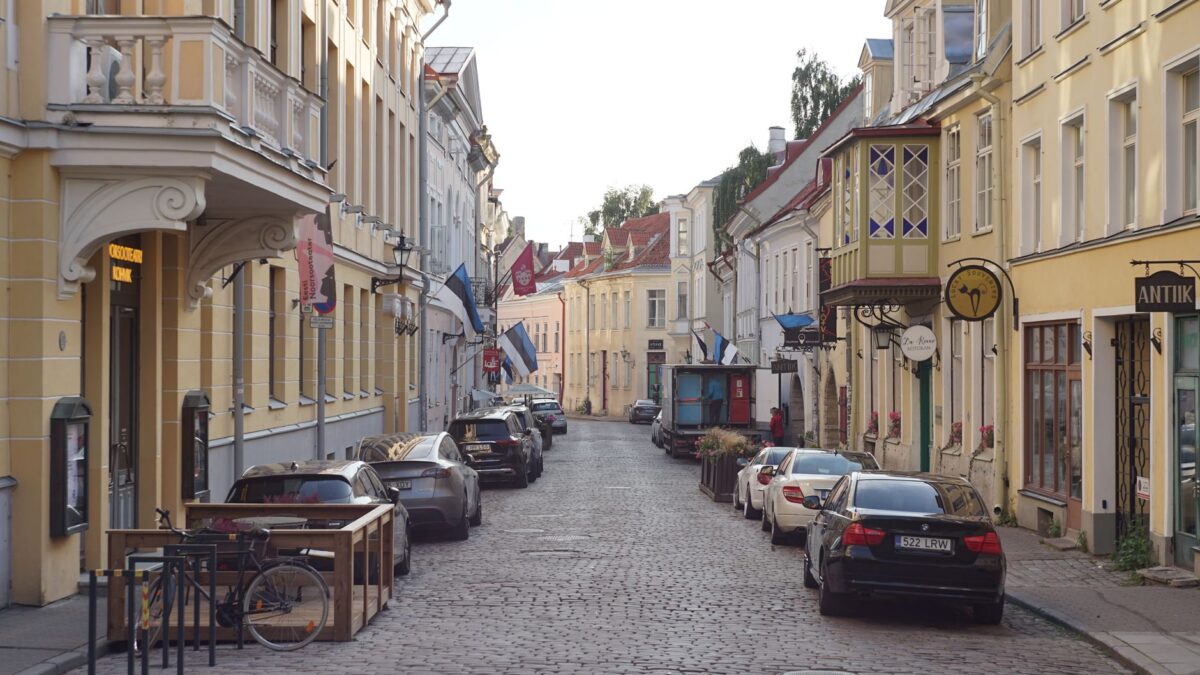
Getting around Tallinn: metros, taxis and passes
How locals get around Tallinn: trams, buses, the Ühiskaart pass, Bolt taxis, and when walking beats it all. September tips inside.
 News & Updates
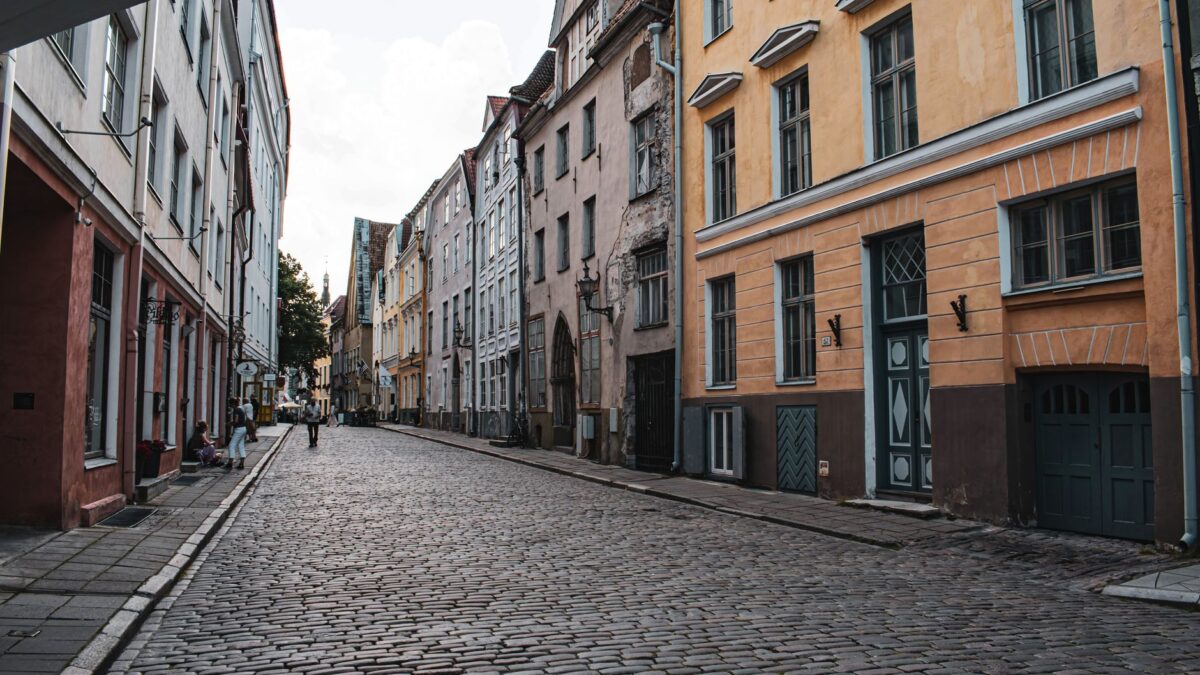
Estonia in August 2026: what travelers should know now
Estonia in August 2026: Tallinn Fringe, Ironman aftermath, weather 15–22°C, festival tips, and local costs for travelers.
Northern Europe
 United Kingdom
United Kingdom Travel Podcast with Oliver Hughes
The Scottish lowlands between Edinburgh and Glasgow sit under overcast skies brought by the North Atlantic Current and prevailing southwest winds.
 Ireland
Ireland Travel Podcast with Saoirse Byrne
The western seaboard's sea cliffs face the North Atlantic, while over 40% of the population lives within 100 km of Dublin.
 Denmark
Denmark Travel Podcast with Freja Andersen
The Danish Archipelago's low, gently rolling terrain means no point in the country lies far from the coast, and its more than…
 Sweden
Sweden Travel Podcast with Anton Lindqvist
The Baltic coast holds most of Sweden's population clusters, while the interior north remains sparsely populated and subarctic, and the Danish Straits…