


Finland Travel Podcast with Eero Virtanen
Hosted by Eero Virtanen — a new episode every day from Finland.
This podcast follows one resident as he settles in Finland, learning the country the way a local would. Travelling here means moving across low plains and lake basins, from the Swedish-speaking coastal south to the sparsely populated interior north, where the long Russian border shapes everyday life. The capital, Helsinki, is the northernmost national capital in continental Europe.
The host moves between Helsinki’s urban streets, Turku’s Swedish-influenced harbour, Savonlinna’s lake-bound castle town, and Oulu’s northern market squares. Each place is tied to the next by rail, road or water, and each shows a different layer of Finland’s history, from Swedish rule to independence. He returns to these places as the seasons change.
Across episodes, the host stays in one region long enough to watch winter turn to spring, the ice melt on a lake, and the midnight sun give way to autumn darkness. He does not rush between sights. Instead, he returns to the same café, forest path or sauna, letting small details accumulate until a place begins to feel like somewhere he knows.
Recent episodes
Things to do in Finland
 Helsinki Walking Tour - Small Group
 Snowmobile Safari in Helsinki Archipelago with Lunch
 Guided Daytime Ski Adventure: Explore Private Trails by Rovaniemi
 Winter Wonderland Hike in a National Park
 Northern Lights Hunting Photography Tour in Rovaniemi Finland
 Helsinki: Archipelago Exploration at Porkkalanniemi peninsula
 Helsinki Private Tour by car + Vitsit Porvoo Medieval old tow
 Redrib Archipelago Experience
Plan your trip to Finland
Getting around
Staying connected
Finland at a glance
Finland in depth
Reference data on the country — geography, people, history, economy and transport.
Geography and climate
Location
Northern Europe, bordering the Baltic Sea, Gulf of Bothnia, and Gulf of Finland, between Sweden and Russia
Terrain
Mostly low, flat to rolling plains interspersed with lakes and low hills
Climate
Cold temperate; potentially subarctic but comparatively mild because of moderating influence of the North Atlantic Current, Baltic Sea, and more than 60,000 lakes
Elevation
- Highest point
- Halti (alternatively Haltia, Haltitunturi, Haltiatunturi) 1,328 m
- Lowest point
- Baltic Sea 0 m
- Mean elevation
- 164 m
Area
- Total
- 338,145 sq km
- Land
- 303,815 sq km
- Water
- 34,330 sq km
Size comparison
Slightly more than two times the size of Georgia; slightly smaller than Montana
Coastline
1,250 km
Land borders
- Total
- 2,563 km
- Border countries
- Norway 709 km; Sweden 545 km; Russia 1,309 km
Natural resources
Timber, iron ore, copper, lead, zinc, chromite, nickel, gold, silver, limestone
Land use
- Agricultural land
- 7.4% (2023 est.)
- Arable land
- 7.4% (2023 est.)
- Permanent crops
- 0% (2023 est.)
- Permanent pasture
- 0% (2023 est.)
- Forest
- 74.2% (2023 est.)
- Other
- 18.4% (2023 est.)
Natural hazards
Severe winters in the north
Note
Long boundary with Russia; Helsinki is northernmost national capital on European continent; population concentrated on small southwestern coastal plain
People and society
Population
- Total
- 5,550,449 (2025 est.)
- Male
- 2,750,057
- Female
- 2,800,392
Nationality
- Noun
- Finn(s)
- Adjective
- Finnish
Ethnic groups
Finnish, Swedish, Russian, Estonian, Romani, Sami
Languages
- Languages
- Finnish (official) 85.9%, Swedish (official) 5.2%, Russian 1.7%, other 7.2% (2022 est.)
- Major-language sample(s)
- World Factbook, korvaamaton perustietolähde. (Finnish)
Religions
Lutheran 66.6%, Greek Orthodox 1.1%, other 1.7%, none 30.6% (2022 est.)
Median age
- Total
- 44 years (2025 est.)
- Male
- 41.8 years
- Female
- 44.9 years
Life expectancy
- Total population
- 82.2 years (2024 est.)
- Male
- 79.3 years
- Female
- 85.2 years
Urbanisation
- Urban population
- 85.8% of total population (2023)
- Rate of urbanization
- 0.42% annual rate of change (2020-25 est.)
Where people live
The vast majority of people are found in the south; the northern interior areas remain sparsely populated
Largest cities
1.338 million HELSINKI (capital) (2023)
Background and government
Background
Finland was a province and then a grand duchy under Sweden from the 12th to the 19th centuries and an autonomous grand duchy of Russia after 1809. It gained complete independence in 1917. During World War II, Finland successfully defended its independence through cooperation with Germany and resisted subsequent invasions by the Soviet Union, albeit with some loss of territory. During the next half-century, Finland transformed from a farm/forest economy to a diversified modern industrial economy; per-capita income is among the highest in Western Europe. A member of the EU since 1995, Finland was the only Nordic state to join the euro single currency at its initiation in January 1999. In the 21st century, the key features of Finland's modern welfare state are high-quality education, promotion of equality, and a national social welfare system, although the system is currently facing the challenges of an aging population and the fluctuations of an export-driven economy. Following Russia's invasion of Ukraine in 2022, Finland opted to join NATO; it became the organization's 31st member in April 2023.
Government
Parliamentary republic
Capital
Helsinki
Time zone
UTC+2 (7 hours ahead of Washington, DC, during Standard Time)
Local name
Suomen tasavalta (Finnish)/ Republiken Finland (Swedish)
Independence
6 December 1917 (from Russia)
National day
Independence Day, 6 December (1917)
Economy and cost of living
Overview
High-income, export-based EU and eurozone economy; major timber, metals, engineering, telecom, and electronics industries; emerging from recession triggered by inflation, weak consumer and export demand, and lower private investment; labor market reform plan to address structural rigidities
GDP per capita
- Real GDP per capita 2024
- $55,600 (2024 est.)
- Real GDP per capita 2023
- $56,200 (2023 est.)
- Real GDP per capita 2022
- $57,100 (2022 est.)
Inflation
- Inflation rate (consumer prices) 2024
- 1.6% (2024 est.)
- Inflation rate (consumer prices) 2023
- 6.3% (2023 est.)
- Inflation rate (consumer prices) 2022
- 7.1% (2022 est.)
Unemployment
- Unemployment rate 2024
- 8.3% (2024 est.)
- Unemployment rate 2023
- 7.2% (2023 est.)
- Unemployment rate 2022
- 6.8% (2022 est.)
Exchange rate
- Currency
- Euros (EUR) per US dollar -
- Exchange rates 2024
- 0.924 (2024 est.)
- Exchange rates 2023
- 0.925 (2023 est.)
- Exchange rates 2022
- 0.95 (2022 est.)
- Exchange rates 2021
- 0.845 (2021 est.)
- Exchange rates 2020
- 0.876 (2020 est.)
Main industries
Metals and metal products, electronics, machinery and scientific instruments, shipbuilding, pulp and paper, foodstuffs, chemicals, textiles, clothing
Agriculture
Milk, barley, oats, wheat, potatoes, sugar beets, pork, chicken, peas, rye (2023)
Transport and connectivity
Airports
98 (2025)
Railways
Total 5,918 km (2020) 3,349 km electrified
Ports
- Total ports
- 37 (2024)
- Large
- 5
- Medium
- 7
- Small
- 11
- Very small
- 14
- Ports with oil terminals
- 21
- Key ports
- Helsinki, Kaskinen, Kokkola, Kotka, Kristinestad, Mantyluoto, Oulu, Pietarsaari, Pori, Rauma, Turku, Vaasa
Internet domain
.fi
Internet users
Percent of population 94% (2023 est.)
Mobile subscriptions
- Total subscriptions
- 7.07 million (2024 est.)
- Subscriptions per 100 inhabitants
- 126 (2024 est.)
Environment
Environmental issues
Limited air pollution in urban centers; some water pollution from industrial wastes, agricultural chemicals; habitat loss threatens wildlife populations
Fresh water
110 billion cubic meters (2022 est.)
UNESCO Global Geoparks
- Total global geoparks and regional networks
- 4 (2024)
- Global geoparks and regional networks
- Impact Crater Lake - Lappajarvi; Rokua; Lauhanvuori-Haemeenkangas; Saimaa; Salpausselka (2024)
Country reference figures are periodically revised. Check anything time-sensitive or safety-critical against an official source before you travel.
Finland travel guides
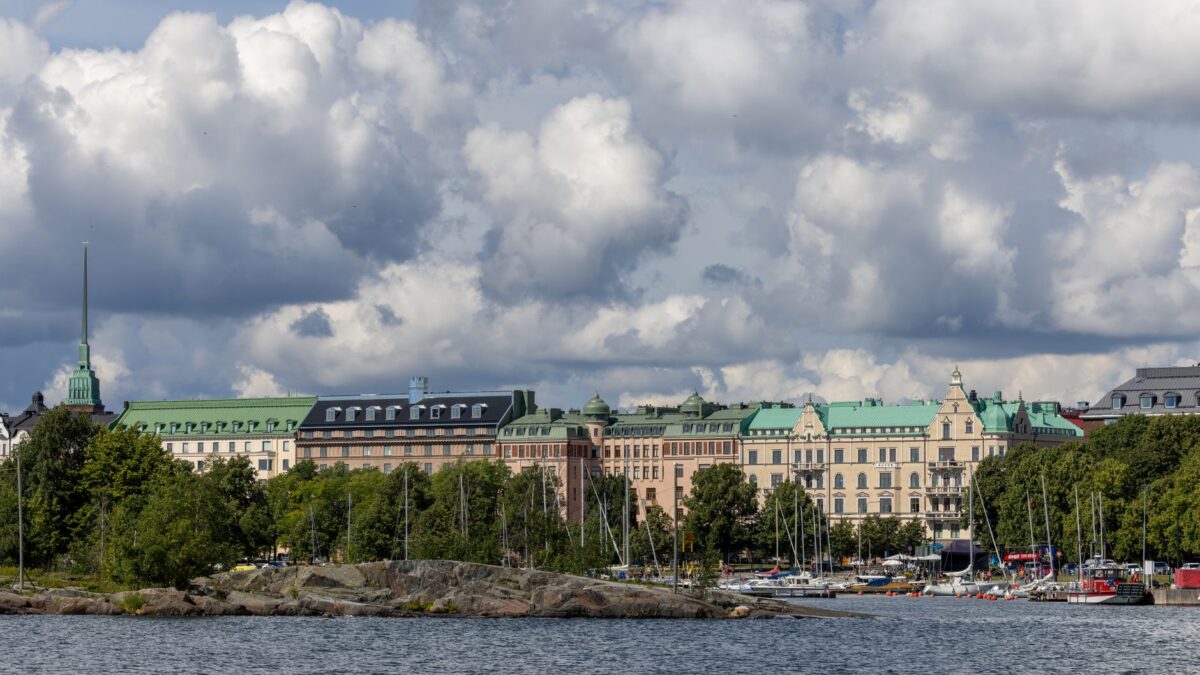 Travel Tips
A first-timer’s guide to Finland
First time in Finland? Get the essential tips on when to go, how to get around, what to pay, and what to see in…
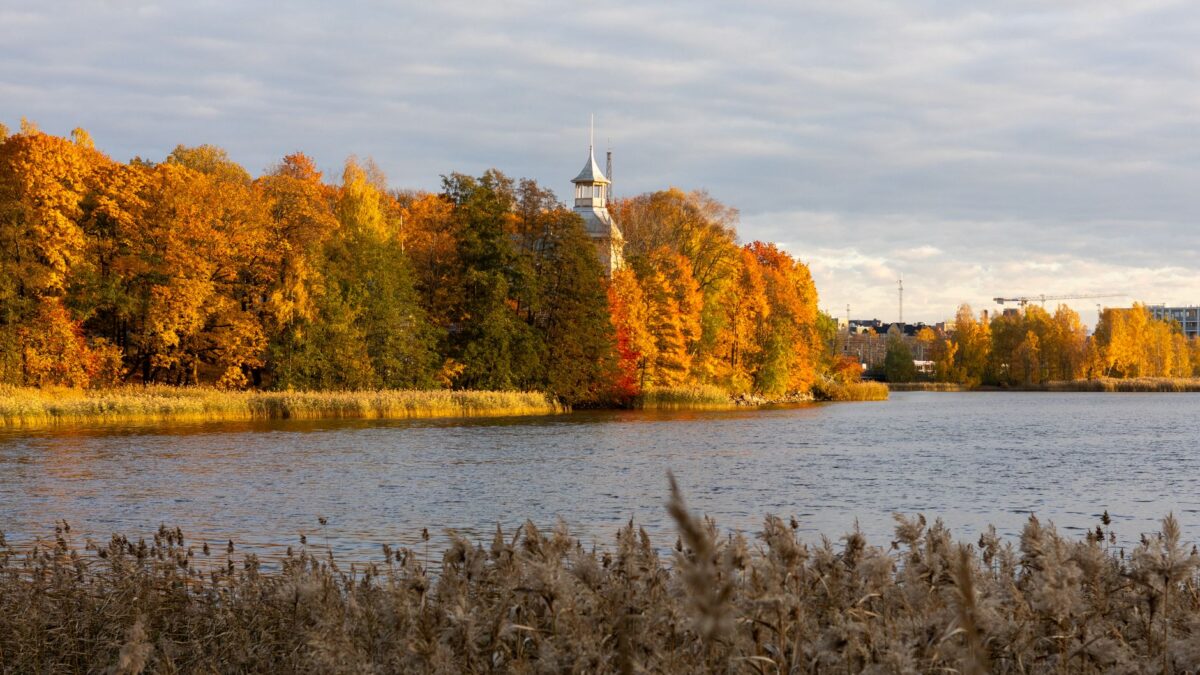 Costs & Money
How much does a trip to Finland cost?
Real Helsinki trip costs in 2026: €15 lunches, €120 hotels, €3.10 transit fares. A local's honest budget breakdown for budget, mid-range & comfortable travel…
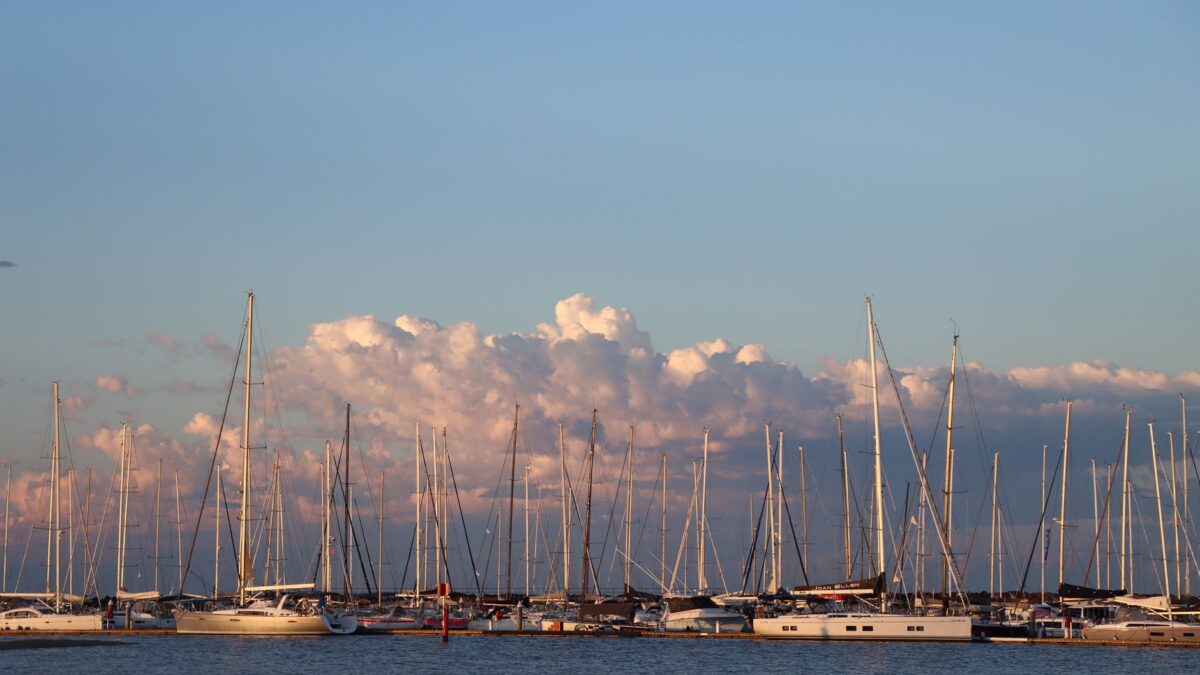 News & Updates
Finland in August 2026: what travelers should know now
Finland in August 2026: Flow Festival, Helsinki Festival, HSL winter timetables, rail closures, crayfish season, and local tips from Eero Virtanen.
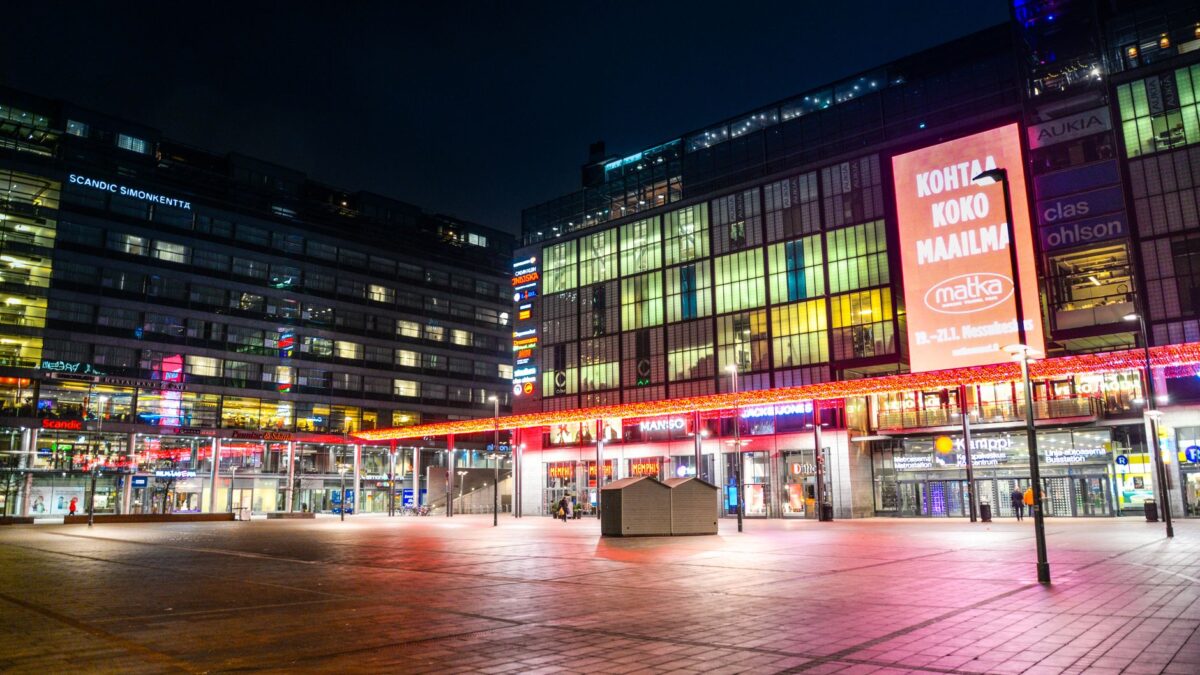 Costs & Money
A week in Helsinki on a mid-range budget
Plan a week in Helsinki on a mid-range budget: real 2026 prices for hotels, meals, transit, and attractions, with local tips from a Finn.
Northern Europe
 United Kingdom
United Kingdom Travel Podcast with Oliver Hughes
The Scottish lowlands between Edinburgh and Glasgow sit under overcast skies brought by the North Atlantic Current and prevailing southwest winds.
 Ireland
Ireland Travel Podcast with Saoirse Byrne
The western seaboard's sea cliffs face the North Atlantic, while over 40% of the population lives within 100 km of Dublin.
 Denmark
Denmark Travel Podcast with Freja Andersen
The Danish Archipelago's low, gently rolling terrain means no point in the country lies far from the coast, and its more than…
 Sweden
Sweden Travel Podcast with Anton Lindqvist
The Baltic coast holds most of Sweden's population clusters, while the interior north remains sparsely populated and subarctic, and the Danish Straits…