
Tanzania Travel Podcast with Zawadi Mushi
Hosted by Zawadi Mushi — a new episode every day from Tanzania.
Tanzania’s terrain runs from a tropical coast to a central plateau and temperate highlands in the north and south. Most of its people live in the northern half of the country and along the eastern seaboard. This podcast follows a long, grounded circuit through those landscapes.
Through the episodes she moves from Dar es Salaam, the administrative capital, to Dodoma, the legislative capital, then to Mwanza on Lake Victoria and into the southern highlands. Along the way the show returns to the central plateau and the coast, following the uneven spread of people across the northern half and eastern seaboard.
The series works through Tanzania’s seasons, returning to places after the rains have remade the roads and the crops. Knowing Tanzania this way means noticing small shifts from one visit to the next, and letting the country reveal its rhythms through repeated journeys rather than a single itinerary.
Recent episodes
Things to do in Tanzania
 7 Days Tanganyika Wilderness Safari
 Zanzibar Airport Transfers Pickup and Drop off/departure
 Private Kilimanjaro Hike 7 Day Lemosho Route
 Private 6-Day Great Migration Ndutu Serengeti Safari Tour
 Kilimanjaro climb, Marangu route (6-day)
 8-Day Essence of Tanzania Safari – Luxury Experience
 Kilimanjaro one day hike experience by KILITA SAFARIS
 Rau Forest Nature Walk (One Trip - One Tree)
Plan your trip to Tanzania
Getting around
Staying connected
Tanzania at a glance
Tanzania in depth
Reference data on the country — geography, people, history, economy and transport.
Geography and climate
Location
Eastern Africa, bordering the Indian Ocean, between Kenya and Mozambique
Terrain
Plains along coast; central plateau; highlands in north, south
Climate
Varies from tropical along coast to temperate in highlands
Elevation
- Highest point
- Kilimanjaro (highest point in Africa) 5,895 m
- Lowest point
- Indian Ocean 0 m
- Mean elevation
- 1,018 m
Area
- Total
- 947,300 sq km
- Land
- 885,800 sq km
- Water
- 61,500 sq km
Size comparison
More than six times the size of Georgia; slightly larger than twice the size of California
Coastline
1,424 km
Land borders
- Total
- 4,161 km
- Border countries
- Burundi 589 km; Democratic Republic of the Congo 479 km; Kenya 775 km; Malawi 512 km; Mozambique 840 km; Rwanda 222 km; Uganda 391 km; Zambia 353 km
Natural resources
Hydropower, tin, phosphates, iron ore, coal, diamonds, gemstones (including tanzanite, found only in Tanzania), gold, natural gas, nickel
Land use
- Agricultural land
- 44.6% (2023 est.)
- Arable land
- 15.2% (2023 est.)
- Permanent crops
- 2.3% (2023 est.)
- Permanent pasture
- 27.1% (2023 est.)
- Forest
- 50.1% (2023 est.)
- Other
- 5.3% (2023 est.)
Natural hazards
Flooding on the central plateau during the rainy season; drought
Volcanism: limited volcanic activity; Ol Doinyo Lengai (2,962 m) has emitted lava in recent years; other historically active volcanoes include Kieyo and Meru
Note
Kilimanjaro is the highest point in Africa and one of only three mountain ranges on the continent that has glaciers (the others are Mount Kenya in Kenya and the Ruwenzori Mountains on the Uganda-Democratic Republic of the Congo border); Tanzania is bordered by three of the largest lakes on the continent: Lake Victoria (the world's second-largest freshwater lake) in the north, Lake Tanganyika (the world's second-deepest) in the west, and Lake Nyasa (Lake Malawi) in the southwest
People and society
Population
- Total
- 69,145,464 (2025 est.)
- Male
- 34,597,449
- Female
- 34,548,015
Nationality
- Noun
- Tanzanian(s)
- Adjective
- Tanzanian
Ethnic groups
Mainland - African 99% (of which 95% are Bantu consisting of more than 130 tribes), other 1% (consisting of Asian, European, and Arab); Zanzibar - Arab, African, mixed Arab and African
Languages
- Languages
- Kiswahili or Swahili (official), Kiunguja (name for Swahili in Zanzibar), English (official, primary language of commerce, administration, and higher education), Arabic, many local languages
- Major-language sample(s)
- The World Factbook, Chanzo cha Lazima Kuhusu Habari ya Msingi. (Kiswahili)
Religions
Christian 63.1%, Muslim 34.1%, folk religion 1.1%, Buddhist <1%, Hindu <1%, Jewish <1%, other <1%, unspecified 1.6% (2020 est.)
Median age
- Total
- 18.8 years (2025 est.)
- Male
- 18.8 years
- Female
- 19.4 years
Life expectancy
- Total population
- 70.8 years (2024 est.)
- Male
- 69 years
- Female
- 72.6 years
Urbanisation
- Urban population
- 37.4% of total population (2023)
- Rate of urbanization
- 4.89% annual rate of change (2020-25 est.)
Where people live
The largest and most populous East African country; population distribution is extremely uneven, but greater population clusters occur in the northern half of country and along the east coast, as shown in this population distribution map
Largest cities
262,000 Dodoma (legislative capital) (2018), 7.776 million DAR ES SALAAM (administrative capital), 1.311 million Mwanza, 800,000 Zanzibar (2023)
Background and government
Background
Tanzania contains some of Africa’s most iconic national parks and famous paleoanthropological sites, and its diverse cultural heritage reflects the multiple ethnolinguistic groups that live in the country. Its long history of integration into trade networks spanning the Indian Ocean and the African interior led to the development of Swahili as a common language in much of east Africa and the introduction of Islam into the region. A number of independent coastal and island trading posts in what is now Tanzania came under Portuguese control after 1498 when they began to take control of much of the coast and Indian Ocean trade. By 1700, the Sultanate of Oman had become the dominant power in the region after ousting the Portuguese, who were also facing a series of local uprisings. During the next hundred years, Zanzibar -- an archipelago off the coast that is now part of Tanzania -- became a hub of Indian Ocean trade, with Arab and Indian traders establishing and consolidating trade routes with communities in mainland Tanzania that contributed to the expansion of the slave trade. Zanzibar briefly became the capital of the Sultanate of Oman before it split into separate Omani and Zanzibar Sultanates in 1856. Beginning in the mid-1800s, European explorers, traders, and Christian missionaries became more active in the region. The Germans eventually established control over mainland Tanzania -- which they called Tanganyika -- and the British established control over Zanzibar. Tanganyika came under British administration after the German defeat in World War I.
Tanganyika gained independence from Great Britain in 1961, and Zanzibar followed in 1963 as a constitutional monarchy. In Tanganyika, Julius NYERERE, a charismatic and idealistic socialist, established a one-party political system that centralized power and encouraged national self-reliance and rural development. In 1964, a popular uprising overthrew the Sultan in Zanzibar and either killed or expelled many of the Arabs and Indians who had dominated the isles for more than 200 years. Later that year, Tanganyika and Zanzibar combined to form the United Republic of Tanzania, but Zanzibar retained considerable autonomy. Their two ruling parties combined to form the Chama Cha Mapinduzi (CCM) party in 1977, which has since won every presidential election. Tanzania held its first multi-party elections in 1995, but CCM candidates have continued to dominate politics. The ruling party has claimed victory in four contentious elections since 1995, despite international observers' claims of voting irregularities. In 2001, 35 people died in Zanzibar when soldiers fired on protestors. John MAGUFULI won the 2015 and 2020 presidential elections, and the CCM won over two-thirds of the seats in Parliament in both elections. MAGUFULI died in 2021 while in office and was succeeded by his vice president, Samia Suluhu HASSAN.
Government
Presidential republic
Capital
Dodoma
Time zone
UTC+3 (8 hours ahead of Washington, DC, during Standard Time)
Local name
Jamhuri ya Muungano wa Tanzania
Independence
26 April 1964 (Tanganyika united with Zanzibar to form the United Republic of Tanganyika and Zanzibar); 29 October 1964 (renamed United Republic of Tanzania); notable earlier dates: 9 December 1961 (Tanganyika became independent from UK-administered UN trusteeship); 10 December 1963 (Zanzibar became independent from UK)
National day
Union Day (Tanganyika and Zanzibar), 26 April (1964)
Economy and cost of living
Overview
Emerging lower middle-income East African economy; resource-rich and growing tourism; strong post-pandemic recovery from hospitality, electricity, mining, and transit sectors; declining poverty; stable inflation; gender-based violence economic and labor force disruptions
GDP per capita
- Real GDP per capita 2024
- $3,700 (2024 est.)
- Real GDP per capita 2023
- $3,600 (2023 est.)
- Real GDP per capita 2022
- $3,500 (2022 est.)
Inflation
- Inflation rate (consumer prices) 2024
- 3.1% (2024 est.)
- Inflation rate (consumer prices) 2023
- 3.8% (2023 est.)
- Inflation rate (consumer prices) 2022
- 4.4% (2022 est.)
Unemployment
- Unemployment rate 2024
- 2.6% (2024 est.)
- Unemployment rate 2023
- 2.6% (2023 est.)
- Unemployment rate 2022
- 2.6% (2022 est.)
Exchange rate
- Currency
- Tanzanian shillings (TZS) per US dollar -
- Exchange rates 2024
- 2,597.9 (2024 est.)
- Exchange rates 2023
- 2,383.043 (2023 est.)
- Exchange rates 2022
- 2,303.034 (2022 est.)
- Exchange rates 2021
- 2,297.764 (2021 est.)
- Exchange rates 2020
- 2,294.146 (2020 est.)
Main industries
Agricultural processing (sugar, beer, cigarettes, sisal twine); mining (diamonds, gold, and iron), salt, soda ash; cement, oil refining, shoes, apparel, wood products, fertilizer
Agriculture
Maize, cassava, sweet potatoes, bananas, milk, sugarcane, rice, vegetables, beans, sunflower seeds (2023)
Transport and connectivity
Airports
206 (2025)
Railways
- Total
- 4,097 km (2022)
- Standard gauge
- 421 km (2022)
- Narrow gauge
- 969 km (2022) 1.067 m gauge
- Broad gauge
- 2,707 km (2022) 1.000 m guage
Ports
- Total ports
- 8 (2024)
- Large
- 0
- Medium
- 1
- Small
- 3
- Very small
- 4
- Ports with oil terminals
- 4
- Key ports
- Chake Chake, Dar Es Salaam, Tanga, Zanzibar
Internet domain
.tz
Internet users
Percent of population 29% (2023 est.)
Mobile subscriptions
- Total subscriptions
- 86.8 million (2024 est.)
- Subscriptions per 100 inhabitants
- 127 (2024 est.)
Environment
Environmental issues
Water pollution; improper management of liquid waste; indoor air pollution from burning wood or charcoal for cooking and heating; soil degradation; deforestation; desertification; coral reef destruction; illegal hunting and animal trade, especially ivory; loss of biodiversity; solid waste disposal
Fresh water
96.27 billion cubic meters (2022 est.)
UNESCO Global Geoparks
- Total global geoparks and regional networks
- 1
- Global geoparks and regional networks
- Ngorongoro Lengai (2023)
Country reference figures are periodically revised. Check anything time-sensitive or safety-critical against an official source before you travel.
Tanzania travel guides
 News & Updates
Tanzania in September 2026: what travelers should know now
Tanzania travel briefing for September 2026: weather, costs, and key updates in Dodoma.
 Getting Around
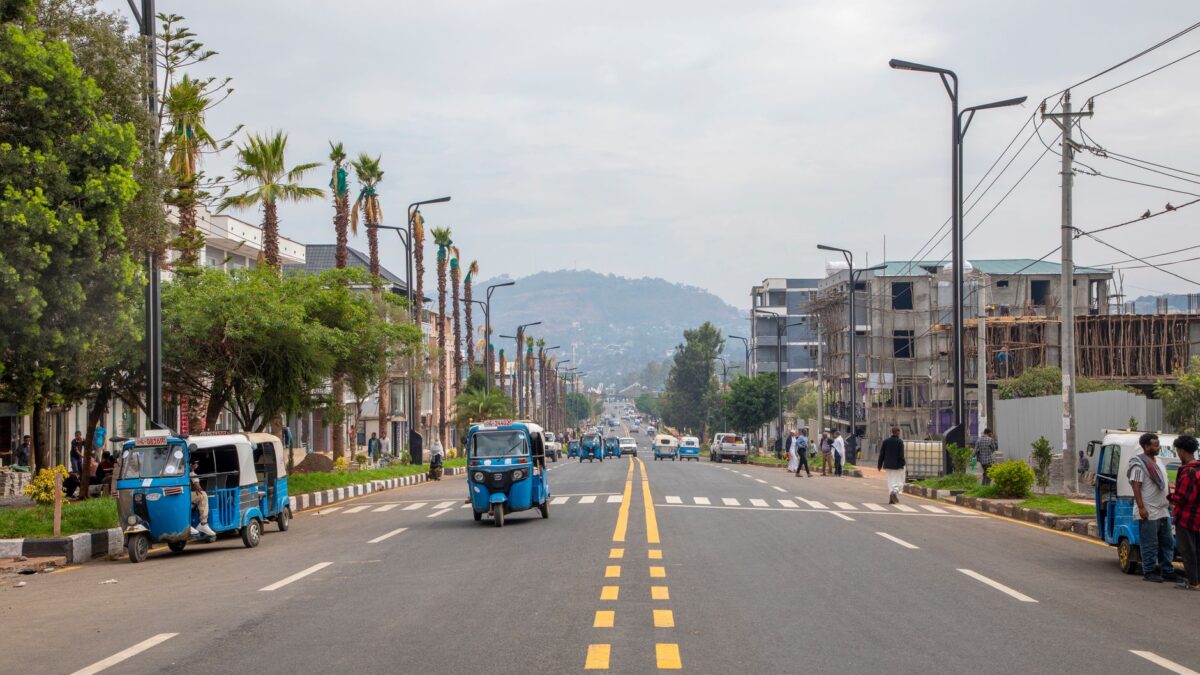
Getting around Dodoma: metros, taxis and passes
Navigate Dodoma's unique transit landscape: daladala, bajaji, walking routes, and intercity links in Tanzania's capital.
 Costs & Money
A week in Dodoma on a mid-range budget
Plan a week in Dodoma on a mid-range budget. Real costs for hotels, meals, and transit in Tanzania's capital.
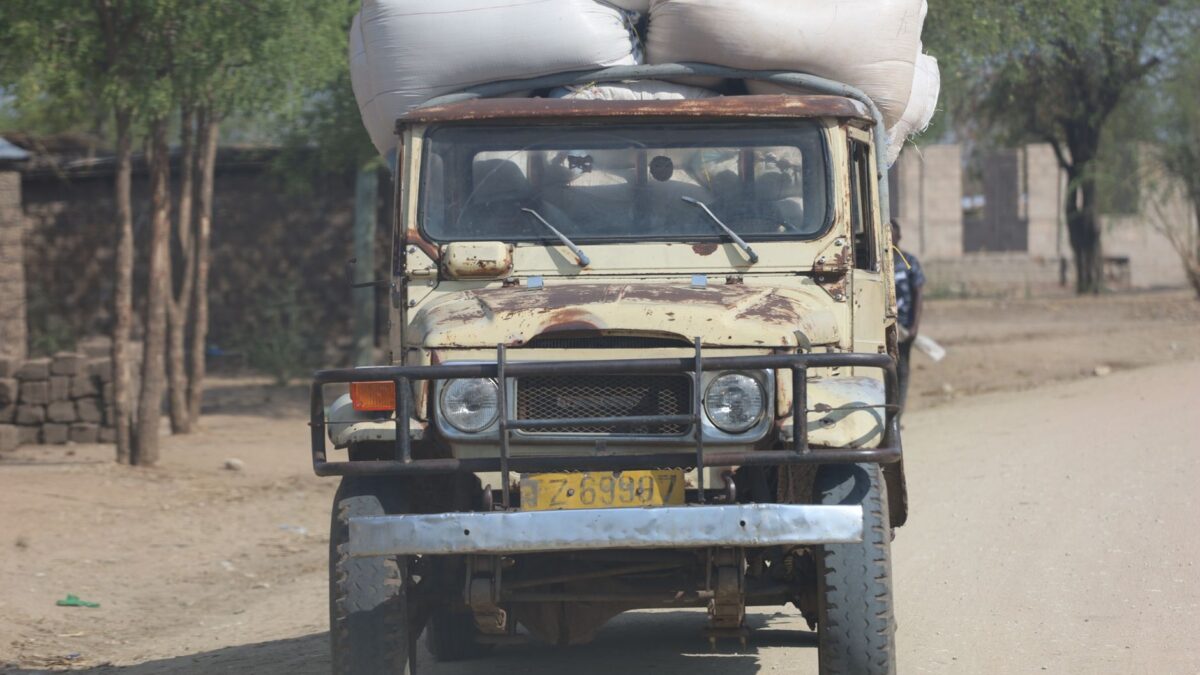 News & Updates
Tanzania in August 2026: what travelers should know now
Tanzania in August 2026: Dodoma's dry-season weather, Parliament in session, Nane Nane aftermath, road safety notes, and practical tips for your visit.
East Africa
 Kenya
KenyaKenya Travel Podcast with Baraka Kimani
The Swahili coast has linked Mombasa with India, China, Persia and the Arab world since at least the 2nd century, shaping Kenya's…
 Rwanda
Rwanda Travel Podcast with Uwase Mutesi
Kinyarwanda is the universal language spoken across Rwanda's rugged grassy uplands, where most people live in the central regions and along Lake…
 Uganda
Uganda Travel Podcast with Daniel Okello
A Uganda travel show that follows the seasons from Kampala's hills to Lake Victoria's shore, with time to learn the country as…
 Ethiopia
Ethiopia Travel Podcast with Dawit Bekele
The Great Rift Valley slices through Ethiopia's high plateau, dividing a landscape where the Blue Nile rises from Lake Tana and most…