
Kenya Travel Podcast with Baraka Kimani
Hosted by Baraka Kimani — a new episode every day from Kenya.
This podcast follows one host as he settles in different parts of Kenya, from the Indian Ocean coast to the highlands. Travelling here means moving between humid coastal towns, the Great Rift Valley floor, and the densely settled western shore of Lake Victoria, each with its own rhythm.
The show moves from Nairobi’s urban streets to the old port of Malindi, west to Kisumu on Lake Victoria, and north to Marsabit in Kenya’s arid interior. It also returns to the Rift Valley escarpment and the slopes of Mount Kenya, where highland farming changes with the seasons.
He stays in one part of Kenya through the short rains and the dry season, then moves somewhere connected by history or landscape. The same towns and valleys reappear as the rains shift, so knowledge accumulates slowly, the way long familiarity with a place grows over months.
Recent episodes
Things to do in Kenya
 3 days Masai Mara on Private 4x4 Land Cruiser
 Lamu Old Town Walking Tour
 Nairobi Park Wildlife Safari
 Masai Mara 3 Days Tour Safari Private 4WD Landcruiser
 Diani Taxi and Airport Transfers
 6 Days Masai Mara, Lake Nakuru and Amboseli Budget Group Safari
 5 Days Maasai mara, Lake Nakuru, samburu private lodge safari
 Masai Mara 3 Days Luxury Tented Safari
Plan your trip to Kenya
Getting around
Staying connected
Kenya at a glance
Kenya in depth
Reference data on the country — geography, people, history, economy and transport.
Geography and climate
Location
Eastern Africa, bordering the Indian Ocean, between Somalia and Tanzania
Terrain
Low plains rise to central highlands bisected by Great Rift Valley; fertile plateau in west
Climate
Varies from tropical along coast to arid in interior
Elevation
- Highest point
- Mount Kenya 5,199 m
- Lowest point
- Indian Ocean 0 m
- Mean elevation
- 762 m
Area
- Total
- 580,367 sq km
- Land
- 569,140 sq km
- Water
- 11,227 sq km
Size comparison
Five times the size of Ohio; slightly more than twice the size of Nevada
Coastline
536 km
Land borders
- Total
- 3,457 km
- Border countries
- Ethiopia 867 km; Somalia 684 km; South Sudan 317 km; Tanzania 775 km; Uganda 814 km
Natural resources
Limestone, soda ash, salt, gemstones, fluorspar, zinc, diatomite, gypsum, wildlife, hydropower
Land use
- Agricultural land
- 49.5% (2023 est.)
- Arable land
- 11.4% (2023 est.)
- Permanent crops
- 1.4% (2023 est.)
- Permanent pasture
- 36.7% (2023 est.)
- Forest
- 6.5% (2023 est.)
- Other
- 44% (2023 est.)
Natural hazards
Recurring drought; flooding during rainy seasons
Volcanism: limited volcanic activity; the Barrier (1,032 m) last erupted in 1921; South Island is the only other historically active volcano
Note
The Kenyan Highlands comprise one of the most successful agricultural production regions in Africa; glaciers are found on Mount Kenya, Africa's second-highest peak; unique physiography supports abundant and varied wildlife of scientific and economic value; Lake Victoria, the world's largest tropical lake and the second-largest freshwater lake, is shared among three countries: Kenya, Tanzania, and Uganda
People and society
Population
- Total
- 55,751,717 (2025 est.)
- Male
- 27,857,519
- Female
- 27,894,198
Nationality
- Noun
- Kenyan(s)
- Adjective
- Kenyan
Ethnic groups
Kikuyu 17.1%, Luhya 14.3%, Kalenjin 13.4%, Luo 10.7%, Kamba 9.8%, Somali 5.8%, Kisii 5.7%, Mijikenda 5.2%, Meru 4.2%, Maasai 2.5%, Turkana 2.1%, non-Kenyan 1%, other 8.2% (2019 est.)
Languages
- Languages
- English (official), Kiswahili (official), numerous indigenous languages
- Major-language sample(s)
- The World Factbook, the indispensable source for basic information. (English)
Religions
Christian 85.5% (Protestant 33.4%, Catholic 20.6%, Evangelical 20.4%, African Instituted Churches 7%, other Christian 4.1%), Muslim 10.9%, other 1.8%, none 1.6%, don't know/no answer 0.2% (2019 est.)
Median age
- Total
- 21.5 years (2025 est.)
- Male
- 21.1 years
- Female
- 21.4 years
Life expectancy
- Total population
- 70.4 years (2024 est.)
- Male
- 68.6 years
- Female
- 72.2 years
Urbanisation
- Urban population
- 29.5% of total population (2023)
- Rate of urbanization
- 4.09% annual rate of change (2020-25 est.)
Where people live
Population heavily concentrated in the west along the shore of Lake Victoria; other areas of high density include the capital of Nairobi, and in the southeast along the Indian Ocean coast, as shown in this population distribution map
Largest cities
5.325 million NAIROBI (capital), 1.440 million Mombassa (2023)
Background and government
Background
Trade centers such as Mombasa have existed along the Kenyan and Tanzanian coastlines, known as the Land of Zanj, since at least the 2nd century. These centers traded with the outside world, including China, India, Indonesia, the Middle East, North Africa, and Persia. By around the 9th century, the mix of Africans, Arabs, and Persians who lived and traded there became known as Swahili ("people of the coast") with a distinct language (KiSwahili) and culture. The Portuguese arrived in the 1490s and, using Mombasa as a base, sought to monopolize trade in the Indian Ocean. The Portuguese were pushed out in the late 1600s by the combined forces of Oman and Pate, an island off the coast. In 1890, Germany and the UK divided up the region, with the UK taking the north and the Germans the south, including present-day Tanzania, Burundi, and Rwanda. In 1895, the British established the East Africa Protectorate, which in 1920 was converted into a colony, and named Kenya after its highest mountain. Numerous political disputes between the colony and the UK led to the violent Mau Mau Uprising, which began in 1952, and the eventual declaration of independence in 1963.
Jomo KENYATTA, the founding president and an icon of the liberation struggle, led Kenya from independence in 1963 until his death in 1978, when Vice President Daniel Arap MOI took power in a constitutional succession. The country was a de facto one-party state from 1969 until 1982, after which time the ruling Kenya African National Union (KANU) changed the constitution to make itself the sole legal political party. MOI gave in to internal and external pressure for political liberalization in 1991, but the ethnically fractured opposition failed to dislodge KANU from power in elections in 1992 and 1997, which were marred by violence and fraud. MOI stepped down in 2002 after fair and peaceful elections. Mwai KIBAKI, running as the candidate of the multiethnic, united opposition group, the National Rainbow Coalition (NARC), defeated KANU candidate Uhuru KENYATTA, the son of the founding president, and assumed the presidency following a campaign centered on an anticorruption platform.
Opposition candidate Raila ODINGA challenged KIBAKI's reelection in 2007 on the grounds of widespread vote rigging, leading to two months of ethnic violence that caused more than 1,100 deaths and displaced hundreds of thousands. African Union-sponsored mediation resulted in a power-sharing accord that brought ODINGA into the government as prime minister and outlined a reform agenda. In 2010, Kenyans overwhelmingly voted to adopt a new constitution that eliminated the prime minister, introduced additional checks and balances to executive power, and devolved power and resources to 47 newly created counties. Uhuru KENYATTA won the first presidential election under the new constitution in 2013. He won a second and final term in office in 2017 after a contentious repeat election. In 2022, William RUTO won a close presidential election; he assumed the office the following month after the Kenyan Supreme Court upheld the victory.
Government
Presidential republic
Capital
Nairobi
Time zone
UTC+3 (8 hours ahead of Washington, DC, during Standard Time)
Local name
Republic of Kenya (English)/ Jamhuri ya Kenya (Swahili)
Independence
12 December 1963 (from the UK)
National day
Jamhuri Day (Independence Day), 12 December (1963)
Economy and cost of living
Overview
Fast growing, third largest Sub-Saharan economy; strong agriculture sector with emerging services and tourism industries; IMF program to address current account and debt service challenges; business-friendly policies foster infrastructure investment, digital innovation and public-private partnerships; vulnerable to climate change-induced droughts
GDP per capita
- Real GDP per capita 2024
- $5,800 (2024 est.)
- Real GDP per capita 2023
- $5,700 (2023 est.)
- Real GDP per capita 2022
- $5,500 (2022 est.)
Inflation
- Inflation rate (consumer prices) 2024
- 4.5% (2024 est.)
- Inflation rate (consumer prices) 2023
- 7.7% (2023 est.)
- Inflation rate (consumer prices) 2022
- 7.7% (2022 est.)
Unemployment
- Unemployment rate 2024
- 5.5% (2024 est.)
- Unemployment rate 2023
- 5.6% (2023 est.)
- Unemployment rate 2022
- 5.8% (2022 est.)
Exchange rate
- Currency
- Kenyan shillings (KES) per US dollar -
- Exchange rates 2024
- 134.822 (2024 est.)
- Exchange rates 2023
- 139.846 (2023 est.)
- Exchange rates 2022
- 117.866 (2022 est.)
- Exchange rates 2021
- 109.638 (2021 est.)
- Exchange rates 2020
- 106.451 (2020 est.)
Main industries
Agriculture, transportation, services, manufacturing, construction, telecommunications, tourism, retail
Agriculture
Sugarcane, milk, maize, bananas, tea, potatoes, cassava, cabbages, camel milk, mangoes/guavas (2023)
Transport and connectivity
Airports
368 (2025)
Railways
- Total
- 3,819 km (2018)
- Standard gauge
- 485 km (2018) 1.435-m gauge
- Narrow gauge
- 3,334 km (2018) 1.000-m gauge
Ports
- Total ports
- 4 (2024)
- Large
- 0
- Medium
- 1
- Small
- 2
- Very small
- 1
- Ports with oil terminals
- 1
- Key ports
- Kilifi, Lamu, Malindi, Mombasa
Internet domain
.ke
Internet users
Percent of population 35% (2023 est.)
Mobile subscriptions
- Total subscriptions
- 71.4 million (2024 est.)
- Subscriptions per 100 inhabitants
- 126 (2024 est.)
Environment
Environmental issues
Water pollution from urban and industrial wastes and from use of pesticides and fertilizers; flooding; water-hyacinth infestation in Lake Victoria; deforestation; soil erosion; desertification; poaching
Fresh water
30.7 billion cubic meters (2022 est.)
Country reference figures are periodically revised. Check anything time-sensitive or safety-critical against an official source before you travel.
Kenya travel guides
 News & Updates
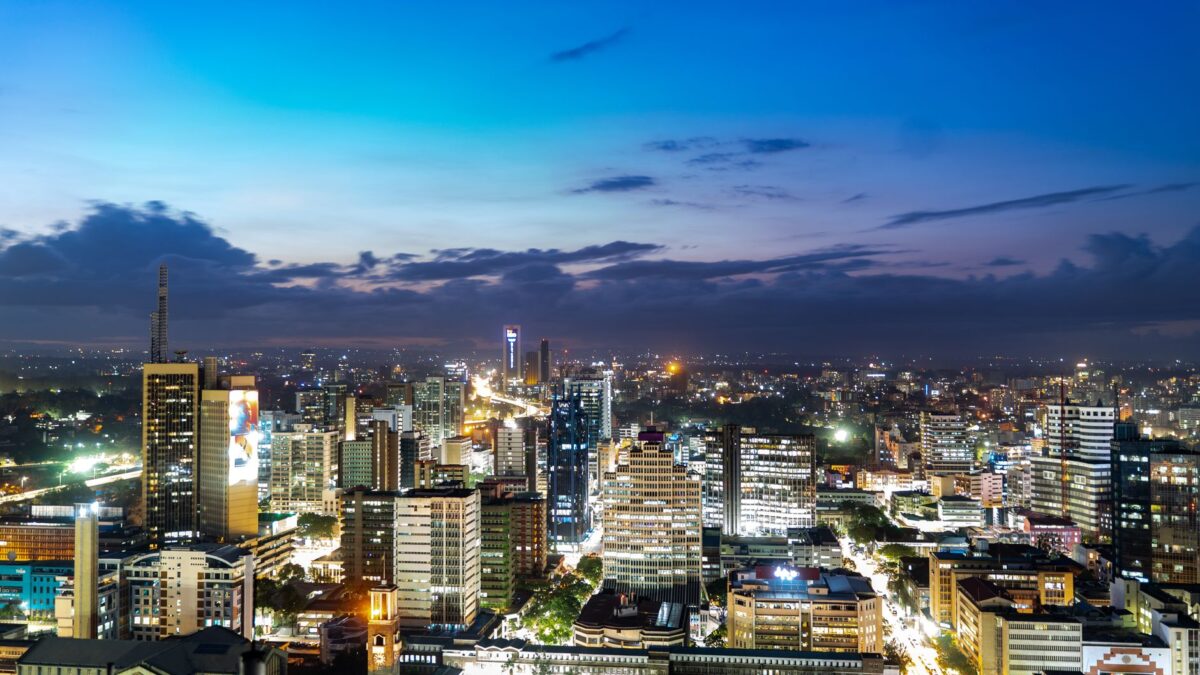
Kenya in September 2026: what travelers should know now
Kenya travel briefing for September 2026: weather, costs, WHX expo, and safety tips for Nairobi.
 Culture & Etiquette
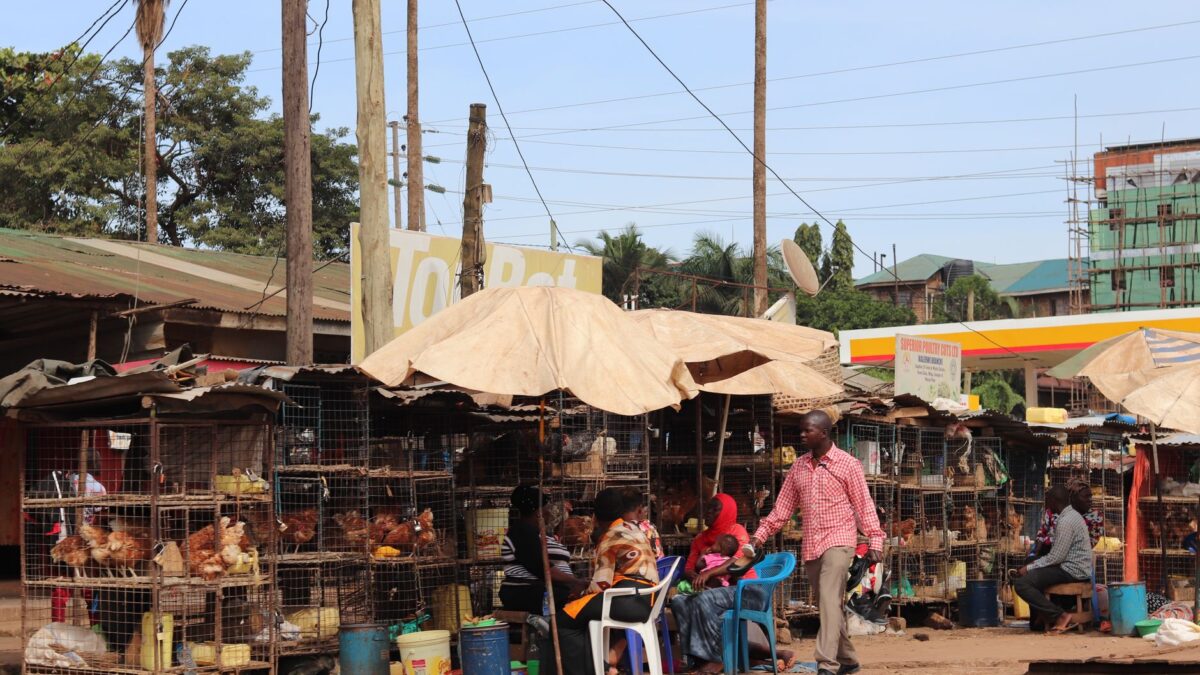
Kenya etiquette: the dos and don’ts
Master Kenyan etiquette with Baraka Kimani. Learn essential dos and don'ts for greetings, dining, dress, and navigating Nairobi like a considerate local.
 Costs & Money
A week in Nairobi on a mid-range budget
Plan a week in Nairobi, Kenya on a mid-range budget. Day-by-day costs for hotels, meals, matatus, and top attractions like the Giraffe Centre and…
 Getting Around
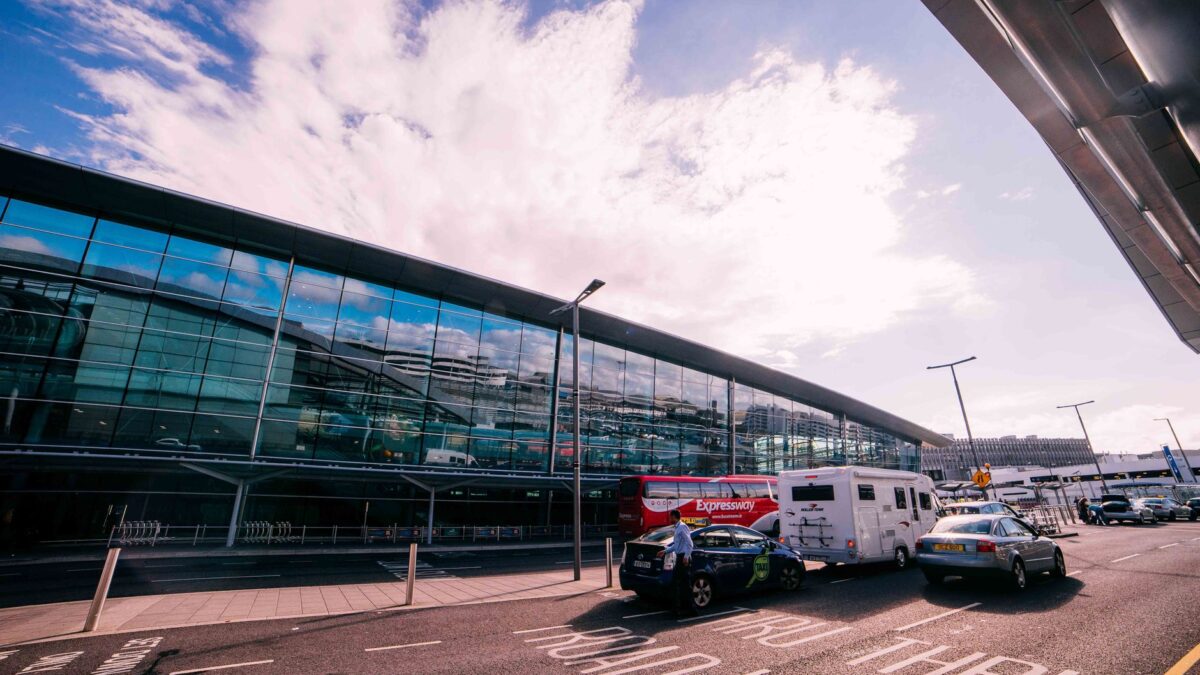
From the airport into Nairobi: every option and what it costs
From JKIA into Nairobi: train, bus, taxi, or private transfer. Real fares, times, and tips from a local. Best pick for your budget.
East Africa
 Tanzania
Tanzania Travel Podcast with Zawadi Mushi
The northern highlands of Tanzania contain Kilimanjaro, Africa's highest point, one of only three mountain ranges on the continent with glaciers.
 Rwanda
Rwanda Travel Podcast with Uwase Mutesi
Kinyarwanda is the universal language spoken across Rwanda's rugged grassy uplands, where most people live in the central regions and along Lake…
 Uganda
Uganda Travel Podcast with Daniel Okello
A Uganda travel show that follows the seasons from Kampala's hills to Lake Victoria's shore, with time to learn the country as…
 Ethiopia
Ethiopia Travel Podcast with Dawit Bekele
The Great Rift Valley slices through Ethiopia's high plateau, dividing a landscape where the Blue Nile rises from Lake Tana and most…