
Slovenia Travel Podcast with Luka Zupan
Hosted by Luka Zupan — a new episode every day from Slovenia.
This podcast follows one resident’s slow travel through Slovenia, where a short Karst coastline sits beneath alpine mountains and river valleys stretch east to the continental climate. The shift from Mediterranean shore to Alpine passes is part of the same journey, and the country rewards repeated, unhurried visits. It also controls some of Europe’s major transit routes, a fact that has shaped its towns and borderlands.
The host’s route starts in Ljubljana, the capital, then moves to the Soča Valley, Maribor and the Karst plateau. These places differ in altitude, climate and history, but each connects to the next through routes that Slovenia controls. Maribor, in the east, reveals how continental the climate becomes away from the Mediterranean.
As seasons change, he returns to the same streets in Ljubljana and paths above the Soča Valley, watching how frost, snow and spring light alter them. He stays in one place long enough to learn its rhythms, then moves somewhere connected to it. The result is a slow, accumulating portrait of Slovenia as a lived country rather than a checklist.
Recent episodes
Things to do in Slovenia
 Canyoning in Fratarica Canyon
 Whitewater Paddle Boarding on Soca River
 Family Beginner Canyoning in Sušec, Bovec With Photos
 Likely to sell out
Classic Canyon Fratarica, Bovec (with photos)
Likely to sell out
Classic Canyon Fratarica, Bovec (with photos)
 Tandem Paragliding Flight Above Lake Bohinj in Julian Alps
 City Tour of Ljubljana
 Half-Day Stand-Up Paddleboarding on Lake Predil
 BOVEC CANYONING - Canyoning Tours For Couples
Plan your trip to Slovenia
Getting around
Staying connected
Slovenia at a glance
Slovenia in depth
Reference data on the country — geography, people, history, economy and transport.
Geography and climate
Location
South Central Europe, Julian Alps between Austria and Croatia
Terrain
A short southwestern coastal strip of Karst topography on the Adriatic; an alpine mountain region lies adjacent to Italy and Austria in the north; mixed mountains and valleys with numerous rivers to the east
Climate
Mediterranean climate on the coast, continental climate with mild to hot summers and cold winters in the plateaus and valleys to the east
Elevation
- Highest point
- Triglav 2,864 m
- Lowest point
- Adriatic Sea 0 m
- Mean elevation
- 492 m
Area
- Total
- 20,273 sq km
- Land
- 20,151 sq km
- Water
- 122 sq km
Size comparison
Slightly smaller than New Jersey
Coastline
46.6 km
Land borders
- Total
- 1,211 km
- Border countries
- Austria 299 km; Croatia 600 km; Hungary 94 km; Italy 218 km
Natural resources
Lignite, lead, zinc, building stone, hydropower, forests
Land use
- Agricultural land
- 30.4% (2023 est.)
- Arable land
- 8.9% (2023 est.)
- Permanent crops
- 2.7% (2023 est.)
- Permanent pasture
- 18.8% (2023 est.)
- Forest
- 61.8% (2023 est.)
- Other
- 10.8% (2023 est.)
Natural hazards
Flooding; earthquakes
Note
Despite its small size, this eastern Alpine country controls some of Europe's major transit routes
People and society
Population
- Total
- 2,097,893 (2024 est.)
- Male
- 1,051,044
- Female
- 1,046,849
Nationality
- Noun
- Slovene(s)
- Adjective
- Slovenian
Ethnic groups
Slovene 83.1%, Serb 2%, Croat 1.8%, Bosniak 1.1%, other or unspecified 12% (2002 est.)
Languages
- Languages
- Slovene (official) 87.7%, Croatian 2.8%, Serbo-Croatian 1.8%, Bosnian 1.6%, Serbian 1.6%, Hungarian 0.4% (official, only in municipalities where Hungarian nationals reside), Italian 0.2% (official, only in municipalities where Italian nationals reside), other or unspecified 3.9% (2002 est.)
- Major-language sample(s)
- Svetovni informativni zvezek - neobhoden vir osnovnih informacij. (Slovene)
Religions
Catholic 69%, Orthodox 4%, Muslim 3%, Christian 1%, other 3%, atheist 14%, non-believer/agnostic 4%, refused to answer 2% (2019 est.)
Median age
- Total
- 46 years (2025 est.)
- Male
- 45 years
- Female
- 47.9 years
Life expectancy
- Total population
- 82.2 years (2024 est.)
- Male
- 79.4 years
- Female
- 85.2 years
Urbanisation
- Urban population
- 56.1% of total population (2023)
- Rate of urbanization
- 0.54% annual rate of change (2020-25 est.)
Where people live
A fairly even distribution throughout most of the country, with urban areas attracting larger and denser populations; pockets in the mountainous northwest are less dense
Largest cities
286,000 LJUBLJANA (capital) (2018)
Background and government
Background
The Slovene lands were part of the Austro-Hungarian Empire until the latter's dissolution at the end of World War I. In 1918, Slovenia became part of the Kingdom of Serbs, Croats, and Slovenes, which was renamed Yugoslavia in 1929. After World War II, Slovenia joined Bosnia and Herzegovina, Croatia, Macedonia, Montenegro, and Serbia as one of the constituent republics in the new Socialist Federal Republic of Yugoslavia (SFRY). In 1990, Slovenia held its first multiparty elections, as well as a referendum on independence. Serbia responded with an economic blockade and military action, but after a short 10-day war, Slovenia declared independence in 1991. Slovenia acceded to both NATO and the EU in the spring of 2004; it joined the euro zone and the Schengen Area in 2007.
Government
Parliamentary republic
Capital
Ljubljana
Time zone
UTC+1 (6 hours ahead of Washington, DC, during Standard Time)
Local name
Republika Slovenija
Independence
25 June 1991 (from Yugoslavia)
National day
Independence Day/Statehood Day, 25 June (1991)
Economy and cost of living
Overview
High-income EU and eurozone economy; high per-capita income and low inequality; key exports in automotive and pharmaceuticals; tight labor market with low unemployment; growth supported by private consumption and public investment, with risks from tight labor market and trade conditions; narrowing fiscal deficit and declining public debt
GDP per capita
- Real GDP per capita 2024
- $48,500 (2024 est.)
- Real GDP per capita 2023
- $47,900 (2023 est.)
- Real GDP per capita 2022
- $47,100 (2022 est.)
Inflation
- Inflation rate (consumer prices) 2024
- 2% (2024 est.)
- Inflation rate (consumer prices) 2023
- 7.4% (2023 est.)
- Inflation rate (consumer prices) 2022
- 8.8% (2022 est.)
Unemployment
- Unemployment rate 2024
- 3.4% (2024 est.)
- Unemployment rate 2023
- 3.7% (2023 est.)
- Unemployment rate 2022
- 4.1% (2022 est.)
Exchange rate
- Currency
- Euros (EUR) per US dollar -
- Exchange rates 2024
- 0.924 (2024 est.)
- Exchange rates 2023
- 0.925 (2023 est.)
- Exchange rates 2022
- 0.95 (2022 est.)
- Exchange rates 2021
- 0.845 (2021 est.)
- Exchange rates 2020
- 0.876 (2020 est.)
Main industries
Ferrous metallurgy and aluminum products, lead and zinc smelting; electronics (including military electronics), trucks, automobiles, electric power equipment, wood products, textiles, chemicals, machine tools
Agriculture
Milk, maize, wheat, barley, grapes, chicken, potatoes, beef, apples, pork (2023)
Transport and connectivity
Airports
42 (2025)
Railways
Total 1,207 km (2020) 609 km electrified
Ports
- Total ports
- 2 (2024)
- Large
- 0
- Medium
- 0
- Small
- 1
- Very small
- 1
- Ports with oil terminals
- 0
- Key ports
- Koper, Piran
Internet domain
.si
Internet users
Percent of population 90% (2023 est.)
Mobile subscriptions
- Total subscriptions
- 2.73 million (2023 est.)
- Subscriptions per 100 inhabitants
- 126 (2022 est.)
Environment
Environmental issues
Air pollution from road traffic, domestic heating (wood burning), power generation, and industry; water pollution; biodiversity protection
Fresh water
31.87 billion cubic meters (2022 est.)
UNESCO Global Geoparks
- Total global geoparks and regional networks
- 2
- Global geoparks and regional networks
- Idrija; Karawanken / Karavanke (includes Austria) (2023)
Country reference figures are periodically revised. Check anything time-sensitive or safety-critical against an official source before you travel.
Slovenia travel guides
 News & Updates
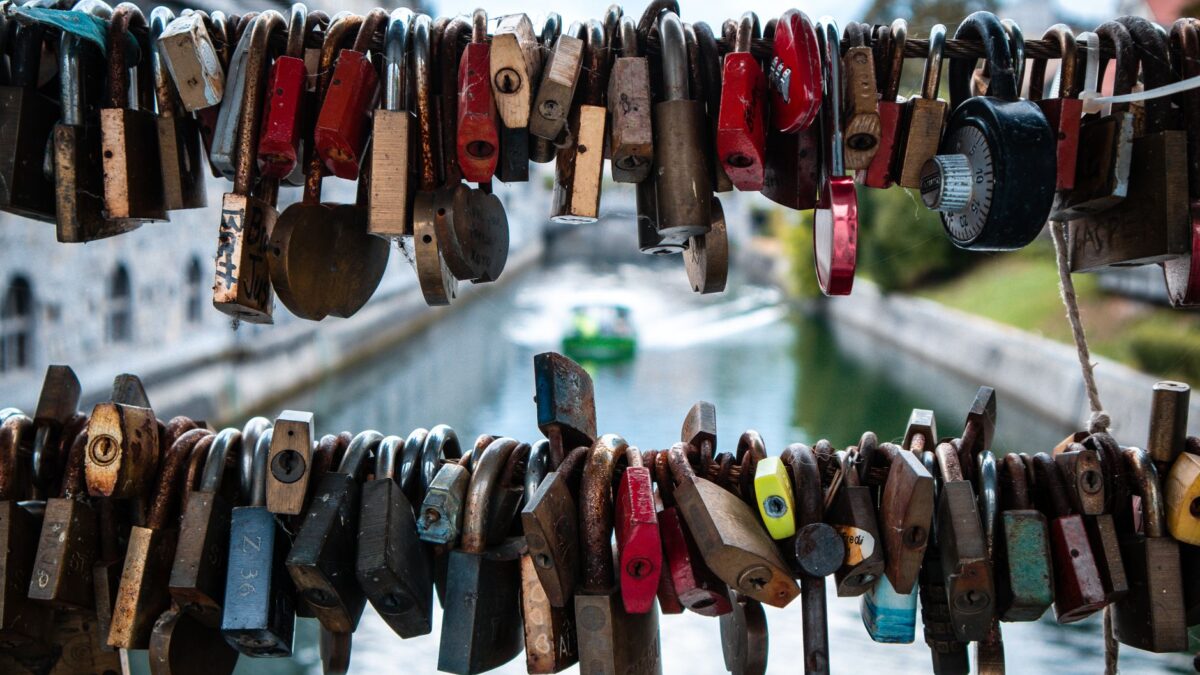
Slovenia in September 2026: what travelers should know now
Slovenia travel update Sept 2026: Weather, PONI Expo, Ljubljana Festival, holidays, and transport tips for your trip.
 Travel Tips
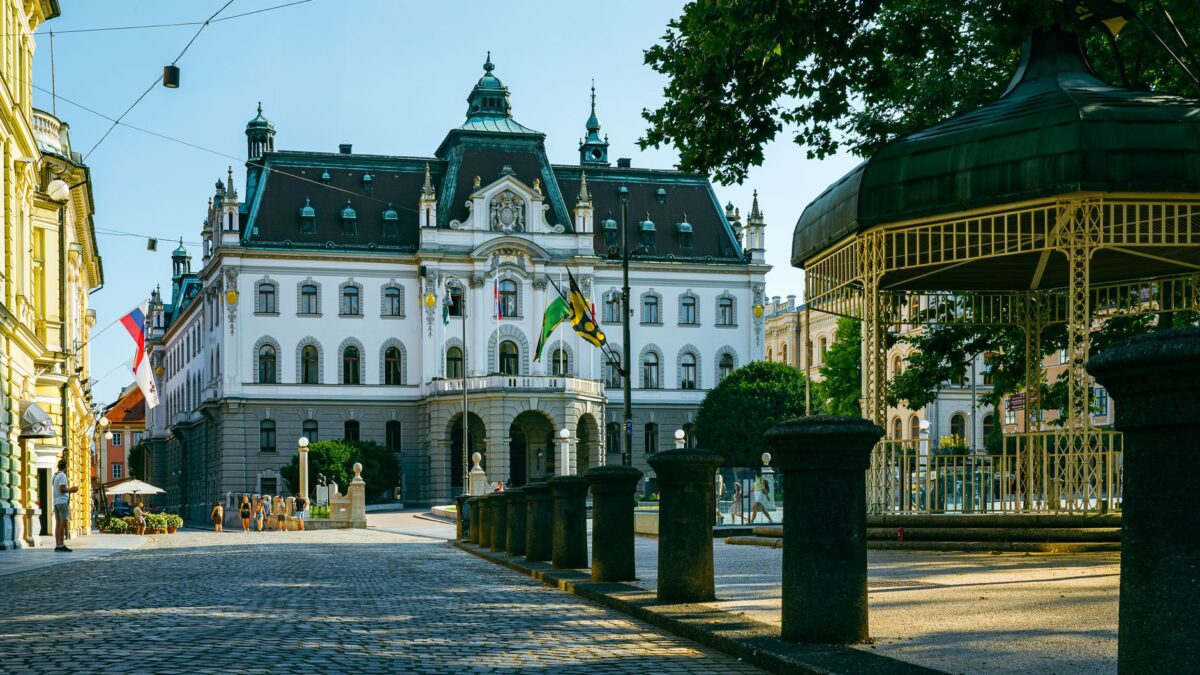
The best time to visit Slovenia
Discover the best time to visit Slovenia with Luka's season-by-season guide—weather, crowds, prices, festivals, and local tips for Ljubljana.
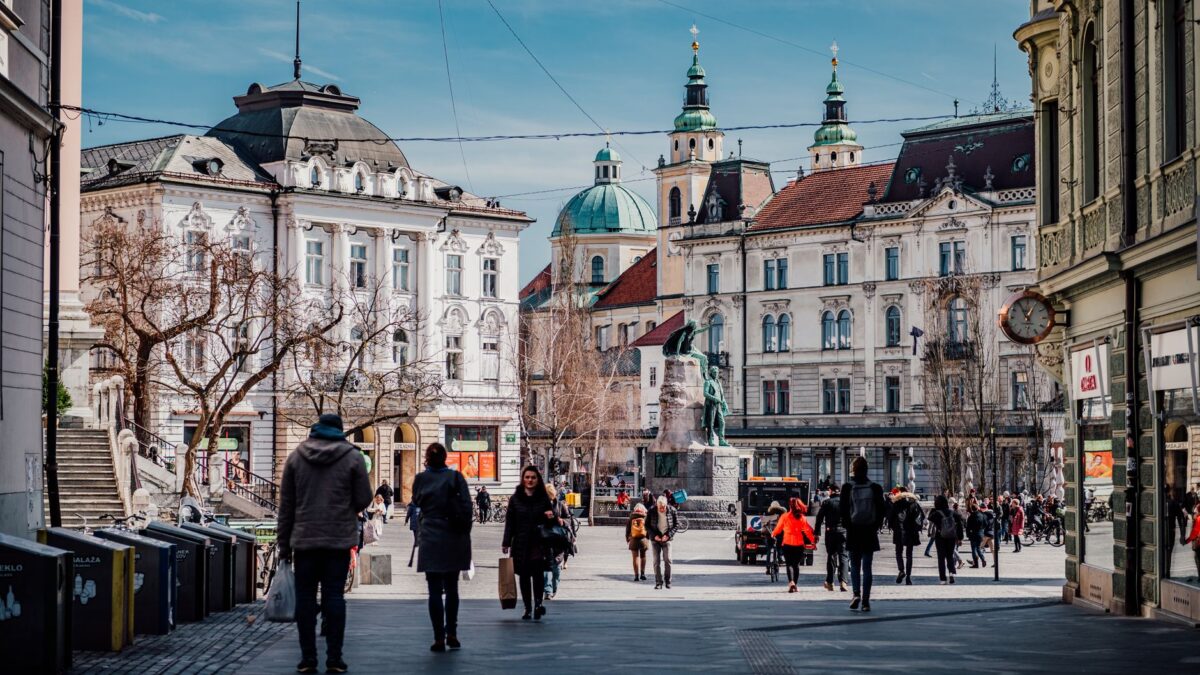 Food & Drink
What to eat in Slovenia — and what it costs
Hungry in Slovenia? Luka's local guide to Ljubljana's best dishes, from street food to fine dining, with real prices in euros.
 News & Updates
Slovenia in August 2026: what travelers should know now
Ljubljana, Slovenia in August 2026: festivals, weather alerts, local tips, costs, and what's on now — from a local's perspective.
Southern Europe
 Spain
SpainSpain Travel Podcast with Mateo Herrera
The Pyrenees run along the northern border; Madrid and Barcelona anchor Spain's largest urban settlements, and the interior summers are hot and…
 Italy
ItalyItaly Travel Podcast with Sofia Romano
The Po River Valley, with its dense population and plains, contrasts sharply with the mountainous terrain that dominates most of Italy.
 Greece
Greece Travel Podcast with Nikos Pappas
The Peloponnese is a mountainous peninsula with ranges that reach into the Aegean as island chains, while Athens holds one third of…
 Portugal
Portugal Travel Podcast with Inês Carvalho
The westward sweep of the Tagus River divides Portugal’s mountainous north from the rolling southern plains, shaping two distinct worlds in one…