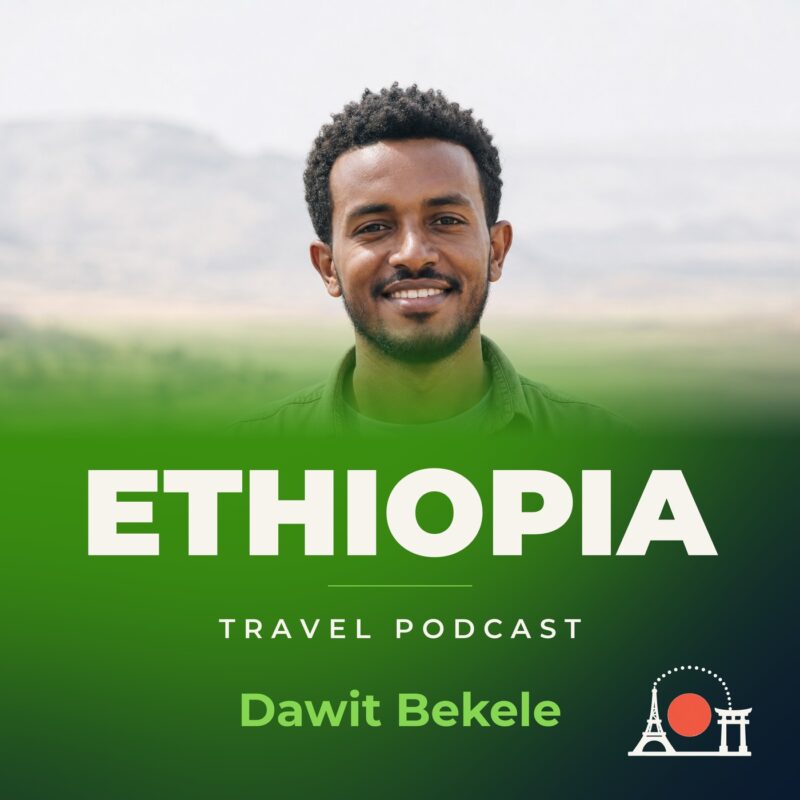
Ethiopia Travel Podcast with Dawit Bekele
Hosted by Dawit Bekele — a new episode every day from Ethiopia.
Ethiopia Travel Podcast follows one person settling in a place long enough to learn it, then moving somewhere connected to it. Travel in Ethiopia is distinctive because the terrain is a high plateau split by the Great Rift Valley, and the climate shifts with altitude. The population is dense in the northern and central highlands, especially around Addis Ababa.
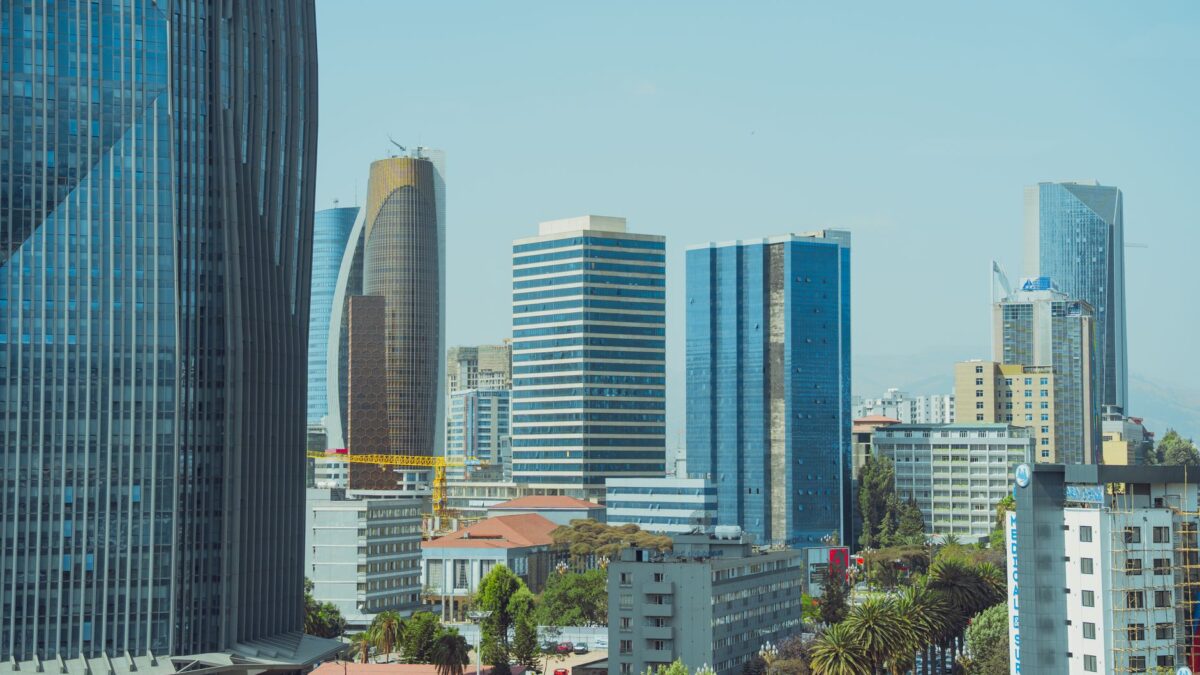
The host’s range includes Addis Ababa, where population density is highest, the Simien Mountains in the north, Lake Tana, source of the Blue Nile, and Gheralta in Tigray, known for churches cut into sandstone cliffs. These places differ in language, religion and climate, reflecting more than eighty ethnic groups.
The episodes track Ethiopia’s seasons, from the short rains to the long rains, and return to the same towns and valleys as the year unfolds. A market, an Orthodox festival, a harvest or a dry-season journey becomes clearer on the second visit. By staying put, the podcast lets knowledge accumulate.
Recent episodes
Things to do in Ethiopia
 Omo Valley Tours from Jinka
 Special offer
Addis Ababa- Guided city tour with museum and market
Special offer
Addis Ababa- Guided city tour with museum and market
 Addis Ababa City Tours Full Day With Hotel Pickup And Drop Off.
 Addis Ababa: Customizable Food, Markets, Coffee & Culture Tour
 Discover Addis Ababa:Museums,Churche,Markets,Landmarks & Coffee
 3-Day Arba Minch & Konso: Culture, Wildlife & Local Tour
 3 days around Arbaminch and Konso Adventure Tours Life Time
 Danakil Depression, Lalibela, Omo Valley and Simien Mountains
Plan your trip to Ethiopia
Getting around
Staying connected
Ethiopia at a glance
Ethiopia in depth
Reference data on the country — geography, people, history, economy and transport.
Geography and climate
Location
Eastern Africa, west of Somalia
Terrain
High plateau with central mountain range divided by Great Rift Valley
Climate
Tropical monsoon with wide topographic-induced variation
Elevation
- Highest point
- Ras Dejen 4,550 m
- Lowest point
- Danakil Depression -125 m
- Mean elevation
- 1,330 m
Area
- Total
- 1,104,300 sq km
- Land
- 1,096,570 sq km
- Water
- 7,730 sq km
Size comparison
Slightly less than twice the size of Texas
Coastline
0 km (landlocked)
Land borders
- Total
- 5,925 km
- Border countries
- Djibouti 342 km; Eritrea 1,033 km; Kenya 867 km; Somalia 1,640 km; South Sudan 1,299 km; Sudan 744 km
Natural resources
Small reserves of gold, platinum, copper, potash, natural gas, hydropower
Land use
- Agricultural land
- 34.1% (2023 est.)
- Arable land
- 14.5% (2023 est.)
- Permanent crops
- 1.8% (2023 est.)
- Permanent pasture
- 17.7% (2023 est.)
- Forest
- 23.7% (2023 est.)
- Other
- 42.2% (2023 est.)
Natural hazards
Geologically active Great Rift Valley susceptible to earthquakes, volcanic eruptions; frequent droughts
Volcanism: volcanic activity in the Great Rift Valley; Erta Ale (613 m) is the country's most active volcano; Dabbahu became active in 2005, forcing evacuations; other historically active volcanoes include Alayta, Dalaffilla, Dallol, Dama Ali, Fentale, Kone, Manda Hararo, and Manda-Inakir
Note
The most populous landlocked country in the world; the Blue Nile, the chief headstream of the Nile by water volume, rises in T'ana Hayk (Lake Tana) in northwest Ethiopia
People and society
Population
- Total
- 121,372,632 (2025 est.)
- Male
- 60,461,406
- Female
- 60,911,226
Nationality
- Noun
- Ethiopian(s)
- Adjective
- Ethiopian
Ethnic groups
Oromo 35.8%, Amhara 24.1%, Somali 7.2%, Tigray 5.7%, Sidama 4.1%, Guragie 2.6%, Welaita 2.3%, Afar 2.2%, Silte 1.3%, Kefficho 1.2%, other 13.5% (2022 est.)
Languages
- Languages
- Oromo (official regional working language) 33.8%, Amharic (official national language) 29.3%, Somali (official regional working language) 6.2%, Tigrigna (Tigrinya) (official regional working language) 5.9%, Sidamo 4%, Wolaytta 2.2%, Gurage 2%, Afar (official regional working language) 1.7%, Hadiyya 1.7%, Gamo 1.5%, Gedeo 1.3%, Opuuo 1.2%, Kafa 1.1%, other 8.1%, English (2007 est.)
- Major-language sample(s)
- Kitaaba Addunyaa Waan Qabataamaatiif - Kan Madda Odeeffannoo bu’uraawaatiif baay’ee barbaachisaa ta’e. (Oromo)
Religions
Ethiopian Orthodox 43.8%, Muslim 31.3%, Protestant 22.8%, Catholic 0.7%, traditional 0.6%, other 0.8% (2016 est.)
Median age
- Total
- 20.6 years (2025 est.)
- Male
- 20.2 years
- Female
- 20.7 years
Life expectancy
- Total population
- 67.7 years (2024 est.)
- Male
- 65.4 years
- Female
- 70 years
Urbanisation
- Urban population
- 23.2% of total population (2023)
- Rate of urbanization
- 4.4% annual rate of change (2020-25 est.)
Where people live
Highest density is found in the highlands of the north and middle areas of the country, particularly around the centrally located capital city of Addis Ababa; the far east and southeast are sparsely populated, as shown in this population distribution map
Largest cities
5.461 million ADDIS ABABA (capital) (2023)
Background and government
Background
The area that is modern-day Ethiopia is rich in cultural and religious diversity with more than 80 ethnic groups. The oldest hominid yet found comes from Ethiopia, and Ethiopia was the second country to officially adopt Christianity in the 4th century A.D. A series of monarchies ruled the area that is now Ethiopia from 980 B.C. to 1855, when the Amhara kingdoms of northern Ethiopia united in an empire under Tewodros II. Many Ethiopians still speak reverently about the Battle of Adwa in 1896, when they defeated Italian forces and won their freedom from colonial rule.
Emperor Haile SELASSIE became an internationally renowned figure in 1935, when he unsuccessfully appealed to the League of Nations to prevent Italy from occupying Ethiopia from 1936 to 1941. SELASSIE survived an attempted coup in 1960, annexed modern-day Eritrea in 1962, and played a leading role in establishing the Organization of African Unity in 1963. However, in 1974, a military junta called the Derg deposed him and established a socialist state. Torn by bloody coups, uprisings, drought, and massive displacement, the Derg regime was toppled in 1991 by a coalition of opposing forces, the Ethiopian People's Revolutionary Democratic Front (EPRDF). The EPRDF became an ethno-federalist political coalition that ruled Ethiopia from 1991 until its dissolution in 2019. Ethiopia adopted its constitution in 1994 and held its first multiparty elections in 1995.
A two-and-a-half-year border war with Eritrea in the late 1990s ended with a peace treaty in 2000. Ethiopia subsequently rejected the 2007 Eritrea-Ethiopia Boundary Commission demarcation. This resulted in more than a decade of a tense “no peace, no war” stalemate between the two countries. In 2012, longtime Prime Minister MELES Zenawi died in office and was replaced by his Deputy Prime Minister HAILEMARIAM Desalegn, marking the first peaceful transition of power in decades. Following a wave of popular dissent and anti-government protest that began in 2015, HAILEMARIAM resigned in 2018, and ABIY Ahmed Ali took office the same year as Ethiopia's first ethnic Oromo prime minister. In 2018, ABIY promoted a rapprochement between Ethiopia and Eritrea that was marked with a peace agreement and a reopening of their shared border. In 2019, Ethiopia's nearly 30-year ethnic-based ruling coalition, the EPRDF, merged into a single unity party called the Prosperity Party; however, the lead coalition party, the Tigray People’s Liberation Front (TPLF), declined to join. In 2020, a military conflict erupted between forces aligned with the TPLF and the Ethiopian military. The conflict -- which was marked by atrocities committed by all parties -- ended in 2022 with a cessation of hostilities agreement between the TPLF and the Ethiopian Government. However, Ethiopia continues to experience ethnic-based violence as other groups -- including the Oromo Liberation Army (OLA) and Amhara militia Fano -- seek concessions from the Ethiopian Government.
Government
Federal parliamentary republic
Capital
Addis Ababa
Time zone
UTC+3 (8 hours ahead of Washington, DC, during Standard Time)
Local name
YeItyop'iya Federalawi Demokrasiyawi Ripeblik
Independence
Oldest independent country in Africa and one of the oldest in the world, at least 2,000 years; may be traced to the Aksumite Kingdom, which appeared in the first century B.C.
National day
Derg Downfall Day (defeat of MENGISTU regime), 28 May (1991)
Economy and cost of living
Overview
Low-income, fast-growing Horn of Africa economy; widespread poverty and food insecurity worsened by conflict and environmental factors; landlocked with tensions over seaport access; development aid supporting reforms to boost private-sector growth and financial stability; challenge of creating jobs for growing labor force
GDP per capita
- Real GDP per capita 2024
- $2,900 (2024 est.)
- Real GDP per capita 2023
- $2,800 (2023 est.)
- Real GDP per capita 2022
- $2,700 (2022 est.)
Inflation
- Inflation rate (consumer prices) 2024
- 21% (2024 est.)
- Inflation rate (consumer prices) 2023
- 30.2% (2023 est.)
- Inflation rate (consumer prices) 2022
- 33.9% (2022 est.)
Unemployment
- Unemployment rate 2024
- 3.4% (2024 est.)
- Unemployment rate 2023
- 3.5% (2023 est.)
- Unemployment rate 2022
- 3.5% (2022 est.)
Exchange rate
- Currency
- Birr (ETB) per US dollar -
- Exchange rates 2023
- 54.601 (2023 est.)
- Exchange rates 2022
- 51.756 (2022 est.)
- Exchange rates 2021
- 43.734 (2021 est.)
- Exchange rates 2020
- 34.927 (2020 est.)
- Exchange rates 2019
- 29.07 (2019 est.)
Main industries
Food processing, beverages, textiles, leather, garments, chemicals, metals processing, cement
Agriculture
Maize, cereals, wheat, milk, sorghum, barley, taro, beans, sweet potatoes, potatoes (2023)
Transport and connectivity
Airports
58 (2025)
Railways
- Total
- 659 km (2017) (Ethiopian segment of the 756 km Addis Ababa-Djibouti railroad)
- Standard gauge
- 659 km (2017) 1.435-m gauge
Internet domain
.et
Internet users
Percent of population 17% (2021 est.)
Mobile subscriptions
- Total subscriptions
- 85.9 million (2024 est.)
- Subscriptions per 100 inhabitants
- 65 (2024 est.)
Environment
Environmental issues
Deforestation; overgrazing; soil erosion; desertification; loss of biodiversity; water shortages in some areas from water-intensive farming and poor management; industrial pollution and pesticides contribute to air, water, and soil pollution
Fresh water
122 billion cubic meters (2022 est.)
Country reference figures are periodically revised. Check anything time-sensitive or safety-critical against an official source before you travel.
Ethiopia travel guides
 Getting Around
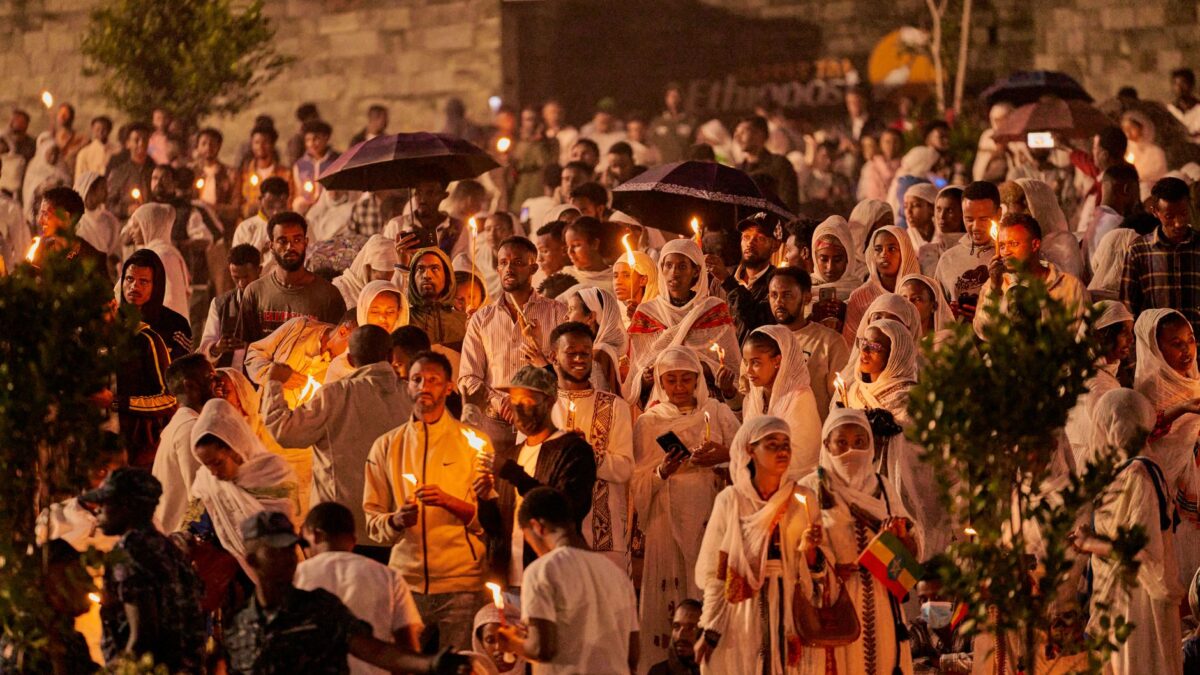
From the airport into Addis Ababa: every option and what it costs
Explore every transport option from Addis Ababa airport: taxis, buses, light rail & private transfers with real costs & local tips.
 News & Updates
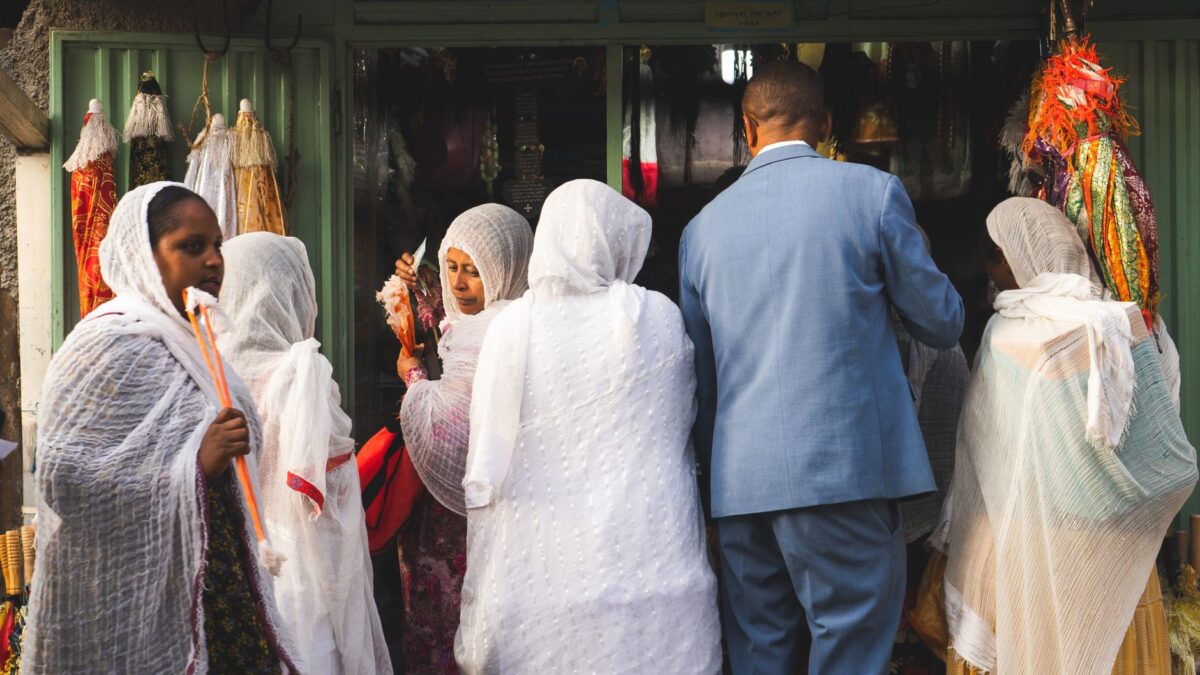
Ethiopia in September 2026: what travelers should know now
Ethiopia in September 2026: Enkutatash, Meskel bonfires, EV summit, weather tips, prices, and the Kebena redevelopment. What travelers should know now.
 News & Updates
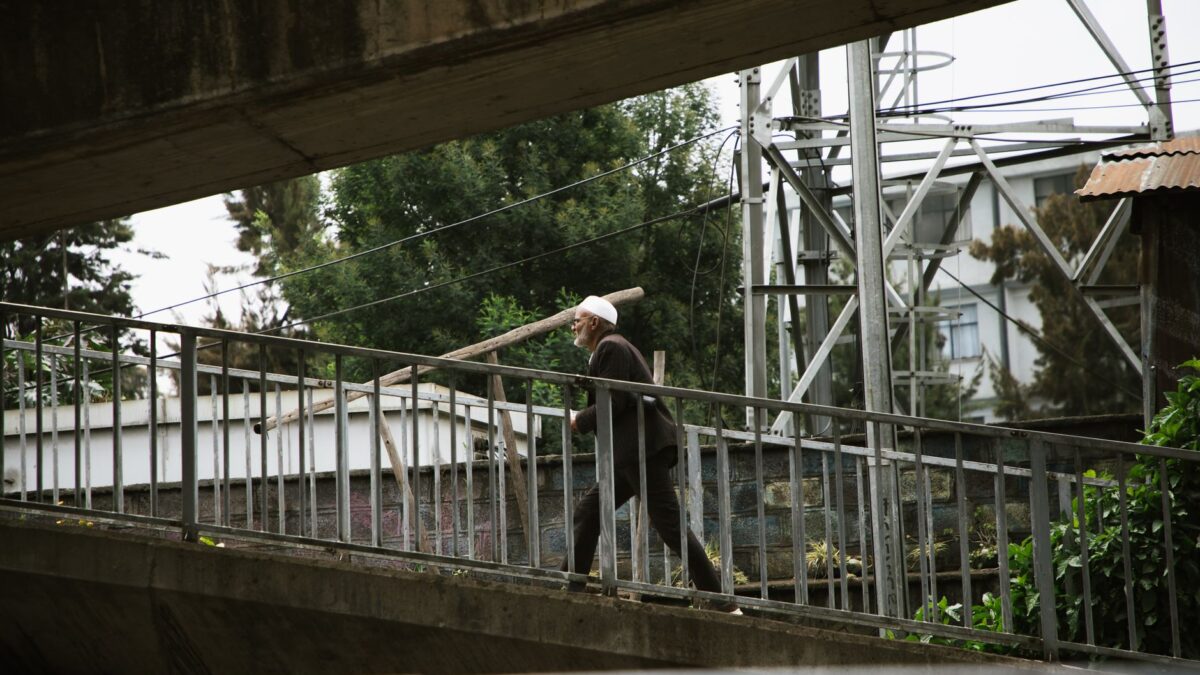
Ethiopia in August 2026: what travelers should know now
Ethiopia in August 2026: rainy season, WHO conference in Addis, Enkutatash coming up, and practical travel tips. What you need to know now.
 Costs & Money
How much does a trip to Ethiopia cost?
Realistic Ethiopia trip cost breakdown: accommodation, food, transport, and attractions in birr (ETB). Budget, mid-range, and comfort daily totals for Addis Ababa.
East Africa
 Kenya
KenyaKenya Travel Podcast with Baraka Kimani
The Swahili coast has linked Mombasa with India, China, Persia and the Arab world since at least the 2nd century, shaping Kenya's…
 Tanzania
Tanzania Travel Podcast with Zawadi Mushi
The northern highlands of Tanzania contain Kilimanjaro, Africa's highest point, one of only three mountain ranges on the continent with glaciers.
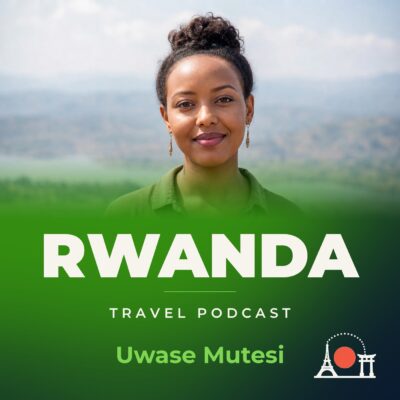 Rwanda
Rwanda Travel Podcast with Uwase Mutesi
Kinyarwanda is the universal language spoken across Rwanda's rugged grassy uplands, where most people live in the central regions and along Lake…
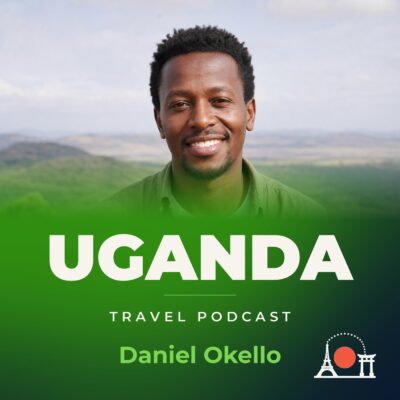 Uganda
Uganda Travel Podcast with Daniel Okello
A Uganda travel show that follows the seasons from Kampala's hills to Lake Victoria's shore, with time to learn the country as…