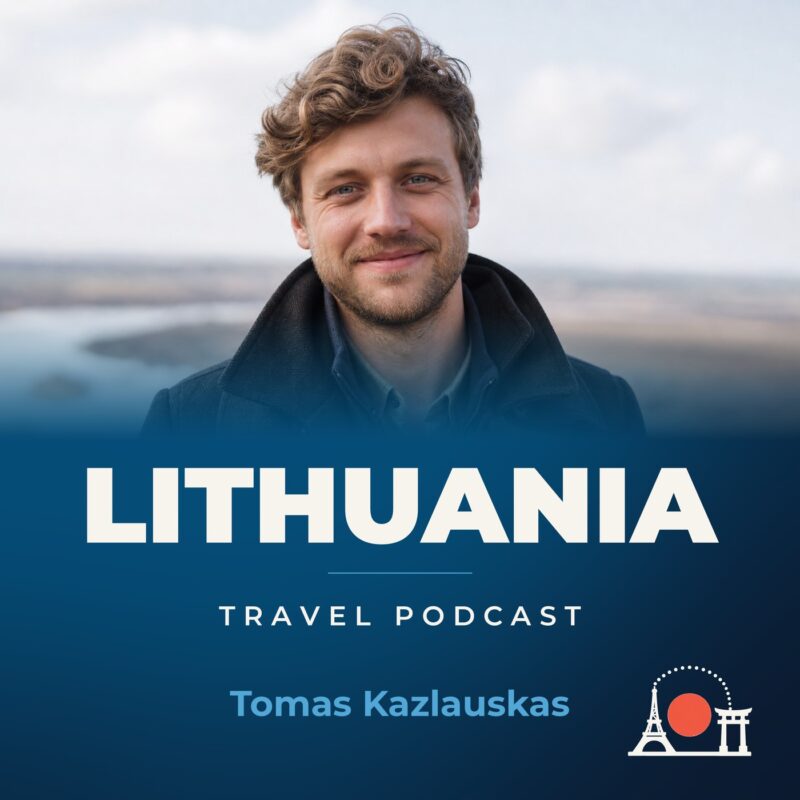
Lithuania Travel Podcast with Tomas Kazlauskas
Hosted by Tomas Kazlauskas — a new episode every day from Lithuania.
The show follows one person settling into Lithuania rather than passing through it. The country is lowland, with many small lakes, fertile soil and hilly uplands made of ancient glacial deposits, so journeys are shaped by modest terrain rather than dramatic peaks. That makes travelling here a matter of noticing gradual transitions and the wet, moderate weather.
He covers Vilnius, Kaunas and Klaipeda, and then moves beyond the obvious into Aukštaitija, with its lakes and glacial ridges, and the flat, wet Nemunas Delta near the coast. The range shows the country’s even settlement and the contrast between southern cities, western port and rural lowlands.
The episodes follow the Lithuanian calendar, moving through wet, moderate winters and summers with a climate that sits between maritime and continental. Places are revisited at different times of year, so a lake in Aukštaitija or a street in Kaunas changes in meaning. Knowing a place properly takes that kind of return.
Recent episodes
Things to do in Lithuania
 Hot air balloon flight Vilnius Trakai with Transfer and Shampagne
 Premium canoe tour at Curonian spit National Park (from Klaipeda)
 BIRDWATCH - Premium guided canoe tour at Cape Vente, Nemunas Delta Regional Park
 Dinner with a local family
 Wild Beach single handed Blokart Safari
 Guided Tour of KGB Museum in Vilnius (Museum of Occupation and Freedom Fights)
 Shared Balloon Ride – Vilnius or Trakai, Hotel Pickup Included
 2 Hours Private Tour to Hill of Crosses from Siauliai
Plan your trip to Lithuania
Getting around
Staying connected
Lithuania at a glance
Lithuania in depth
Reference data on the country — geography, people, history, economy and transport.
Geography and climate
Location
Eastern Europe, bordering the Baltic Sea, between Latvia and Russia, west of Belarus
Terrain
Lowland, many scattered small lakes, fertile soil
Climate
Transitional, between maritime and continental; wet, moderate winters and summers
Elevation
- Highest point
- Aukstojas 294 m
- Lowest point
- Baltic Sea 0 m
- Mean elevation
- 110 m
Area
- Total
- 65,300 sq km
- Land
- 62,680 sq km
- Water
- 2,620 sq km
Size comparison
Slightly larger than West Virginia
Coastline
90 km
Land borders
- Total
- 1,545 km
- Border countries
- Belarus 640 km; Latvia 544 km; Poland 100 km; Russia (Kaliningrad) 261 km
Natural resources
Peat, arable land, amber
Land use
- Agricultural land
- 45.9% (2023 est.)
- Arable land
- 36.8% (2023 est.)
- Permanent crops
- 0.5% (2023 est.)
- Permanent pasture
- 8.6% (2023 est.)
- Forest
- 35.3% (2023 est.)
- Other
- 18.8% (2023 est.)
Natural hazards
Occasional floods, droughts
Note
Fertile central plains are separated by hilly uplands that are ancient glacial deposits
People and society
Population
- Total
- 2,815,687 (2025 est.)
- Male
- 1,334,600
- Female
- 1,481,087
Nationality
- Noun
- Lithuanian(s)
- Adjective
- Lithuanian
Ethnic groups
Lithuanian 84.6%, Polish 6.5%, Russian 5%, Belarusian 1%, other 1.1%, unspecified 1.8% (2021 est.)
Languages
- Languages
- Lithuanian (official) 85.3%, Russian 6.8%, Polish 5.1%, other 1.1%, two mother tongues 1.7% (2021 est.)
- Major-language sample(s)
- Pasaulio enciklopedija – naudingas bendrosios informacijos šaltinis. (Lithuanian)
Religions
Roman Catholic 74.2%, Russian Orthodox 3.7%, Old Believer 0.6%, Evangelical Lutheran 0.6%, Evangelical Reformist 0.2%, other (including Sunni Muslim, Jewish, Greek Catholic, and Karaite) 0.9%, none 6.1%, unspecified 13.7% (2021 est.)
Median age
- Total
- 44 years (2025 est.)
- Male
- 40.9 years
- Female
- 49.2 years
Life expectancy
- Total population
- 76.1 years (2024 est.)
- Male
- 70.8 years
- Female
- 81.7 years
Urbanisation
- Urban population
- 68.7% of total population (2023)
- Rate of urbanization
- -0.12% annual rate of change (2020-25 est.)
Where people live
Fairly even population distribution throughout the country, but somewhat greater concentrations in the southern cities of Vilnius and Kaunas, as well as the western port of Klaipeda
Largest cities
541,000 VILNIUS (capital) (2023)
Background and government
Background
Lithuanian lands were united under MINDAUGAS in 1236; over the next century, Lithuania extended its territory through alliances and conquest to include most of present-day Belarus and Ukraine. By the end of the 14th century, Lithuania was the largest state in Europe. An alliance with Poland in 1386 led the two countries into a union through a common ruler. In 1569, Lithuania and Poland formally united into a single dual state, the Polish-Lithuanian Commonwealth. This entity survived until 1795 when surrounding countries partitioned its remnants. Lithuania regained its independence after World War I, but the USSR annexed it in 1940 -- an action never recognized by the US and many other countries. In 1990, Lithuania became the first of the Soviet republics to declare its independence, but Moscow did not recognize this proclamation until 1991. The last Russian troops withdrew in 1993. Lithuania subsequently restructured its economy for integration into West European institutions; it joined both NATO and the EU in 2004. In 2015, Lithuania joined the euro zone, and it joined the Organization for Economic Cooperation and Development in 2018.
Government
Semi-presidential republic
Capital
Vilnius
Time zone
UTC+2 (7 hours ahead of Washington, DC, during Standard Time)
Local name
Lietuvos Respublika
Independence
16 February 1918 (from Soviet Russia and Germany); 11 March 1990 (declared from the Soviet Union); 6 September 1991 (recognized by the Soviet Union); notable earlier dates: 6 July 1253 (coronation of MINDAUGAS, traditional founding date); 1 July 1569 (Polish-Lithuanian Commonwealth created)
National day
Independence Day (or National Day), 16 February (1918)
Economy and cost of living
Overview
High-income EU and eurozone member, largest Baltic economy; recovery supported by private consumption and EU fund-driven investments; structural challenges include pension reform, aging workforce, and high energy-import costs
GDP per capita
- Real GDP per capita 2024
- $47,200 (2024 est.)
- Real GDP per capita 2023
- $46,200 (2023 est.)
- Real GDP per capita 2022
- $46,700 (2022 est.)
Inflation
- Inflation rate (consumer prices) 2024
- 0.7% (2024 est.)
- Inflation rate (consumer prices) 2023
- 9.1% (2023 est.)
- Inflation rate (consumer prices) 2022
- 19.7% (2022 est.)
Unemployment
- Unemployment rate 2024
- 7.6% (2024 est.)
- Unemployment rate 2023
- 6.9% (2023 est.)
- Unemployment rate 2022
- 6% (2022 est.)
Exchange rate
- Currency
- Euros (EUR) per US dollar -
- Exchange rates 2024
- 0.924 (2024 est.)
- Exchange rates 2023
- 0.925 (2023 est.)
- Exchange rates 2022
- 0.95 (2022 est.)
- Exchange rates 2021
- 0.845 (2021 est.)
- Exchange rates 2020
- 0.876 (2020 est.)
Main industries
Metal-cutting machine tools, electric motors, televisions, refrigerators and freezers, petroleum refining, shipbuilding (small ships), furniture, textiles, food processing, fertilizer, agricultural machinery, optical equipment, lasers, electronic components, computers, amber jewelry, information technology, video game development, app/software development, biotechnology
Agriculture
Wheat, milk, sugar beets, rapeseed, barley, potatoes, triticale, oats, beans, peas (2023)
Transport and connectivity
Airports
64 (2025)
Railways
Total 1,911 km (2020) 152 km electrified
Ports
- Total ports
- 2 (2024)
- Large
- 0
- Medium
- 1
- Small
- 0
- Very small
- 1
- Ports with oil terminals
- 2
- Key ports
- Butinge Oil Terminal, Klaipeda
Internet domain
.lt
Internet users
Percent of population 89% (2023 est.)
Mobile subscriptions
- Total subscriptions
- 3.97 million (2024 est.)
- Subscriptions per 100 inhabitants
- 139 (2024 est.)
Environment
Environmental issues
Water pollution; air pollution; deforestation; groundwater pollution from chemicals and waste; soil degradation and erosion
Fresh water
24.5 billion cubic meters (2022 est.)
Country reference figures are periodically revised. Check anything time-sensitive or safety-critical against an official source before you travel.
Lithuania travel guides
 Getting Around
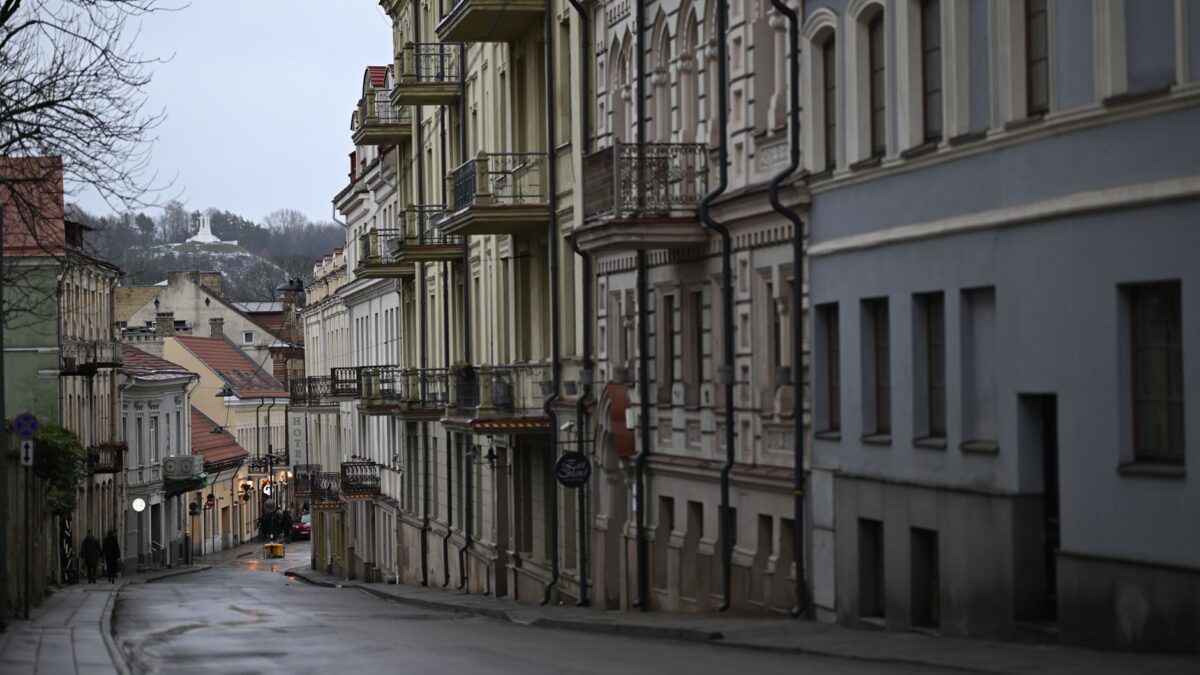
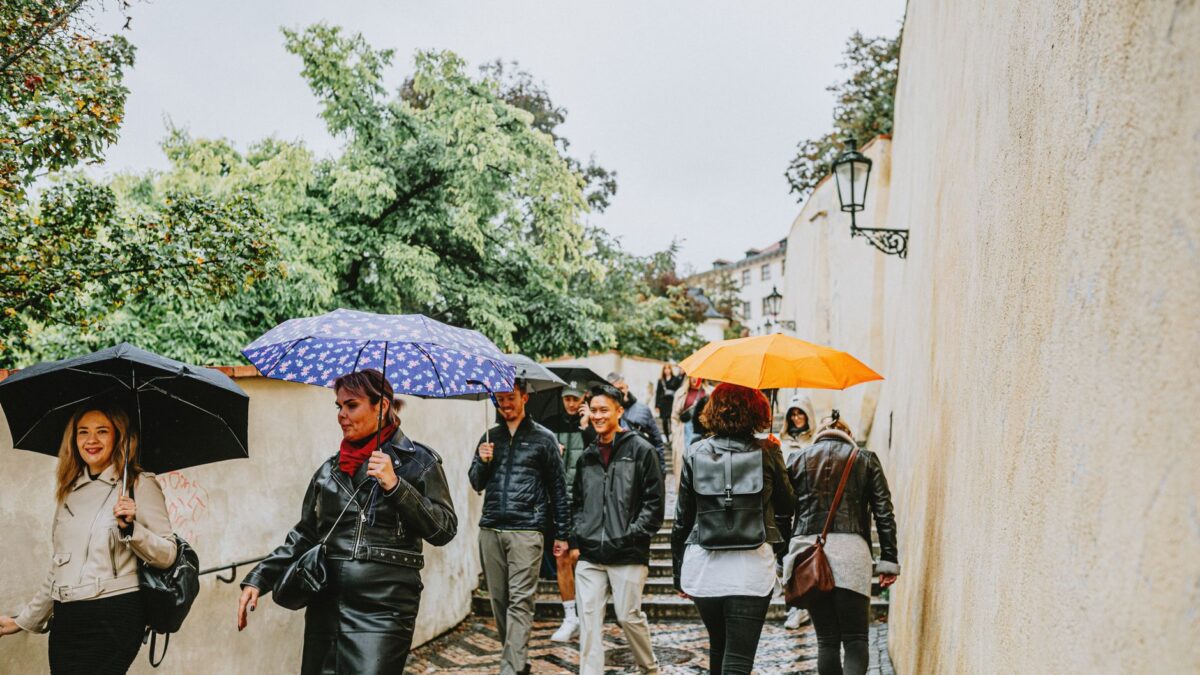
Getting around Vilnius: metros, taxis and passes
Navigate Vilnius without a metro. Local guide to buses, taxis, walking routes, and current traffic updates for smart travelers in Lithuania's capital.
 News & Updates
Lithuania in September 2026: what travelers should know now
Lithuania travel guide for September 2026: weather, festivals, costs, and tips for visiting Vilnius as summer ends.
 Getting Around
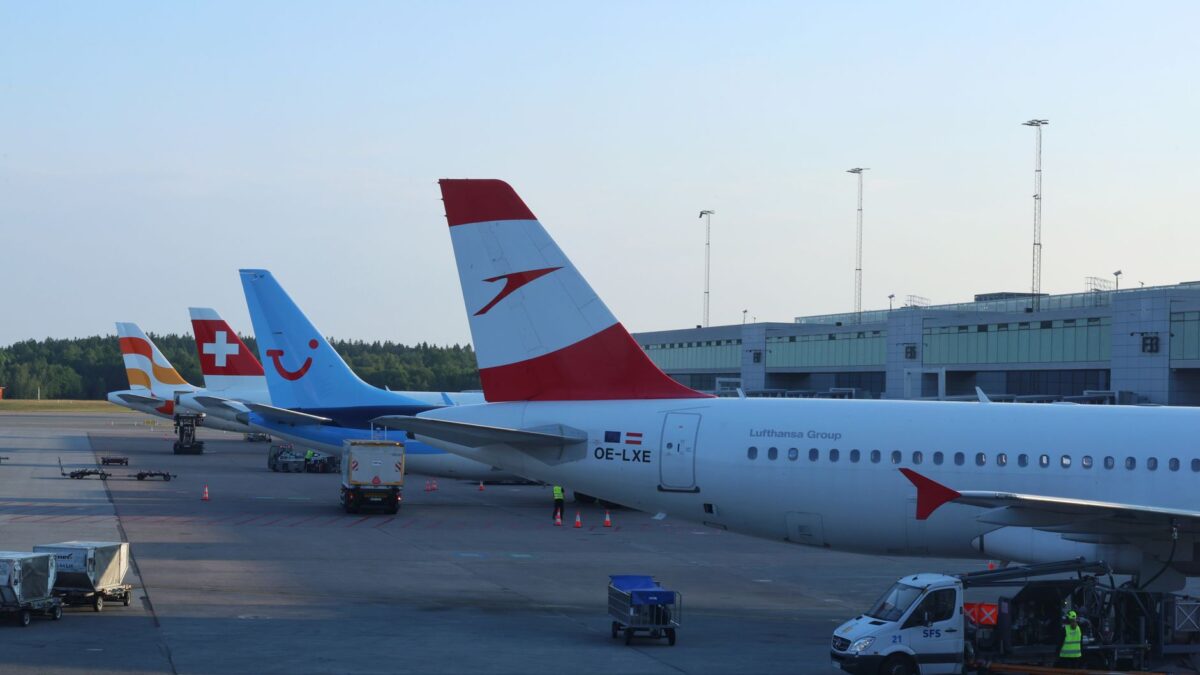
From the airport into Vilnius: every option and what it costs
From Vilnius Airport to the city: train, bus, taxi, and private transfer prices and times. A local's honest guide to getting into Lithuania's capital.
 News & Updates
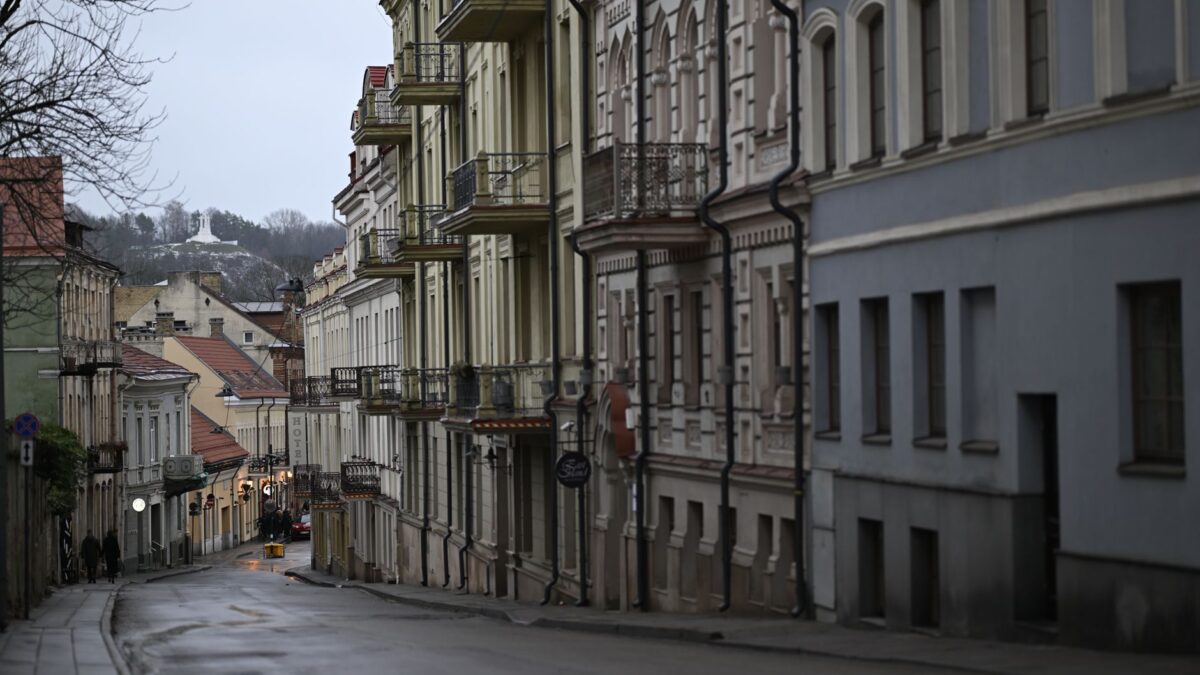
Lithuania in August 2026: what travelers should know now
Vilnius in August 2026: what's on, what's closed, and how to pack. Sustainable Fashion Week, Jessica Shy concerts, and the last organ recital at…
Northern Europe
 United Kingdom
United Kingdom Travel Podcast with Oliver Hughes
The Scottish lowlands between Edinburgh and Glasgow sit under overcast skies brought by the North Atlantic Current and prevailing southwest winds.
 Ireland
Ireland Travel Podcast with Saoirse Byrne
The western seaboard's sea cliffs face the North Atlantic, while over 40% of the population lives within 100 km of Dublin.
 Denmark
Denmark Travel Podcast with Freja Andersen
The Danish Archipelago's low, gently rolling terrain means no point in the country lies far from the coast, and its more than…
 Sweden
Sweden Travel Podcast with Anton Lindqvist
The Baltic coast holds most of Sweden's population clusters, while the interior north remains sparsely populated and subarctic, and the Danish Straits…