
Serbia Travel Podcast with Milica Jovanović
Hosted by Milica Jovanović — a new episode every day from Serbia.
This podcast follows the slow, grounded work of travelling through Serbia as a resident would: settling, learning, then moving on. Serbia’s character comes from its variety — the flat and fertile Vojvodina plain in the north, the limestone ranges of the east, and the ancient mountains of the southeast all sit within one landlocked country.
The show takes in Belgrade and Novi Sad as well as the wine-growing hills of Fruška Gora and the remote Stara Planina. She moves across Serbia between city streets, monastery complexes, and mountain pastures, following the change from continental climate in the north to hot, dry summers in the south-east.
The series unfolds across Serbia’s seasons, from cold, snowy winters to hot, dry summers. Episodes return to the same places as the weather changes: a Belgrade park under snow, a Fruška Gora vineyard in autumn, a mountain ridge in the heat of summer. That repeated attention is how Serbian places are known properly — slowly, through accumulated detail, rather than a checklist.
Recent episodes
Things to do in Serbia
 Business-class Airport Taxi Transfer in Belgrade
 Airport Nis Shuttle Taxi
 Likely to sell out
Full-Day Trip from Belgrade: Tara National Park & The Drina River Valley
Likely to sell out
Full-Day Trip from Belgrade: Tara National Park & The Drina River Valley
 A Crash Course through Serbian History
 Nis Sightseeing Tour
 Belgrade Private City Tour
 Belgrade Airport to City Center Transfers
 History and Culture in my Belgrade
Plan your trip to Serbia
Getting around
Staying connected
Serbia at a glance
Serbia in depth
Reference data on the country — geography, people, history, economy and transport.
Geography and climate
Location
Southeastern Europe, between Macedonia and Hungary
Terrain
Extremely varied; to the north, rich fertile plains; to the east, limestone ranges and basins; to the southeast, ancient mountains and hills
Climate
In the north, continental climate (cold winters and hot, humid summers with well-distributed rainfall); in other parts, continental and Mediterranean climate (relatively cold winters with heavy snowfall and hot, dry summers and autumns)
Elevation
- Highest point
- Midzor 2,169 m
- Lowest point
- Danube and Timok Rivers 35 m
- Mean elevation
- 442 m
Area
- Total
- 77,474 sq km
- Land
- 77,474 sq km
- Water
- 0 sq km
Size comparison
Slightly smaller than South Carolina
Coastline
0 km (landlocked)
Land borders
- Total
- 2,322 km
- Border countries
- Bosnia and Herzegovina 345 km; Bulgaria 344 km; Croatia 314 km; Hungary 164 km; Kosovo 366 km; North Macedonia 101 km; Montenegro 157 km; Romania 531 km
Natural resources
Oil, gas, coal, iron ore, copper, zinc, antimony, chromite, gold, silver, magnesium, pyrite, limestone, marble, salt, arable land
Land use
- Agricultural land
- 40.4% (2023 est.)
- Arable land
- 31% (2023 est.)
- Permanent crops
- 2.5% (2023 est.)
- Permanent pasture
- 6.6% (2023 est.)
- Forest
- 40.4% (2023 est.)
- Other
- 27.2% (2023 est.)
Natural hazards
Destructive earthquakes
Note
Landlocked; controls one of the major land routes from Western Europe to Turkey and the Near East
People and society
Population
- Total
- 6,652,212 (2024 est.)
- Male
- 3,242,751
- Female
- 3,409,461
Nationality
- Noun
- Serb(s)
- Adjective
- Serbian
Ethnic groups
Serb 83.3%, Hungarian 3.5%, Romani 2.1%, Bosniak 2%, other 5.7%, undeclared or unknown 3.4% (2011 est.)
Languages
- Languages
- Serbian (official) 88.1%, Hungarian 3.4%, Bosnian 1.9%, Romani 1.4%, other 3.4%, undeclared or unknown 1.8% (2011 est.)
- Major-language sample(s)
- Knjiga svetskih činjenica, neophodan izvor osnovnih informacija. (Serbian)
Religions
Serbian Orthodox 81.1%, unknown 5.3%, Islam 4.2%, Catholic 3.9%, no response 2.5%, atheist 1.1%; less than 1%: other Christians, Protestant, agnostic (2022)
Median age
- Total
- 44.1 years (2025 est.)
- Male
- 42.4 years
- Female
- 45.4 years
Life expectancy
- Total population
- 75.3 years (2024 est.)
- Male
- 72.7 years
- Female
- 78.1 years
Urbanisation
- Urban population
- 57.1% of total population (2023)
- Rate of urbanization
- 0.04% annual rate of change (2020-25 est.)
Where people live
A fairly even distribution throughout most of the country, with urban areas attracting larger and denser populations
Largest cities
1.408 million BELGRADE (capital) (2023)
Background and government
Background
In 1918, the Croats, Serbs, and Slovenes formed a kingdom known after 1929 as Yugoslavia. The monarchy remained in power until 1945, when the communist Partisans headed by Josip Broz (aka TITO) took control of the newly created Socialist Federal Republic of Yugoslavia (SFRY). After TITO died in 1980, communism in Yugoslavia gradually gave way to resurgent nationalism. In 1989, Slobodan MILOSEVIC became president of the Republic of Serbia, and his calls for Serbian domination led to the violent breakup of Yugoslavia along ethnic lines. In 1991, Croatia, Slovenia, and Macedonia declared independence, followed by Bosnia in 1992. The remaining republics of Serbia and Montenegro declared a new Federal Republic of Yugoslavia (FRY) in 1992, and MILOSEVIC led military campaigns to unite ethnic Serbs in neighboring republics into a "Greater Serbia." These actions ultimately failed, and international intervention led to the signing of the Dayton Accords in 1995.
In 1998, an ethnic Albanian insurgency in the formerly autonomous Serbian province of Kosovo resulted in a brutal Serbian counterinsurgency campaign. Serbia rejected a proposed international settlement, and NATO responded with a bombing campaign that forced Serbian forces to withdraw from Kosovo in June 1999. In 2003, the FRY became the State Union of Serbia and Montenegro, a loose federation of the two republics. In 2006, Montenegro seceded and declared itself an independent nation.
In 2008, Kosovo also declared independence -- an action Serbia still refuses to recognize. In 2013, Serbia and Kosovo signed the first agreement of principles governing the normalization of relations between the two countries. Additional agreements were reached in 2015 and 2023, but implementation remains incomplete. Serbia has been an official candidate for EU membership since 2012, and President Aleksandar VUCIC has promoted the ambitious goal of Serbia joining the EU by 2025.
Government
Parliamentary republic
Capital
Belgrade (Beograd)
Time zone
UTC+1 (6 hours ahead of Washington, DC, during Standard Time)
Local name
Republika Srbija
Independence
5 June 2006 (from the State Union of Serbia and Montenegro); notable earlier dates: 1217 (Serbian Kingdom established); 16 April 1346 (Serbian Empire established); 13 July 1878 (Congress of Berlin recognizes Serbian independence); 1 December 1918 (Kingdom of Serbs, Croats, and Slovenes established, later known as Yugoslavia)
National day
Statehood Day, 15 February (1835), the day the first constitution of the country was adopted
Economy and cost of living
Overview
Upper middle-income Balkan economy; current EU accession candidate; hit by COVID-19; pursuing green growth development; manageable public debt; new anticorruption efforts; falling unemployment; historic Russian relations; energy import-dependent
GDP per capita
- Real GDP per capita 2024
- $26,900 (2024 est.)
- Real GDP per capita 2023
- $25,700 (2023 est.)
- Real GDP per capita 2022
- $24,600 (2022 est.)
Inflation
- Inflation rate (consumer prices) 2024
- 4.7% (2024 est.)
- Inflation rate (consumer prices) 2023
- 12.4% (2023 est.)
- Inflation rate (consumer prices) 2022
- 12% (2022 est.)
Unemployment
- Unemployment rate 2024
- 7.4% (2024 est.)
- Unemployment rate 2023
- 8.3% (2023 est.)
- Unemployment rate 2022
- 8.5% (2022 est.)
Exchange rate
- Currency
- Serbian dinars (RSD) per US dollar -
- Exchange rates 2024
- 108.208 (2024 est.)
- Exchange rates 2023
- 108.403 (2023 est.)
- Exchange rates 2022
- 111.662 (2022 est.)
- Exchange rates 2021
- 99.396 (2021 est.)
- Exchange rates 2020
- 103.163 (2020 est.)
Main industries
Automobiles, base metals, furniture, food processing, machinery, chemicals, sugar, tires, clothes, pharmaceuticals
Agriculture
Maize, wheat, sugar beets, milk, sunflower seeds, soybeans, potatoes, barley, apples, plums (2023)
Transport and connectivity
Airports
46 (2025)
Railways
Total 3,333 km (2020) 1,274 km electrified
Internet domain
.rs
Internet users
Percent of population 85% (2023 est.)
Mobile subscriptions
- Total subscriptions
- 8.53 million (2023 est.)
- Subscriptions per 100 inhabitants
- 124 (2021 est.)
Environment
Environmental issues
Air pollution around Belgrade and other industrial cities; water pollution from industrial wastes in rivers; inadequate management of domestic, industrial, and hazardous waste
Fresh water
162.2 billion cubic meters (2022 est.)
UNESCO Global Geoparks
- Total global geoparks and regional networks
- 1
- Global geoparks and regional networks
- Djerdap (2023)
Country reference figures are periodically revised. Check anything time-sensitive or safety-critical against an official source before you travel.
Serbia travel guides
 News & Updates
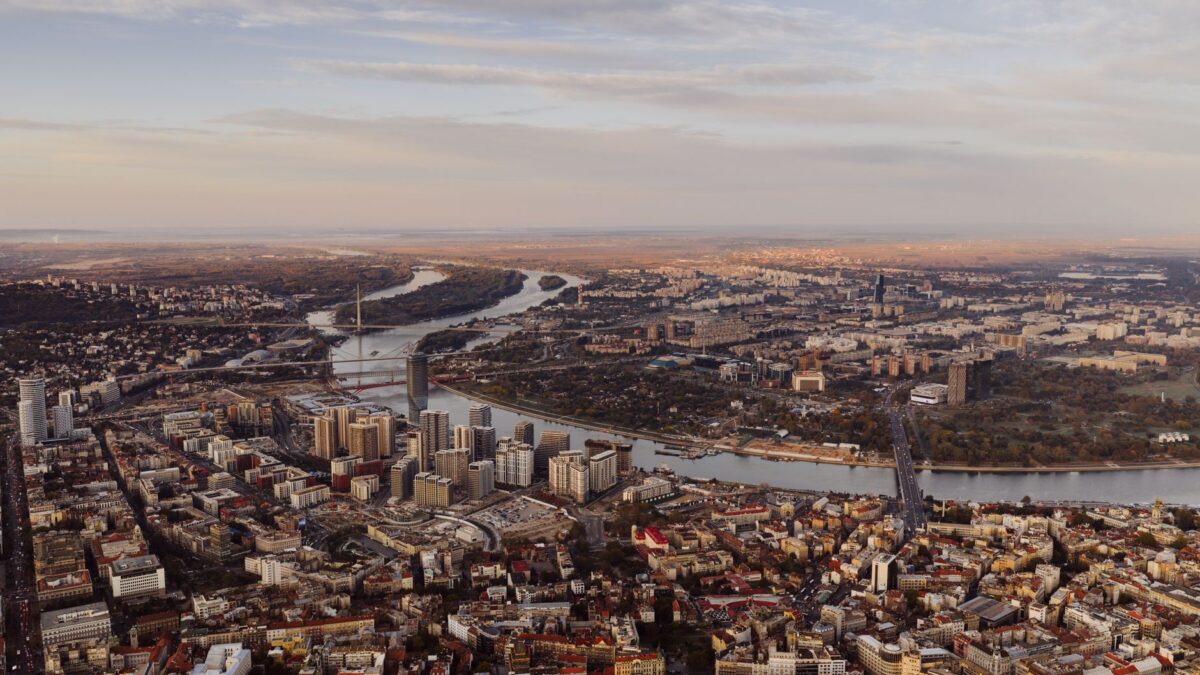
Serbia in September 2026: what travelers should know now
Serbia travel briefing September 2026: weather, election alerts, transport closures, and real-time tips for Belgrade visitors.
 News & Updates
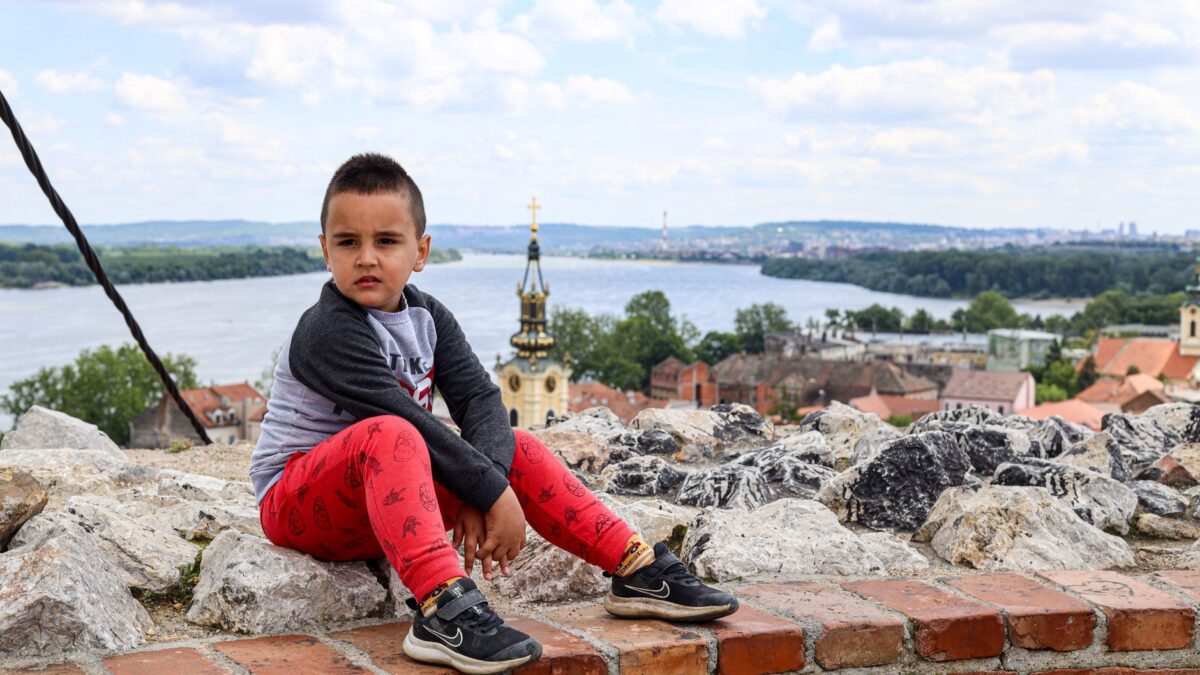
Serbia in August 2026: what travelers should know now
Serbia in August 2026: Belgrade Beer Fest, free transit, Danube bridge delays, rerouted buses, heat tips, and approximate costs for this month.
 Culture & Etiquette
Serbia etiquette: the dos and don’ts
Serbia etiquette guide: greetings, tipping, dining manners, dress, and small customs that matter in Belgrade. Be a considerate visitor with Milica's local tips.
Southern Europe
 Spain
SpainSpain Travel Podcast with Mateo Herrera
The Pyrenees run along the northern border; Madrid and Barcelona anchor Spain's largest urban settlements, and the interior summers are hot and…
 Italy
ItalyItaly Travel Podcast with Sofia Romano
The Po River Valley, with its dense population and plains, contrasts sharply with the mountainous terrain that dominates most of Italy.
 Greece
Greece Travel Podcast with Nikos Pappas
The Peloponnese is a mountainous peninsula with ranges that reach into the Aegean as island chains, while Athens holds one third of…
 Portugal
Portugal Travel Podcast with Inês Carvalho
The westward sweep of the Tagus River divides Portugal’s mountainous north from the rolling southern plains, shaping two distinct worlds in one…